DbcultAccessing Vault...
7.6/10
Senior Film Conservator
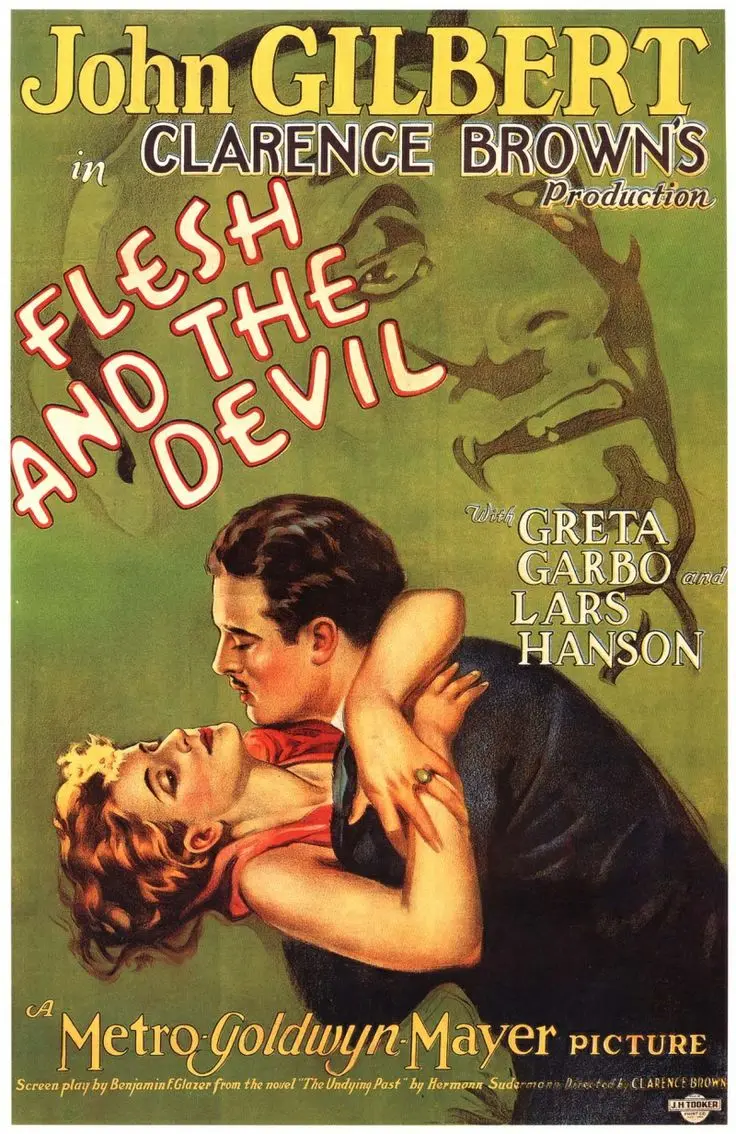
A definitive 7.6/10 rating for a film that redefined the boundaries of cult cinema. Flesh and the Devil remains a cornerstone of transgressive art.
Does Flesh and the Devil still demand your attention nearly a century after its release? Short answer: yes, but only if you are willing to succumb to the hypnotic, slow-burn pacing of the silent era’s most erotic power play. This film is essential viewing for anyone interested in the history of screen presence and the birth of the modern 'femme fatale,' yet it will likely alienate modern viewers who demand rapid-fire plotting or clear-cut moral heroes.
This is a film for the romantics, the historians, and those who want to see the exact moment Greta Garbo became an icon. It is decidedly not for those who find silent cinema’s exaggerated gestures or moralistic endings tiresome. It is a heavy, humid experience that prioritizes mood over logic.
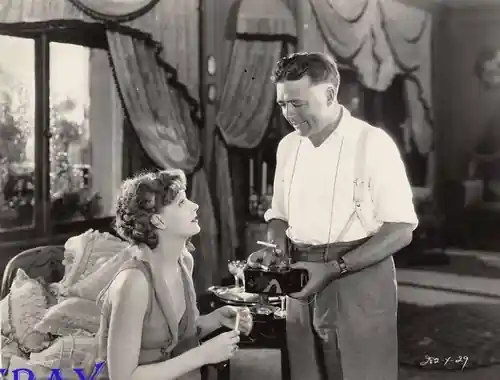
1) This film works because the chemistry between Greta Garbo and John Gilbert is not a performance; it is a documented event of mutual obsession.
2) This film fails because its final act retreats into a convenient, almost cowardly moralism that betrays the complexity of the preceding hour.
3) You should watch it if you want to understand how lighting and close-ups can tell a story more effectively than any dialogue script.
To talk about Flesh and the Devil without centering Greta Garbo is like discussing the ocean without mentioning the water. Before this film, Garbo was a promising Swedish import; after it, she was a deity. Her portrayal of Felicitas is revolutionary because she refuses to play the villain as a caricature. In many ways, her performance is more modern than anything seen in The Marriage Lie or other contemporary dramas of the time.
Consider the scene where she first meets Leo (John Gilbert) at the train station. She doesn't just look at him; she consumes him. Her eyes carry a weight of experience that makes Gilbert’s Leo look like a schoolboy. It works. But it’s flawed in how the script treats her as a vessel for male ruin rather than a woman with her own agency. Still, Garbo’s ability to communicate internal conflict through the slight tilt of her head is unparalleled.
Unlike the broader acting styles found in Going Up, Garbo practices a form of subtraction. She does less, and in doing so, she means more. Every time the camera lingers on her face, the film stops being a narrative and starts being a portrait. It is a masterclass in the 'star vehicle' as an art form.
Director Clarence Brown understood that in a silent film, the smallest gestures must carry the weight of a thousand words. There are two specific moments in Flesh and the Devil that define the film's erotic power. The first is the legendary match-lighting scene. Leo and Felicitas are in a dark garden; he strikes a match to light her cigarette, and the flicker of the flame illuminates their faces in a way that feels dangerously intimate. The way she exhales the smoke into his space is a blatant challenge to his 'brotherly' honor.
The second is the communion scene in the church. As Felicitas takes the cup, she rotates it so her lips touch the exact spot where Leo’s lips were. It is a sequence of staggering blasphemy and brilliance. It shows that her character doesn't just want Leo; she wants to subvert the very institutions—military, marriage, and religion—that he holds dear. This level of visual storytelling is far more sophisticated than the literalism found in The Unbeliever.
These moments are not just 'visually stunning'—they are structural. They build a tension that the script, which is essentially a standard melodrama, doesn't quite deserve. The cinematography by William Daniels uses chiaroscuro to trap the characters in their own shadows, suggesting that their fate was sealed the moment they stepped out of the light of their childhood friendship.
At its core, the film is about the 'Blood Brotherhood' between Leo and Ulrich (Lars Hanson). This is a trope we see explored in various ways in films like West of Chicago, but here it is treated with a religious fervor. The two men are obsessed with one another’s honor, which makes Felicitas’s intrusion all the more violent. The film posits that a woman’s love is a 'devilish' force that corrupts the purity of male friendship.
This is where the film feels most dated. The idea that Felicitas is a 'devil' simply for having desires is a hard pill to swallow in the 21st century. However, Lars Hanson plays Ulrich with such a pathetic, earnest vulnerability that you actually feel the tragedy of the betrayal. When he realizes that his wife and his best friend are the architects of his misery, the film moves from romance into the territory of a psychological thriller.
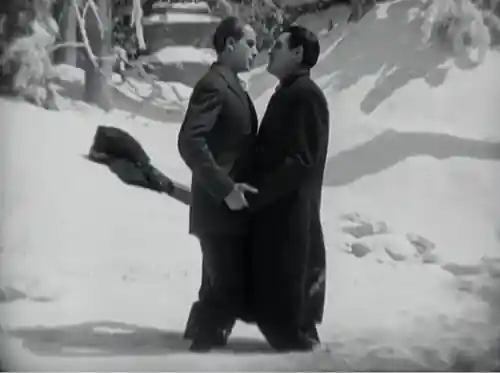
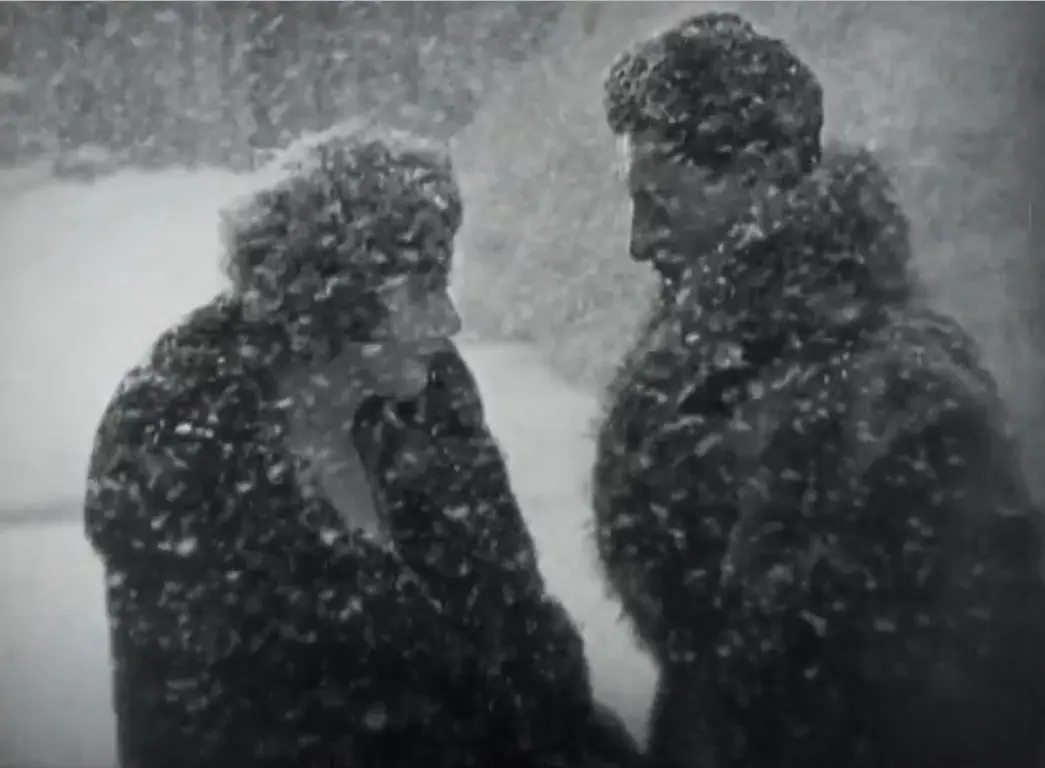
The duel scene is a highlight of tension. The use of long shadows on the snow-covered ground creates a sense of impending doom that feels more grounded than the theatricality of Brigadier Gerard. It’s a sequence that proves silent film could handle suspense just as well as modern noir.
Yes, Flesh and the Devil is worth watching because it represents the pinnacle of the MGM 'prestige' style. It is a film that values beauty and emotional intensity above all else. If you want to see why Greta Garbo became a legend, this is the primary text. It is a visceral experience that transcends its silent medium through sheer force of personality and lighting design.
The chemistry between the leads is genuine and palpable, largely because they were falling in love in real life during production. The cinematography is light-years ahead of its time, using soft focus and shadows to create a dreamlike atmosphere. The pacing in the first two acts is deliberate and effective, building a sense of unavoidable catastrophe.
The third act drags as it tries to reconcile the 'brotherhood' plot. Some of the secondary characters, like those played by George Fawcett, feel like they belong in a different, more cartoonish movie like The Tenderfoot. The final resolution on the ice feels like a literal 'Deus ex Machina' that lets the male characters off the hook too easily.
Flesh and the Devil is a flawed masterpiece of the silent era. It isn't perfect—the story is a bit thin and the morality is archaic—but as a piece of visual poetry, it is staggering. Garbo is a revelation, and the film serves as a reminder that before movies learned to talk, they knew exactly how to look. It’s a film about the heat of the moment and the cold reality of the morning after. Watch it for the faces, stay for the shadows, and forgive the ending. It is a landmark of cinema that still has the power to make you hold your breath. It works. But it’s flawed. And that’s exactly why it’s worth your time.
IMDb 7.5
1930
Community
Log in to comment.