DbcultAccessing Vault...
4.1/10
Senior Film Conservator
A definitive 4.1/10 rating for a film that redefined the boundaries of cult cinema. The Sea Panther remains a cornerstone of transgressive art.
To witness The Sea Panther (1918) is to encounter a fascinating relic of the silent era that refuses to be categorized simply as an adventure serial. At its heart, the film is a character study of Paul Le Marsan, portrayed with a magnetic, almost feline grace by William Desmond. In an era where many screen heroes were painted in broad, monochromatic strokes of virtue, Le Marsan offers a more complex palette. He is a man of the sword, a commander of the Cygnet, yet his soul is anchored in an archaic code of honor that feels increasingly out of place in the brutal economy of the seventeenth-century Caribbean. This film, directed with a keen eye for both the sweeping horizon and the intimate domestic space, stands as a testament to the sophistication of early narrative cinema.
Unlike the urban grit found in Stop Thief!, The Sea Panther leverages the sheer scale of the ocean to emphasize the isolation of its protagonists. The cinematography captures the billowing sails and the churning wake of the Lady Devon with a visceral quality that belies the technical limitations of 1918. When Le Marsan intercepts the British vessel, the ensuing conflict is not merely a tactical victory but a collision of worlds. Molly Tarpley, played with a delicate yet firm resilience by Mary Warren (though some credits suggest the maternal presence of Lillian Langdon anchored the production), represents the civilization that Le Marsan has ostensibly abandoned. Her journey toward the Carolinas is interrupted by the 'Panther,' yet she finds herself not in a dungeon, but in a gilded cage.
The transition from the high seas to the pirate enclave of Cayo del Muerto provides the film's most visually arresting sequences. Here, the production design creates a stark dichotomy. Outside, the town is a cacophony of lawlessness, a hive of buccaneers whose morality is as fluid as the rum they consume. Inside Le Marsan’s residence, however, we find an oasis of European refinement. This juxtaposition serves to highlight the protagonist's internal struggle. He is a king among thieves, yet he yearns for the validation of a woman who represents the very society he raids. It is a theme of social displacement that echoes the emotional weight of The Failure, where the protagonist must navigate a world that no longer recognizes his inherent worth.
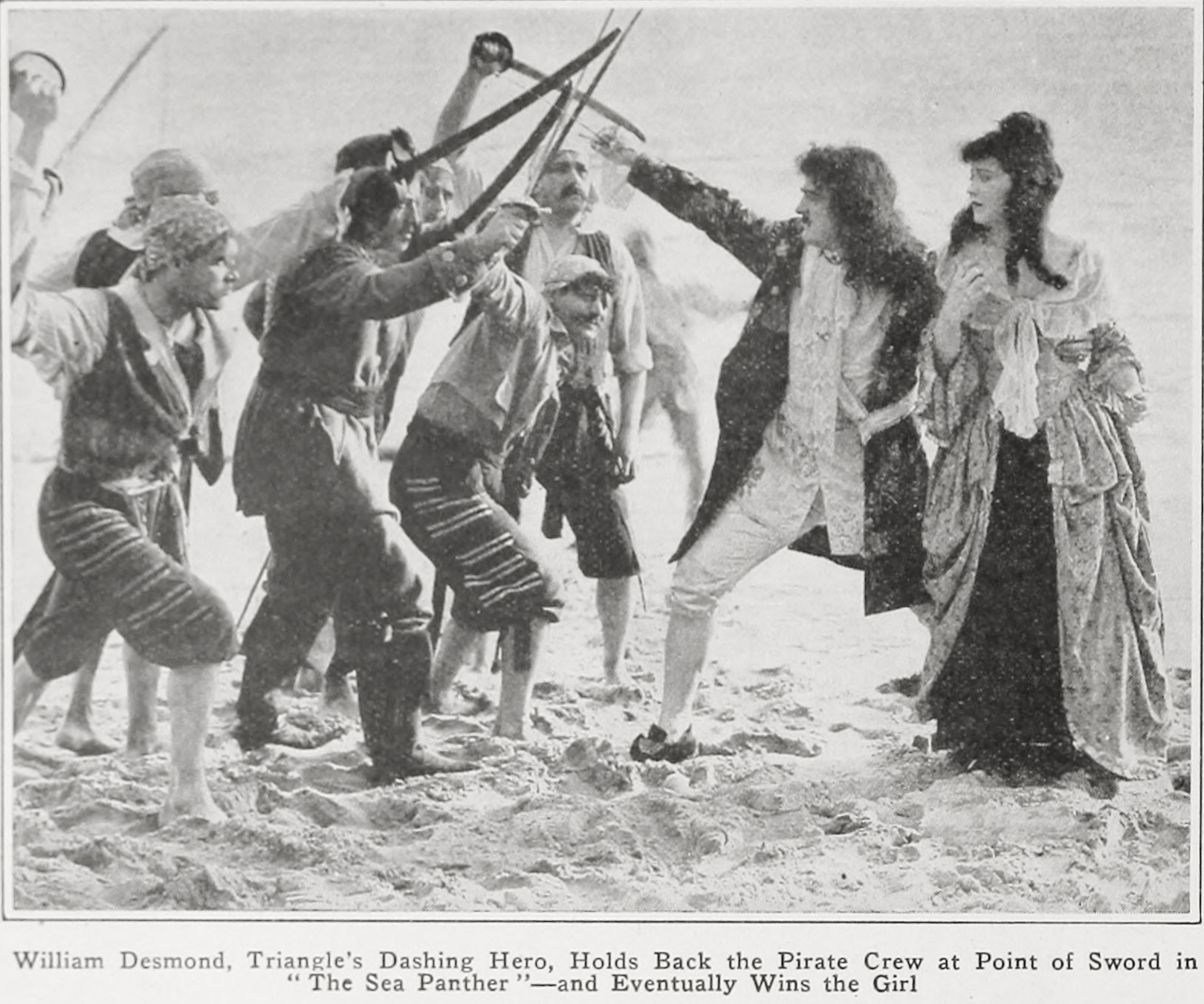
The tension within the household is palpable. Le Marsan’s 'iron hand' is constantly tested by his crew’s growing resentment. They see Molly not as a lady to be protected, but as a commodity to be exploited. In one of the film's most harrowing scenes, Le Marsan must literally draw his steel against his own men to maintain the sanctity of Molly’s presence. This act of defiance against his own power structure marks the beginning of his downfall. It is a narrative arc of self-sabotage that is far more nuanced than the simplistic moralizing often found in The Struggle.
William Desmond’s performance is a masterclass in silent-era histrionics tempered by a modern sensibility. His Le Marsan does not merely scowl; he projects a weary intelligence. There is a specific scene where he watches Molly from a distance, realizing that all the treasures of the Spanish Main cannot buy the genuine affection he craves. His eyes convey a profound sense of loss that predates the more overt sentimentality of Hoodoo Ann. Desmond manages to balance the physical demands of the swashbuckler—the leaping, the fencing, the commanding presence—with a vulnerability that makes his ultimate defeat feel earned rather than forced.
The supporting cast, including Jack Richardson and Arthur Millett, provides a necessary grit. They represent the entropy of the pirate life, the constant threat of mutiny that simmers beneath the surface. Their performances ensure that the stakes of Le Marsan’s chivalry are always high. If he fails to be a 'Panther,' he will be devoured by the wolves he leads. This dynamic is a sharp contrast to the more lighthearted social complications seen in Nearly Married, reminding the audience that in the seventeenth-century Caribbean, a lapse in authority is often fatal.
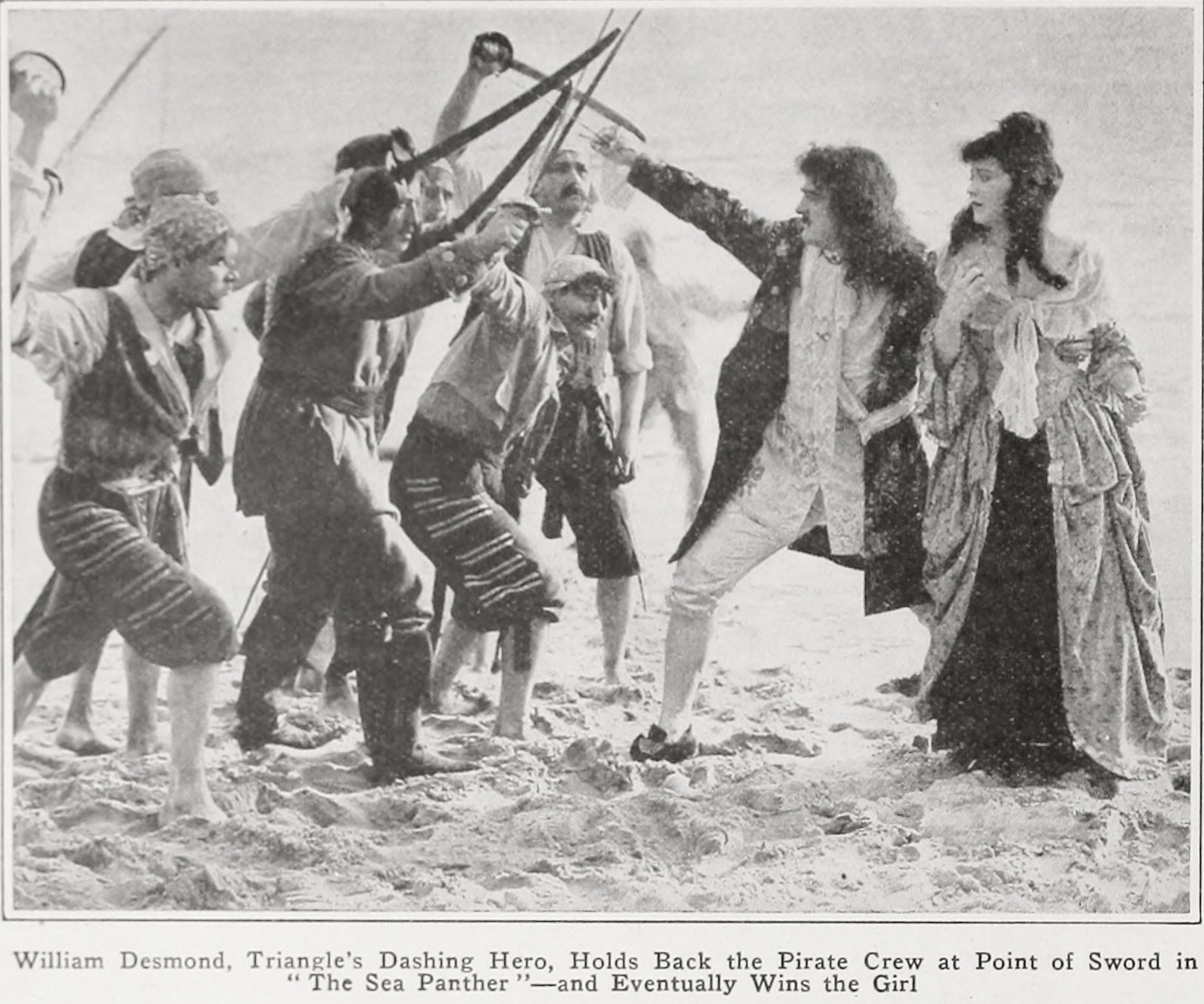
The third act of The Sea Panther shifts from a romantic drama to a high-stakes thriller. Le Marsan’s decision to personally escort Molly to the Carolinas is the catalyst for the crew’s rebellion. It is a moment of profound irony: his most noble act is the one that brands him a traitor to his men. The cinematography during the mutiny is chaotic and claustrophobic, utilizing the tight spaces of the Lady Devon to heighten the sense of peril. The imagery of the British reclaiming the ship while Le Marsan is shackled in irons is a powerful visual metaphor for the triumph of colonial order over individualistic anarchy.
However, the film’s true soul resides in the final interaction between Molly and Paul. Throughout the narrative, Molly has been the object of his protection, but in the end, she becomes the agent of his salvation. Her decision to secretly release him is not an endorsement of his lifestyle, but a recognition of his humanity. It is a moment of moral reciprocity that elevates the film above the standard 'damsel in distress' tropes. While a film like The Wolf Woman explores the destructive power of female agency, The Sea Panther presents a more redemptive vision of feminine influence.
In terms of production value, The Sea Panther punches well above its weight for a 1918 release. The use of natural light in the Bahamian sequences creates a sense of place that is often missing from contemporary studio-bound productions like The New South. The costumes, while perhaps slightly stylized for the era, convey the necessary distinctions of class and character—Le Marsan’s velvet coats contrasting sharply with the salt-stained rags of his crew. The editing, particularly during the naval skirmishes, shows a developing understanding of rhythmic pacing that would later become standard in the genre.
The screenplay by Kenneth B. Clarke deserves recognition for its restraint. It avoids the pitfalls of excessive intertitles, allowing the actors' physicality and the visual storytelling to carry the narrative weight. This 'show, don't tell' philosophy makes the film feel remarkably contemporary. It shares a certain thematic DNA with Up or Down?, as both films examine the moral trajectory of men pushed to the edge of societal norms. Yet, The Sea Panther is unique in its maritime setting and its focus on the 'gentleman pirate' archetype.
The final image of Le Marsan rowing away into the horizon, watched by the woman he could never truly possess, is one of the most haunting endings in early action cinema. It is a victory that feels like a defeat, and a defeat that contains a spark of moral victory. This ambiguity is what keeps The Sea Panther relevant over a century later. It does not offer the easy resolution of The Cup Winner or the clear-cut justice of $5,000 Reward. Instead, it leaves the viewer with a sense of the vast, indifferent ocean and the small, flickering flame of human decency that occasionally survives upon it.
In conclusion, The Sea Panther is more than just a swashbuckling romp. It is a sophisticated exploration of honor, unrequited love, and the cost of leadership. William Desmond delivers a career-defining performance that bridges the gap between the theatricality of the past and the psychological realism of the future. While it may lack the epic scale of D.W. Griffith’s Hearts of the World, it possesses a narrative focus and an emotional honesty that make it a hidden gem of the silent era. For those willing to look past the absence of sound, there is a rich, resonant story waiting to be discovered beneath the waves of history. It is a film that reminds us that even in the darkest corners of the world—among thieves and murderers—a certain light can still prevail, provided there is a captain brave enough to hold the torch.
Note: For those interested in the socio-political undercurrents of early 20th-century film, comparing the pirate hierarchy here to the political machinations in The Senator or the moral dilemmas in Shall We Forgive Her? offers a fascinating glimpse into the period's evolving ethics.
IMDb 5.7
1914
Community
Log in to comment.