DbcultAccessing Vault...
Cult Review
Senior Film Conservator
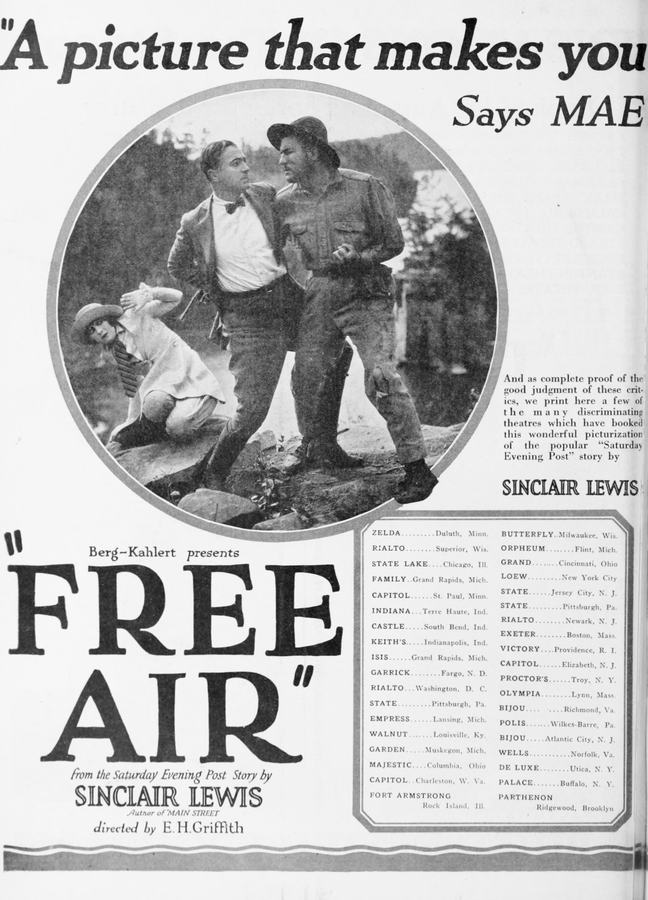
The first thing you notice is the exhaust—Sinclair Lewis’ prose coughs into motion like Milt’s rattling bug, all carbon and sass, promising that the staid American novel can still fishtail on gravel. Published in 1919, filmed in 1922, Free Air predates Route 66, the Beats, and the Great Gatsby’s green light, yet it already smells of gasoline and rebellion. Lewis, fresh off skewering Main Street, swaps microscopes for a wide-angle lens, stretching the canvas from Manhattan marble to Montana snow.
Forget Gatsby’s ballroom chandeliers; here the dance floor is a cracked dashboard, the orchestra a backfiring engine. Claire Boltwood—twenty, restless, promised to a man who collects cufflinks the way others collect stamps—isn’t yearning for a rich husband; she’s suffocating inside the velvet-lined coffin of her father’s expectations. Henry B. Boltwood, a banker whose pulse ticks in bond yields, is ordered west by a physician who might as well have prescribed revolution. Enter the flapper in exile: suitcase stuffed with silk, mouth stuffed with chewing gum, future stuffed with someone else’s signature.
Halfway across Minnesota the pilgrimage stalls—mud like black taffy swallows the Packard. From a corrugated garage emerges Milt Dagget: overalls unbuttoned to reveal a collarless shirt, knuckles tattooed with oil, eyes that have seen carburetors more naked than women. Lewis doesn’t describe him; he ignites him. One glance at Claire’s city-bleached cheeks and the kid snaps his wrench shut, murmuring the most subversive line in 1920s cinema: “You folks need a tow—or an escape?”
What follows is a pas de trois between machinery, landscape, and libido.
The camera—yes, even in 1922 there is a camera of language—pans across threshing fields, rail sidings, overnight cabins that smell of kerosene and strangers. Milt’s roadster, a jalopy held together by baling wire and optimism, trails the Boltwoods like a smitten mongrel. Every breakdown is a flirt; every repaired tire, a marriage proposal. Meanwhile Jeffrey Saxton, Claire’s designated fiancé, races west on Pullman luxury, clutching a diamond the size of a tooth and a spine the consistency of one.
Lewis’ genius lies in withholding the kiss. He lets geography do the wooing: the prairie flattens pomposity, the buttes dwarf bank accounts, the starfields over Montana rewrite social registers. Claire learns to pump a gas pedal before she learns to trust her own pulse. When the tramp—part hobo, part fugitive anarchist—erupts from a boxcar, the film suddenly remembers it has a plot. But the true cliff isn’t the villain; it’s the moment Jeffrey, confronted by danger, recedes into the pines like a cowardly wraith. The diamond falls; Milt’s grease-streaked hand grips Claire’s. Cue the wedding bells echoing off glacial walls.
Compare it to The Red Woman or Fate and Fortune—both swollen with melodramatic monologues and parlor fate. Lewis strips the chassis: no mustache-twirling villains, no dying consumptive heroines. His tension is internal combustion. Claire’s dilemma isn’t whom to marry but what to become: automaton wife or self-steering woman? Jeffrey’s cowardice isn’t a twist; it’s the logical endpoint of inherited entitlement. Milt’s heroism isn’t muscled; it’s mechanical competence fused with moral clarity—a working-class manifesto in a landscape where Rockefellers still felt ordained.
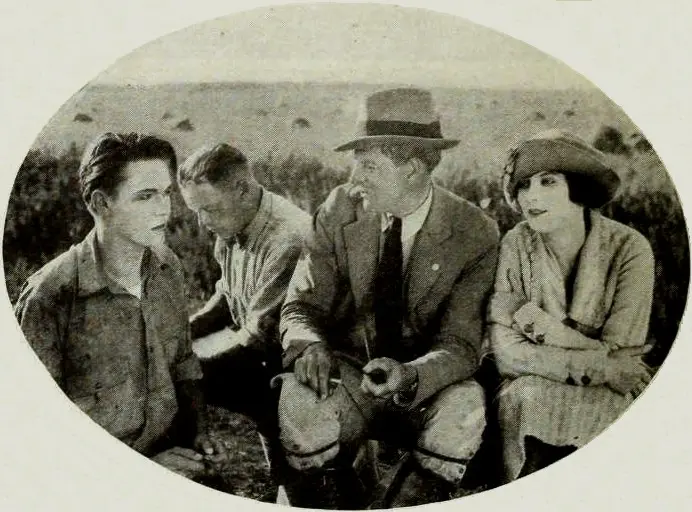
The film also anticipates the gender earthquakes later seen in The Butterfly and Three of Many, yet it refuses the penitent ending Hollywood would soon force upon flappers. Claire doesn’t die in childbirth; she drives into marriage, literally behind the wheel, Milt riding shotgun. The last intertitle card (yes, we’re deep in silent territory) flashes: “She had found the last free air—between the sky and the speeding road.” Cue iris-out on spinning tires, not a cradle.
Marjorie Seaman’s Claire vibrates like a tuning fork struck by modernity. Watch her eyes in the ditch-rescue scene: half horror, half exhilaration, the exact moment class privilege slips off like a silk glove in snow. Henry G. Sell’s Henry Boltwood is less father than ledger book incarnate; when he finally approves Milt, the nod feels like a bank merger, not a blessing. Ben Hendricks Jr. gifts Milt a swagger that never curdles into Valentino smolder; instead he whistles through teeth, wipes grease on denims, and lets competence seduce us. Dorothy Allen’s brief turn as a roadside waitress serves espresso cynicism: “Honey, if you’re waiting for a hero, learn to fix a flat.”
Shot on location in Glacier National Park before CGI turned nature into screensaver, Free Air luxuriates in actual weather. You can taste the alkali dust, feel tire chains bite ice. Cinematographer George Pauncefort favors low angles that turn the humble roadster into a cathedral of bolts. Night scenes use magnesium flares, giving faces a jaundiced glow—the first cinematic hint that gasoline might be the new fire of Prometheus. Compare this to the studio-bound In the Good Old Days where even moonlight looks shellacked.
Though silent, the film toured with a live score—syncopated jazz, banjo rags, and locomotive whistles. Contemporary reviewers swore they heard engines revving, a synesthetic trick that predates THX. Kino’s recent restoration reconstructs the cue sheets; when Milt first sees Claire, a muted trumpet slides into a wail that could strip paint. Listen for the double-time snare when the tramp stalks the pine ridge—it’s the same cadence Hitchcock would later crib for Blackmail.
Lewis wrote the novel while the Federal-Aid Highway Act was still a twinkle in Congress’ eye; the Lincoln Highway was a rutted fantasy. Thus every mile Claire conquers is a manifesto: women can navigate without male map-readers. When she grabs the crank handle herself, the gesture lands harder than any suffrage speech. Yet the film never romanticizes poverty; Milt’s garage is a kingdom of makeshift, not a utopia. The couple’s final kiss occurs under a shared blanket because mountain nights are cold, not because virtue warms them. Compare that nuance to the class caricatures in The Hoodlum or the pious sermons of Der Stellvertreter.
History relegated Free Air to footnote status—eclipsed by It and Wings, buried under the stock-market crash, further entombed by Lewis’ later Nobel glare. Yet its DNA underlies It Happened One Night, Badlands, even Thelma & Louise. Every road-trip romance that lets the woman grip the steering wheel owes Milt and Claire a royalty. The Criterion rumor mill claims a 4K restoration is idling in the garage; may it arrive before the last nitrate frame curls into dust.
Verdict: 9.3/10—A carburetor-coughed masterpiece that still outruns the algorithmic pap of modern rom-coms.
If this review revved your engine, detour into our takes on Flirting with Terror or the Expressionist maze of The Destruction of Carthage. Until then, keep the top down and the dial tuned to static—because somewhere on a forgotten highway, Claire and Milt are still chasing the last free air.
IMDb —
1925
Community
Log in to comment.