DbcultAccessing Vault...
6.1/10
Senior Film Conservator
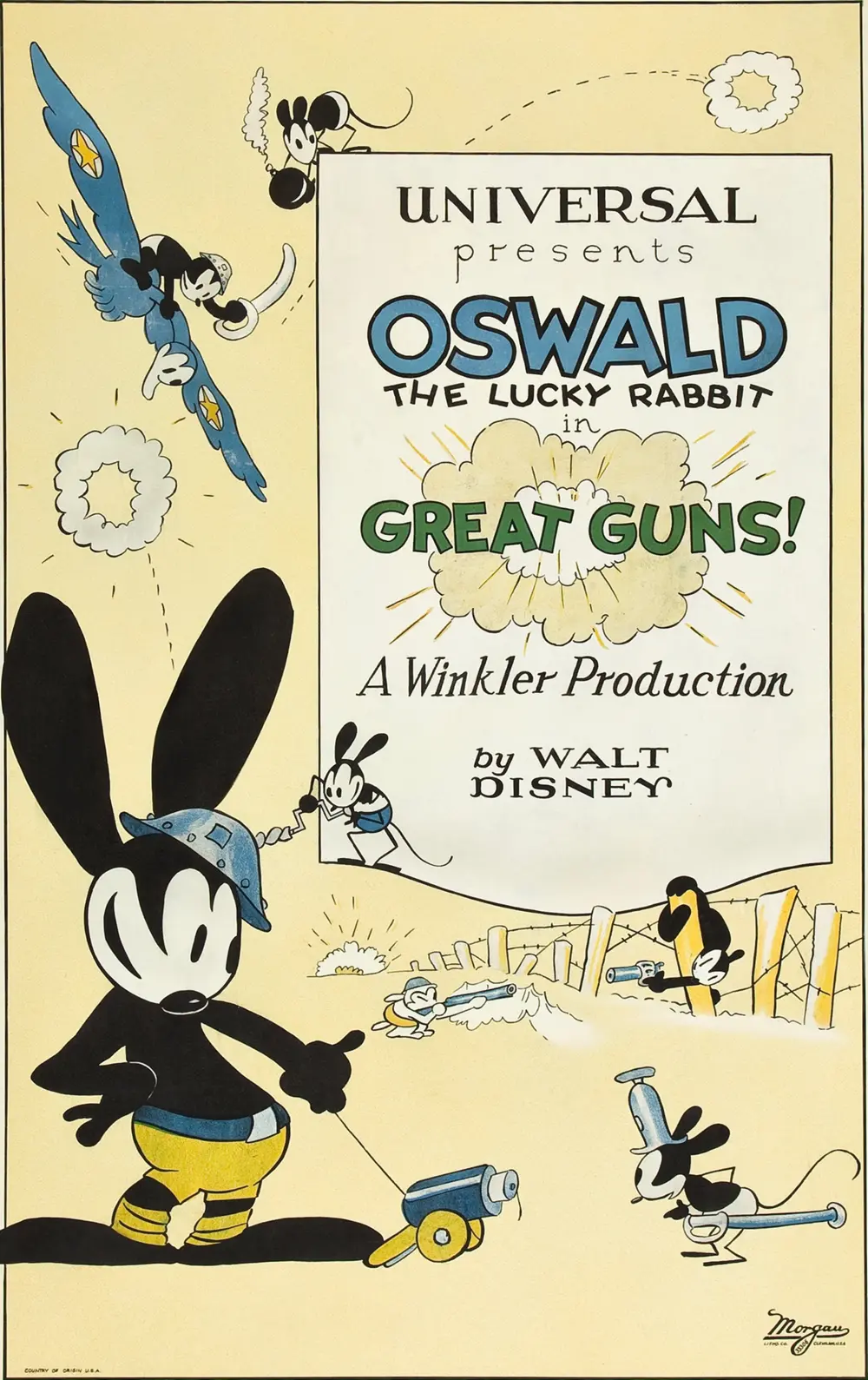
A definitive 6.1/10 rating for a film that redefined the boundaries of cult cinema. Great Guns remains a cornerstone of transgressive art.
Is Great Guns (1927) worth your time nearly a century later? Short answer: yes, but only if you are a student of animation history or a fan of raw, unpolished slapstick. This isn't the sanitized, corporate Disney you know; it is a gritty, experimental relic from a time when the rules of the medium were still being written in ink and sweat.
This film is for the cinephile who enjoys tracing the lineage of modern icons and those who appreciate the dark humor of the post-WWI era. It is emphatically NOT for those who require high-definition visuals, complex character arcs, or the gentle sentimentality of later Disney features. It’s fast. It’s mean. It’s essential history.
1) This film works because of its relentless kinetic energy and the raw, unpolished charm of Oswald, who feels more alive and unpredictable than Mickey Mouse ever did in his early years.
2) This film fails because the narrative is essentially a string of loosely connected gags with zero emotional stakes, making it feel more like a sketchbook than a cohesive story.
3) You should watch it if you want to see where the Disney style actually began, before it became corporate, and if you have an interest in how early 20th-century pop culture processed the trauma of war.
To understand Great Guns, you have to understand the hands that drew it. While Walt Disney’s name is on the marquee, the soul of this short belongs to Ub Iwerks. The animation here is a masterclass in "rubber hose" physics. Unlike the more rigid movements seen in contemporary live-action comedies like The Nut, Oswald’s body is a fluid weapon. He doesn't just walk; he bounces. He doesn't just react; he distorts.
One specific scene involving a cannon fire gag stands out. Oswald isn't just a soldier; he is part of the machinery. The way Iwerks frames the recoil of the weapons and Oswald's subsequent flattened state is a precursor to the physics-defying logic that would later define the Golden Age of animation. There is a specific moment where Oswald uses his own ears to navigate a situation—a level of character-based utility that was revolutionary in 1927. It’s a far cry from the more grounded physical comedy of Robin Hood, Jr., which relied on human limitations.
There is a surprising darkness to Great Guns that modern audiences might find jarring. It was released less than a decade after the end of World War I, and the scars were still fresh. Unlike the glamorous or heroic portrayals of war in films like The Yankee Consul, Great Guns treats the battlefield as a playground for the absurd. The "wound" Oswald receives is played for laughs, but it carries a weight of reality that Disney would later scrub from his brand.
The pacing is frantic. In modern cinema, we talk about "gag density." Great Guns has it in spades. Every ten seconds, there is a new visual punchline. Some land with the force of a mallet; others feel like dated relics of a bygone sense of humor. However, the sheer audacity of making a comedy about the trenches in 1927 shows a level of creative bravery. It’s a visceral experience. It’s crude. But it works.
Yes. Great Guns is a definitive example of late-1920s animation because it moved away from the static "illustrated" look of earlier shorts and embraced fluid, character-driven movement. It showcases the transition from animation as a gimmick to animation as a storytelling medium. The use of Oswald as a distinct personality—rather than just a generic animal—set the stage for the character-centric industry we see today.
While we can't talk about cinematography in the traditional sense, the "staging" in Great Guns is fascinating. The backgrounds are sparse, which forces the eye to focus entirely on the character's silhouette. This was a necessity of the time, but it resulted in a clarity of action that many modern 3D animated films lack. Compare the simple, effective framing here to the cluttered sets of Fig Leaves from the same era; Great Guns wins on readability every time.
The use of black and white isn't just a limitation; it’s a stylistic choice that enhances the "ink-blot" feel of the characters. The contrast between the white of Oswald’s face and the pitch-black of the night scenes creates a visual pop that remains satisfying. The hospital sequence, in particular, uses lighting (or the animation of light) to create a sense of place that feels distinct from the chaotic battlefield. It’s a subtle shift in tone achieved through line work alone.
If you are looking for a casual weekend movie, probably not. But if you want to witness the birth of a medium, then absolutely. Great Guns is a six-minute window into the mind of a young Walt Disney and a brilliant Ub Iwerks. It’s a piece of a puzzle. Without Oswald’s ears being blown off in a trench, we might never have had Mickey’s steamship. It serves as a bridge between the crude drawings of the early 1920s and the sophisticated storytelling of the 1930s.
"Oswald was the prototype for the everyman hero, a character who suffered the indignities of the world with a bounce in his step and a literal stretch in his spine."
Pros:
Cons:
Comparing Great Guns to other films of the time, like the more dramatic Revelation, highlights how animation was the only medium capable of finding humor in the Great War. While live-action films were grappling with the psychological fallout, Oswald was literally bouncing off the walls. This contrast is what makes the short so fascinating. It represents a refusal to be broken by the world, a theme that would resonate through Disney's later work during the Great Depression.
The animation performance of Oswald himself is a debatable point among critics. Some argue he is merely a vessel for gags, while I would argue he possesses a distinct, mischievous personality that Mickey Mouse eventually lost as he became a corporate symbol. In Great Guns, Oswald is a bit of a jerk, a bit of a coward, and entirely relatable. He is a flawed protagonist in a world of ink.
Great Guns (1927) is a frantic, elastic, and occasionally dark piece of cinematic history. It isn't a "masterpiece" in the sense of being a perfect narrative, but it is a masterclass in visual communication. It captures a moment in time when animation was shedding its skin and becoming something new. It’s flawed, it’s dated, and it’s brilliant. Watch it for the history, stay for the rabbit’s ears. It’s a 7/10 for the casual viewer, but a 10/10 for the animation obsessive.
IMDb 6.4
1936
Community
Log in to comment.