DbcultAccessing Vault...
Cult Review
Senior Film Conservator
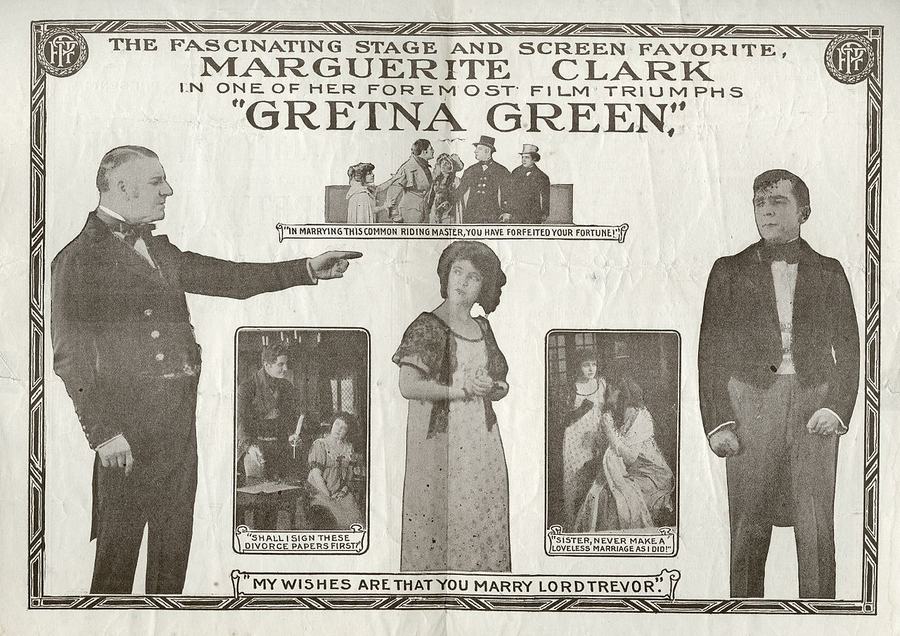
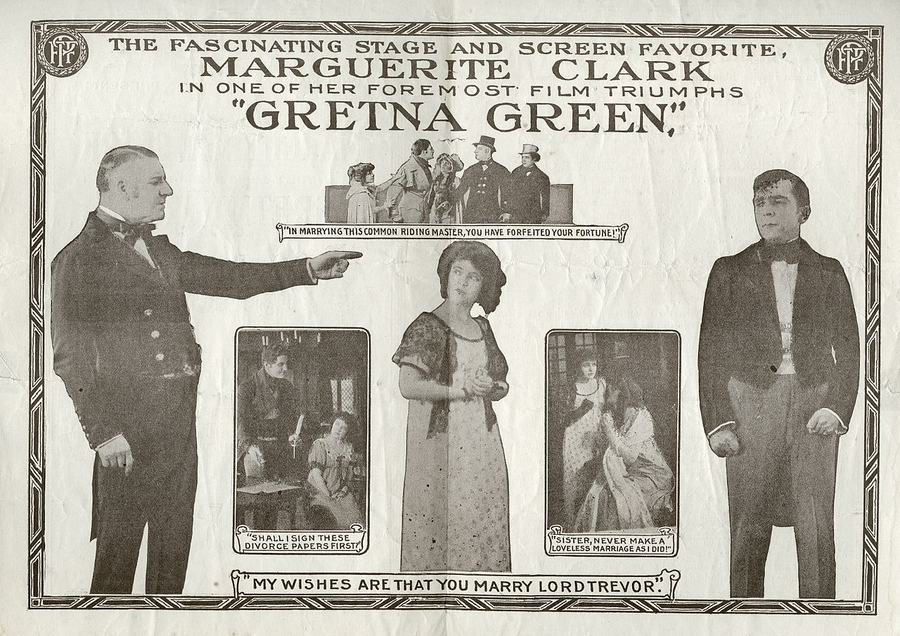
The reel unwinds like peat smoke—grey, aromatic, impossible to bottle—depositing us on a moon-mottled road where carriages squeal and lovers sprint toward the anvil’s clang. Gretna Green (1915) is less a story than a fevered passport stamp, a celluloid affidavit declaring that desire, when cornered, will always choose the border town over the ballroom.
Director Thomas N. Heffron, moonlighting from his usual Paramount fare, treats the Scottish border village as both cathedral and casino. Every close-up tilts toward reverence; every iris shot feels like a wink. The film’s DNA splices the reverent tableaux of Life and Passion of Christ with the frantic elopement mechanics found in Under the Gaslight, yet it refuses to genuflect to either.
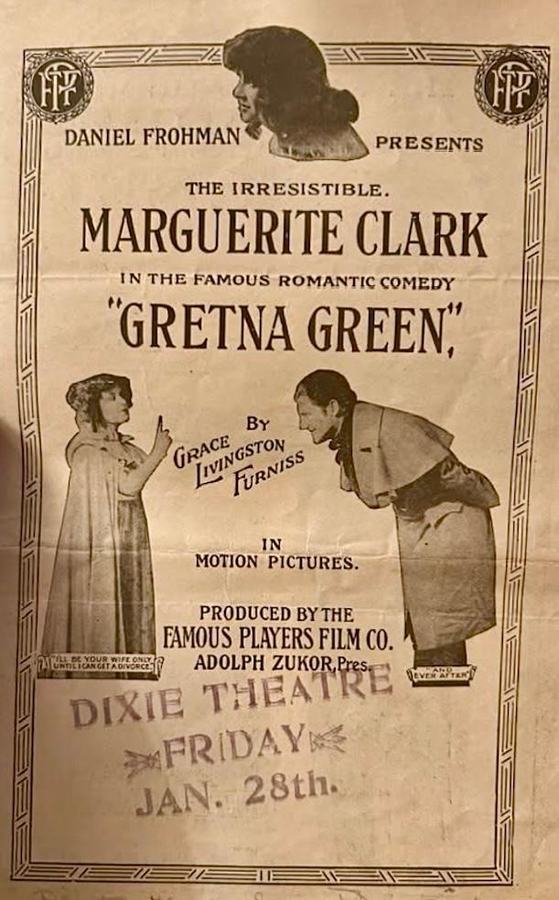
Heffron’s camera stalks Lyster Chambers and Helen Lutrell through cobblestone arteries where shadows drip like candle wax. Chambers, essaying the debt-ridden musician Evelyn Heath, possesses the hollow-cheeked magnetism of a man who has already sold his tomorrow for a violin string. Lutrell’s heiress, Moira Garnett, arrives swaddled in couture that seems embarrassed by the mud; her eyes, wide as communion wafers, suggest both trespass and pilgrimage. Their first shared frame—Moira’s glove sliding across Evelyn’s palm as she offers her last gold coin—ignites the film’s thesis: marriage as economic sabotage.
The screenplay, adapted by Grace Livingston Furniss from a now-lost novelette, distills three centuries of borderland legend into a breathless forty-two minutes. It is silent-era alchemy: letters burn, fathers rage, and the blacksmith’s forge becomes a secular confessional where sins are hammered into horseshoes.
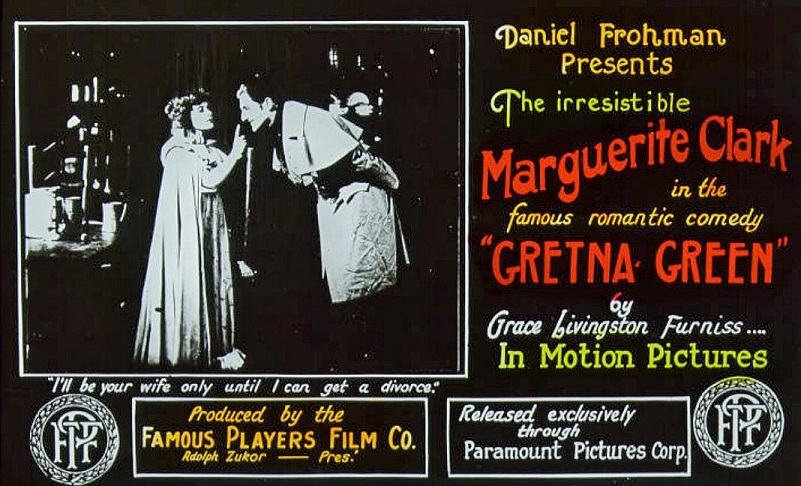
Cinematographer J. Albert Hall shoots Gretna’s night like a Caravaggio in motion: faces emerge from tenebrous voids, backlit by the forge’s ember-glow, then recede into obsidian. The anvil itself—an ugly, practical slab—glowers center-frame, a pagan monolith. Compare this to the airy, fairy-tale pastels of the 1915 Alice in Wonderland; here, wonder is traded for wager, and the rabbit hole is a two-shilling toll road.
Intertitles, lettered in a font that mimics wrought iron, drop like subpoenas: “The law of man ends at the Sark; the law of longing begins.” Such lines flirt with purple prose, yet they land because the images that flank them are so mercilessly concrete—mud on hems, frost on breath, the squeak of a signet ring pried off for hock money.
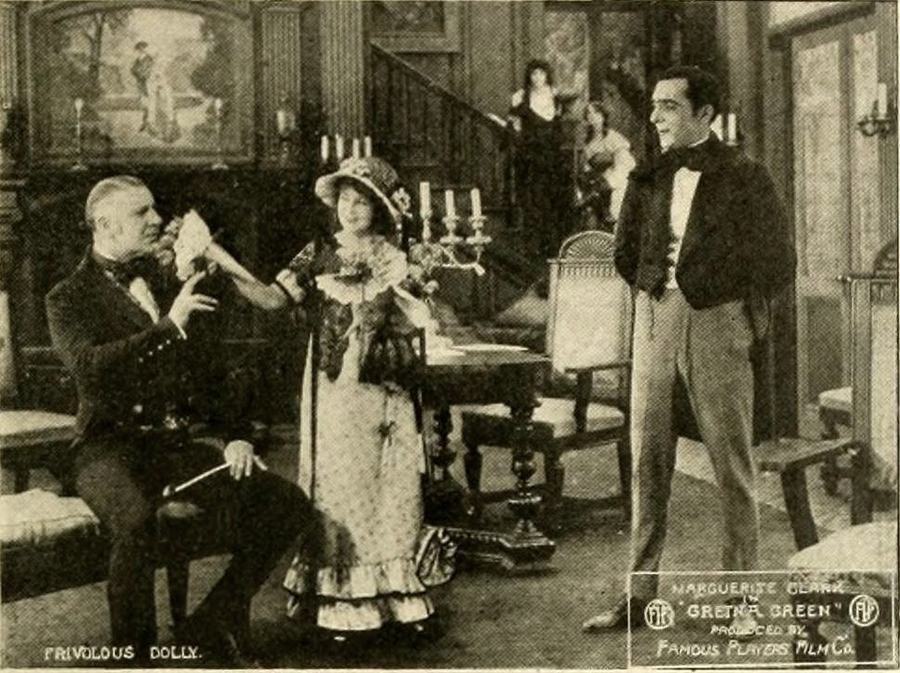
John Merkyl, as Moira’s pursuing uncle, brandishes a walking stick like a scepter of ruined dignity; his moustache alone deserves separate billing. In one bravura tableau, he pauses outside the forge window, hearing the marriage pronouncement, and the frost on the glass writes despair across his face more legibly than any title card. Meanwhile, Marguerite Clark cameos as a pixie-like witness who sells posies to nervous brides; her smile, caught in flickering nitrate, feels like the last butterfly before winter.
But the film’s pulse rests on Lutrell. Watch the moment she lifts her veil: the lace trembles like a moth caught between two weathers. She does not act; she consents to be devoured by the lens. Silent-film acting often ages into mime; Lutrell’s work, mercifully, calcifies into icon.
Modern viewers supplied a DIY soundtrack might reach for Debussy; I recommend field recordings of actual forges. The narrative’s tension coils around industrial rhythm—hammer, bellows, the hiss of hot iron dunked into water. When the final ring is slipped on, the silence that follows feels like a smithy abruptly abandoned, tools still warm.
While Should a Woman Tell? debates female confession, Gretna Green stages female escape. Moira’s purse funds the entire elopement; her dowry becomes both passport and ransom. The film flirts with proto-feminist semaphore yet stops short of revolution—after all, she still needs a husband’s signature to void her father’s contract. Still, in 1915, showing a woman bargaining away her inheritance for bodily autonomy felt like setting off fireworks inside a cathedral.
Where The Devil wallows in moral decay and The Wolf stalks predatory masculinity, Gretna Green prefers the gamble to the gallows. Its DNA resurfaces decades later in It Happened One Night and every road-movie romance that prizes locomotion over altar. Yet few descendants retain this film’s Calvinist dread: the notion that love, once legalized, may cool to the temperature of the ring on your finger.
The print housed at Eye Filmmuseum, Amsterdam, bears scorch marks—presumably from a projector fire in 1921—creating accidental flash-forwards that devour entire courtship beats. Rather than mourn the loss, accept it as historical ellipsis: love consumed by its own heat. Digital restoration tinted night scenes with sea-blue, dawn with amber, forging a chiaroscuro worthy of Rembrandt’s The Jewish Bride—if the bride had only five hours to outrun her pedigree.
Gretna Green will not deliver the catharsis of The Battle of Love nor the theological vertigo of 'Tween Heaven and Earth. Instead it gifts the brittle ecstasy of a contract signed in haste, sealed by sweat, and witnessed by the indifferent clang of iron on iron. Watch it when you crave a romance that smells of coal smoke rather than roses; watch it when you suspect that every promise is merely a dare dressed in Sunday clothes.
Stream the 4K restoration on Eye Filmmuseum’s digital suite or catch a rare 35mm screening at Scotland’s Borders Archive each October. Bring someone you’re not supposed to.
IMDb —
1919
Community
Log in to comment.