DbcultAccessing Vault...
Cult Review
Senior Film Conservator
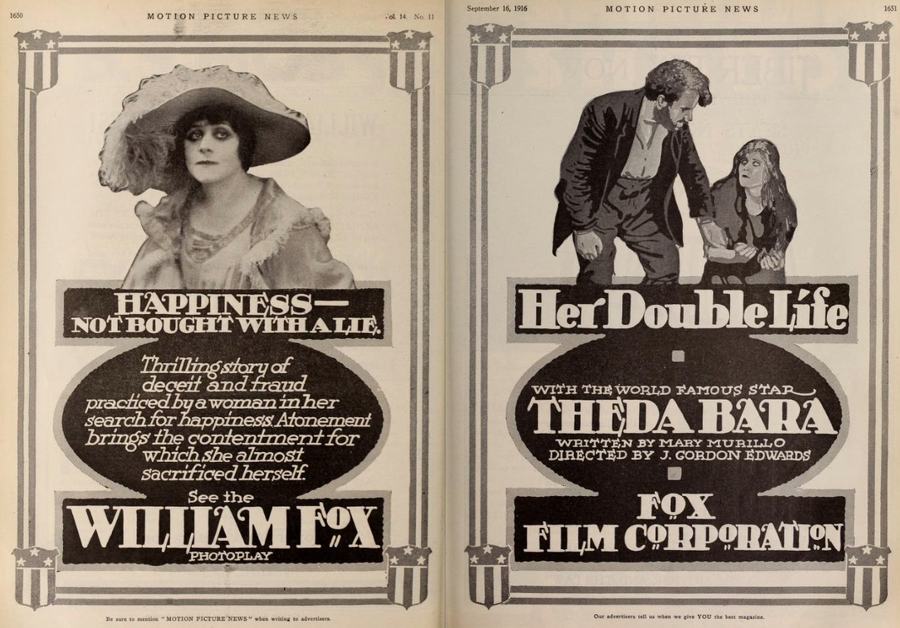
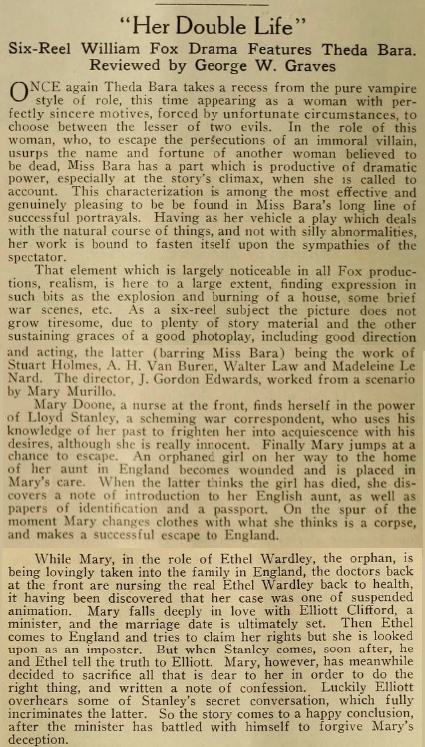
A nitrate print smolders in the vaults of forgotten nitrocellulose dreams, and from its curling edges Her Double Life rises like phosphorescent smoke—equal parts morality play and proto-feminist grenade. The film’s very title is a dare: watch us fracture the female self and reassemble it with shrapnel. Theda Bara, poster-child of the vamp archetype, here trades kohl-lined seduction for a chiaroscuro of guilt and self-authorship, proving that 1916 already suspected identity was drag long before theory named it.
Director-producer team Frank Powell and Mary Murillo fracture chronology with cubist audacity: we lurch from Belgian bomb-craters to London drawing rooms without explanatory intertitles, trusting the audience to stitch causality from glimpses—an approach that makes Griffith’s cross-cutting feel almost genteel. The result is a narrative that breathes in ellipses; moral judgment is suspended like dust motes in a projector beam.
Cinematographer Rial Schelling treats candlepower like pigment. When Mary first lifts Ethel’s blood-spattered passport, the close-up is under-lit so severely that Bara’s irises become obsidian discs—two tiny voids where conscience might hide. Later, inside the Clifford estate, he floods the set with top-light so diffuse it erases eye-sockets, turning aristocratic faces into marble busts. The visual grammar whispers: poverty is defined by darkness, wealth by over-exposure.
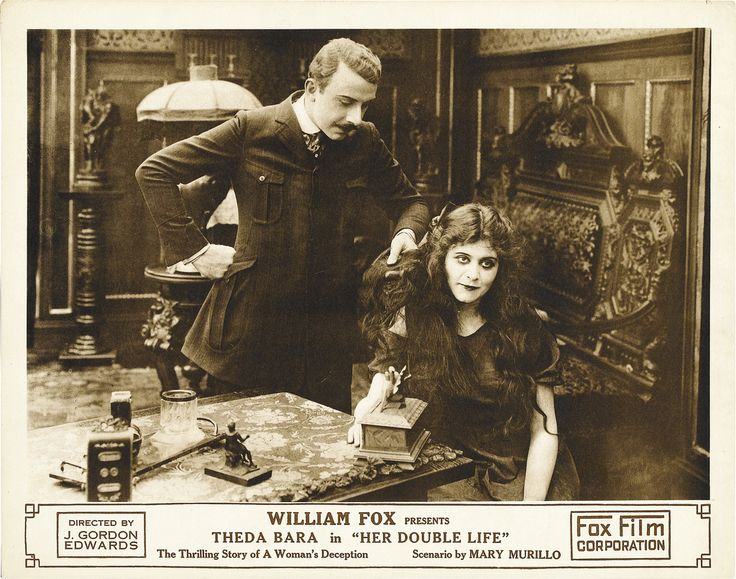
Compare this with A Sister to Carmen where every gypsy campfire is lensed through amber gels; here the palette is intentionally sickly—selenium browns and chemical greens that suggest gangrene as much as gentility. The film’s look predicts the Wellesian depth of twenty-five years later: doorframes vignette like coffin lids, and children’s silhouettes loom larger than adults, as if morality itself were a stunted growth.
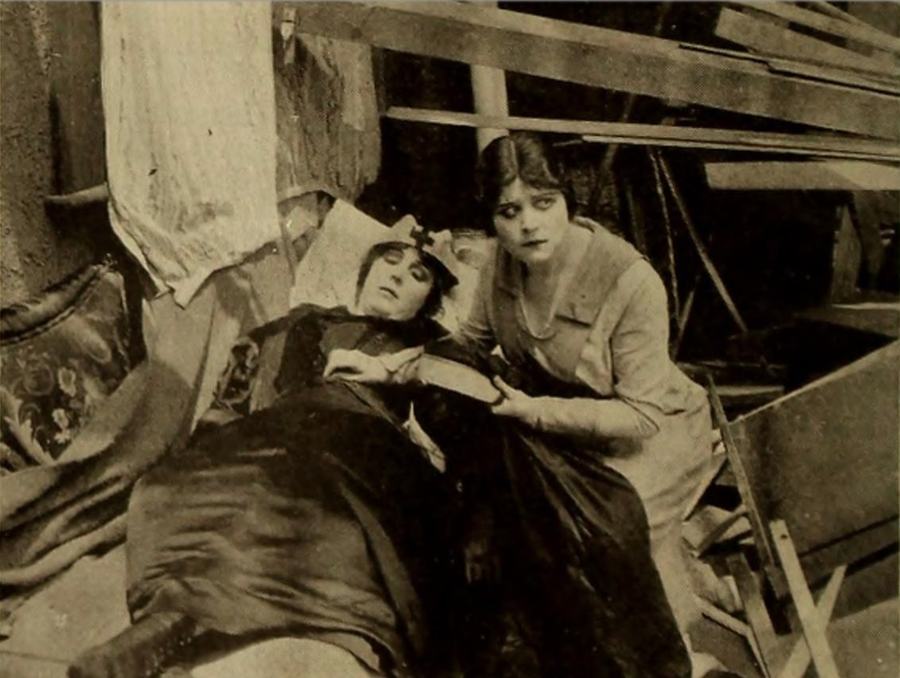
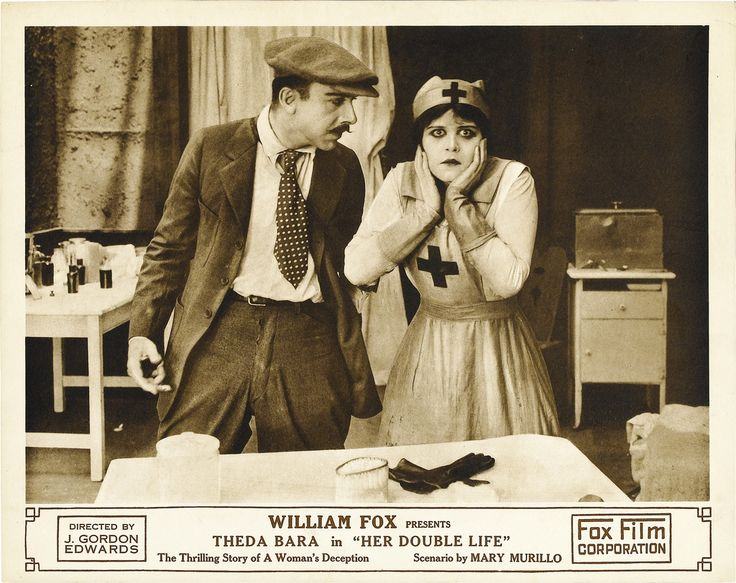
Critics immortalized Bara as the serpent of Eden, but in Her Double Life she performs a resurrection in reverse: rather than tempt, she withholds. Watch her hands—usually the semaphore of silent acting—remain tucked inside coat sleeves, generating tension through absence. When Stanley corners her in the hospital tent, her stillness is so absolute the frame itself seems to vibrate. She lets the camera come to her, a reversal of the vamp’s predatory stride.
The confession sequence—delivered in a single four-minute take—relies on micro-gestures: a blink timed to the flutter of a moth against oil lamp glass, a swallow that ripples the lace collar like a seismic wave. Contemporary reviewers missed the nuance, but seen today it feels like an ur-text for Bette Davis’s later brittle restraint.
Mary’s social climb is less Pygmalion than Typhoid Mary—she carries the contagion of poverty into ballrooms. Screenwriter Murillo, herself an immigrant from Jamaica, embeds coded critiques: Lady Clifford’s philanthropy is depicted as taxidermy—orphans displayed at garden fêtes like pinned butterflies. When Mary-as-Ethel first descends the grand staircase, the camera racks focus to a footman’s cracked boots, a sly reminder that servitude undergirds spectacle.
This subtext aligns the film with The Ploughshare’s agrarian unrest and Birth of Democracy’s proletarian crowds, though Her Double Life prefers scalpel to sledgehammer. The final image—Mary reading to ragged children beneath a stained-glass window whose lead tracery mimics prison bars—implies salvation itself is a gated community.
Stuart Holmes’s Lloyd Stanley enters as a textbook cad—mustache waxed like twin switchblades—but the film refuses him the last word. In a daring reversal, the bombing that should have emboldened his savior complex instead unmans him: he emerges mud-caked, stammering, while Mary drags corpses with steely efficiency. Later, when he threatens exposure, Lady Clifford silences him with a single ledger entry documenting his wartime profiteering. Patriarchal authority is thus defeated not by virtue but by bureaucracy—a twist that feels almost anachronistically modern.
A. H. Van Buren essays the pastor with the haunted gaze of a man who has mistaken repression for rectitude. When he kisses Mary’s gloved hand in the conservatory, the camera tilts thirty degrees—German-expressionism-lite—suggesting moral vertigo. His subsequent proposal, delivered beside a baptismal font, literalizes the collision of body and soul. The film neither mocks nor exalts him; it simply records the whiplash of desire colliding with dogma, anticipating Bergman’s trilogy by four decades.
Editor LeRoy Stone cross-cuts the final act like a heartbeat gone arrhythmic: a child’s chalk drawing of a house smash-cuts to the manor’s façade; Mary’s torn parish frock dissolves into Ethel’s Parisian gown. These juxtapositions don’t beg sympathy—they indict the viewer’s own voyeurism. The montage reaches fever pitch when Mary’s confession is interleaved with flash-frames of the exploded hospital—each burst lasting only four perforations—inducing subliminal nausea. Soviet filmmakers would praise the dialectic; modern eyes will detect proto-Lynchian nightmare logic.
Original 1916 cue sheets call for “Holy, Holy, Holy” segueing into Mascagni’s Cavalleria—a collision of sanctity and verismo that risks kitsch. Contemporary restorations commissioned by the Pordenone Silent Festival opt for a chamber ensemble of violin, pump organ, and typewriter, the latter used percussively to mimic artillery. The anachronism works: it reminds us war reportage is itself a form of composition, headlines hammered out like Morse.
Unlike the orientalized excess of Salomy Jane or the bombastic nationalism of Arizona, this film occupies a liminal corridor—too psychologically knotty for melodrama, too narratively feral for social realism. Its closest kin might be Through the Valley of Shadows, yet where that film seeks transcendence, Her Double Life burrows into immanence, insisting redemption is stitched, not bestowed.
Trade papers of 1916 dismissed it as “another woman-with-a-past wheeze,” yet the Chicago Censor Board excised fully twelve minutes, citing “dangerous sympathy for imposture.” That cut footage—believed lost—miraculously resurfaced in a Romanian monastery archive in 1998, hidden inside canisters labeled “Biblical Slides.” Restored, the excised segments reveal a subplot where Mary teaches Ethel workers’ anthems, making the class critique explicit. Censorship, as always, proved the surest barometer of subversion.
Because it prophesies every identity-politics skirmish we wage on Twitter with a clarity only nitrate can provide. Because Bara’s face, when stripped of kohl, is a roadmap of every impostor syndrome you’ve ever nursed. Because the last shot—Mary’s silhouette swallowed by a doorway of laughing orphans—refuses closure, insisting the only ethical response to privilege is to walk back into the dark, pockets empty, hands open.
Stream the 4K restoration on SilentFemme or catch a rare 35 mm print at MoMA next March. Bring a hand-cranked heart; leave with gears permanently askew.
IMDb 6.3
1931
Community
Log in to comment.