DbcultAccessing Vault...
Cult Review
Senior Film Conservator
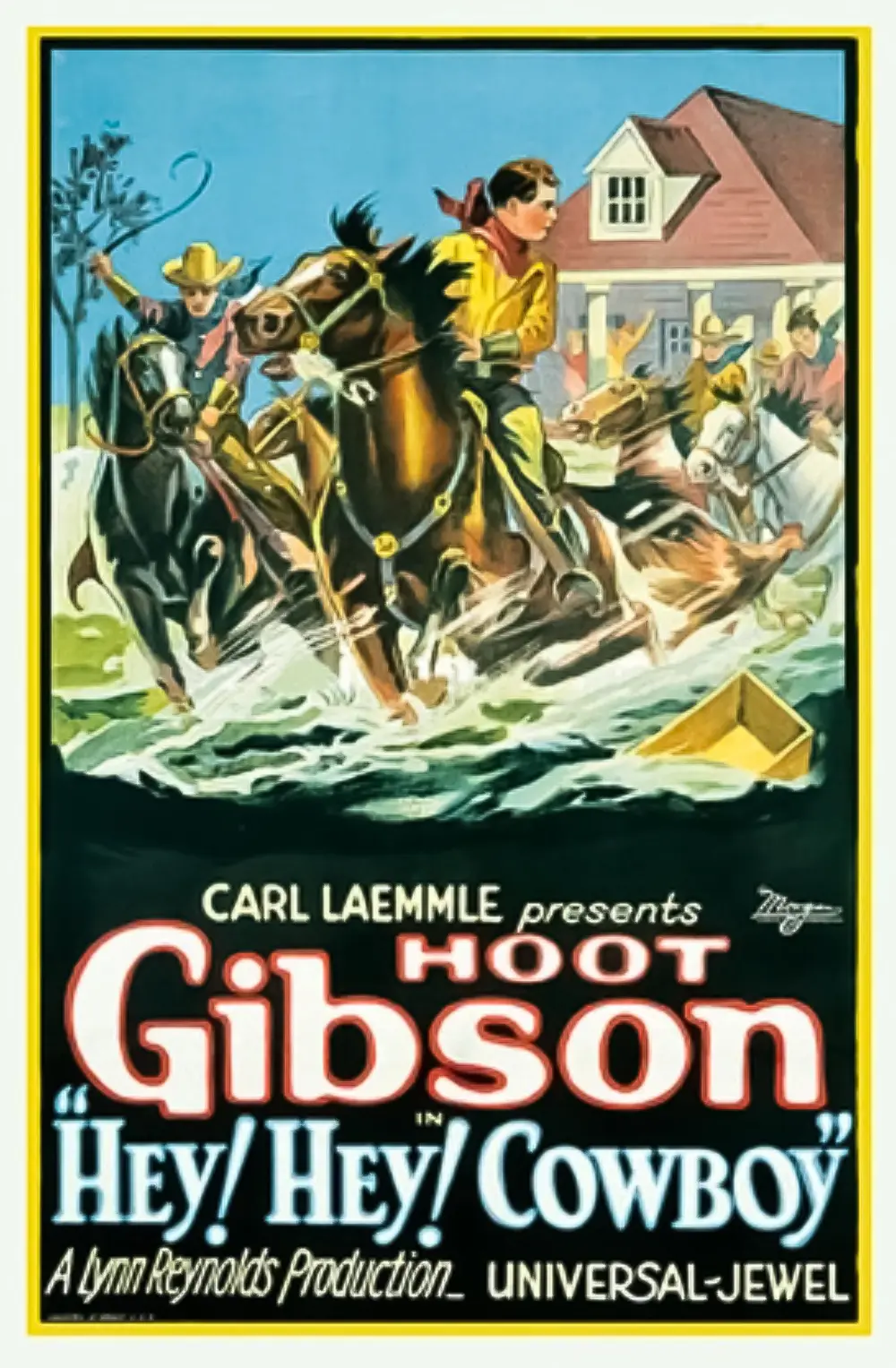
Is Hey! Hey! Cowboy a relic worth unearthing for the modern viewer? Short answer: yes, but only if you value character charisma over high-octane gunfights.
This film is specifically for those who enjoy the lighter side of silent cinema and want to see how the Western genre functioned before it became obsessed with gritty realism. It is definitely NOT for viewers who require fast-paced action or a complex, dark narrative to stay engaged.
1) This film works because Hoot Gibson’s "everyman" persona breaks the stoic cowboy mold, providing a level of relatability that was rare in 1927.
2) This film fails because the antagonist's motivations are thin even by the standards of the era, making the central conflict feel somewhat mechanical.
3) You should watch it if you want to see the DNA of the modern action-comedy, where humor is just as important as the hero’s mission.
Hoot Gibson was never the archetypal rugged frontiersman. He didn't have the steely gaze of William S. Hart or the athletic intensity of Tom Mix. Instead, he brought a sense of playfulness to the screen that was revolutionary. In Hey! Hey! Cowboy, Gibson’s performance as Jimmie Cardwell is a masterclass in subtlety. Take, for instance, the scene where he first encounters the ranch hands. Instead of reaching for a holster, he adjusts his hat and offers a smirk. It is a small gesture, but it defines the character. He is a man who is comfortable in his own skin, and that confidence is infectious.
This approach to the Western hero is what keeps the film fresh. While other films from the same period, like Revenge, leaned heavily into the melodrama of the frontier, Gibson opted for a more grounded, human touch. He makes the audience feel like they could actually sit down and have a conversation with him. His performance isn't about being a legend; it's about being a guy who is trying to do the right thing while having a bit of fun along the way.
His comedic timing is particularly sharp. There is a moment midway through the film where Cardwell has to evade a group of pursuers. Rather than a high-speed chase, he uses a series of clever misdirections and physical gags that feel more like something out of Tramp, Tramp, Tramp the Boys Are Marching than a traditional oater. It works. But it’s flawed in its simplicity.
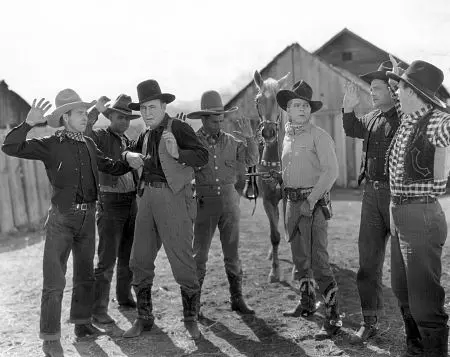
Lynn Reynolds, who both wrote and directed the film, understood the importance of rhythm. The pacing of Hey! Hey! Cowboy is brisk, avoiding the sluggish middle acts that plague many silent features. Reynolds uses the landscape of the ranch not just as a backdrop, but as a functional part of the storytelling. The way the camera captures the wide-open spaces of the valley creates a sense of freedom that mirrors Cardwell’s own spirit.
There is a specific shot where the villain, played by Wheeler Oakman, is framed through the slats of a ranch gate. It’s a simple visual metaphor for his trapped, narrow-minded perspective compared to Gibson’s open-air presence. This kind of visual storytelling is what separates a professional production from a standard B-movie. It reminds me of the atmospheric work seen in Der Berg des Schicksals, albeit with a much lighter heart.
The cinematography doesn't try to be overly ambitious. It stays focused on the actors. Reynolds knows that his biggest asset is Gibson’s face. The close-ups are used sparingly but effectively, usually to highlight a moment of realization or a bit of dry humor. This focus on character over spectacle is a refreshing change of pace from the heavy-handedness of films like The Devil's Circus.
Yes, Hey! Hey! Cowboy is worth watching for anyone interested in the evolution of the Western genre. It offers a unique look at a time when the genre was still finding its voice. The film prioritizes wit and character over violence, making it a pleasant and engaging experience even for those who aren't typically fans of silent movies.
It serves as a perfect entry point for viewers who want to explore the work of Hoot Gibson. His performance is timeless, and the film’s humor translates surprisingly well to a modern audience. It isn't a deep philosophical exploration of the human condition, but it doesn't try to be. It is honest entertainment.
Pros: The film is genuinely funny. Gibson’s charisma carries every scene. The pacing is tight, and the runtime is perfect for the story being told. It avoids many of the tired clichés of the era, such as the overly dramatic "damsel in distress" trope, giving Kathleen Key a bit more to do than just scream.
Cons: The plot is predictable. If you’ve seen more than three Westerns, you know exactly how the land dispute will be resolved. The villain is a bit of a caricature, lacking the depth found in more sophisticated dramas of the time like The Violinist of Florence.
While Gibson is the star, the supporting cast provides a sturdy foundation. Kathleen Key brings a quiet dignity to her role. She doesn't play the character with the frantic energy often seen in silent films like The Girl from Beyond. Instead, she is a calm center for the movie’s more chaotic moments. Her chemistry with Gibson is understated but effective.
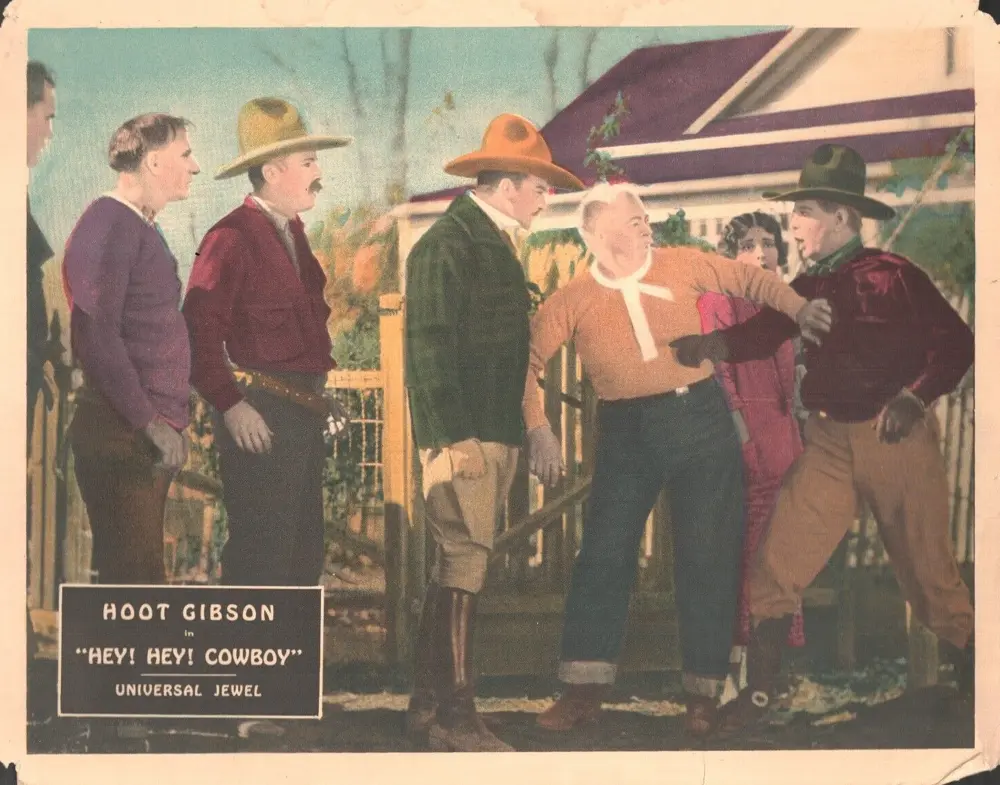
Nick Cogley provides the necessary curmudgeonly energy as the ranch owner. His interactions with Gibson provide some of the film’s best comedic beats. There is a specific moment where Cogley’s character is trying to explain the ranch’s problems, and Gibson is more interested in the quality of the coffee. It’s a small, human moment that adds a lot of texture to the world. It feels more real than the heightened reality of Fighting the Flames.
Wheeler Oakman, as the villain, does exactly what is required of him. He sneers, he plots, and he looks menacing in a hat. While he isn't given much to work with in terms of motivation, his presence creates enough tension to keep the stakes feeling real. He is the necessary obstacle that allows Gibson to shine.
Technically, the film is a product of its time, but it’s a high-quality one. The editing is particularly impressive. The cuts are clean, and the action sequences are easy to follow. This wasn't always the case in 1927, where many films suffered from confusing geography during stunts. Here, you always know where everyone is in relation to each other. It has the mechanical precision of a Felix Gets the Can short, but applied to a full-length feature.
The tone of the film is remarkably consistent. It never dips too far into tragedy, nor does it become a pure slapstick farce. It maintains a middle ground that feels unique to the Hoot Gibson brand. This balance is difficult to achieve, as seen in films like He Loved Like He Lied, which often struggled to find their footing. Reynolds manages to keep the ship steady from start to finish.
The stunt work is also worth noting. Gibson did many of his own stunts, and his background as a rodeo champion is evident. The way he handles a horse is natural and unforced. There is a sequence involving a chase through a rocky outcrop that shows off his physical prowess without feeling like he's showing off. It’s just part of the job for Jimmie Cardwell.
Hey! Hey! Cowboy is a delightful slice of silent era entertainment. It doesn't redefine the genre, but it refines it. By injecting a sense of humor and a more human lead character, Lynn Reynolds and Hoot Gibson created something that feels remarkably modern in its sensibilities. It lacks the dark complexity of Das Gefängnis auf dem Meeresgrund, but it makes up for it with sheer charm.
The film is a reminder that even in the silent era, audiences wanted to laugh as much as they wanted to be thrilled. It is a sturdy, well-crafted piece of filmmaking that deserves a spot in the conversation about the great Westerns of the 1920s. It isn't a masterpiece. It’s something better: it’s a good time. If you have an hour to spare and a love for the history of cinema, you won't regret spending it with Jimmie Cardwell.
"Gibson’s Jimmie Cardwell is the cowboy we all wish we could be: smart, funny, and entirely unbothered by the chaos around him."
Ultimately, the film succeeds because it knows exactly what it is. It doesn't try to be Big Jim Garrity or any other heavy drama. It stays in its lane and delivers a breezy, enjoyable ride. In a world of overly long and overly serious films, there is something profoundly satisfying about a movie that just wants to say 'Hey! Hey!' and have a good time.
IMDb 6.2
1926
Community
Log in to comment.