DbcultAccessing Vault...
Cult Review
Senior Film Conservator
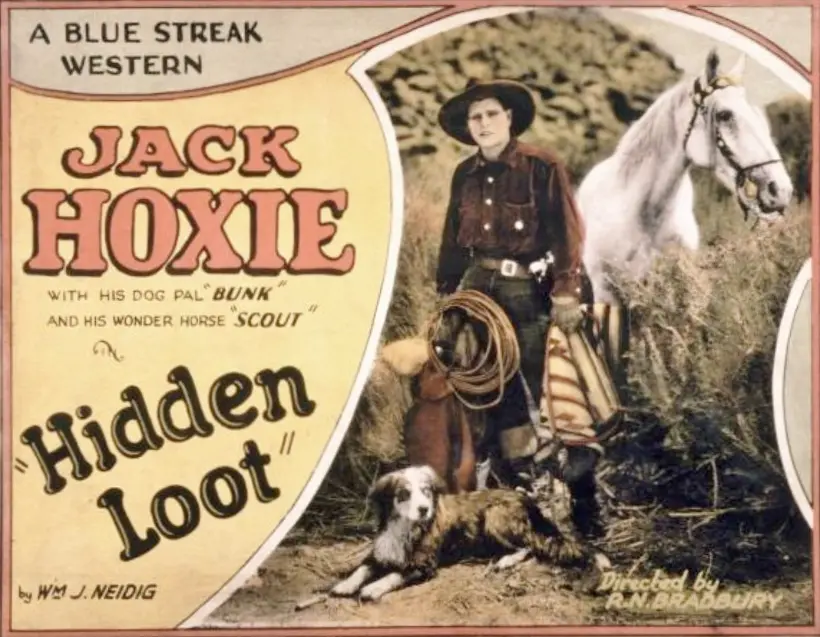
Is Hidden Loot a silent Western worth digging up? Short answer: Yes, but only if you appreciate the era's reliance on animal heroics and Jack Hoxie's rugged stoicism over modern psychological depth.
This film is for enthusiasts of the silent era who enjoy straightforward morality plays and those who appreciate the historical evolution of the 'undercover lawman' trope. It is NOT for viewers who find the slow pacing and exaggerated physical acting of the 1920s to be a barrier to enjoyment.
1) This film works because the canine performance by Bunk is genuinely more charismatic than half the human cast, providing a unique tactical element to the standard heist plot.
2) This film fails because the central romantic tension relies on Anna Jones being incredibly unobservant for the majority of the runtime, ignoring obvious clues to Cranner's character.
3) You should watch it if you miss the days when a hero's dog was as vital to the plot as his shooting ability, or if you want to see Jack Hoxie at the peak of his physical screen presence.
Jack Hoxie was not just an actor; he was a rodeo star, and that authenticity bleeds into every frame of Hidden Loot. Unlike the more theatrical performances found in films like The Third Degree, Hoxie brings a grounded, almost heavy presence to the role of Cranner. When he is 'rescuing' Anna in the opening scene, his movements are forceful and unpolished. It makes sense that she would call him a bonehead.
Hoxie’s Cranner is a man of few words—literally, given the medium—but his body language speaks of a man accustomed to the harshness of the Texas trails. There is a specific moment during his capture where he stares down Big Bill with a level of coldness that rivals the intensity seen in The Snarl. He doesn't need intertitles to convey his disdain for the bandits; it's all in the set of his jaw.
However, Hoxie is often overshadowed by his four-legged co-star. This was a common trend in 1920s Westerns, where the 'Wonder Dog' or the 'Wonder Horse' often received top billing. In Hidden Loot, the dog isn't just a mascot; he is a primary driver of the plot. This sets it apart from more domestic dramas like Castles for Two, where the conflict is purely interpersonal.
Let’s talk about the dog. Bunk’s escape from the shack is the film's technical highlight. The sequence where he leaps through the window with the payroll bag is captured in a wide shot that emphasizes the athleticism required for the stunt. It’s a moment of pure cinematic joy that breaks the tension of the preceding capture. The dog's intelligence is framed as almost supernatural, a trope that would later be perfected by Rin Tin Tin.
The scene where Bunk digs under the wall to free Cranner is particularly well-edited. The intercutting between the bandits drinking outside and the dog's frantic digging creates a genuine sense of urgency. It reminds me of the pacing found in Blue Jeans, where the mechanical threat is replaced here by the threat of discovery. It’s simple, effective storytelling that doesn’t require a single line of dialogue to understand.
The dog’s ability to keep the bandits at bay while Cranner escapes adds a layer of 'animal vs. man' conflict that is rare in the more grounded Westerns of the time. While films like My Pal focused on the emotional bond between man and dog, Hidden Loot focuses on their tactical partnership. It’s a professional relationship built on survival.
Olive Hasbrouck plays Anna Jones with a feisty energy that is refreshing for 1925. She isn't the typical damsel in distress seen in The Song of the Soul. Her initial rejection of Cranner is rooted in her own competence as a rider. She didn't need saving, and she isn't afraid to tell him so. This creates a friction that fuels the first half of the film.
The romance that develops is one of the film's weaker points, purely because it relies on the 'misunderstood hero' cliché. Anna believes Cranner is part of the gang, yet she falls for him because he is 'gallant.' It’s a bit of a stretch. One has to wonder why Cranner doesn't just show her his badge earlier. But then, we wouldn't have a movie. It’s a narrative convenience that we also see in The Kentuckians.
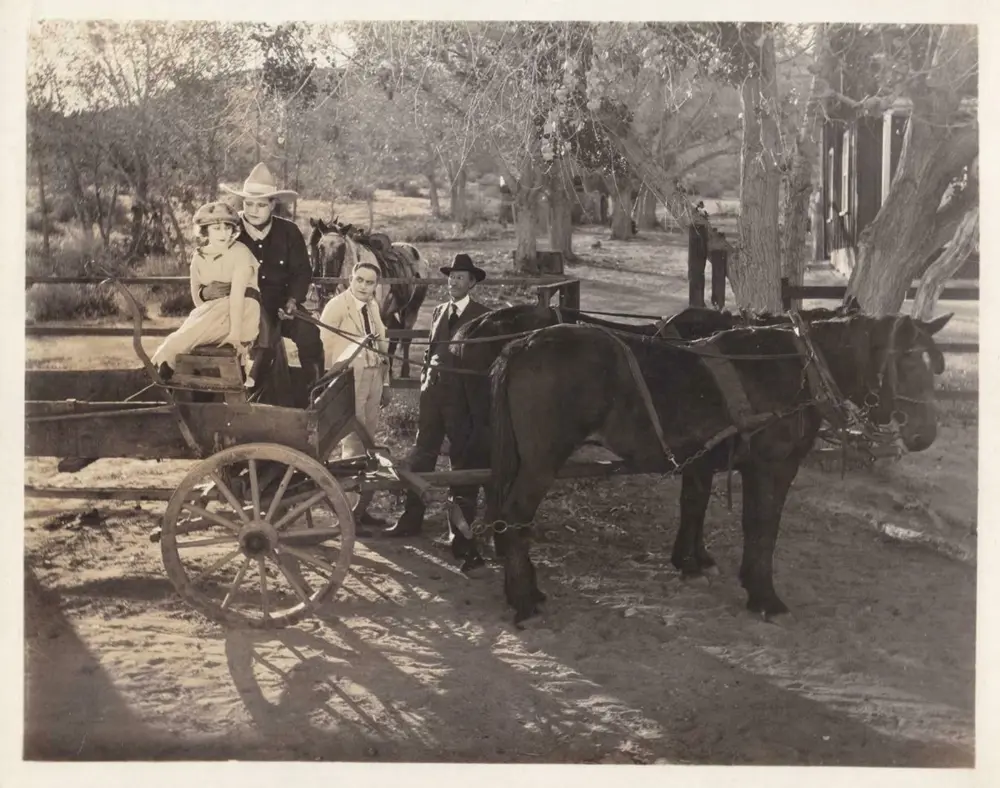
Despite the logic gaps, the chemistry between Hasbrouck and Hoxie is palpable. There is a quiet scene in the forest where they share a moment of respite that feels surprisingly modern. The way the light filters through the trees—likely shot on location in the California hills—gives the film a naturalistic beauty that studio-bound films like Mad Love often lack.
Hidden Loot delivers a punchy, straightforward narrative that focuses on action rather than complex dialogue. It successfully blends the tension of a payroll heist with the charm of a heroic animal sidekick. While the plot follows established Western tropes, the execution remains energetic and engaging for modern viewers of silent cinema. It works. But it’s flawed.
Every Western is only as good as its villain, and Bert De Marc’s 'Big Bill' is a serviceable heavy. He represents the internal threat—the employee who turns on his own. This adds a layer of betrayal to the heist that makes the stakes feel more personal than a random stagecoach robbery. His performance is broad, typical of the era, but he provides a solid physical foil for Hoxie.
The gang itself is a collection of recognizable archetypes. They aren't given much depth, but their presence in the forest shack creates a claustrophobic atmosphere. The contrast between the open ranch and the dark, cramped hideout is a smart visual choice by the director. It mirrors the transition from the social order of the ranch to the lawlessness of the wilderness, a theme explored in many Swedish films of the era like Fiskebyn.
The cinematography by the uncredited cameraman is surprisingly crisp. The horse racing scenes at the beginning use tracking shots that must have been difficult to achieve with the bulky cameras of 1925. These shots give the film a sense of speed that was often missing from earlier Westerns. It’s far more dynamic than the static staging of The Woman God Sent.
The pacing is Hidden Loot’s greatest strength. At roughly five reels, it doesn't overstay its welcome. The transition from the race to the robbery to the escape happens with a rhythmic efficiency. There are no unnecessary subplots or comedic relief characters to distract from the central mission. Even the 'Texas Ranger' reveal at the end is handled with a quick, satisfying punch rather than a long-winded explanation.
The writing by Harry Dittmar and William J. Neidig is lean. They understand that in a Western, action is character. Cranner’s character is defined by what he does—observing the crime, enduring capture, and eventually saving the girl. It’s a blueprint for the B-Westerns that would dominate the 1930s and 40s. It lacks the moral ambiguity of Slaves of Pride, but it gains a lot in terms of pure entertainment value.
Pros:
- Authentic stunts and horse riding by Jack Hoxie.
- Exceptional animal training and performance by Bunk.
- Tight pacing that avoids the 'silent film sag' in the middle.
- Strong location scouting that provides a beautiful backdrop for the action.
Cons:
- The 'bonehead' misunderstanding is dragged out for too long.
- The villains are somewhat one-dimensional compared to other films of 1925.
- The plot relies heavily on coincidences.
If you are looking for a historical curiosity that still packs a punch, then yes. Hidden Loot is a prime example of the 'programmers' of the silent era—films made to entertain a mass audience with thrills and spills. It doesn't have the artistic pretensions of Ole Opfinders offer, but it has a heart and a sense of fun that many of its contemporaries lacked.
The film also serves as a great entry point for those new to silent Westerns. It’s not as long or as daunting as some of the epics, and the story is universal enough that the lack of sound never feels like a hindrance. It’s a film that knows exactly what it is: a Saturday afternoon adventure.
Hidden Loot is a brisk, enjoyable ride through the tropes of the Old West. While it won't win any awards for narrative complexity, its combination of Jack Hoxie’s physicality and Bunk’s canine brilliance makes it a standout in the crowded field of 1920s Westerns. It’s a reminder that sometimes, all you need for a good movie is a hero, a villain, a girl, and a very smart dog.
Compared to the comedic leanings of Mr. Billings Spends His Dime or Never Say Die, Hidden Loot stays true to its dramatic roots. It’s a solid piece of filmmaking that deserves to be remembered for its contributions to the genre. It’s not a masterpiece, but it’s a damn good time. It works. Even with its flaws, it works.
IMDb 5.8
1937
Community
Log in to comment.