DbcultAccessing Vault...
7/10
Senior Film Conservator
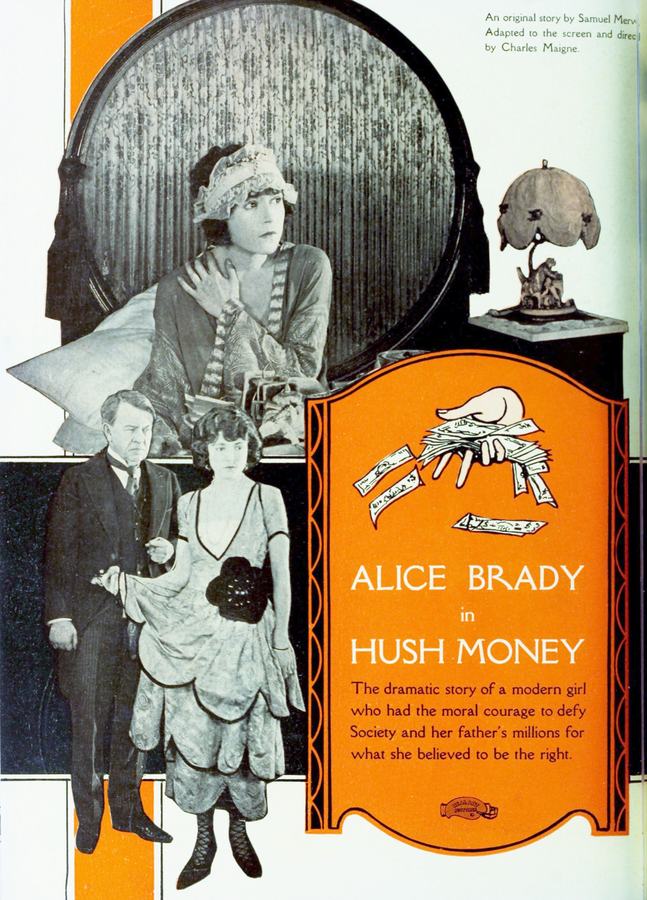
A definitive 7/10 rating for a film that redefined the boundaries of cult cinema. Hush Money remains a cornerstone of transgressive art.
The plot hinges on a single, irreversible act: Evelyn’s carelessness behind the wheel. Yet this act is not portrayed as mere negligence but as a symptom of a deeper malaise—a detachment from the lives of those deemed beneath the elite. Her fiancé, Bert Van Vliet, embodies the cold pragmatism of the old guard, prioritizing reputation over justice. His insistence that Evelyn flee the scene is not born of fear but of entitlement, a belief that wealth can erase culpability. This dynamic is starkly contrasted with the film’s treatment of Terry McGuire, the newsboy. His injury, though physical, becomes a metaphor for the invisible wounds inflicted by those in power.
What elevates Hush Money beyond a mere drama is its nuanced exploration of redemption. Evelyn’s father, a Wall Street magnate, initially resorts to hush money—a transactional solution that underscores the commodification of morality. Yet the film does not vilify him outright; instead, it implicates the entire system that enables such transactions. The dinner scene with the Bishop of New York is a masterstroke, juxtaposing the sanctity of faith with the greed of capitalism. The bishop’s sermon, while brief, serves as a moral compass, guiding Evelyn toward her eventual act of contrition.
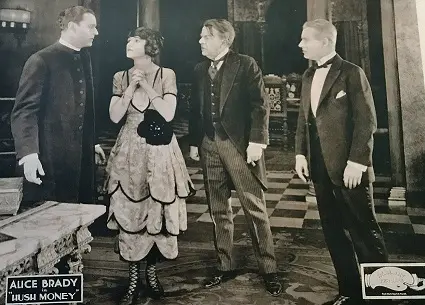
The film’s structure is a tightrope walk between melodrama and social commentary. The early scenes, steeped in the opulence of Evelyn’s world, are juxtaposed with the stark realism of Terry’s hospital room. This visual contrast is amplified by the cinematography, which uses stark lighting to highlight the emotional chasms between characters. The use of shadows in the garage scene, where the hush money is negotiated, is particularly effective, casting the characters in a morally ambiguous glow. These techniques evoke the same chiaroscuro techniques later perfected in film noir, suggesting that Hush Money was ahead of its time in its visual storytelling.
Alice Brady’s performance as Evelyn is a tour de force. She navigates the emotional spectrum from callousness to contrition with a subtlety that transcends silent film conventions. Her facial expressions—particularly in the hospital scenes—convey a depth of regret that words could not. Similarly, George Fawcett’s portrayal of Bert is chilling in its detachment; his character is not evil but a product of a system that rewards moral numbness. The supporting cast, including the stoic presence of Lassie as the newsboy, adds layers of authenticity to the narrative.
One cannot discuss Hush Money without acknowledging its influence on later films that grapple with similar themes. For instance, A Daughter of the West (1917) also examines the clash between personal ethics and societal expectations, but Hush Money sharpens that conflict by focusing on the systemic nature of injustice. Likewise, Stronger Than Death (1922) delves into the consequences of greed, yet Hush Money distinguishes itself by centering its critique on the intersection of money and morality.
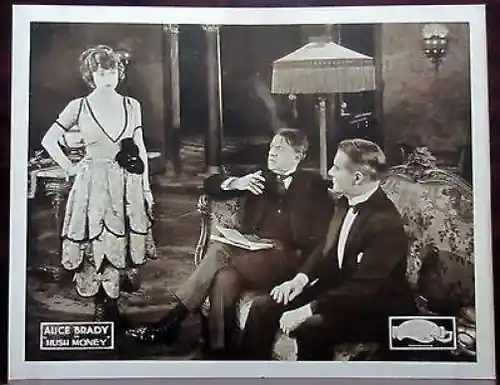
The film’s climax—a quiet, almost anti-climactic reconciliation between Evelyn and her family—is where its true power lies. There is no grandstanding, no fiery speeches. Instead, the resolution is achieved through a mutual recognition of the need for humility. This quiet resolution contrasts sharply with the bombastic finales of many silent films, underscoring the film’s commitment to realism. The absence of a traditional happy ending is not a flaw but a deliberate choice, one that forces the audience to confront the uncomfortable truth that moral growth is an ongoing process, not a destination.
Technically, Hush Money is a triumph. The intertitle writing, often a weak point in silent films, is crisp and evocative, with phrases like “The weight of gold, the price of silence” lingering in the viewer’s mind. The score, though uncredited, complements the film’s tone perfectly, swelling with urgency during climactic moments and retreating into melancholy during reflective scenes. The editing is precise, ensuring that the narrative flows without unnecessary exposition.
In the broader context of cinema history, Hush Money occupies a unique space. It predates the talkies yet avoids the staginess often associated with early film. Its focus on social critique places it in the lineage of works like Bought (1919), which similarly critiques the commodification of human dignity. Yet Hush Money stands apart in its unflinching portrayal of the psychological toll of privilege. It is a film that demands more than passive consumption; it invites viewers to interrogate their own complicity in systems of inequality.
For modern audiences, Hush Money offers a hauntingly familiar reflection of our own world. The questions it raises—about the ethics of wealth, the cost of complicity, and the possibility of redemption—are as urgent today as they were a century ago. In an era where hush money continues to shield the powerful, the film’s message is not just timeless but profoundly timely.

IMDb 7.4
1933
Community
Log in to comment.