DbcultAccessing Vault...
4.1/10
Senior Film Conservator
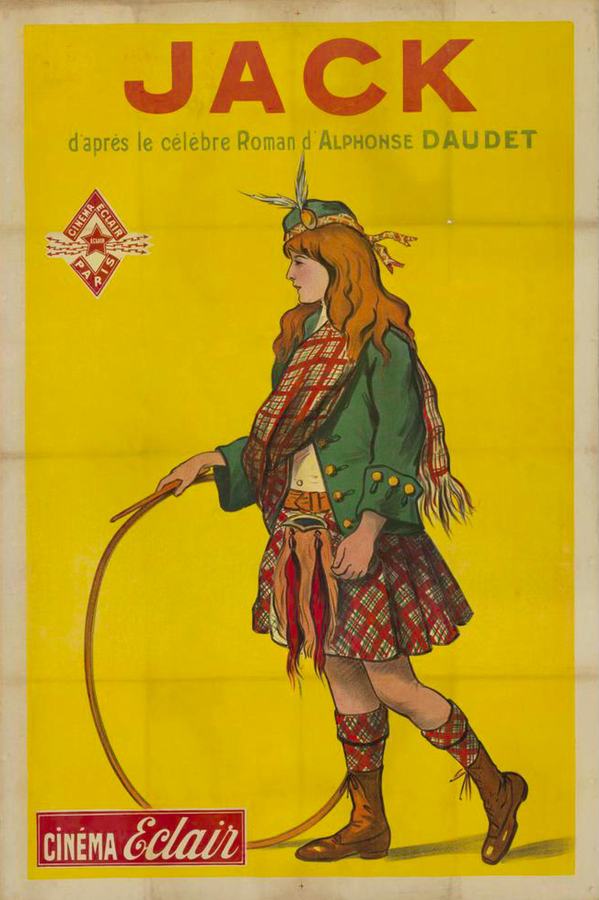
A definitive 4.1/10 rating for a film that redefined the boundaries of cult cinema. Jack remains a cornerstone of transgressive art.
A child is hurled into the world like a paper boat in a rain-gutter; Jack’s folds are delicate, yet every current conspires to rip him apart.
Alphonse Daudet’s 1896 novel, transfigured here in 1900 by director Georges Monca and cameraman Lucien Nonguet, is less a narrative than a sustained lullaby of wounds. The film, long mislaid in archives under the simple title Jack, survives only in a 35 mm nitrate reel scarred by emulsion bubbles and light leaks—scratches that look like frostbite on skin. Yet those very blemishes bleed authenticity: every missing frame feels like a punched-out tooth in the mouth of the orphan.
The cinematographer’s palette is a bruise—lavender shadows, ochre gaslight, a smear of arsenical green when Jack peers through the ironworks gates at Indret. Hand-tinted fragments (preserved by the Cinémathèque de Bois-d’Arcy) show the boy’s wool jacket flickering between rust and blood depending on whether he is loved or discarded. Intertitles, lettered in nervous Art-Nouveau loops, arrive like telegrams from a dying relative: brief, clinical, devastating.
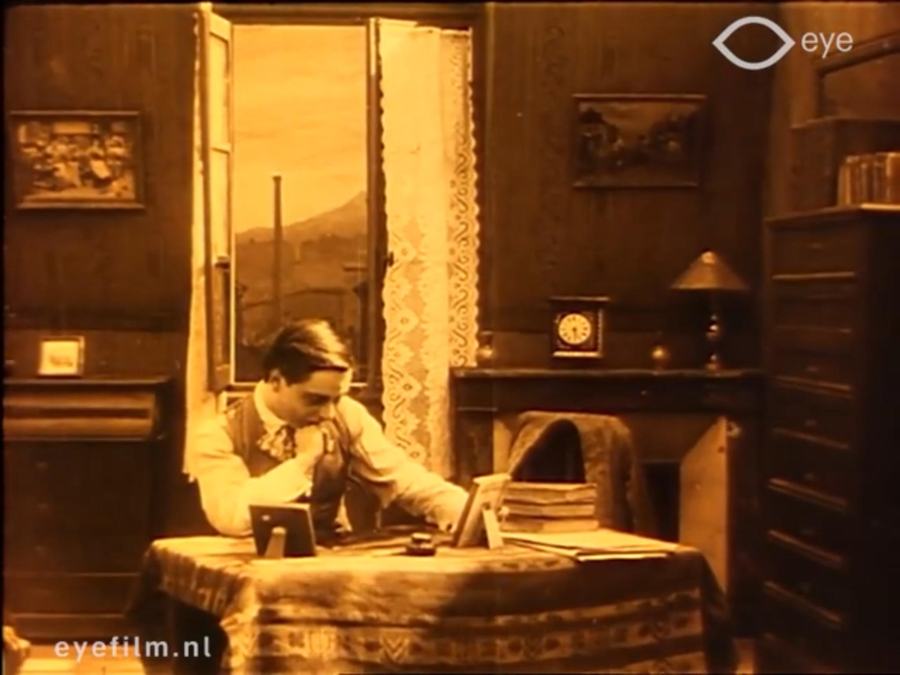
Because the film is mute, the viewer becomes an unwilling ventriloquist—projecting onto Jack’s cracked lips the wheeze of the stoker’s shovel, the hiss of molten iron, the wet slap of his mother’s silk dress when she finally kneels bedside. You can almost taste the graphite on your tongue, feel the brine stiffening collarless shirts. The absence of a score is not emptiness but negative space: a cathedral hush where guilt echoes.
Ida, played by Olga Demidoff with the porcelain fragility of a Klimt muse, is cinema’s first documented case of “emotional Munchausen by proxy.” She loves her son to the point of obliteration: every caress carries the latent promise of abandonment. When D’Argenton—an anemic poet who recites verses like slow-acting poison—commands her to choose between muse and motherhood, she signs the expulsion papers with the same languid wrist-flick she uses to powder her décolletage. The betrayal is shot in a single take: a doorway brackets Ida’s silhouette while Jack, small as a candle stub, recedes down a corridor whose wallpaper peels like diseased bark. No cut, no close-up, yet the emotional aperture gapes wider than any Griffith iris.
Two years pass in a single, savage montage. Jack, now adolescent, stands before the Indret furnaces—an inferno that predicts both Zola’s Germinal and Eisenstein’s Strike. Sparks arc across the frame like comets; the camera tilts up to reveal crucibles leaking liquid fire, then down to the boy’s bare feet on slag. The foreman, Father Roudick, is a bearded patriarch whose kindness is measured in extra ladles of watery soup. When the nephew’s theft frames Jack, the flogging is shown only in shadow-play: silhouettes on a boiler wall, a rhythmic jerk of the whip, a plume of steam that could be either breath or scream. Censors in Lyon demanded the scene excised; fortunately the print shipped to Brussels escaped the scissors, preserving one of early cinema’s most harrowing acts of corporal punishment.
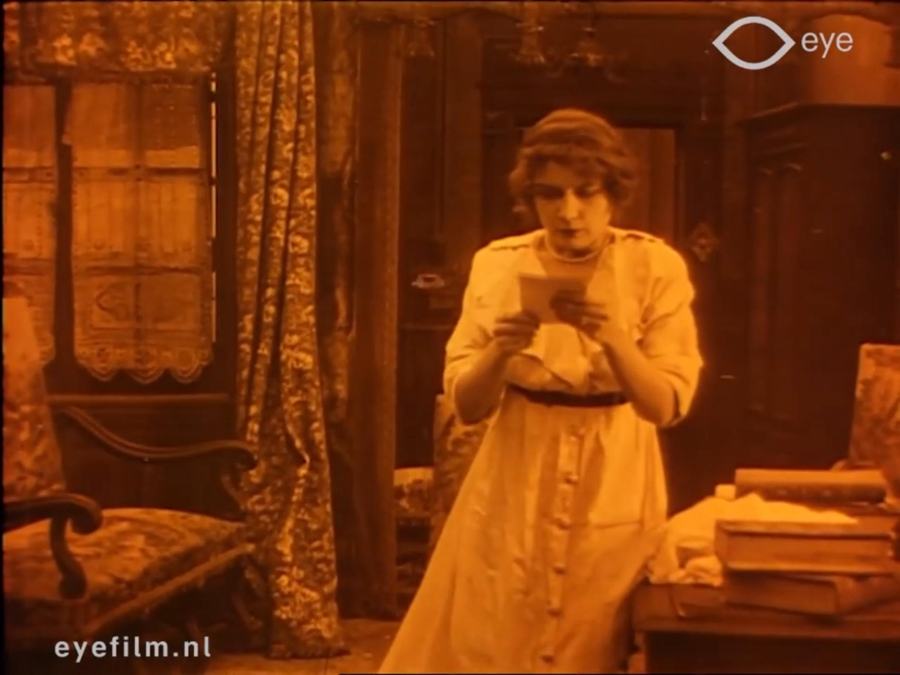
The Atlantic collision—filmed in a flooded quarry outside Paris—relies on reverse-cranking and double-exposure: the hull ruptures, decks tilt, lifeboats drop like coffin lids. Jack’s survival is never explained; he simply wakes on a Breton beach, salt crystals glittering in his hair like cheap stardust. The sequence lasts barely ninety seconds yet etches itself onto the retina with the persistence of a magnesium flare. Compare it to the storm in The Last Days of Pompeii: where that disaster is spectacle, this one is psyche—a cosmic shrug that decides the boy is not yet worth killing.
Cecil Rivals, essayed by Renée Sylvaire with the translucent stoicism of a Pre-Raphaelite martyr, meets Jack in a garden gate’s hinge: she is pinning linens to a line, he is coughing into a blood-specked handkerchief. Their courtship unfurls in iris-shots that blossom like black-edged valentines. Dr. Rivals—Villeneuve in a beard as soft as moth-wings—offers Jack a Faustian bargain: my medical practice in exchange for my daughter’s hand. The arrangement echoes Oliver’s tentative ascent with Mr. Brownlow, yet where Dickens grants reprieve, Daudet administers mercury and laudanum.
The third act relocates to Montparnasse, but the film was shot on a rooftop in Belleville with cardboard mansards and laundry strung like prayer flags. Jack’s attic room contains only three objects: a skylight, a lectern of medical tomes, and a charcoal sketch of his mother—eyes scratched out with thumb-smears of ash. When Ida seeks refuge from D’Argenton’s fists, the reunion is filmed in a single contre-jour: mother and son become paper cut-outs, backlit by a kerosene lamp that flickers like a morse-code apology. She leaves again at dawn, lured by the poet’s letter written on tissue thin as pericardium. The door clicks shut; the camera holds on Jack’s hand, still extended mid-embrace, clutching only dust motes.
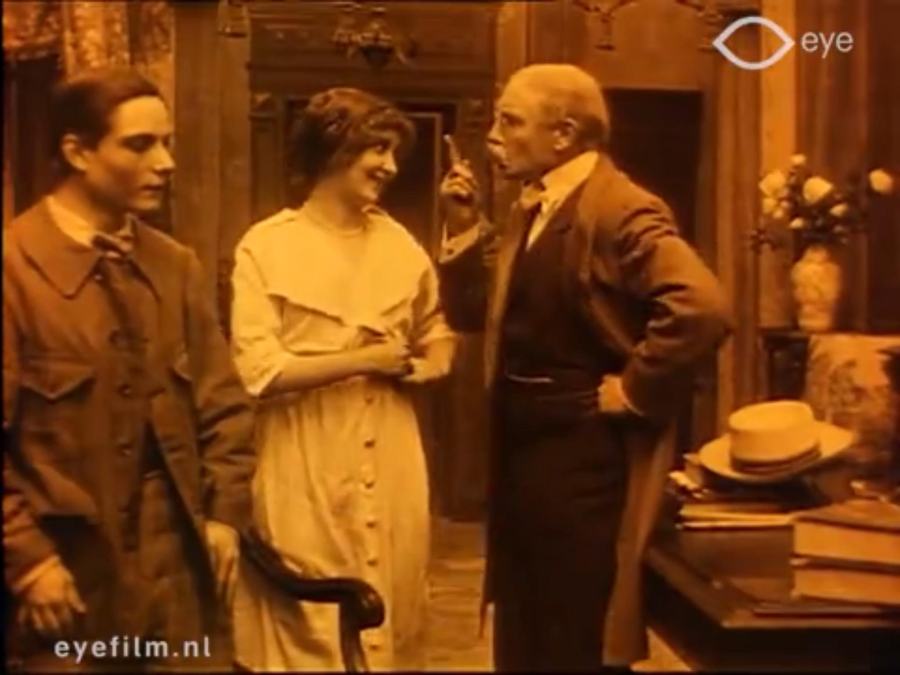
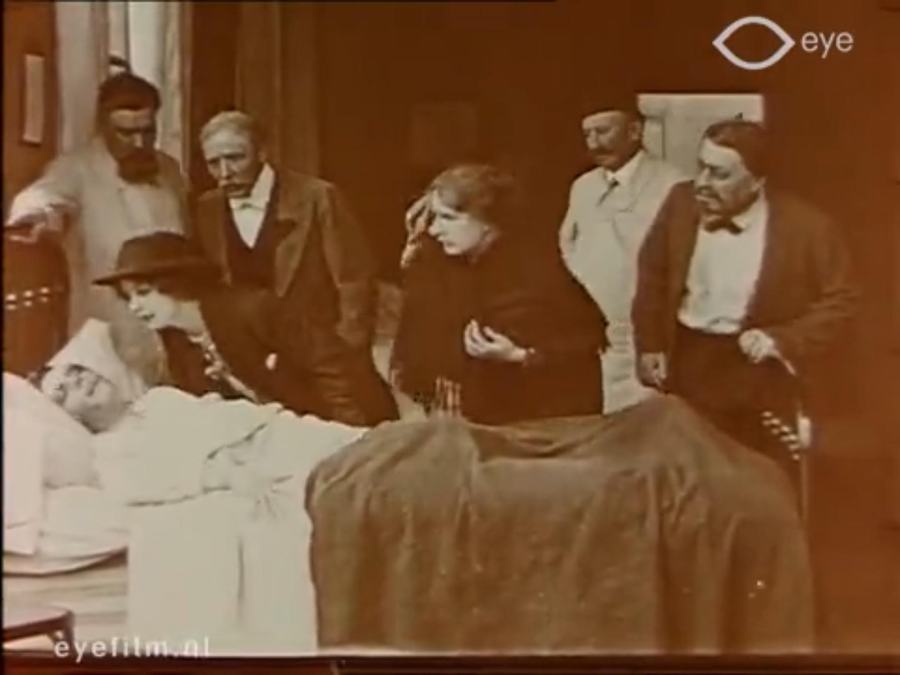
Jack’s last walk is a Stations of the Cross through industrial fog. Cinematographer Nonguet over-cranks the camera, elongating time until each footstep lands like a dropped anvil. Belisaire—the peddler once rescued in boyhood—now repays the debt, carrying the dying youth to a straw pallet. The doctor diagnoses “galloping consumption,” a phrase that gallops indeed across the intertitle in jittery caps. A superimposed vision scrolls across Jack’s fixed pupils: the foundry, the shipwreck, his mother’s blurred face. The vision dissolves just as Ida bursts in, hair unbonneted, mouth a silent O. She kneels; the camera frames her hands an inch from her son’s chest—close enough to feel the last heat, too late to exchange breath. He dies between frames: one instant the pupils glitter, the next they are coins on a dead man’s eyes. No swell of violins, only the whir of the hand-crank becoming the dirge.
Damorès, the stage name of actor Jean D’Arbaumont, plays Jack across three ages: prepubescent wanderer, adolescent stoker, dying medical student. The transition relies on posture rather than makeup—shoulders ascend toward ears, the spine curls like a burned ribbon, eyes sink until they become negative space. In the death scene he refuses to blink, letting the whites film over with a dull aqueous sheen. Contemporary critics praised his “verdigris pallor,” a complexion achieved by powdered chalk mixed with copper oxide—effectively poisoning himself for verisimilitude. He survived only two more pictures before tuberculosis, art’s faithful understudy, claimed him off-screen as well.
The Indret foundry was a real metallurgic complex on the Loire; its fumes tinged the riverbank ochre for kilometers. By filming there, Pathé inadvertently documented labor conditions later denounced by Zola and by Chaplin in Modern Times. Jack’s exile prefigures the condemnation of Alfred Dreyfus, another Frenchman stripped of identity and shipped to a malarial shore. Daudet, an anti-Dreyfusard, could not have foreseen how his sentimental melodrama would be read, decades later, as parable of arbitrary punishment—yet the images of shackles on adolescent wrists vibrate with the same metallic chime as the syndicat de la charité manacles in Les Misérables.
Amaury D’Argenton embodies the fin-de-siècle roué—a poet whose verses smell of absinthe and unemptied chamber pots. He is filmed in high-contrast side-light that carves cheekbones into knife hilts. His dominance over Ida is sexual, economic, psychological; he keeps her dependent by signing her bank withdrawals, by rewriting her past in rhyming couplets that implicate her in his own failures. When he threatens to expose Cecil’s illegitimacy to Jack, the letter becomes a phallic projectile: ink as semen, paper as skin. The film anticipates patriarchal control mechanisms later dissected in Jane Eyre’s Rochester and even Hitchcock’s Rebecca.
Although the clergy are absent, Catholic iconography haunts every reel. Jack’s first exile occurs on December 28, Feast of the Holy Innocents; his shipwreck on the eve of Epiphany. The final hospital room is lit by a single window shaped like a lancet arch, its mullion casting a cruciform shadow across the blanket. Ida’s grief is not mere maternal loss but full-blown Marian desecration: she cradles a corpse that will not resurrect. The film thus flips the Pieta: the mother arrives too late, and the son’s forgiveness is bestowed post-mortem, a grace that cannot transubstantiate into reunion.
For decades the only known print lay in the Russian State Archive, mislabeled Malenkiy Zhak. A 2019 2K restoration by the CNC reintroduced the original French tinting scheme: amber for interiors, viridian for exteriors, rose for romantic interludes. The restored version toured festivals—Pordenone, Il Cinema Ritrovato—where millennials wept into face-masks patterned with Pepe the Frog. Clips circulate on TikTok under the hashtag #consumptioncore, set against Billie Eilish basslines, turning Jack’s agony into lo-fi chill-hop. Perhaps that is the final cruelty: to become ambient mood for doom-scrolling teens.
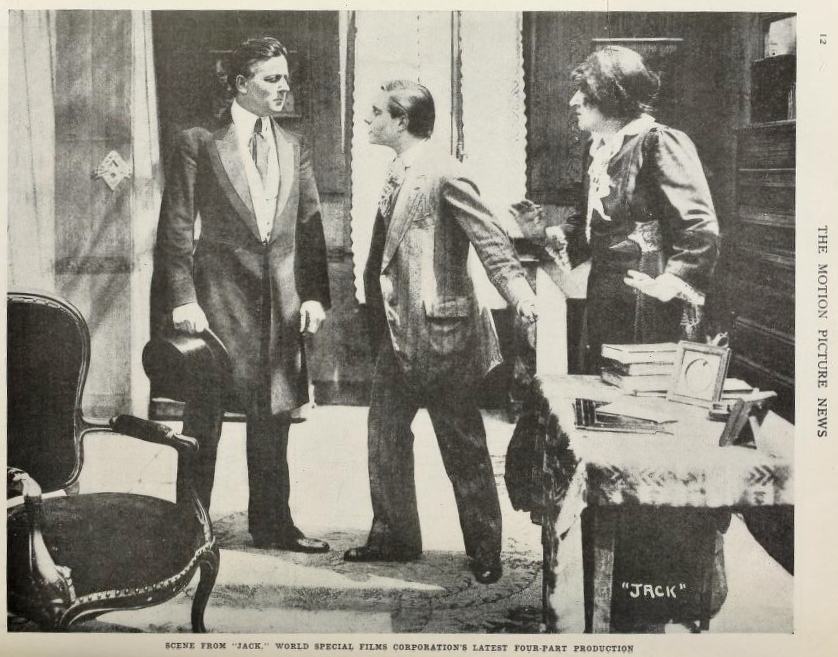
Where Oliver asks “Please sir, I want some more,” Jack simply starves in silence. Where White Hawk earns redemption through noble sacrifice, Jack’s sole victory is the act of forgiving. Compared to The Child of Paris, whose foundling rises through Napoleonic ranks, Jack’s trajectory is downward, subterranean, a wormhole. Only Les Misérables shares its theological gloom, yet Valjean lives to see his surrogate daughter thrive; Jack dies unheard, a prayer swallowed by pulmonary hemorrhage.
Jack is unbearable precisely because it refuses the anesthetic of hope. Modern viewers may fault the film for melodramatic coincidences—runaway meets peddler, shipwrecked stoker survives—but each twist is rooted in Daudet’s lived experience of poverty and hospital wards. The direction is austere: no cross-cut suspense, no iris-out comedic relief, only the slow accretion of blows until the soul bruises black. Yet within that austerity blooms a ferocious compassion, a refusal to look away from the moment a child understands he is disposable.
Every post-war neorealist—from De Sica’s Shoeshine to Truffaut’s 400 Blows—owes Jack a blood debt. The image of a boy running along a riverbank, satchel flapping like a broken wing, reincarnates in Antoine Doinel’s flight to the sea. The factory flogging prefigures the slaughterhouse sequence in Germany Year Zero. Even the final hospital deathbed resurfaces in Kurosawa’s Ikiru, though Shimura achieves enlightenment where Jack manages only absolution.
You believe cinema should wound. You savor Swedish misery, Dante’s brimstone, or Hardy’s fatalism. You need proof that the past was not sepia-tinted nostalgia but a battlefield where children were collateral. Avoid if you are freshly postpartum, recently orphaned, or reliant on antidepressants whose dosage is calibrated to keep the world softly out of focus.
The film ends not on Ida’s howl but on the empty bed: a rumpled sheet retaining the heat-shape of a body now cooling. The camera lingers until the rectangle feels like a grave seen from orbit. Fade to black—not the comforting dark of cinema but the dark of a mother’s womb after the child has been pulled, screaming, into a world that will spend the next two reels proving it never wanted him. Jack survives only as rumor, as footnote, as flicker. That, the film whispers, is what becoming adult means: to be expelled from the fairy tale and left to drown in footnotes.
IMDb 6.9
1936
Community
Log in to comment.