DbcultAccessing Vault...
4.4/10
Senior Film Conservator
A definitive 4.4/10 rating for a film that redefined the boundaries of cult cinema. Kick Me Again remains a cornerstone of transgressive art.
Should you invest twenty minutes of your life in this 1925 silent short? Short answer: yes, but only if you appreciate the raw, unpolished energy of early slapstick over sophisticated plotting.
This film is specifically for students of physical comedy and those who enjoy the 'wrong place, wrong time' trope executed with maximum velocity. It is definitely not for viewers who require high-definition production values or a narrative that avoids the predictable pitfalls of the era.
1) This film works because the physical contrast between the diminutive Billy Engle and the hulking Bud Jamison creates an immediate, visceral sense of peril that fuels the comedy.
2) This film fails because the final act relies on a coincidence so massive it threatens to break the internal logic of the chase, even by silent film standards.
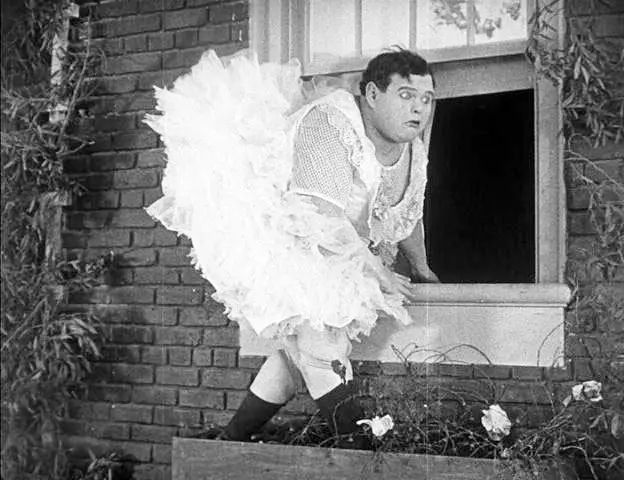
3) You should watch it if you want to see a masterclass in how to use a single, ridiculous prop—the ballerina costume—to escalate a scene from mere tension to absolute absurdity.
Kick Me Again is a fascinating relic from the mid-20s, a period where silent comedy was reaching its technical zenith but still clung to the vaudevillian roots of broad, physical gags. The premise is simple: Puffy (Billy Engle) is the underdog assistant at a dance school. His interactions with Mildred (Mildred June) are sweet, but they are shadowed by the looming threat of her husband, played by the formidable Bud Jamison. Jamison is a force of nature here. He doesn't just walk into a room; he colonizes it with his anger.
The standout moment occurs when Puffy realizes he has no exit. In a move that defines 'desperate measures,' he dons a massive ballerina costume. This isn't just a disguise; it's a character choice that highlights Engle's ability to play against his own physique. The way he tries to mimic the grace of a dancer while his eyes scream 'impending doom' is a highlight of the film. It reminds me of the tonal shifts seen in Hearts and Arts, where the absurdity of the situation is the primary engine of the plot.
Zion Myers directs with a frenetic pace that leaves little room for breath. The choreography of the dance school scenes is particularly noteworthy. While the film lacks the sweeping dramatic scale of something like Tess of the D'Urbervilles, it compensates with a tight, claustrophobic focus on movement. Every frame is packed with background action, making the school feel like a living, breathing entity rather than just a set.
One specific scene involves Puffy trying to hide behind a line of dancers. The timing required for him to stay out of the husband's line of sight while the group shifts is impeccable. It’s a mechanical ballet. The camera stays static, a common trait for the era, but the movement within the frame is so dynamic that you hardly notice the lack of cutting. It’s a stark contrast to the more somber, static compositions found in Reputation.
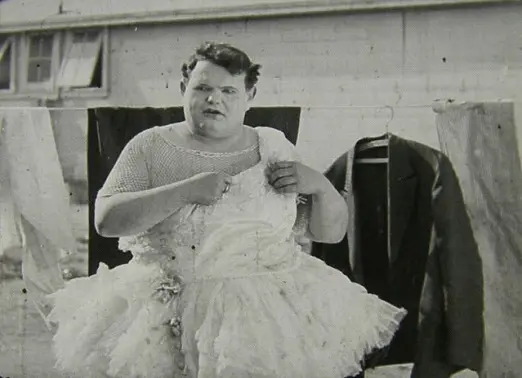
Yes, Kick Me Again is worth watching for its historical value and its sheer audacity. It represents a time when movies weren't afraid to be completely ridiculous to get a laugh. The 'wrong window' climax is a trope we've seen a thousand times, but here it feels fresh because of the stakes. Puffy isn't just a thief; he's a man in a tutu who accidentally broke into the house of the man who wants to kill him. That is a high-stakes comedy.
While Billy Engle is the lead, Bud Jamison is the anchor. Without a credible threat, slapstick falls flat. Jamison provides that threat. His performance is a study in 'slow-burn' rage. When he discovers Mildred at the school, his facial expressions transition from suspicion to volcanic fury in a way that modern actors often over-complicate. He keeps it simple. He is the wall that Puffy keeps running into. It works. But it’s flawed—Jamison is almost too intimidating, making the comedy feel slightly lopsided at times.
Compare this to the more nuanced character work in A Double-Dyed Deceiver. In that film, the conflict is internal and moral. In Kick Me Again, the conflict is a large man with a mustache trying to kick a small man in a dress. It’s primal. It’s effective. It’s cinema at its most basic level.
Pros:
Cons:
The lighting in Kick Me Again is remarkably flat, typical of shorts from this era that were produced quickly. However, this flatness actually aids the comedy. It allows the viewer to see every movement clearly. There are no shadows for Puffy to hide in, which makes his attempt to hide in plain sight even funnier. If this were a more atmospheric film like The Blue Moon, the comedy might have been lost in the mood. Here, the clarity is the point.
I found the use of the 'random window' to be a particularly bold choice. Usually, films try to lead the character to a location. Here, it’s pure chance. It’s a debatable choice—some might call it lazy writing, but I see it as a commitment to the 'chaos theory' of comedy. Puffy is a leaf in the wind of his own bad luck. This echoes the frantic energy found in The Rough Lover, where the protagonist is similarly at the mercy of his environment.
Kick Me Again is a loud, sweaty, and unapologetic slice of silent cinema. It doesn't aim for the heart; it aims for the funny bone. While it lacks the sophistication of later comedy features, its brevity is its strength. It delivers a concentrated burst of energy that reminds us why silent comedy was a global phenomenon. It’s not a masterpiece, but it’s a damn good time. Billy Engle might not be Chaplin, but in that tutu, he’s exactly what the doctor ordered for a dull afternoon.
"A frenetic, tutu-clad chase that proves some gags are timeless, even if the logic isn't."
IMDb —
1918
Community
Log in to comment.