DbcultAccessing Vault...
6.9/10
Senior Film Conservator
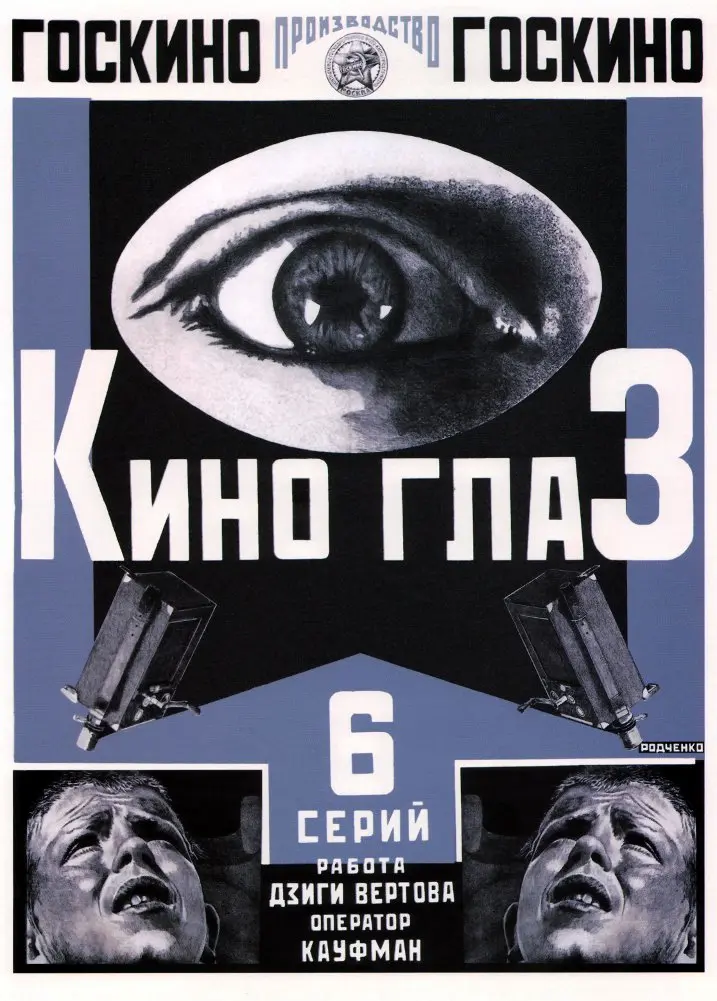
A definitive 6.9/10 rating for a film that redefined the boundaries of cult cinema. Kino Eye remains a cornerstone of transgressive art.
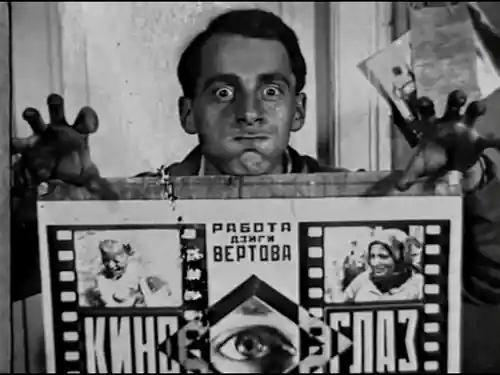
To witness Kino Eye (1924) is to stand at the precipice of a cinematic revolution, where the camera is no longer a passive observer but a dynamic participant in the construction of social truth. Dziga Vertov, the iconoclastic architect of the Kino-Glaz (Cine-Eye) movement, presents a work that is simultaneously a documentary, a propaganda tool, and a radical aesthetic manifesto. Unlike the narrative constraints of contemporary fiction films like Nancy from Nowhere or the melodramatic tropes found in Love's Battle, Vertov’s masterpiece eschews actors and scripts in favor of the raw, unvarnished pulse of the Soviet village.
The film functions as a rhythmic exploration of the Young Pioneers, a group of children who embody the burgeoning spirit of the USSR. We see them not as mere subjects, but as the vanguard of a new moral and economic order. They are seen pasting propaganda posters with a fervor that borders on the religious, distributing handbills, and advocating for the state-run cooperatives. This conflict between the Cooperative and the Private Sector is not merely a background detail; it is the ideological engine of the film. Vertov uses the camera to illuminate the virtues of collective labor, contrasting it with the perceived decadence of the old-world market systems.
One of the most profoundly experimental aspects of Kino Eye is its use of reverse motion. In a sequence that remains visually arresting even a century later, Vertov shows the un-slaughtering of a bull and the un-baking of bread. By reversing the film, the meat flows back onto the carcass, and the bread returns to the oven and eventually the field. This is not merely a technical flourish or a camera trick akin to the visual mysteries of Das Geheimnis der Mumie. Rather, it is a Marxist deconstruction of the commodity. Vertov forces the viewer to trace the lineage of the product back to its source—the labor and the land.
This technique allows the Cine-Eye to perceive what the human eye cannot: the inherent connection between the consumer and the producer. In an era where cinema was often used for escapism, as seen in the lightheartedness of All at Sea, Vertov demands an intellectual engagement. He wants the audience to understand the mechanics of their existence. The reverse-motion sequences serve as a visual metaphor for the ability of the socialist state to reorganize and rethink the very foundations of life and production.
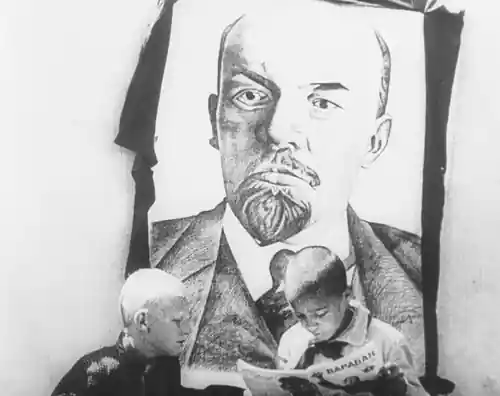
The focus on the Young Pioneers provides the film with its moral heartbeat. These children are depicted as tireless workers for the common good. They are seen helping poor widows, a scene that resonates with the social consciousness found in A Self-Made Widow, yet Vertov strips away the sentimentality, replacing it with a sense of civic duty. Their promotion of temperance is particularly striking. In a sequence that might remind one of the cautionary themes in The Bar Fly, the Pioneers confront the social ill of alcoholism, positioning the new generation as the sober, disciplined foundation of the Soviet future.
The cinematography captures their movements with a kinetic energy that reflects their youthful vigor. Vertov’s use of montage creates a sense of constant motion, a feeling that the revolution is an ongoing process that requires perpetual effort. The camera angles are often low, looking up at the children, granting them a heroic stature that was traditionally reserved for kings or generals. This shift in perspective is central to the film's intent: the exaltation of the common worker and the youth who will inherit the state.
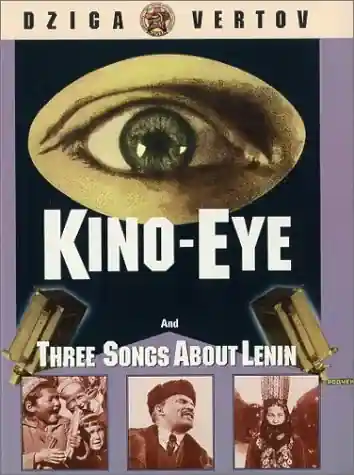
When comparing Kino Eye to other early political chronicles like Gira política de Madero y Pino Suárez, the difference in intent becomes clear. While the latter is a valuable historical record of political figures, Vertov’s work is an attempt to create a new language altogether. He is not just recording history; he is attempting to influence the way the human brain processes reality. The film lacks the narrative structure of The Snarl or the mystery of The Vermilion Pencil, opting instead for a structuralist approach that prioritizes rhythm and association over character development.
Even when compared to adventure or action-oriented films like Plunder or By Indian Post, Kino Eye stands apart due to its rejection of the 'theatrical' lens. Vertov famously despised the 'poison' of the scripted film, believing that the camera should be used to capture 'life unawares.' This philosophy leads to a documentary style that feels incredibly modern, prefiguring the Cinéma Vérité movement by decades. The lack of traditional plot might alienate those used to the easy resolutions of Broken Bubbles, but for the patient viewer, the rewards are found in the exquisite detail of a world being rebuilt.
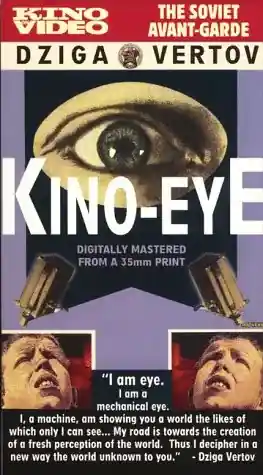
Visually, the film is a masterclass in composition. Vertov and his cinematographer (and brother) Mikhail Kaufman utilize the natural light of the Soviet countryside to create high-contrast images that feel visceral and grounded. The scenes of the cooperative market are bustling with life, a stark contrast to the static, almost gothic atmospheres one might find in Die Teufelskirche. There is a sense of air and space in Kino Eye, a celebration of the outdoors and the physical reality of the village.
The film also touches upon the cultural shifts of the time, including the influence of jazz and modernism, which were beginning to permeate the global consciousness, much like the themes explored in The Sultan of Djazz. However, Vertov filters these modern influences through a strictly Soviet lens. The 'modernity' here is not one of leisure or western consumerism, but of efficiency, technology, and collective organization. The camera itself is celebrated as the ultimate modern tool—a machine that can help the worker see the truth of their condition.
Reviewing Kino Eye today requires us to look past the overt propaganda and appreciate the formal brilliance of Vertov’s vision. While the film is undeniably a tool for the state, its innovations in editing and camera work transcend its political origins. It asks fundamental questions about the nature of the image: Can a camera ever be truly objective? Does the act of editing inherently create a fiction? These are the same questions that haunt the more cynical narratives of The Easiest Way, yet Vertov answers them with a resounding belief in the power of the Cine-Eye to reveal a higher truth.
In conclusion, Kino Eye is an essential artifact of cinema history. It is a film that refuses to be forgotten, demanding our attention through its sheer audacity and technical prowess. Whether you are a student of Soviet history or a lover of avant-garde cinema, Vertov’s work offers a window into a moment in time when the world felt entirely new, and the camera was the key to unlocking its secrets. It remains a staggering achievement, a testament to the idea that film can be more than just entertainment—it can be a way of seeing the world anew.
Final Rating: A monumental 9/10 for its pioneering spirit and lasting influence on the documentary form.
IMDb 6.1
1934
Community
Log in to comment.