DbcultAccessing Vault...
6.6/10
Senior Film Conservator
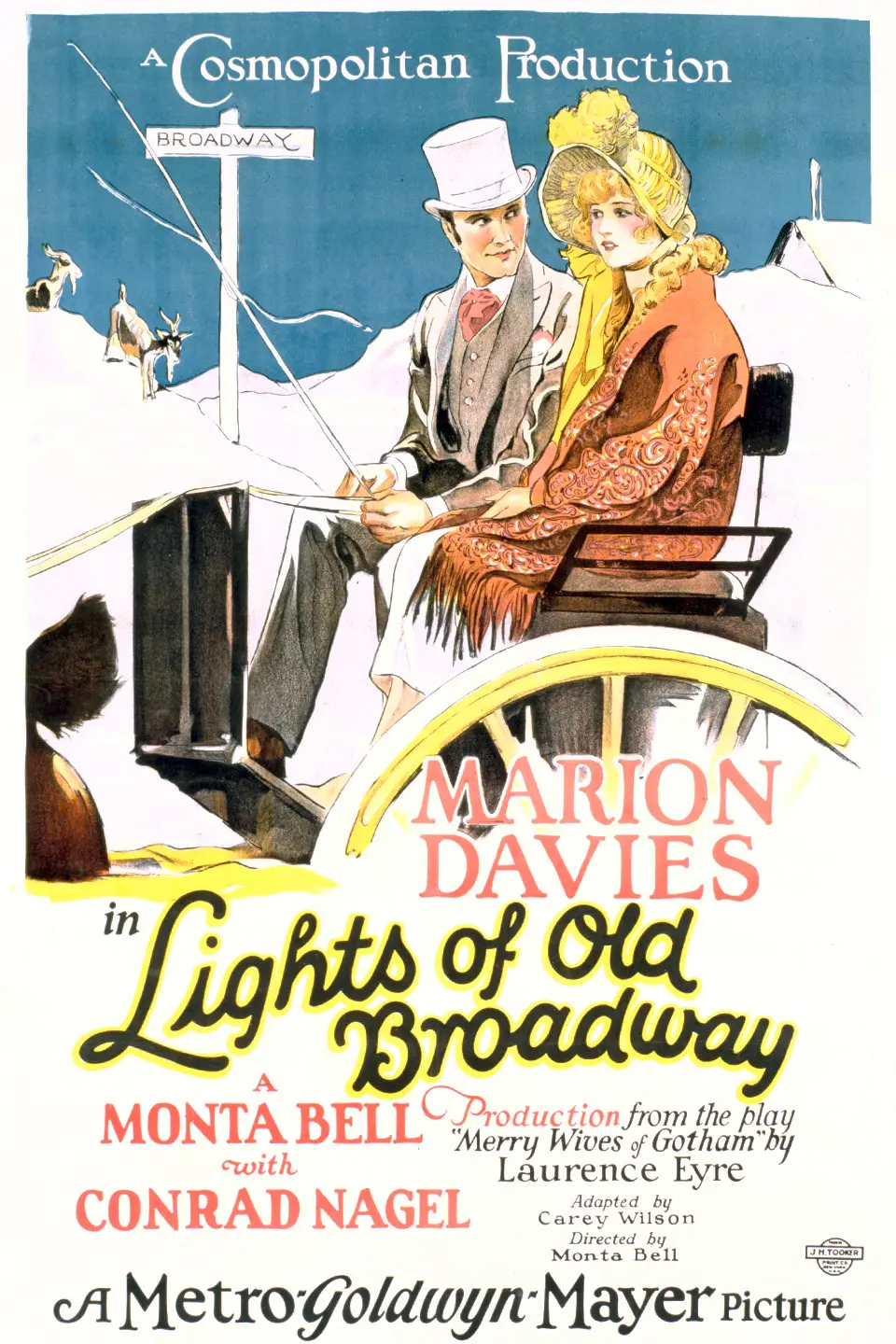
A definitive 6.6/10 rating for a film that redefined the boundaries of cult cinema. Lights of Old Broadway remains a cornerstone of transgressive art.
In the pantheon of silent cinema, few films capture the tectonic shifts of urban identity with the same shimmering audacity as Monta Bell’s 1925 masterpiece, Lights of Old Broadway. This is not merely a melodrama of separated siblings; it is a celluloid excavation of New York City’s soul during its most transformative epoch—the transition from the flickering uncertainty of gaslight to the relentless clarity of the incandescent bulb.
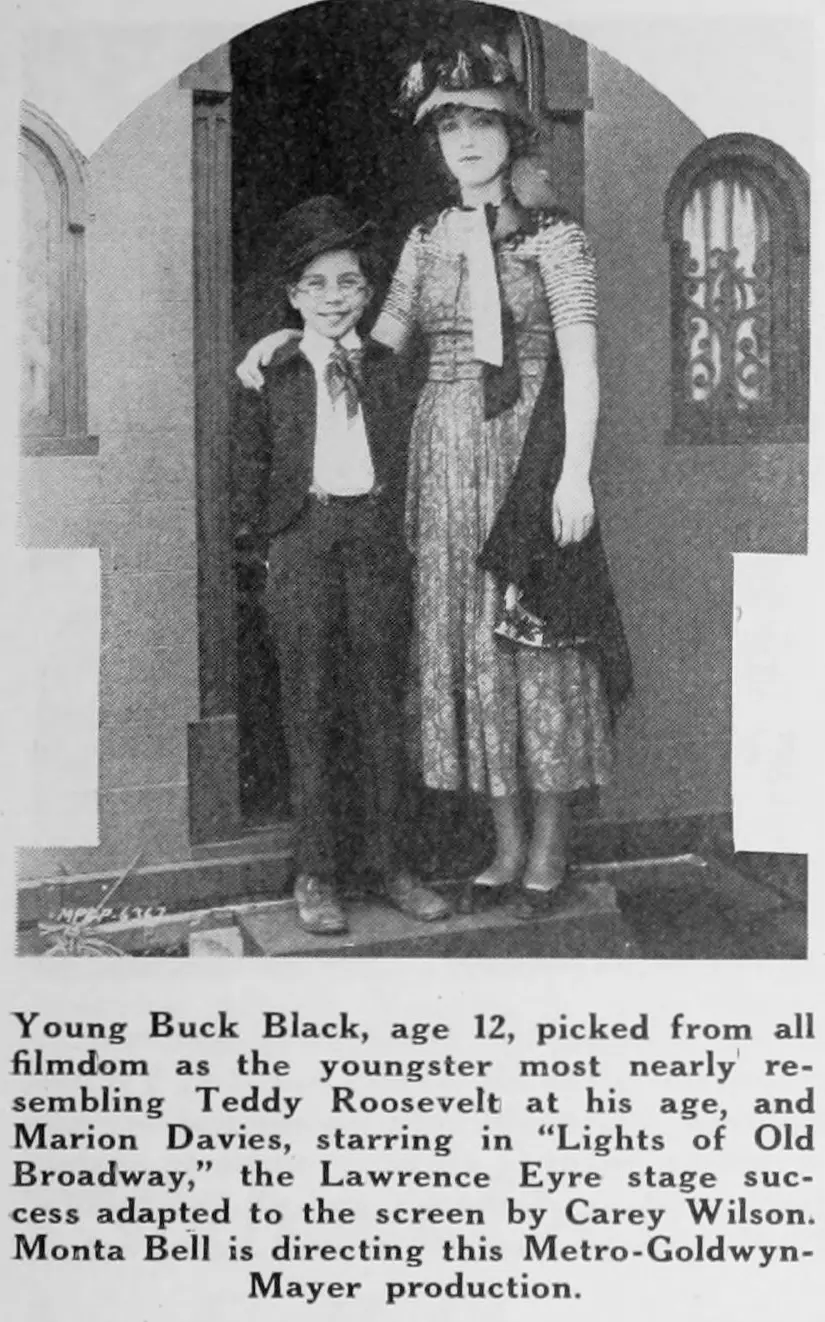
Marion Davies, often unfairly relegated to the footnotes of history as the paramour of William Randolph Hearst, delivers a performance here that should silence any detractor. Playing the dual roles of Fely and Anne, Davies demonstrates a chameleonic range that rivals the sophisticated character work seen in Eyes of Youth. As Fely, the Shantytown gamine, she is a whirlwind of kinetic energy, her comedic timing as sharp as the Irish wit she portrays. Conversely, as the refined Anne, she embodies a restrained melancholy, a gilded bird trapped in the cage of Fifth Avenue etiquette.
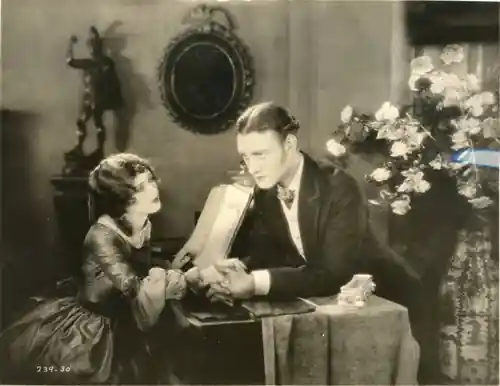
The film’s brilliance lies in its refusal to simplify the class struggle. While many contemporary works like The Third Generation explored the friction between ancestral expectations and modern desires, Lights of Old Broadway grounds its conflict in the literal dirt of the New York streets. The Shantytown sequences are filmed with a gritty naturalism that contrasts sharply with the ethereal, soft-focus opulence of the De Rhondo estate. This visual dichotomy serves as a silent commentary on the arbitrary nature of birthright—a theme also poignantly handled in Naked Hearts.
One cannot discuss this film without acknowledging its technical bravura. The inclusion of early two-strip Technicolor sequences for the musical numbers at Tony Pastor’s theater provides a hallucinatory burst of vibrancy that must have left 1925 audiences breathless. These scenes aren't just spectacles; they represent the 'lights' of the title—the allure of fame and the burgeoning entertainment industry that offered a ladder out of the tenements. The choreography and Davies' infectious joy in these moments provide a necessary counterweight to the film’s darker undercurrents.
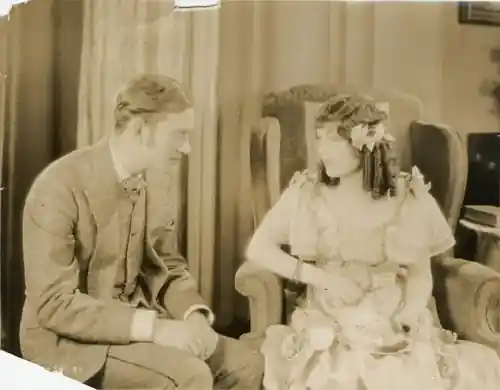
The depiction of the Orangemen’s riot of 1871 is handled with a visceral intensity that predates the epic scale of modern historical dramas. It is a sequence of chaos and conviction, reminding us that the 'Old Broadway' of the title was built on a foundation of sectarian strife and immigrant blood. Dirk De Rhondo (played with a sturdy, chivalrous charm by Conrad Nagel) finds his moral compass within this crucible. His defense of Fely is not merely a romantic gesture; it is a rejection of the insular elitism his father represents. This thematic exploration of individual honor against social upheaval echoes the narrative weight of The Majesty of the Law.
Perhaps the most fascinating element of the screenplay is the integration of Thomas Edison’s invention of the incandescent light bulb. In a stroke of narrative genius, the O’Tandys’ upward mobility is linked directly to the technological revolution. While the De Rhondos represent the stagnant wealth of the past—much like the decaying aristocracy in The Betrothed—the O’Tandys are the beneficiaries of the future. This plot point transforms the film from a simple romance into a metaphor for the American experience: the old guard is eclipsed by those who embrace the coming light.
When Dirk’s father faces financial ruin, the irony is delicious but not cruel. The film avoids the cynicism found in The Danger_Line, opting instead for a resolution of magnanimity. Fely’s decision to save the De Rhondo bank is a masterclass in dramatic irony. She uses the very wealth generated by the 'new' lights to preserve the legacy of those who once looked down upon her. It is a moment of profound social reconciliation that feels earned, rather than contrived.
When placed alongside other films of the mid-20s, Lights of Old Broadway stands out for its pacing and emotional clarity. Unlike the somewhat mechanical progression of The West~Bound Limited, Monta Bell’s direction allows for quiet, character-driven moments that breathe life into the period setting. We see the influence of European sensibilities—perhaps a nod to the stylistic experimentation in A kuruzsló—in how the shadows are utilized to heighten the emotional stakes of the sisters' separation.
The film also navigates the 'fallen woman' or 'abandoned child' tropes with more nuance than The Little Girl That He Forgot. Instead of focusing solely on the tragedy of the orphans, it celebrates their resilience. Fely is not a victim of her circumstances; she is the architect of her own destiny. This agency is a recurring theme in Davis’s best work and reflects the shifting social mores of the 1920s, where women were increasingly asserting their presence in the public sphere, a sentiment mirrored in Real Adventure.
The cinematography by J. Peverell Marley is nothing short of luminous. The way the camera lingers on the textures of the period—the lace of a debutante’s gown, the rough-hewn timber of a Shantytown shack, the gleaming brass of a new bank vault—creates a sense of immersive history. There is a tactile quality to the film that reminds one of the atmospheric depth in Whispers.
Furthermore, the film’s exploration of the Irish-American experience is a vital historical document. It captures the transition from 'No Irish Need Apply' to the political and economic powerhouse the community would become. The O’Tandy household, with its boisterous warmth and fierce loyalty, provides the film's emotional heartbeat. It’s a portrayal that avoids the caricatures often seen in films like Little Italy, offering instead a nuanced look at immigrant aspiration.
Lights of Old Broadway is a triumph of silent storytelling. It manages to balance historical epic, social commentary, and intimate romance without ever losing its narrative footing. Marion Davies delivers what is arguably the definitive performance of her career, proving that she was a star of the highest magnitude, capable of carrying a film of immense complexity.
As we watch the final frames, where the electric lights of a burgeoning New York City finally chase away the shadows of the past, we are reminded of the transformative power of progress—not just technological, but human. The film is a testament to the fact that while class and money may divide us, courage and character are the true currencies of the soul. It is as relevant today as it was in 1925, a glowing beacon from the silent era that continues to illuminate the possibilities of the cinematic medium. For those who found the moral complexities of The Brand of Lopez or the whimsical nature of The Seven Swans compelling, this film is an essential addition to your repertoire. It is a film of big hearts, bright lights, and the enduring spirit of a city that never sleeps.
CRITIC'S SCORE: 9.4 / 10
A dazzling synthesis of history and heart, anchored by a career-best turn from Marion Davies.
IMDb 6.1
1936
Community
Log in to comment.