DbcultAccessing Vault...
7.2/10
Senior Film Conservator
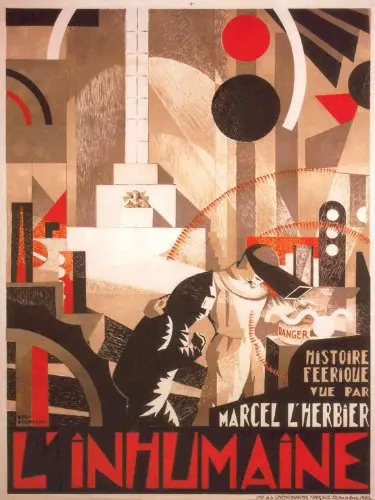
A definitive 7.2/10 rating for a film that redefined the boundaries of cult cinema. L'inhumaine remains a cornerstone of transgressive art.
To approach L’inhumaine is to step into a cathedral of the 1920s zeitgeist, a sprawling, interdisciplinary project that seeks to synthesize every nascent movement of the European avant-garde into a singular, flickering experience. Directed by the cerebral Marcel L’Herbier, this 1924 opus is less a film and more a revolutionary declaration. It is a work where the scenery breathes, the architecture emotes, and the editing rhythms mimic the pulse of a new, electrified century. While some might find the melodrama of Drama na okhote more grounded in traditional pathos, L’Herbier eschews the psychological realism of the era in favor of a visual synesthesia that remains unparalleled.
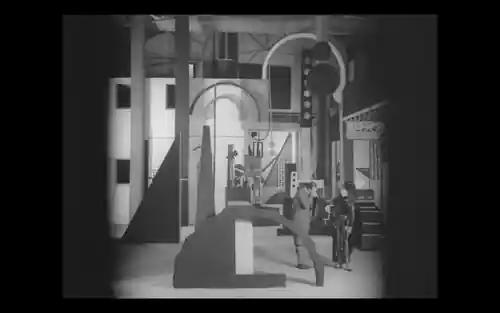
The protagonist, Claire Lescot (portrayed with a statuesque, almost spectral elegance by Georgette Leblanc), is the ultimate modernist icon. She lives within a fortress of Art Deco splendor designed by Robert Mallet-Stevens, a space where every angle is a provocation. Unlike the pastoral innocence found in The Primrose Ring, Claire’s world is one of sharp edges and cold surfaces. Her 'inhumanity' is not a moral failing but a stylistic choice—she is a woman who has transcended the messy, organic impulses of the 19th century to become a living piece of sculpture. The film’s first act is a masterclass in social choreography, as L’Herbier uses wide shots to dwarf his characters within their opulent environments, suggesting that the human element is merely a component of the overarching aesthetic design.
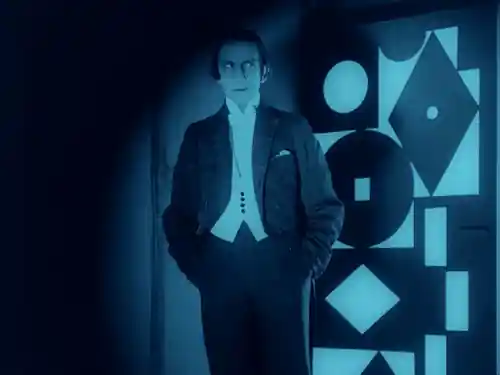
The arrival of Einar Norsen (Jaque Catelain) introduces a friction between the cerebral and the visceral. Norsen is a scientist, but he is also a romantic in the grandest, most self-destructive sense. His laboratory, a cubist fever dream conceived by Fernand Léger, represents the film’s pivot toward science fiction. Here, the gears, pistons, and flashing lights are not just props; they are the vocabulary of a new religion. When Claire mocks his devotion, the subsequent 'suicide' sequence is edited with a frantic, proto-Soviet energy that stands in stark contrast to the languid, theatrical pacing of contemporary works like Colombine.
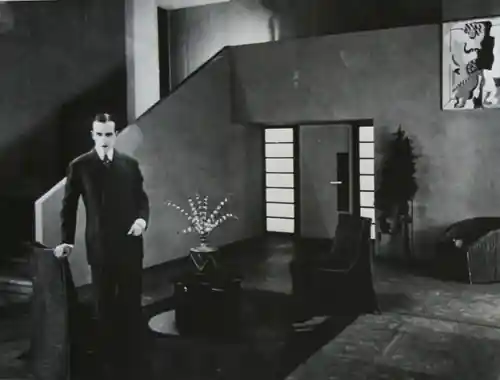
What distinguishes L’inhumaine from its peers is the sheer density of its creative pedigree. This was a 'total work of art' (Gesamtkunstwerk) that enlisted the finest minds of the era. The fashion was handled by Paul Poiret, the furniture by Pierre Chareau, and the music—originally—by Darius Milhaud. This collaborative spirit creates a texture that is incredibly rich; every frame is saturated with intentionality. One might compare the film's obsession with movement and physicality to the kinetic energy of Der Tänzer, yet L’Herbier pushes this further by integrating the camera itself into the dance. The use of rapid-fire cutting during the climax—some shots lasting only a few frames—predates the montage theories of Eisenstein and Vertov, making the viewing experience a physical assault on the senses.

The narrative arc, involving a faked death and a high-tech resurrection, serves as a metaphor for the cinema itself. Just as Norsen uses his machines to bring life back to the 'inhuman' woman, L’Herbier uses the cinematograph to breathe life into the inanimate objects of the set. The film argues that technology is not the enemy of the soul, but its ultimate amplifier. This optimism is a far cry from the gritty, cynical realism found in later crime narratives like Railroaded, or the historical weight of El último malón. Instead, it occupies a space of pure, unadulterated futurism.
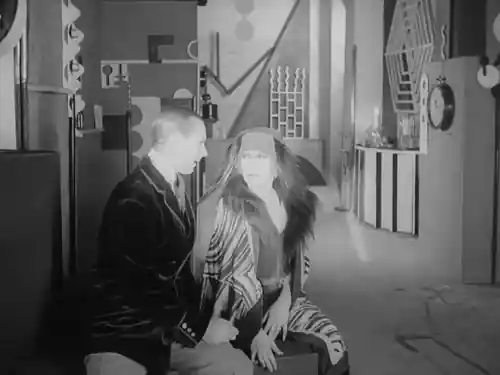
The final third of the film is where the 'inhuman' mask finally slips. Claire’s journey into Norsen’s subterranean world is a descent into the heart of the machine. The laboratory sequence is a visual banquet of geometric patterns and rhythmic light, a precursor to the aesthetics of *Metropolis*. However, where Lang’s vision was dystopian, L’Herbier’s is ecstatic. The resurrection of Claire is achieved through a fusion of art and science, a moment of cinematic alchemy that suggests humanity can be perfected through the embrace of the artificial. This theme of redemption through artifice is a sophisticated evolution of the tropes seen in Love’s Redemption, moving away from moralistic platitudes toward a more complex, aestheticized salvation.
Critics of the time were often baffled by the film’s refusal to adhere to standard narrative logic. They found the performances, particularly Leblanc’s, to be too stylized, too removed from the 'natural' acting seen in films like Komtesse Doddy. But to judge L’inhumaine by the standards of theatrical realism is to miss the point entirely. It is a film that operates on the logic of music and painting. The characters are not people in the traditional sense; they are archetypes, moving through a landscape of ideas. Even the more obscure entries of the era, such as Forbandelsen, rarely achieved this level of conceptual purity.
Viewing L’inhumaine today, one is struck by how much of modern visual culture it predicted. From the sleek lines of contemporary high-fashion photography to the rhythmic editing of music videos, the DNA of this film is everywhere. It lacks the bumbling comedy of Almost Heroes or the straightforward propaganda of Crashing Through to Berlin; instead, it remains an aloof, beautiful, and occasionally frustrating masterpiece that demands total attention. It is a reminder of a time when cinema was not just a medium for storytelling, but a laboratory for the soul.
The film’s conclusion, a blinding flash of light and a sudden, quiet intimacy, suggests that even in a world of steel and glass, the human heart remains the ultimate mystery. It is a sentiment that contrasts sharply with the darker, more theological explorations of Die Teufelskirche. L’Herbier’s world is one of light, speed, and endless possibility. While it may occasionally flirt with the absurdity found in Hoppla, Herr Lehrer, it never loses its dignity. L’inhumaine stands as a monument to the brief moment when the dream of a unified aesthetic world seemed not only possible but inevitable.
In the pantheon of silent cinema, few works are as polarizing or as essential. It is a film that requires the viewer to shed their expectations of plot and character and instead surrender to the flow of images. It is a journey through a forgotten future, a glimpse into a world where art was the only reality that mattered. For those willing to look past its 'inhuman' exterior, it reveals a profound, if icy, beauty that continues to resonate a century later. It is the ultimate testament to the power of the image to transcend the limitations of the word, a true masterpiece of the seventh art that defies categorization and continues to inspire awe in the modern spectator.

IMDb —
1928
Community
Log in to comment.