DbcultAccessing Vault...
Cult Review
Senior Film Conservator
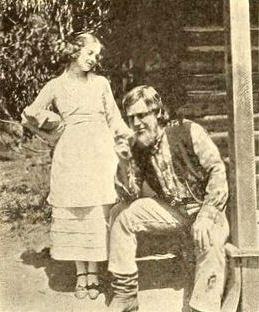
The cinematic landscape of 1919 was a crucible of narrative experimentation, and few films encapsulate the era's obsession with social stratification as poignantly as Louisiana. Adapted from the work of Frances Hodgson Burnett, a writer whose name is synonymous with the alchemy of transformation—think The Secret Garden or Little Lord Fauntleroy—this film serves as a fascinating specimen of early American melodrama. Unlike the grand biblical scale of Judith of Bethulia, Louisiana operates within the intimate, yet no less volatile, geography of the human heart and the North Carolina peaks.
Vivian Martin, an actress whose luminosity often rivaled the more celebrated Mary Pickford, brings a peculiar, ethereal quality to the titular character. Louisiana is not merely a girl; she is a canvas upon which the anxieties of the post-Victorian world are painted. Her father’s decision to 'improve' her through the medium of a resort hotel is a trope that resonates through the history of silent cinema, echoing the thematic concerns found in The Heart of Youth. Martin’s performance is a masterclass in subtlety; her initial discomfort in the presence of silver service and silk gowns is conveyed through a series of micro-expressions that bypass the need for intertitles.
The resort itself functions as a liminal space—a bridge between the wild, untamed beauty of the Blue Ridge and the rigid, often hypocritical, structures of the wealthy. It is here that the film’s visual language truly shines. The cinematography captures the stark contrast between the verticality of the mountains and the horizontal, sprawling luxury of the hotel lobby. This visual dichotomy mirrors the internal struggle of the protagonist: to ascend socially is to leave the solid ground of her upbringing behind.
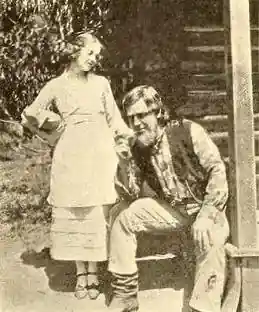
Every great melodrama requires a foil, and in Louisiana, that role is occupied with terrifying conviction by Noah Beery. As the mountain boy who stakes a claim on Louisiana’s soul, Beery provides a visceral counterpoint to the refined, perhaps somewhat anemic, wealthy suitor played by Arthur Allardt. Beery represents the 'old world'—not the old world of Europe, but the primordial, rugged American frontier that was rapidly being encroached upon by industrialization and 'culture.' His performance is reminiscent of the rugged masculinity seen in The Last of the Duanes, yet it is infused with a specific regional resentment that feels startlingly modern.
The conflict between the two men is not merely over a woman; it is a battle for the future of the American spirit. Does the future lie in the manicured gardens of the resort or the unyielding granite of the peaks? The film refuses to offer a simplistic answer, though its sympathies clearly lie with the possibility of growth. This nuanced approach to class and character is a testament to Alice Eyton’s screenplay, which manages to preserve the emotional core of Burnett’s prose while adapting it for the kinetic demands of the silver screen.
In examining the secondary characters, we find a rich tapestry of 1910s archetypes. Lillian Leighton and Robert Ellis provide a supporting framework that fleshes out the social stakes of Louisiana’s transformation. The film shares a certain DNA with The Tar Heel Warrior, particularly in its attempt to capture the specific cadence of North Carolinian life, even within the silent medium. There is a sense of place here that is often lacking in the studio-bound productions of the later 1920s. The location shooting—or at least the convincingly rendered sets—imbues the film with a verisimilitude that grounds the high-flown emotional stakes.
One cannot discuss Louisiana without acknowledging its place in the broader cinematic discourse of 1919. While films like The Broken Commandments explored the moral fallout of modern life, Louisiana focuses on the socioeconomic mechanisms of that modernity. It asks: at what cost does one acquire 'culture'? Is the loss of one's vernacular identity a fair price for the gain of social capital? These are the same questions that would later haunt films like Salt of the Earth, albeit in a more overtly political context.
Technically, the film utilizes lighting to extraordinary effect. The scenes set in the mountain cabin are bathed in deep shadows and harsh, directional light, emphasizing the ruggedness of the environment. In contrast, the resort scenes are flooded with a soft, diffused glow, suggesting a world of ease and artifice. This use of light as a narrative device is a precursor to the sophisticated visual storytelling that would define the next decade of cinema. It’s a far cry from the more static presentations found in earlier works like Paz e Amor, demonstrating how rapidly the medium was evolving.
The pacing of the film is also noteworthy. Director Robert G. Vignola (though often uncredited in contemporary discussions of this specific Burnett adaptation) ensures that the transition from the hills to the hotel doesn't feel rushed. We are allowed to feel the weight of Louisiana’s isolation in both worlds. When she is in the mountains, she is too 'different' because of her mother’s legacy; when she is at the resort, she is a 'pretender.' This sense of double-alienation is what gives the film its lasting emotional resonance. It mirrors the immigrant experience or the experience of the internal migrant, themes explored with varying degrees of success in films like Armenia, the Cradle of Humanity, though Louisiana keeps its focus strictly on the American domestic sphere.
Frances Hodgson Burnett’s involvement as a writer ensures that the story avoids the more saccharine pitfalls of the 'poor girl meets rich boy' genre. There is a steeliness to Louisiana’s character that reflects Burnett’s own history of resilience. The film doesn't just want her to be happy; it wants her to be autonomous. This drive for autonomy is what sets the film apart from more conventional romances like Beulah or the moralistic weight of Martha's Vindication.
Ultimately, Louisiana is a triumph of silent era storytelling. It manages to be both a sweeping romance and a sharp social critique. It captures a specific moment in American history when the mountains were being 'discovered' by the leisure class, and the inhabitants of those mountains were being forced to choose between their past and a curated future. The film’s final act, which I shall not spoil, provides a resolution that feels earned rather than forced, a rarity in an era often defined by the deus ex machina.
For those who appreciate the nuanced exploration of character within the constraints of early cinema, Louisiana is essential viewing. It stands alongside films like The Halfbreed in its willingness to look at the 'outsider' with empathy rather than pity. Vivian Martin’s luminous presence, combined with the thematic depth of Burnett’s writing, creates a cinematic experience that transcends its 1919 origins. It is a haunting, beautiful, and intellectually stimulating piece of art that deserves its place in the pantheon of silent greats, far outshining the more formulaic releases of its time like Stop Thief! or the purely aesthetic exercises of Revelj.
In the end, Louisiana is a film about the names we carry and the places we claim. It is a story of the North Carolina hills, but its heart belongs to the universal struggle for self-definition. Whether you are a scholar of the silent era or a casual fan of classic melodrama, this film offers a rich, rewarding journey into a world that, while long gone, continues to speak to our modern sensibilities regarding class, identity, and the meaning of 'home.'
IMDb —
1921
Community
Log in to comment.