DbcultAccessing Vault...
Cult Review
Senior Film Conservator
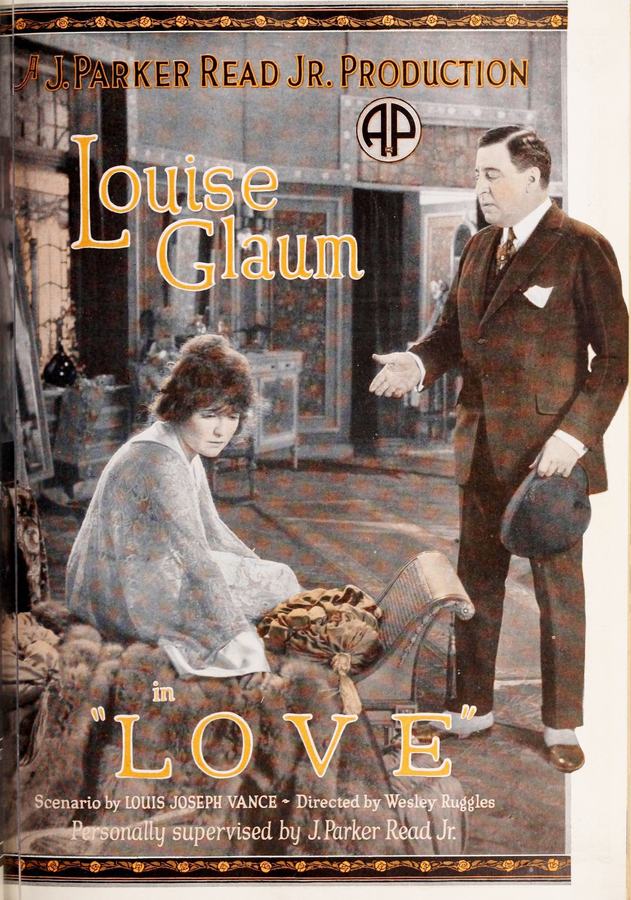
There are silents that merely flicker, and then there is Love—a film that arrives like a bruise you keep pressing because the ache tells you you’re still alive. Directed by the under-sung Wesley Ruggles and released at that hinge-moment when the teens collapsed into the twenties, it is less a love story than an autopsy of American aspiration, performed with a sewing needle instead of a scalpel.
From the first iris-in, cinematographer Devereaux Jennings frames Manhattan as a tungsten-lit abattoir: sweatshop rows recede like conveyor belts of the soul, each stitch a suture holding society’s wound together. Natalie Storm—played by Louise Glaum with the languid ferocity of a caged panther—moves through these frames as both victim and voyeur, her kohl-ringed eyes registering every indignity while her mouth refuses to plead. The film’s visual grammar borrows from German Expressionism without the caricature: angles tilt just enough to suggest moral vertigo, but never so steep that the world becomes cartoon.
When the mother’s cough becomes a death rattle, Jennings dims the bulb until the screen is almost charcoal, letting the soundtrack of clacking needles stand in for a funeral dirge. The moment is so economically brutal that later, when Dunning offers Natalie a champagne bubble of a life, we understand why she swallows it whole—even as the fizz burns like acid.
Joseph Kilgour’s Alvin Dunning is no mustache-twirling Snidely; he is worse—plausible. With the torso of a linebacker and the patience of a spider, he courts Natalie by staging charity balls for orphan asylums while shorting the very railroads that ferry the orphans’ bread. Kilgour plays him like a man who has read all the etiquette manuals merely to learn which fork can double as a weapon. In one scalding insert, he fastens a diamond choker around Natalie’s throat, the clasp clicking shut like a guillotine. The camera lingers on her collarbones—two pale brackets enclosing a life sentence.
Meanwhile, James Kirkwood’s Tom Chandler is introduced in a South American cantina lit by a single kerosene lamp, his face sheened with the copper dust that will soon make him Midas. Kirkwood has the square-jawed earnestness of a Frank Capra hero, yet the actor threads it with a self-doubt that keeps the character from calcifying into saintdom. When he offers Natalie a future measured in honest calluses rather in stock options, the film stages the proposal in a graveyard of obsolete locomotives—rusted caskets that remind us every empire ends in scrap metal.
The screenplay, cobbled from Louis Joseph Vance’s novella by Carol Kapleau and H. Tipton Steck, has the creaky plot hinge of a last-minute market tip. Yet the way it’s visualized turns cliché into chiaroscuro: a close-up of a telegraph key tapping out the ticker code, the letters superimposed over Natalie’s iris until her pupil becomes a tiny stock exchange. When the money arrives, it isn’t in the form of paper bills but in the silhouette of a departing ocean liner—freedom as negative space. The film intuits that in modernity, capital is less what you clutch than what you divest.
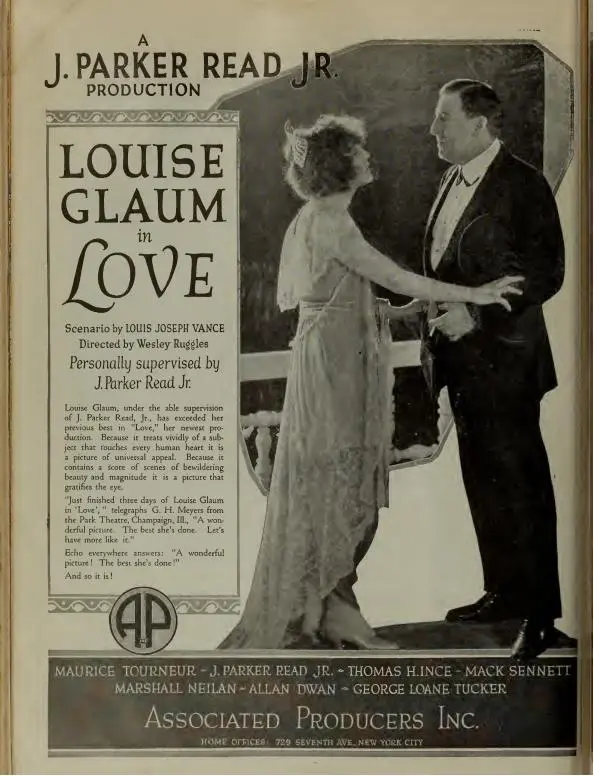
The climactic car crash—rendered with glass-plate negative superimpositions and a dolly shot that races alongside the chassis—feels shockingly 21st-century in its kinetic nihilism. Dunning dies not by poetic justice but by Newtonian physics; Natalie survives wrapped in a lattice of moonlight and torn chiffon. When Tom lifts her from the wreck, the camera adopts a god’s-eye vantage, spiraling upward until the lovers shrink to a single ember against the asphalt. The moral ledger is left unsettled: she is complicit, he is complicit, we—voyeurs in the dark—are most complicit of all.
Louise Glaum, remembered today mainly for vamp roles, here gives a masterclass in graduated self-disgust. Watch the micro-muscular twitch at the corner of her mouth when Dunning introduces her as “my protégé” to a roomful of brokers—half smile, half snarl, the moment she realizes protegé is merely Latin for “paid in advance.” Opposite her, little Peggy Cartwright as the tubercular sister delivers the film’s most lethal line via intertitle: “I dreamed the sewing machine was singing mama to sleep.” Innocence articulated as industrial lullaby—Keats could not have improved it.
Though shot in monochrome, the tinting strategy speaks a chromatic dialect: amber for tenement scenes (the color of cheap tallow candles), cyan for the Andean sequences (a ghost of altitude sickness), and sulfurous yellow for Dunning’s soirées—jaundice as lifestyle. Edith Yorke’s gowns for Natalie progress from calico to lamé to finally a blood-streaked chemise, each fabric upgrade another ring in Dante’s spiral.
Where Her Greatest Love sentimentalizes maternal sacrifice and Comradeship opts for proletarian camaraderie, Love refuses the balm of collective uplift. It is closer in spirit to The Fear of Poverty, yet more fatalistic; closer to A Tale of Two Cities in its willingness to let the innocent choke on someone else’s revolution. The film’s true analogue might be the Hungarian Zoárd mester—both locate salvation not in social reform but in the perilous privilege of being scraped clean by catastrophe.
A 4K restoration by the Library of Congress—scanned from a 35mm nitrate print discovered in a Buenos Aires vault—premiered at Pordenone in 2022. The tints were recreated using photochemical analysis of dye samples lifted from the original positive; the Mont Alto Motion Picture Orchestra premiered a compilation score stitched from 1919 cue sheets and a fox-trot titled “Copper Queen,” unearthed in a Denver thrift store. Streaming rights are currently split between Criterion Channel (North America) and ArteKino (EU), with a Blu-ray slated for autumn that will include an audio commentary by this critic and a video essay on Louise Glaum’s post-Hollywood career breeding Pomeranians.
Ninety-three minutes of flickering nitrate have rarely felt so caustically contemporary: gig economies still monetize desperation, Wall Street still sells absolution by subscription, and lovers still crash into each other hoping the impact will realign their fractures. Love offers no redemptive thesis, only the chillier consolation that surviving the wreck does not automatically sanitize the guilt. Yet in that final shot—Natalie’s bandaged hand slipping into Tom’s calloused palm—there is a whisper that perhaps love is less a state of grace than a bilateral treaty to shoulder the weight of one another’s crimes. The film fades, not on a kiss, but on a tremor: two pulses negotiating a shared rhythm, audible above the projector’s death rattle. The house lights rise, and you exit into neon dusk feeling oddly, inexplicably, laundered.

IMDb 5.8
1930
Community
Log in to comment.