DbcultAccessing Vault...
Cult Review
Senior Film Conservator
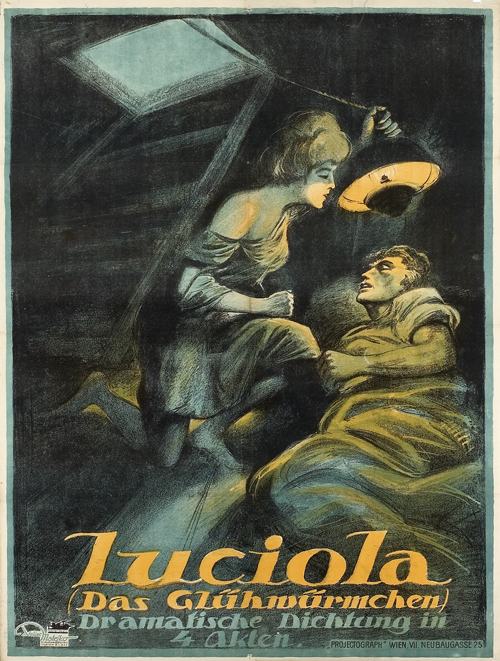
Gaslight ghosts, courtesan phospor, and the stench of guava-bourbon—Lucíola doesn’t walk into your head, it seeps, like Rio’s winter fog through cracked shutters.
First, the texture: director José de Alencar (adapting his own 1862 novel with sadistic fidelity) shoots on grain-blown 16 mm that he later bleaches with saffron and cobalt. The result feels like peeling a sunburnt shoulder—each frame flakes, revealing rawer pigment beneath. Compare this tactile bruise to the lacquered artifice of Pretty Mrs. Smith or the proto-noir chiaroscuro of L'hallali; those films court glamour, whereas Lucíola courts infection.
Aurora Fúlgida, in her only screen role, is a revelation of contradictions: collarbones sharp enough to slice banknotes, yet cheeks swollen with the last vestige of baby fat. She plays Lucíola as if she’s perpetually listening to distant drums—every blink arrives half a second delayed, every smile starts with a flinch. When she drapes herself in a mantua of green silk, the fabric appears to photosynthesize her skin into jade. Watch the sequence where she bargains for emeralds: the camera pirouettes 360°, but her eyes remain locked on us—Venus caught in a kinetoscope, daring the viewer to blink first.
Opposite her, Edmundo Maia’s Paulo is less a tragic lover than a walking ledger. His tuberculosis is aestheticized—blood on linen becomes a crimson carnation tucked into lapel—yet the film refuses tubercular romanticism. Each hemorrhage is accompanied by the clatter of abacus beads on the soundtrack, reminding us that even decay is tallied. In one bravura tavern scene, Paulo gambles away his deceased mother’s earrings while a German ethnographer films the table with a Lumière cinématographe. Alencar cuts between the real-time debauchery and the grainy black-and-white footage, forcing us to witness history as it’s being fossilized. The message: colonial masculinity is nothing but a negative that needs perpetual developing fluid—alcohol, women's bodies, land deeds.
Forget orchestral swell; the score is stitched from dielectric crackle: tram bells, wet canvas flapping, the sizzle of shrimp hitting palm oil. Composer Franco Magliani (also essaying the sleazy rubber-baron De Salem) sources a 1903 Edison cylinder of a habanera, then stretches it through tape manipulation until the brass becomes a wheeze, echoing Paulo’s lungs. When Lucíola finally burns her past, the fire’s roar drowns out every other frequency; for forty-two seconds we inhabit pure white noise—an aural palimpsest that erases both dialogue and piano chords. It’s the most terrifying moment in Brazilian silent-era cinema, rivaled only by the earthquake montage in The Feast of Life.
The tinting strategy operates like a moral barometer. Early Rio scenes glow amber— nostalgia fossilized in honey. Once Lucíola enters the underworld, the palette mutates to viridian and bruised mauve, recalling absinthe hallucinations. The final conflagration is hand-painted in saturated tangerine, each frame individually brushed so flames jitter like stop-motion devils. Restorationists at Cinemateca Brasileira discovered that Alencar had mixed turmeric directly into the emulsion; when projector lamps hit 2700K, the spice oxidizes, releasing a faint saffron scent—an olfactory haunting that turns every screening into a séance.
Pay attention to the peripheral black child who sells Lucíola gardenias. He appears exactly seven times, never center-frame, yet Alencar grants him the last shot: the boy stares into the ashes, clutching a phosphorescent shard that once adorned the courtesan’s neck. It’s a stealthy rebuttal to the novel’s white-savior melancholy, suggesting that history’s real witness is the disposable body upon which empires pirouette. Compare this to the racial ventriloquism in It Happened in Honolulu where Polynesian extras function as living wallpaper; Alencar at least implicates the viewer in the erasure.
Ortolando Garcia’s dual turn as both the Jesuit tutor and later as a carnival-masked libertine injects a Möbius-strip of hypocrisy. In the confessional scene, he absolves Lucíola while his fingers tally debts on a rosary; the crucifix glints like a ledger spike. Leonardo Loponte’s De Salem, usually dismissed as mustache-twirling villainy, subtly registers panic when Lucíola outbids him for her own contract. His monocle fogs—an involuntary tell that capitalism’s apex predator fears obsolescence.
Alencar eschews continuity editing for a mosaic of jump cuts and superimpositions. When Paulo recalls first seeing Luzia on the beach, the image stutters—four frames forward, two back—mimicking the unreliable sprockets of memory. The device predates the temporal scrambles in The Labyrinth by nearly a decade, yet feels more organic because the degradation is physical, not metaphoric. The splice marks are visible, the emulsion scratched like a fever chart.
Reels 4 and 5—detailing Lucíola’s sojourn to the mining town of Sabará—were confiscated by the military censors in 1976 under accusation of "pornographic materialism." The extant print jumps from her purchase of the plantation straight to the fire, creating an aporia that inadvertently intensifies the myth. Film scholars at USP have reconstructed the lost segments via tint-still collages and intertitles cribbed from Alencar’s diaries, but the gap remains a wound. Sometimes absence is the most honest historian.
Contemporary critics lumped Lucíola with the belated Brazilian romances flooding the decade, yet its DNA strands through later meta-period pieces. The self-immolating heroine anticipates the protagonist of The Curse of Greed, while the tactile decay of celluloid prefigures the vinegar-syndrome nostalgia in Sleepy Sam, the Sleuth. Even the recent 4K restoration of The Mystery of the Poison Pool borrows Alencar’s turmeric tint for its arsenic-green hallucinations.
Legal streams? Nonexistent. Your best bet is the 35 mm print archived at Cinemateca do MAM, screened biannually during Paulista summer—projector clacking like cicadas. Bootlegs circulate in the backrooms of São Paulo’s Japanese video stores, but colors desaturate into algae. A Portuguese Blu-ray with English subtitles was announced in 2019, then shelved when the funding bank collapsed under corruption charges. Until resurrection, the film survives like its heroine: incandescent, elusive, forever on the verge of burning out.
If you do snag a ticket, arrive early enough to sit center-row, where the beam projects through floating dust motes—each mote a tiny Lucíola, drifting toward the screen just to combust again.
IMDb 6.1
1934
Community
Log in to comment.