DbcultAccessing Vault...
6.1/10
Senior Film Conservator
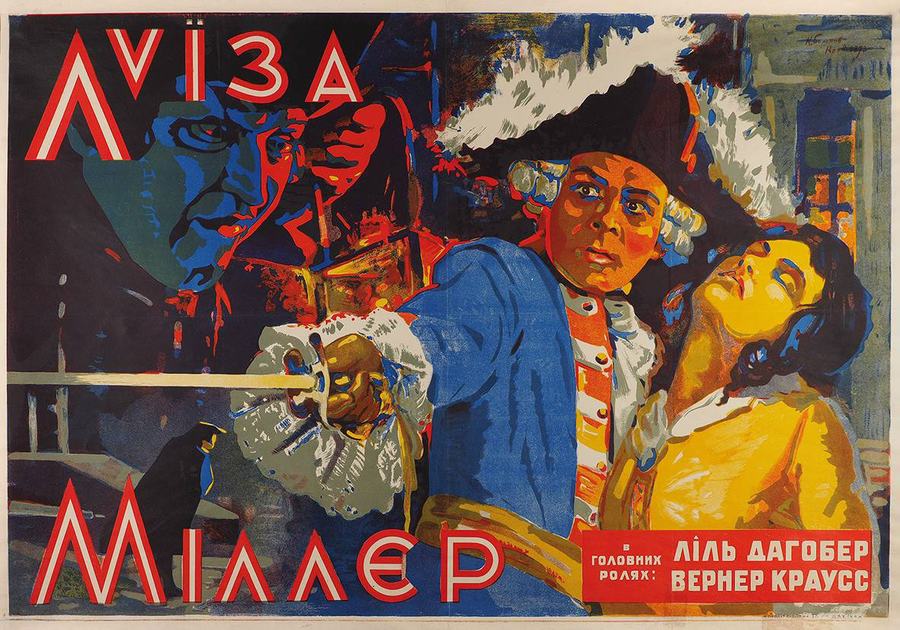
A definitive 6.1/10 rating for a film that redefined the boundaries of cult cinema. Luise Millerin remains a cornerstone of transgressive art.
The 1922 iteration of Luise Millerin, directed by Carl Froelich, stands as a monumental bridge between the theatrical grandiosity of the 18th century and the burgeoning psychological interiority of the Weimar Republic’s golden era of cinema. While many contemporary viewers might perceive silent adaptations of stage plays as stiff or archaic, this specific rendering of Friedrich Schiller’s Kabale und Liebe possesses a kinetic energy and a visual vocabulary that anticipates the darker, more fragmented narratives of the mid-1920s. The collaboration between Froelich and a young, pre-fame Georg Wilhelm Pabst on the script results in a screenplay that strips away the verbosity of the stage to reveal the raw, pulsating nerves of class warfare.
Lil Dagover, fresh from her iconic role in The Cabinet of Dr. Caligari, brings a spectral yet grounded quality to the titular role. Her Luise is not merely a victim of circumstance but a vessel of profound moral conviction. In the silent medium, where the spoken word is replaced by the geometry of the face, Dagover excels. Her performance avoids the hyperbolic pantomime often associated with the era; instead, she utilizes subtle shifts in posture and a haunting ocular intensity to convey the weight of her social displacement. Unlike the more whimsical heroines found in films like The Floor Below, Dagover’s Luise is burdened by the realization that her very existence is a threat to the established order.
Paul Hartmann’s Ferdinand provides a sharp, almost jagged contrast. His portrayal of the rebellious aristocrat is fueled by a volatile mixture of idealism and entitlement. Hartmann captures the frantic energy of a man trying to outrun his own shadow—the shadow being his father’s legacy. The chemistry between Dagover and Hartmann is palpable, a rare feat in an era where romantic leads often felt like static icons. Their scenes together are bathed in a soft, diffused light that suggests a sanctuary, which the film systematically dismantles as the plot progresses.
The set design in Luise Millerin is a masterclass in psychological architecture. The Miller household is characterized by cramped, vertical lines—wooden beams that seem to press down on the characters, emphasizing their proletarian confinement. In contrast, the courtly settings are cavernous and sterile, filled with mirrors that reflect the duplicity of the inhabitants. This visual dichotomy serves as a silent narrator, articulating the impossibility of the lovers' union long before the poison is ever introduced. One might compare this meticulous attention to atmosphere with The Alster Case, though Froelich’s work here is far more concerned with the metaphysical than the procedural.
The cinematography utilizes deep shadows to hide the faces of the conspirators, most notably the President (played with chilling restraint by Walter Janssen) and his lackey Wurm. The use of low-angle shots to depict the President creates a sense of looming, inescapable authority. It is a visual language of dread that mirrors the narrative’s descent. While other films of the period, such as Say! Young Fellow, leaned into the optimism of the youth, Luise Millerin is an excavation of the decay inherent in old-world structures.
The contribution of G.W. Pabst to the screenplay cannot be overstated. Though often overshadowed by his later directorial masterpieces, his work here demonstrates an early fascination with the intersection of social forces and individual psychology. The adaptation retains the 'Sturm und Drang' spirit of Schiller’s original text but infuses it with a cynicism that feels distinctly modern. The manipulation of the letter—a central plot device—is handled with a mounting tension that rivals the suspense found in The Plumber or even the legalistic dread of Le coupable.
The dialogue-heavy nature of the original play is translated into a series of potent visual vignettes. The film understands that the tragedy of Luise Millerin is not just in the death of the lovers, but in the systematic destruction of their reputations. The 'intrigue' (Kabale) of the title is rendered as a physical presence—a web of glances, whispers, and sealed envelopes that slowly entangles the protagonists. This focus on the machinery of social destruction is reminiscent of the themes explored in God's Man, where the individual is crushed by forces far beyond their control.
Releasing in 1922, Luise Millerin arrived at a time when Germany was grappling with its own identity crisis. The collapse of the monarchy and the birth of the Weimar Republic made Schiller’s critique of aristocratic tyranny particularly resonant. The film does not shy away from the ugliness of power. The Lady Milford, portrayed by Gertrude Welcker, is given a sympathetic treatment that highlights the precariousness of women within these power structures—a theme also touched upon in Sisters of the Golden Circle. Milford is as much a prisoner as Luise, albeit in a more gilded cage.
The film’s pacing is deliberate, allowing the audience to feel the slow tightening of the noose. It eschews the frantic editing of some American imports, choosing instead a more rhythmic, almost operatic progression. This allows the emotional beats to resonate with a frequency that is often lost in more action-oriented silent films like Protea II. Instead, it finds a kinship with the somber, moralistic tone of Bog pravdu vidit, da ne skoro skazhet, focusing on the spiritual toll of injustice.
The climax of the film is a masterclass in restraint. The poisoning scene is filmed with a stark, unflinching eye. There are no grand histrionics here; only the quiet, terrifying realization of a love that has been weaponized against itself. Ferdinand’s jealousy, stoked by the President’s machinations, becomes the very instrument of Luise’s destruction. This psychological complexity elevates the film above standard melodramas like Dangerous Love or A Bashful Bigamist.
As the poison takes hold, the visual style shifts. The lighting becomes more harsh, the shadows more elongated, reflecting the distortion of Ferdinand’s perception. It is only in her dying moments that Luise is able to reveal the truth, and the subsequent reconciliation is both heartbreaking and futile. The final shot of the film, focusing on the devastated Miller, serves as a poignant reminder that while the lovers have found peace, the survivors are left to inhabit a world that remains fundamentally unchanged. This bleakness is a hallmark of the finest Weimar cinema, mirroring the disillusionment found in Hoppla, Herr Lehrer or the stark realities of La luz, tríptico de la vida moderna.
Luise Millerin (1922) remains a vital piece of cinematic history, not just as an adaptation of a literary classic, but as an exploration of the medium's ability to convey complex social critique. It avoids the pitfalls of being a mere 'filmed play' by utilizing the unique properties of the camera to expand upon Schiller’s themes. The performances, particularly those of Dagover and Janssen, are timeless, transcending the stylistic conventions of the 1920s. For those interested in the evolution of German cinema and the transition from theater to screen, this film is an essential artifact. It possesses a gravitas and a visual sophistication that many modern adaptations fail to achieve, proving that the silent era was not a period of cinematic infancy, but one of profound and nuanced maturity.
In the pantheon of early 20th-century drama, this film occupies a space similar to Dolken or Other Men's Shoes, where the moral stakes are absolute and the consequences are final. Carl Froelich’s direction, coupled with the early brilliance of Pabst’s writing, ensures that the tragedy of Luise Millerin continues to resonate, reminding us that the 'intrigue' of the powerful will always seek to extinguish the 'love' of the powerless. It is a haunting, beautiful, and ultimately devastating work of art that demands to be seen by anyone who appreciates the power of visual storytelling.
IMDb —
1919
Community
Log in to comment.