DbcultAccessing Vault...
5.7/10
Senior Film Conservator
A definitive 5.7/10 rating for a film that redefined the boundaries of cult cinema. Lulù remains a cornerstone of transgressive art.
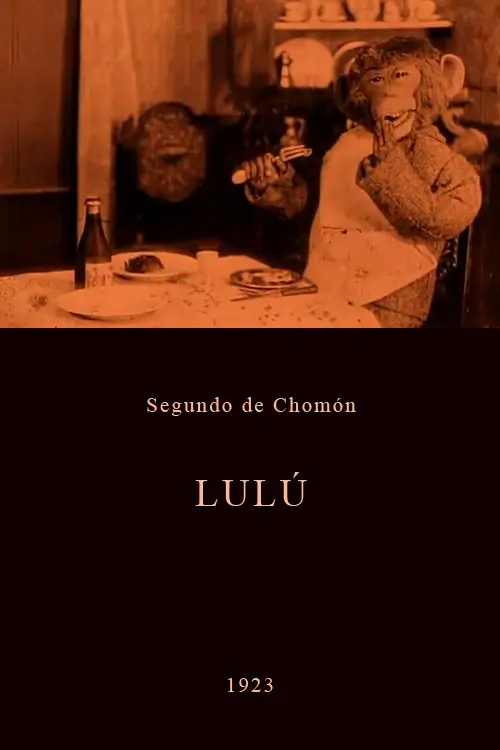
To delve into the cinematic world of Segundo de Chomón is to unearth a treasure trove of early filmic innovation, a realm where the impossible pirouetted with charming nonchalance across the silver screen. His 1923 creation, Lulù, is no mere historical footnote; it is a vibrant, albeit brief, testament to the boundless imagination that characterized the nascent years of cinema. This particular offering, featuring a 'sportive and elegant monkey with magical powers,' transcends its simple premise to deliver a captivating spectacle that, even a century later, retains a peculiar, almost enchanting, allure.
Chomón, often overshadowed by his contemporary Georges Méliès, was a master illusionist in his own right, pushing the boundaries of what was technologically feasible in the early 20th century. His filmography is replete with examples of trick films, hand-colored extravaganzas, and stop-motion wizardry, techniques he honed and perfected. Lulù, in its understated brilliance, embodies this spirit of experimental artistry. It doesn't aspire to grand narratives or profound psychological insights; instead, it revels in the sheer joy of visual trickery and the delightful absurdity of its central premise.
The narrative, as succinct as it is imaginative, centers on a highly sophisticated primate whose domestic peace is shattered by a common thief. What follows is anything but common. The monkey, Lulù, is not merely a creature of instinct; it's a being endowed with an almost whimsical command over its environment. We witness a series of escalating magical defenses, each more charmingly ingenious than the last. Objects shift, disappear, and reappear with a mischievous flair, all at the behest of our simian protagonist. It's a delightful subversion of expectation, where the vulnerable becomes the formidable, and the ordinary home transforms into a magical fortress.
The robber, a stock character of early cinema, serves primarily as a foil against which Lulù's powers can be spectacularly demonstrated. He represents the intrusion of mundane malice into a world that, through Chomón's lens, is capable of extraordinary resistance. The humor derives from the robber's increasing bewilderment and frustration as he grapples not with a mere animal, but with forces beyond his comprehension. This escalation of magical retaliation against a human antagonist might remind one of the playful chaos in a film like Daffy House, though Lulù injects a layer of true, inexplicable magic rather than just slapstick.
Chomón's technical prowess is the true star of Lulù. The 'magical powers' of the monkey are, of course, the result of masterful cinematic trickery. One can envision the painstaking process: stop-motion animation for objects moving seemingly on their own, carefully timed cuts, and perhaps even early forms of matte painting or superimposition to achieve the illusion of teleportation or levitation. These effects, though rudimentary by today's standards, were revolutionary for their time, demanding immense precision and creative ingenuity from the filmmaker and his crew.
The elegance of Lulù's movements, the 'sportive' aspect, is likely achieved through a combination of trained animal performance and clever editing. It's a testament to the early filmmakers' ability to imbue non-human characters with personality and agency long before CGI made such feats commonplace. The film's brevity ensures that the illusions never outstay their welcome, leaving the viewer with a sense of wonder rather than fatigue. This focus on concise, impactful visual storytelling is a hallmark of the era, distinguishing it from the more extended narratives that would soon dominate, such as those found in later features like The Child of Paris, which prioritized human drama over pure spectacle.
The plot introduces a policeman, initially an agent of law and order, who becomes an unexpected ally. This development adds another layer to the whimsical narrative. Instead of simply apprehending the robber through conventional means, the officer finds himself drawn into Lulù's magical defense, perhaps initially skeptical, but ultimately convinced by the irrefutable evidence of the monkey's supernatural capabilities. This partnership between man and magical beast against a common human foe is charmingly unconventional, highlighting a nascent cinematic fascination with cross-species collaboration that would later become a staple in various genres.
The policeman's role also serves to ground the fantastical elements, providing a human perspective on the extraordinary events unfolding. His presence validates the 'reality' of Lulù's powers within the film's diegesis, making the magical feats more impactful. It's a subtle yet effective narrative device that elevates the film beyond a mere showcase of special effects, imbuing it with a rudimentary sense of plot progression and character interaction, albeit in an exceedingly simplified form. This kind of interaction, where authority figures encounter the inexplicable, is a recurring motif in early cinema, often played for comedic effect, much like the broader societal reactions to new technologies or phenomena.
Animals in early cinema often served as subjects of curiosity, comedic relief, or symbolic figures. Lulù elevates its simian star to an unprecedented level of agency and fantastical power. Unlike documentaries of the era, such as Baptême du Belgenland par S.E. le cardinal Mercier, which captured real-world events, Lulù delves into pure fantasy, using an animal as its central magical conduit. This anthropomorphism, coupled with genuine magical abilities, makes Lulù a memorable character, capable of eliciting both amusement and a genuine sense of wonder.
The choice of a monkey is particularly apt. Monkeys, with their inherent agility and often human-like expressions, lend themselves well to cinematic trickery and anthropomorphic narratives. Their mischievous nature aligns perfectly with the playful, defensive magic Lulù employs. This film, in its own way, foreshadows a long tradition of animal protagonists in cinema, from the loyal companions to the fantastical creatures, demonstrating that compelling characters need not always be human. The film's ability to create empathy and engagement with a non-human lead, using only visual cues and clever effects, is a testament to Chomón's innate understanding of cinematic language.
While Lulù might not be as widely celebrated as some of Méliès's grander productions, its significance in the history of special effects and fantastical storytelling cannot be overstated. It exemplifies the spirit of experimentation and boundless creativity that defined the early decades of cinema. Chomón, a truly international filmmaker working across France, Italy, and Spain, brought a unique sensibility to his craft, often combining the theatricality of magic shows with the nascent language of film.
The film serves as a delightful snapshot of a period when cinema was still defining itself, exploring its own capabilities and limitations. It's a reminder that before complex narratives and character arcs became standard, the sheer spectacle of moving images and the magic of illusion were enough to captivate audiences. Films like Buried Treasure or The Gilded Spider, while offering more conventional dramas or adventures, still relied on the visual storytelling techniques being pioneered by trick film artists like Chomón.
Viewing Lulù today is an exercise in appreciating the foundational elements of film as an art form. It's not about comparing it to modern blockbusters, but understanding its context as a piece of pioneering entertainment. Its simple plot allows the audience to fully immerse themselves in the visual gags and the delightful absurdity of a magical monkey defending its home. The film's legacy lies not in its grand themes, but in its charming demonstration of what cinema could achieve with ingenuity and a touch of the fantastic.
What makes Lulù resonate even now is its unabashed embrace of whimsy. There's an innocence to its magic, a playful spirit that transcends time. In an era where many films, such as High Speed or Bucking the Line, focused on action or drama, Lulù offered pure escapism through fantasy. It reminds us that cinema's earliest purpose was often to transport, to enchant, and to surprise.
The film's conciseness is also a virtue. It delivers its premise, executes its tricks, and concludes before any sense of tedium can set in. This economical storytelling is a lesson in itself, demonstrating that sometimes, less is indeed more, especially when the 'less' is packed with such inventive visual flair. Its charm lies in its directness, its lack of pretension, and its sheer delight in showcasing the magical potential of the moving image. It’s a film that asks for nothing more than a moment of suspended disbelief and delivers a charming, magical reward.
In conclusion, Lulù stands as a delightful, if often overlooked, gem in Segundo de Chomón's illustrious filmography. It is a testament to the power of early cinematic innovation, a whimsical narrative brought to life by pioneering special effects, and a charming reminder of the enduring appeal of pure, unadulterated fantasy. For anyone interested in the foundational magic of cinema, Lulù offers a captivating glimpse into a bygone era where a sportive monkey with supernatural abilities could truly steal the show, leaving audiences captivated by its extraordinary defense of home and hearth.
The film, much like a fleeting dream, leaves a sweet, lingering impression, a testament to Chomón's unique ability to craft cinematic experiences that were both technically advanced and utterly enchanting. It's a small film with a big heart, and a magical spirit that continues to twinkle brightly from the annals of silent cinema.
IMDb —
1919
Community
Log in to comment.