DbcultAccessing Vault...
Cult Review
Senior Film Conservator
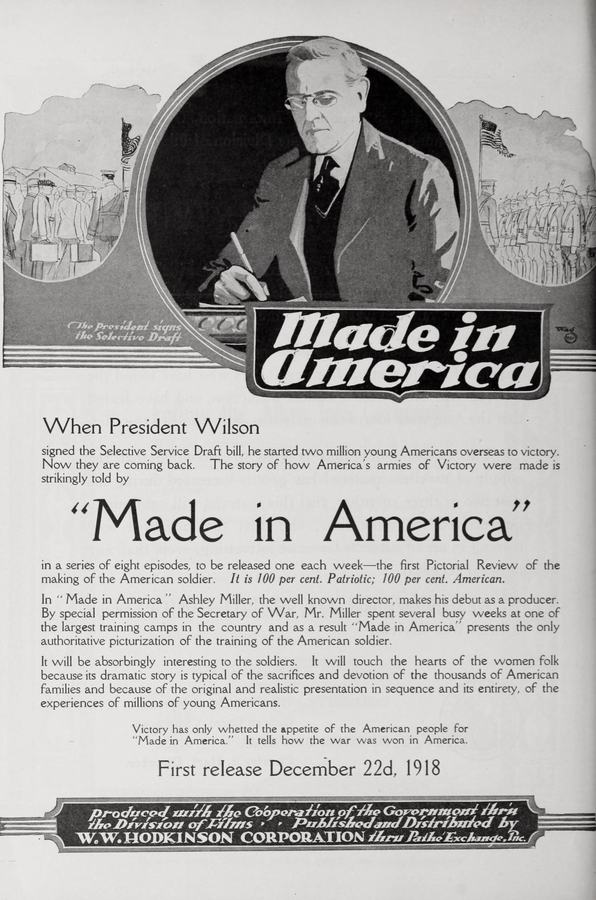
When we discuss the evolution of the docudrama or the authoritative military procedural, the conversation invariably circles back to the monumental effort of Ashley Miller. In the eight-episode odyssey titled Made in America, Miller shifts his creative weight from the director's chair to the producer's helm, orchestrating a project of such scale and bureaucratic complexity that it remains a singular achievement in early 20th-century media. This wasn't merely a production; it was a mobilization. By securing the express permission of the Secretary of War, Miller didn't just find a location; he found a crucible.
Unlike the romanticized escapades found in The Good Bad-Man, where the frontier is a playground for myth-making, *Made in America* treats the military camp as a living, breathing character. The weeks Miller spent embedded within one of the nation's largest training facilities resulted in a visual lexicon that felt startlingly immediate to contemporary audiences. This is the antithesis of the stage-bound artifice seen in The Wrong Door. Here, the dirt is real, the sweat is palpable, and the sheer logistical magnitude of preparing a nation for war is rendered with an unflinching, almost clinical eye.
The casting of Emily Marceau and Brian Darley provides the necessary emotional scaffolding to prevent the series from devolving into a mere instructional manual. Marceau, in particular, brings a nuanced vulnerability that contrasts sharply with the rigid environment. While some might argue that the serial format often prioritizes cliffhangers over character development—as seen in the suspense-heavy Beatrice Fairfax—Miller’s production allows his actors to inhabit the spaces of the camp with a naturalism that was rare for the time.
Brian Darley and Edmund Burns offer a grounded masculinity that feels earned rather than performed. Their presence suggests a bridge between the civilian world and the iron-clad demands of the infantry. In comparison to the more stylized, almost gothic performances in Witchcraft, the ensemble here—including Florida Kingsley and Lillian Lawrence—operates within a framework of observational realism. They aren't just playing soldiers or their families; they are conduits for a national experience. Richard Turner and Phil Sanford round out a cast that understands the gravity of their setting, ensuring that the human element is never eclipsed by the spectacle of the machinery.
The cinematography in *Made in America* is a masterclass in utilizing natural light and expansive landscapes. Where a film like The Golden Lotus might lean into the exotic and the ornamental, Miller’s production leans into the geometry of the barracks and the rhythmic patterns of the drill field. There is a certain stark beauty in the sight of five thousand men moving in unison, a visual symphony that serves as the ultimate proof of the "authoritative picturization" promised in the marketing. This isn't just cinema; it's a record.
The access granted by the War Department cannot be overstated. We see the intricacies of the supply chain, the psychological hardening of the recruits, and the mundane reality of camp life that usually ends up on the cutting room floor in more commercial ventures like Branding Broadway. Miller understands that the true story of the American soldier isn't just found in the heat of battle, but in the quiet moments of preparation. This thematic depth puts it leagues ahead of contemporary melodramas such as Dorian's Divorce, which, while competent, lacks the historical weight of Miller’s vision.
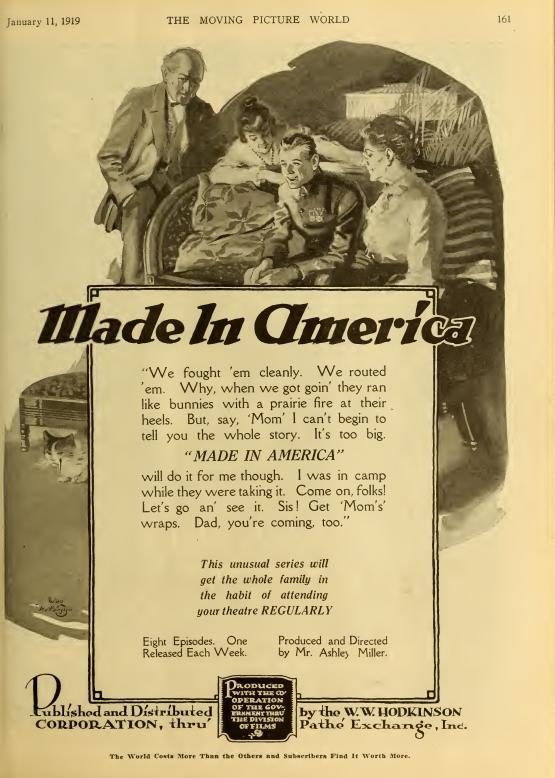
The decision to frame this as an eight-episode series was a stroke of genius. It allows for a gradual escalation of tension and a more profound immersion into the military lifestyle. Each episode acts as a chapter in a bildungsroman, not of an individual, but of a collective identity. We see the raw, disparate elements of society—men from all walks of life—forged into a singular entity. This structural patience is something that the shorter, more frantic narratives like Telegramtyvene simply cannot achieve.
Miller manages to avoid the pitfalls of repetitive propaganda by focusing on the technical and the personal. There is a sequence involving the distribution of gear that, in its rhythmic editing and focus on tactile detail, rivals the best work in The Drifter. By the time the final episode concludes, the viewer feels as though they have undergone the training alongside the cast. It is an exhausting, exhilarating, and ultimately transformative experience that sets a new standard for what "educational" cinema can be.
When we place *Made in America* alongside other works of the era, its uniqueness becomes even more apparent. Consider Gypsy Love or The Slave Mart—films that rely heavily on heightened emotions and exoticized settings to captivate the audience. Miller rejects these crutches. He finds the drama in the mundane: the cleaning of a rifle, the layout of a mess hall, the stern face of a drill sergeant. This is a form of cinematic honesty that would later influence the documentary movements of the 1930s and 40s.
Even when compared to adventure-laden biopics like Davy Crockett, Miller’s work feels more vital because it is contemporary. It deals with the "now." It addresses the immediate anxieties and prides of a nation in flux. While Denny from Ireland might offer a charming look at immigrant identity, *Made in America* shows that same identity being subsumed and redefined by the American military machine. It is a fascinating, if sometimes sobering, look at the price of national unity.
From a technical standpoint, the production values are impeccable. The use of deep focus in the wide shots of the training camp allows the viewer to observe multiple layers of activity simultaneously, creating a sense of overwhelming scale. This is a far cry from the intimate, often claustrophobic framing of The Hypnotic Violinist or the tragic intimacy of A Game with Fate. Miller wants us to see the whole, not just the parts.
The legacy of *Made in America* lies in its refusal to compromise on its authoritative stance. By involving the Secretary of War, Miller ensured that this would be the definitive record of its time. It serves as both a time capsule and a testament to the power of film as a tool for national reflection. As a producer, Ashley Miller has proven that he can handle the weight of history with the same finesse he once applied to the director's lens. This series is not just a triumph of production; it is a landmark of American cultural history, a visceral reminder of the effort required to make a soldier, and a nation, ready for the world stage.
Final Verdict: An essential viewing for those who seek the intersection of military history and cinematic innovation. Miller has crafted a masterpiece of logistical and narrative ambition.
IMDb 6.1
1924
Community
Log in to comment.