DbcultAccessing Vault...
6.2/10
Senior Film Conservator
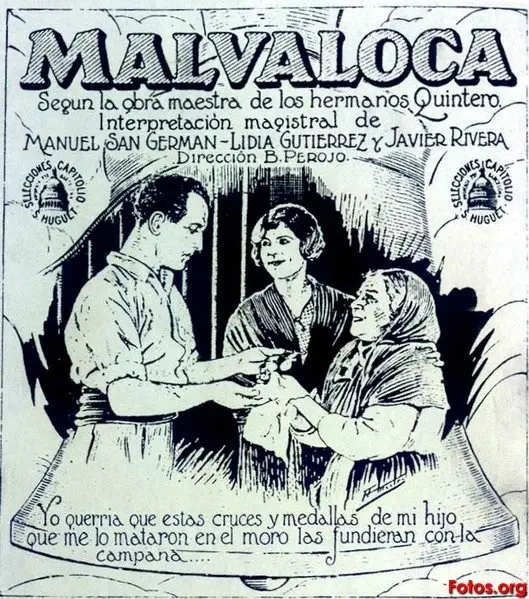
A definitive 6.2/10 rating for a film that redefined the boundaries of cult cinema. Malvaloca remains a cornerstone of transgressive art.
Is Malvaloca (1926) worth your time nearly a century after its release? Short answer: Yes, but only if you have the patience for the deliberate pacing of 1920s melodrama.
This film is for the dedicated cinephile who wants to see the roots of Spanish cinematic identity and for those who appreciate visual metaphors that carry more weight than dialogue ever could. It is decidedly NOT for the casual viewer seeking fast-paced action or modern sensibilities regarding gender roles.
1) This film works because it successfully anchors a complex emotional arc in the physical, tactile world of industrial labor.
2) This film fails because its secondary characters often feel like archetypes rather than flesh-and-blood people.
3) You should watch it if you want to experience how silent cinema could communicate profound social critiques through atmosphere alone.
Yes, Malvaloca is worth watching for its historical significance and its surprisingly modern cinematography. While the plot relies on the 'fallen woman' trope common in its era, director Benito Perojo elevates the material through a sophisticated use of lighting and location. The film captures a specific moment in Spanish culture where the industrial and the religious collided. It is a slow burn, but the payoff is a rich, textured experience that stays with you.
At its core, Malvaloca is a film about the possibility of change. In 1926, the idea that a woman with a 'past' could find a future was a radical proposition in many parts of the world, especially in conservative Spain. The film doesn't just ask us to feel sorry for Malvaloca; it asks us to respect her resilience. Lina Moreno brings a quiet dignity to the role that prevents the character from becoming a mere victim.
The most striking element of the film is the parallel between Malvaloca and the convent bell. The bell is broken, just as Malvaloca is seen as 'broken' by society. The process of recasting the bell—melting it down in a furnace, skimming off the dross, and pouring it into a new mold—is filmed with an almost documentary-like intensity. The heat, the sweat, and the sparks are palpable. It’s a gritty, beautiful sequence that serves as the heart of the movie.
Compare this to other films of the era like The Price of Pleasure, which also deals with the social costs of desire. While that film leans into the tragedy of circumstance, Malvaloca leans into the labor of redemption. It suggests that moving forward isn't an accident; it's a choice that requires the same heat and pressure as refining bronze.
Benito Perojo was a master of the frame. In Malvaloca, he uses shadows to tell the story of a woman trying to step into the light. There are moments in the forge where the contrast between the dark corners and the glowing molten metal creates a chiaroscuro effect that rivals the best of German Expressionism. The cinematography isn't just there to look pretty; it’s there to reinforce the themes of the story.
However, we must address the pacing. Like Burnt Wings, Malvaloca suffers from the occasional 'silent film drag.' There are long sequences of exposition that could have been shortened, and some of the comedic relief provided by the parents feels out of place in such a heavy drama. It works. But it’s flawed. The tonal shifts can be jarring for a modern audience used to a more consistent narrative voice.
The acting style is surprisingly restrained for the mid-20s. While there is still some of the broad gesturing typical of the era, Moreno and Carrasco (playing Salvador) have moments of quiet intimacy that feel remarkably real. When Malvaloca first looks at Leonardo, the camera lingers on her face, capturing a flicker of hope that is genuinely moving. It’s a far cry from the theatrical overacting found in lesser silents like The Web of the Law.
The film is based on a play by the Álvarez Quintero brothers, who were known for their depictions of Andalusian life. Translating their dialogue-heavy work into a silent medium was a risk, but Perojo succeeded by focusing on the 'vibe' of the setting. The sense of place is overwhelming. You can almost smell the dust of the Spanish roads and the metallic tang of the forge. This groundedness is what saves the film from becoming a flighty melodrama.
One of my more controversial takes is that the film is actually more about the men than it is about Malvaloca. While she is the titular character, the film spends an enormous amount of time exploring the bond between Salvador and Leonardo. Their friendship is tested by their love for the same woman, but it is ultimately their shared work at the forge that defines them. In a way, Malvaloca is the catalyst for their growth, which is a bit of a disappointment for those hoping for a purely female-centric narrative.
That said, Malvaloca’s agency is not entirely absent. She chooses to leave her past behind. She chooses to face the judgment of the town. She isn't just a bell being cast; she is the one tending the fire. This nuance is easy to miss if you aren't paying attention, but it's what gives the film its lasting power.
Malvaloca is a fascinating artifact that manages to transcend its era through sheer visual willpower. While its social politics are firmly rooted in the 1920s, the human desire for a clean slate is universal. Benito Perojo created a film that is both a product of its time and a timeless exploration of grace. It’s not a perfect movie, but it is a powerful one. The clanging of the bell at the end isn't just a plot point; it's a statement of survival. If you can handle the silence, you'll find a lot to hear in Malvaloca.
"A rare instance where industrial grit meets spiritual grace, proving that even a cracked soul can be recast."

IMDb 5.2
1930
Community
Log in to comment.