DbcultAccessing Vault...
6.1/10
Senior Film Conservator
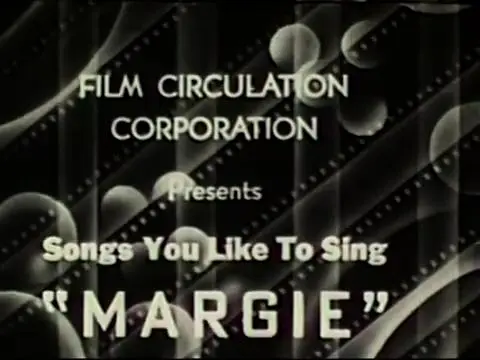
A definitive 6.1/10 rating for a film that redefined the boundaries of cult cinema. Margie remains a cornerstone of transgressive art.
Is Dave Fleischer’s 1926 short film Margie worth your time in an era of 4K streaming and immersive VR? Short answer: yes, but only if you view it as a piece of archaeological cinematic DNA rather than a standalone narrative experience.
This film is strictly for animation historians, jazz age enthusiasts, and those who find beauty in the primitive mechanics of early film. It is absolutely not for anyone seeking a plot, character development, or modern visual fidelity. It is a six-minute rhythmic exercise that demands a specific mindset to appreciate.
To understand Margie, one must understand that it was designed to be loud. In 1926, this wasn't a silent film; it was a film that relied on the audience to provide the soundtrack. Here are three clear statements on its quality:
If you are looking for a story, look elsewhere. If you are looking for the roots of how we interact with screens, Margie is essential. It represents a transition point. While films like The Waif were exploring the depths of human misery through silent melodrama, Dave Fleischer was looking for a way to make the theater shake with noise.
The 'bouncing ball' isn't just a gimmick here; it’s a character. It has more personality than many human actors in the stilted dramas of the same year, such as The Bigger Man. The ball has a weight to it, a gravity that dictates the room's energy. It works. But it’s flawed in its simplicity.
The Fleischers were the blue-collar engineers of animation. While Disney was chasing fairy tales, the Fleischers were patenting machines. The bouncing ball in Margie was actually a physical object—a white ball on a stick moved by an animator over a printed sheet of lyrics, then filmed and superimposed over the background. This mechanical reality gives the ball a jittery, human energy that purely hand-drawn animation often lacked in the mid-20s.
Compare the fluidity here to the static, often clunky movements found in Off the Trolley. There is a sense of 'swing' in the animation that mirrors the jazz music it accompanies. The Fleischers understood that animation didn't have to be a literal representation of life; it could be a visual extension of music. This philosophy would later peak with Betty Boop and Popeye, but the seeds are sown right here in this sing-along short.
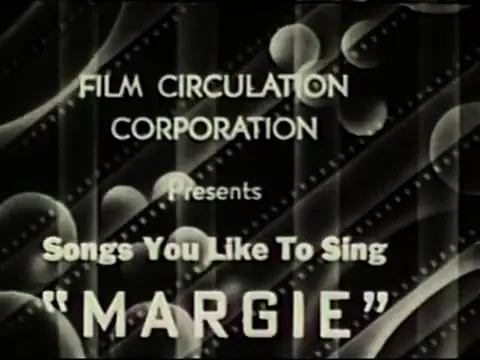
The song 'Margie' was a massive hit long before this film was made. It was a standard of the flapper era, a song about domestic longing and youthful romance. By choosing this specific track, Dave Fleischer ensured that the audience already knew the words. The film wasn't teaching them a song; it was coordinating their existing knowledge.
This is a stark contrast to the heavy-handed moralizing found in contemporary features like Just a Woman or the legal dramas like A Debtor to the Law. Margie was pure escapism. It was the 1920s version of a viral TikTok trend—everyone knew the steps, everyone knew the words, and the screen was just the catalyst for a shared social moment.
Watching Margie today is a haunting experience. You see the lyrics. You see the ball. You hear the silence of a digital file. It highlights the one thing modern cinema has lost: the necessity of the 'other.' A film like The Dream Cheater exists perfectly well on a laptop screen. Margie feels broken without a hundred ghosts singing along with it. It is a film that requires a crowd to be complete, making it perhaps the most 'social' film ever made, despite its age.
The film is a masterclass in economy. It does exactly what it sets out to do in under ten minutes. The visual clarity is high for the era, and the pacing is relentless. It doesn't overstay its welcome like many silent features such as A Celebrated Case.
It is visually repetitive. Once you have seen the ball bounce for thirty seconds, you have essentially seen the entire film. There is no visual 'payoff' or climax, which might leave modern viewers feeling underwhelmed.
While films like Faint Hearts were trying to replicate stage plays, Margie was trying to create a new form of entertainment entirely. It doesn't care about the rules of theater. It cares about the rules of the metronome. This makes it feel much more modern than many of its peers, even if its 'content' is just a simple song. It is an avant-garde work disguised as a populist sing-along.
Margie is a fascinating, if slight, piece of film history. It isn't a masterpiece of storytelling, but it is a masterpiece of technical foresight. It proved that the screen could talk back to the audience before 'talkies' were even a reality. If you have six minutes, watch it to see the birth of the music video. Then, go watch something with a plot. It’s a curiosity, not a meal. But as curiosities go, it’s one of the most important in the Fleischer catalog.
"Margie is the grandfather of Karaoke, a mechanical ghost that reminds us cinema was once a conversation, not a lecture."
IMDb —
1934
Community
Log in to comment.