DbcultAccessing Vault...
Cult Review
Senior Film Conservator
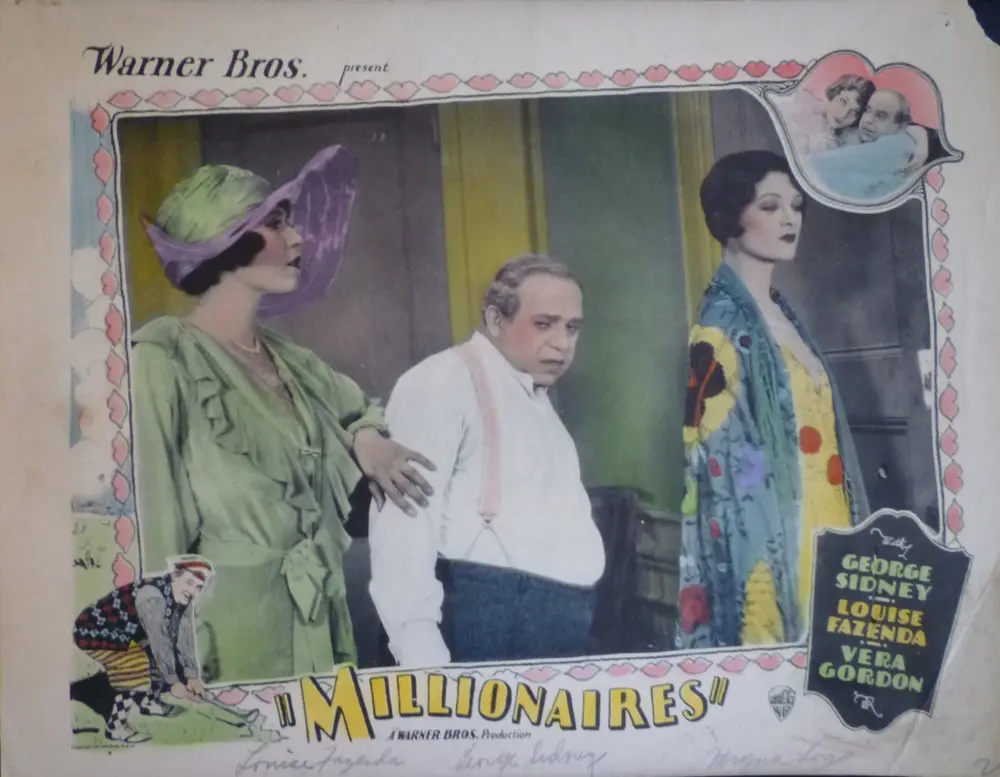
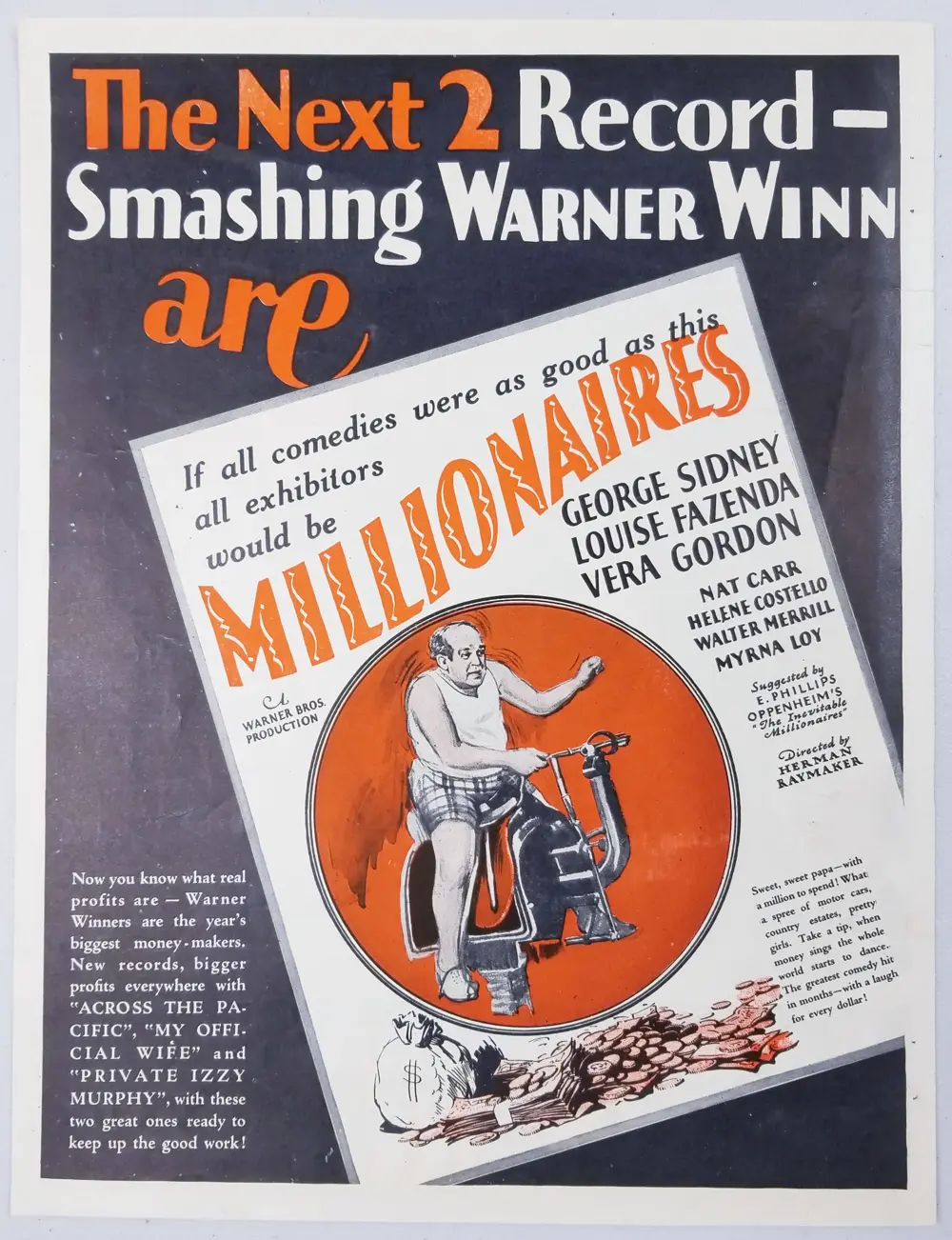
Is Millionaires worth watching today? Short answer: yes, but only if you view it as a cultural time capsule rather than a modern comedy.
This film is for silent cinema enthusiasts and students of the Jewish-American immigrant experience; it is not for those who lack the patience for the exaggerated pantomime of the mid-1920s. It works. But it’s flawed.
1) This film works because it captures the genuine anxiety of the immigrant 'nouveau riche' with surprising warmth.
2) This film fails because the third-act 'infidelity trap' is a tired cliché even by 1926 standards.
3) You should watch it if you want to see how the silent era handled the collision of traditional values and sudden wealth.
The film opens in the cramped, humid quarters of a pressing shop. You can almost smell the scorched wool and the heavy steam. Director Herman C. Raymaker (though often uncredited in favor of the writers) does an excellent job of establishing the Rubens' world as one of tactile reality. When they move to the Upper West Side, the spaces become larger, colder, and significantly less 'lived-in.' This visual transition is a masterclass in silent storytelling. It isn't just about the money; it's about the loss of community. In the pressing shop, Meyer is a king; in the mansion, he is a clumsy intruder. Unlike the grand scale of The Vanishing American, which deals with national identity, Millionaires keeps the stakes painfully domestic.
The contrast is most evident in a scene where Meyer attempts to navigate a formal dinner. He handles a silver fork like it’s a foreign weapon. It’s a trope we’ve seen a thousand times, but George Sidney brings a specific, weary dignity to the role that prevents it from becoming a cruel caricature. He isn't stupid; he's just out of place. The film takes a firm stance: the Lower East Side had soul, while the Upper West Side only has shadows. This is a debatable opinion, of course, as the film ignores the very real poverty and hardship of the slums to romanticize 'simpler times,' but for the sake of the narrative, it works.
George Sidney’s Meyer is the heart of the film. His face is a map of 1920s New York—full of hope, exhaustion, and a stubborn refusal to be anyone other than himself. His chemistry with Louise Fazenda, who plays the scheming Reba, is the film's engine. Fazenda is deliciously wicked. She represents the toxic side of the American Dream—the idea that to move up, you must cut ties with anyone who reminds you of where you came from. While Molly and I deals with domestic charm, Millionaires deals with domestic warfare.
The supporting cast, including Helene Costello and William H. Strauss, provide a solid foundation, but the film truly belongs to the Rubens family. One surprising observation is how the film treats Esther. Usually, in these films, the wife is the villain for wanting more. Here, the writers (Edward Clark and C. Graham Baker) give her a sense of misplaced aspiration that feels tragic rather than malicious. She doesn't hate Meyer; she just loves the idea of being 'someone.' It’s a subtle distinction that makes the eventual reconciliation feel earned rather than forced.
The plot pivots on a scheme by Reba to catch Meyer in a 'compromising situation' with another woman. This is where the film feels its age. The setup is clumsy, involving a series of convenient coincidences that would make a modern screenwriter blush. However, the execution is fascinating. The use of shadows and doorways to create a sense of entrapment is effective. It turns a light comedy into a noir-adjacent thriller for about ten minutes. This tonal shift is jarring, but it keeps the audience on their toes.
The resolution, while predictable, offers a satisfying punch. The film doesn't just return them to their old life; it forces them to reckon with what they nearly lost. It’s a moralistic ending, typical of the era, but it’s delivered with enough sincerity to stick the landing. If you look at films like Faith, you see a similar preoccupation with moral purity, but Millionaires grounds it in the specific economics of the 1920s stock market boom.
Does Millionaires still hold up after nearly a century? Short answer: yes, but only as a fascinating cultural artifact of the Jewish-American experience.
This is a film for those who enjoy character-driven silent comedies; it is certainly not for audiences who require high-octane action or subtle, modern plot twists. The pacing is deliberate, and the humor is broad. However, the emotional core is surprisingly resilient. It asks a question that remains relevant: can you change your zip code without losing your soul? The film’s answer is a resounding 'no,' and it delivers that message with both a laugh and a sigh.
Pros: George Sidney gives a masterclass in physical pathos. The film manages to be funny without being mocking of its working-class characters. The cinematography in the shop scenes is surprisingly atmospheric.
Cons: The 'oil stock' plot device is a bit of a deus ex machina. The pacing drags in the middle of the second act during the transition to the mansion. Some of the social-climbing jokes feel repetitive.
Millionaires is a solid, if standard, example of the 1920s 'rags-to-riches-back-to-rags' subgenre. It lacks the poetic depth of something like The Call of the Cumberlands, but it makes up for it with heart and a genuine sense of place. It is a film about the weight of gold and the lightness of a clean conscience. While it won't change your life, it provides a charming window into a world that was already disappearing when the cameras started rolling. It’s a minor classic that deserves a spot in the conversation about early American cinema's portrayal of class. It works. But it’s flawed. And that’s exactly why it’s worth a look.
IMDb —
1920
Community
Log in to comment.