DbcultAccessing Vault...
Cult Review
Senior Film Conservator
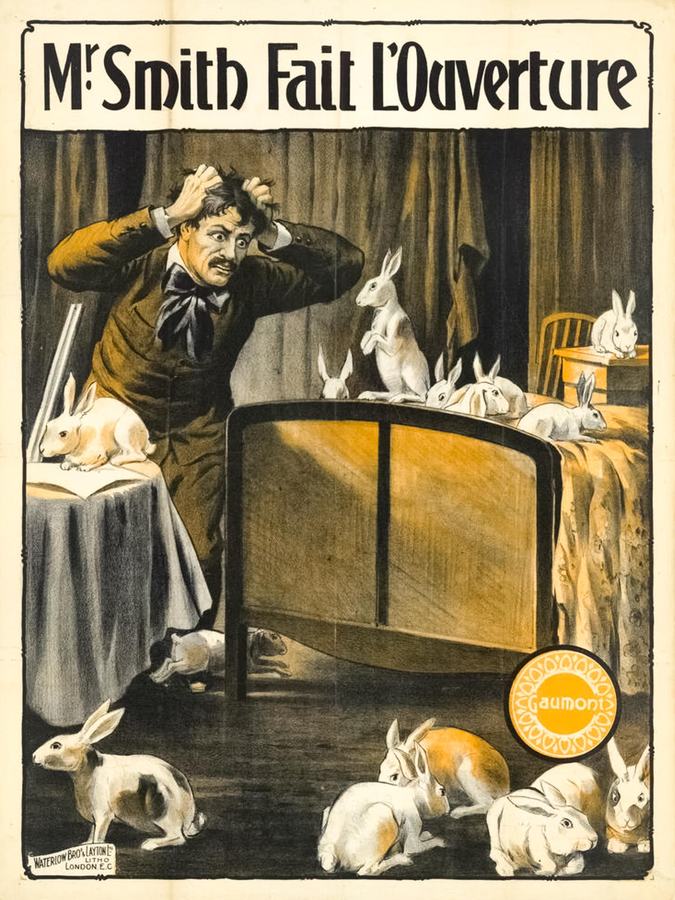
In the nascent dawn of cinematic artistry, when the moving image was still finding its voice, certain films emerged as quiet harbingers of the narrative sophistication and emotional resonance that would define the medium. Among these, Mister Smith fait l'ouverture stands as a curious, often overlooked, artifact, a charming vignette that, despite its apparent simplicity, offers a nuanced glimpse into the comedic sensibilities and societal observations of its era. This isn't merely a film; it's a window into a bygone world, a delicate dance between meticulous planning and the delightful chaos of human endeavor.
The film, a delightful confection from a period often characterized by melodramatic flourishes or grand spectacles, instead opts for an intimate, almost farcical, portrayal of civic life. At its heart lies Monsieur Ernest Smith, portrayed with an endearing blend of earnestness and subtle physical comedy by the inimitable Jean Durand. Smith is not a hero of epic proportions, nor a villain of sinister design. He is, rather, a quintessential everyman, burdened with the monumental task of inaugurating the city's newest pride and joy: the 'Parc des Lumières'. This seemingly straightforward assignment becomes the crucible through which Smith's character, and indeed the film's comedic genius, is forged. The narrative, lean yet remarkably effective, constructs a series of escalating mishaps, each more preposterous than the last, all conspiring to undermine Smith's meticulously planned ceremony. It's a masterclass in situational humor, where the tension arises not from external threats, but from the relentless assault of everyday absurdity on one man's dignity.
Durand's performance as Smith is nothing short of captivating. He doesn't merely play a character; he embodies a spirit of well-meaning futility. His facial expressions, subtle shifts in posture, and the precise timing of his reactions speak volumes in a medium still reliant on visual storytelling. One can draw parallels to the understated brilliance seen in performances from films like Hearts of Oak, where emotional depth is conveyed through gesture and gaze, or even the comedic timing found in some segments of Pierre of the Plains. Durand, however, brings a unique blend of Gallic charm and universal relatability to Smith, making his struggles profoundly human. He is the bureaucrat whose carefully typed speech becomes a confetti storm, the dignitary whose ceremonial scissors are purloined by a mischievous canine, the man whose grand entrance is consistently upstaged by the unpredictable ballet of life. His resilience, even in the face of utter chaos, is what elevates the character beyond mere caricature.
The direction, though attributed to no single prominent name in the available records for this specific film (a common occurrence in the collaborative, often uncredited, early studio systems), demonstrates an acute understanding of visual storytelling and comedic pacing. The camera, often static, serves as an impartial observer, allowing the unfolding farce to play out naturally within the frame. There's a delightful use of depth and blocking, particularly in scenes involving multiple characters attempting to 'help' Smith, only to further exacerbate his predicament. The staging of the grand opening itself is a triumph of controlled chaos, reminiscent of the elaborate set pieces found in other early spectacles like Salambo, a $100,000 Spectacle, albeit on a much more intimate, pedestrian scale. Yet, the impact is no less profound, eliciting genuine laughter through its clever subversion of expectations.
The writers, whose contributions are similarly obscured by time, crafted a narrative that, while simple, is remarkably robust in its comedic structure. The escalating series of unfortunate events, each building upon the last, creates a momentum that carries the audience through Smith's trials. It's a testament to the power of a well-conceived premise and sharp execution. The humor isn't reliant on witty dialogue – a luxury largely unavailable in silent film – but on visual gags, character reactions, and the universal experience of plans gone awry. This approach to storytelling is a fundamental pillar of early cinema, a tradition that saw its peak in the works of luminaries like Chaplin and Keaton, but whose roots can be clearly traced to films such as this.
Thematically, Mister Smith fait l'ouverture subtly explores the human condition's relationship with order and chaos. Smith represents the human desire for control, for things to proceed according to plan, while the universe, in its infinite wisdom, consistently throws wrenches into the meticulously crafted machinery. Yet, the film doesn't present this as a tragedy, but as a comedy. It suggests that perhaps true success lies not in the flawless execution of a plan, but in the ability to adapt, to find joy in the unexpected, and to embrace the delightful disarray of existence. This resonates with the stoicism often seen in characters facing adversity in films like Through Fire to Fortune, though here, the adversity is of a decidedly more whimsical nature. It's a gentle reminder that sometimes, the most memorable moments are those that defy expectation, arriving not through grand design but through happy accident.
The film's aesthetic, while simple by modern standards, is entirely appropriate for its narrative. The black and white cinematography, with its stark contrasts and subtle shadings, lends a timeless quality to the proceedings. The absence of color forces the viewer to focus on movement, expression, and the interplay of light and shadow, enhancing the visual storytelling. There's an authentic charm to the sets and costumes, reflecting the everyday attire and urban landscapes of the early 20th century. It feels lived-in, authentic, a genuine slice of life, albeit one exaggerated for comedic effect. This commitment to verisimilitude within a farcical framework is a delicate balance, one that the filmmakers skillfully maintain.
Comparing it to its contemporaries, Mister Smith fait l'ouverture occupies a unique space. While films like Den hvide Slavehandels sidste Offer tackled grave social issues and Anna Karenina explored complex romantic tragedies, Smith's misadventures offer a lighter, yet no less insightful, commentary on human nature. It shies away from the grandiosity of Locura de amor or the moral dilemmas of Leah Kleschna, choosing instead to find profundity in the everyday. Its charm lies in its unassuming nature, its ability to find humor in the mundane, and its gentle affirmation of the human spirit's capacity for resilience and good humor, even when faced with the most vexing of circumstances. It's a film that doesn't demand your attention with shocking twists or dramatic pronouncements, but rather invites you to chuckle along with its protagonist, to empathize with his plight, and ultimately, to share in his accidental triumph.
The enduring appeal of Mister Smith fait l'ouverture lies in its timeless humor and its universal themes. Long after the technological marvels of its era have faded into obsolescence, the human element, the relatable struggle of a well-intentioned individual against the forces of comedic chaos, remains potent. It's a film that reminds us of the power of simple storytelling, of the effectiveness of a well-timed visual gag, and of the magnetic charisma of a performer like Jean Durand. It's a delightful antidote to cynicism, a celebration of the small victories that punctuate our lives, and a testament to the enduring magic of early cinema. For cinephiles and casual viewers alike, it offers a refreshing journey back to a time when film was still discovering its boundless potential, a journey well worth taking.
In an age increasingly saturated with digital effects and complex narratives, there's a profound comfort in revisiting the elemental charm of films like this. They strip away the superfluous, focusing on the core elements of character, situation, and reaction. It's a pure form of entertainment, unburdened by the weight of modern expectations, yet surprisingly resonant. The final scene, where the park is officially, if haphazardly, declared open, leaves the audience with a smile, a warm feeling of shared experience, and a quiet appreciation for the unassuming hero who, despite everything, truly 'made the opening' in his own unforgettable way. It’s a film that deserves to be rediscovered, celebrated, and cherished as a vibrant piece of cinematic heritage, a small but radiant gem in the vast tapestry of film history.
The cultural significance of such early works cannot be overstated. They are the building blocks, the foundational experiments from which all subsequent cinematic innovation has sprung. Mister Smith fait l'ouverture, with its unassuming title and straightforward premise, contributes to this grand legacy by demonstrating the universal appeal of comedy and the power of human perseverance. It’s a reminder that even in the most modest productions, profound artistic statements can be made, and lasting impressions forged. The film, much like a meticulously crafted miniature, contains an entire world within its brief running time, a world of laughter, minor frustrations, and ultimately, endearing success. It’s a testament to the fact that sometimes, the greatest openings are those that unfold with an unexpected, yet utterly charming, flourish.
The legacy of films from this specific era, often overshadowed by the later 'golden age' of Hollywood, deserves renewed attention. Works like In the Prime of Life, The Woman of Mystery, and When Fate Leads Trump, each in their own genre, contributed to the evolving language of film. Mister Smith fait l'ouverture joins these ranks as a crucial piece of the puzzle, illustrating how comedy, even in its simplest forms, was already a sophisticated art. It’s a film that doesn't just entertain; it educates, offering insights into the comedic principles that continue to inform storytelling today. Its understated brilliance is a beacon, guiding us back to the roots of cinematic expression, proving that a well-told story, regardless of its technological complexity, will always find its audience and its place in history.

IMDb 7.7
1935
Community
Log in to comment.