DbcultAccessing Vault...
Cult Review
Senior Film Conservator
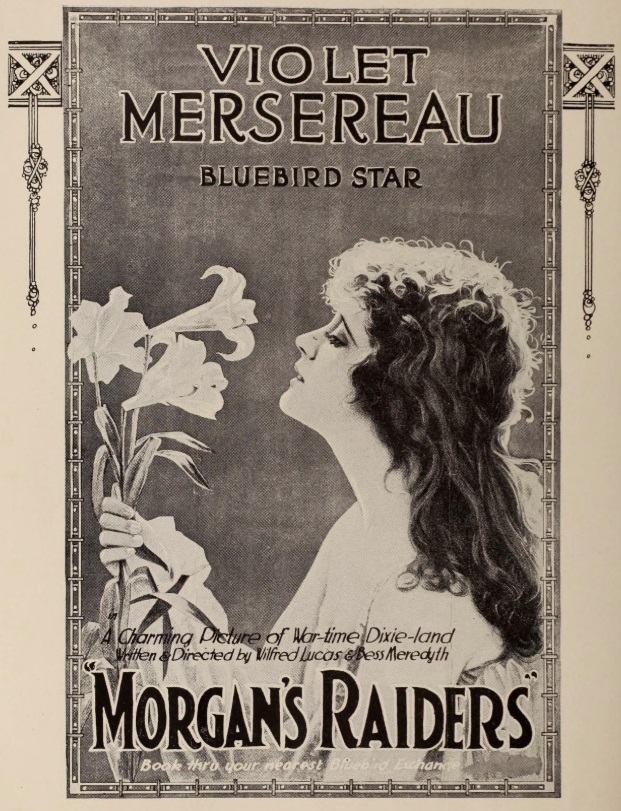
To examine Morgan's Raiders (1918) is to peer into the nascent machinery of the American historical epic before it was codified by the gargantuan budgets of the mid-century. Directed by Wilfred Lucas and penned by the formidable Bess Meredyth, this production represents a sophisticated intersection of gendered perspective and rugged masculinity. Meredyth, a screenwriter whose influence on the silent era remains criminally under-discussed, injects a sense of psychological urgency into what could have been a standard equestrian melodrama. Unlike the more static domestic dramas found in The Marriage Bond, this film breathes with an outdoor vitality that feels almost documentary in its ruggedness.
The collaboration between Lucas and Meredyth often yielded results that challenged the simplistic moral binaries of early cinema. In this instance, they take the historical figure of Colonel Morgan and use his tactical reputation as a backdrop for a much more personal story of endurance. The film avoids the broad, often clumsy social commentary seen in A Daughter of the Poor, opting instead for a streamlined, propulsive narrative that prioritizes the physical reality of the mountain girl’s journey. The landscape isn't just a setting; it is an active participant in the espionage, providing the verticality and visual depth necessary to maintain tension through the silent medium's inherent reliance on visual storytelling.
Violet Mersereau, often relegated to the roles of the ingenue in her earlier career, finds a grit here that is startling. Her portrayal of the mountain girl is devoid of the theatrical histrionics that occasionally marred the performances in The Strength of the Weak. Mersereau possesses a wiry, nervous energy that perfectly suits the role of a courier operating under the constant threat of execution. Her interaction with her horse—a common trope in Westerns and Civil War films—is handled with a lack of sentimentality that highlights the utilitarian nature of her mission.
There is a specific scene, roughly midway through the film, where Mersereau must navigate a Union encampment under the veil of a moonlit fog. The cinematography here, likely utilizing the primitive but effective tinting methods of 1918, creates a chiaroscuro effect that rivals the moody atmosphere of The Lash of Power. Mersereau’s face, captured in tight close-ups, conveys a spectrum of terror and resolve without the need for excessive intertitles. It is a masterclass in silent screen acting, proving that she could carry the weight of an entire military operation on her slight shoulders. The supporting cast, including Edmund Burns and Frank Holland, provide a solid, if less transformative, framework for her performance, ensuring that the stakes remain grounded in a recognizable military reality.
The core of Morgan's Raiders is the chase. Unlike the urban, procedural tension found in Detective Craig's Coup, the tension here is derived from the vastness of the terrain. Lucas utilizes wide shots to emphasize the isolation of the courier, making the sudden appearance of Union blue against the grey rock of the mountains feel like a genuine shock to the system. The editing, which feels remarkably modern for a film over a century old, creates a rhythmic pulse that mirrors the galloping of the horse. It lacks the somewhat disjointed pacing often found in European imports like Wer ist der Täter?, opting for a linear, relentless forward momentum.
This focus on spatial dynamics extends to the way the secret dispatch is handled. In many contemporary films, the 'MacGuffin' is merely a plot device, but here, the physical possession of the paper becomes a source of tactile anxiety. We see the girl tuck it into her boot, check it amidst a stream crossing, and clutch it during a fall. This attention to detail elevates the film from a simple adventure story to a study of localized heroism. It shares a certain thematic DNA with Miss Robinson Crusoe in its depiction of female self-reliance in a hostile environment, though Morgan's Raiders is significantly darker and more grounded in historical consequence.
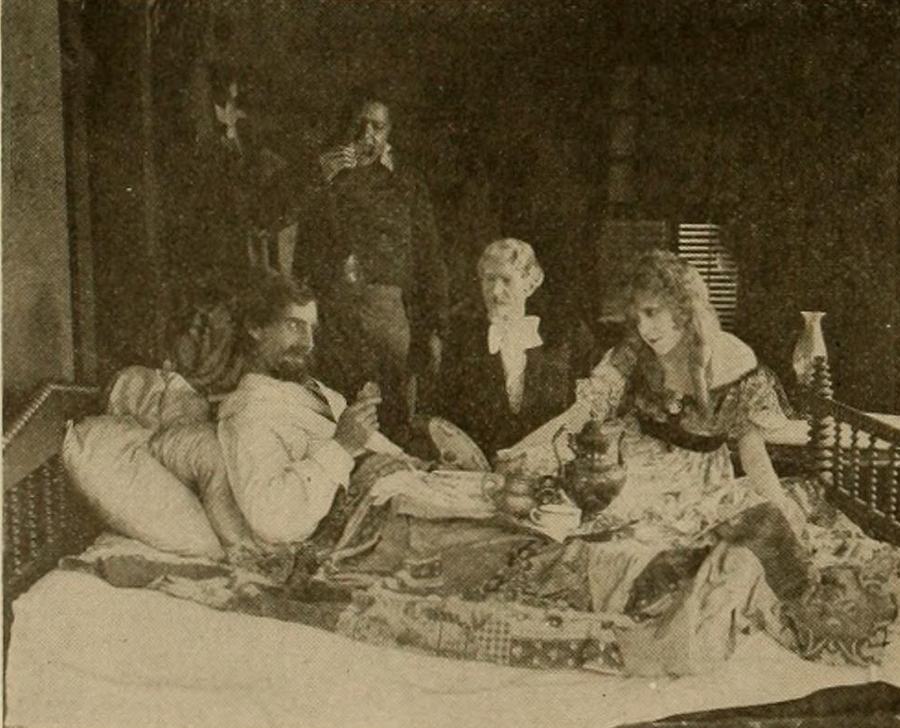
When placing Morgan's Raiders alongside other works of the era, its narrative economy becomes its greatest strength. While Three Weeks wallows in a certain aristocratic melodrama that feels dated, Lucas's film feels immediate and visceral. Even when compared to the high-budget historical pageantry of Les amours de la reine Élisabeth, which relies heavily on the stage presence of Sarah Bernhardt, Morgan's Raiders feels more inherently 'cinematic.' It understands that the camera's true power lies in its ability to capture movement across a landscape rather than merely recording a performance.
Furthermore, the film avoids the saccharine pitfalls of Cheerful Givers. There is a hardness to the mountain girl’s world that Meredyth refuses to soften. The Union soldiers are not caricatures of villainy; they are an encroaching force of nature, an institutional wall that the protagonist must find a crack in. This nuance is rare for 1918, a year where wartime propaganda often seeped into historical recreations. The film’s focus on the individual’s struggle against the collective machinery of war gives it a timeless quality, much like the somber reflections found in Life in a Western Penitentiary, though with a much higher degree of kinetic excitement.
Technically, the film is a testament to the ingenuity of the pre-studio system era. The use of natural light in the mountain sequences provides a texture that is often lost in later, studio-bound productions. The grit on the actors' faces, the sweat on the horses, and the genuine peril of the steep-grade descents contribute to a sense of verisimilitude that modern CGI-heavy epics struggle to replicate. It possesses a raw, unpolished beauty that is more evocative than the stylized gloom of Grekh or the clinical precision of Urteil des Arztes.
The direction by Wilfred Lucas is particularly noteworthy for its restraint. He allows the camera to linger on the stillness of the woods before the eruption of a chase, creating a tension that is as much about silence as it is about sound (or the lack thereof in the silent era). The framing often places the protagonist at the bottom of the frame, with the looming mountains above her, visually representing the literal and metaphorical uphill battle she faces. This visual metaphor is far more effective than the heavy-handed symbolism found in The Wrong Door.
In the broader context of Bess Meredyth’s career, Morgan's Raiders serves as an early indicator of her ability to navigate complex historical narratives. While she would go on to work on much larger canvases, the fingerprints of her narrative style—strong female leads, high-stakes moral dilemmas, and a rejection of easy resolutions—are all present here. The film doesn't end with a grand triumph that erases the scars of war; instead, it offers a quiet moment of relief that acknowledges the ongoing trauma of the conflict. This subtlety is what separates it from the more sensationalist fare like The Woman in the Case.
Ultimately, Morgan's Raiders is a vital piece of silent cinema that deserves a place in the conversation regarding the evolution of the action-drama. It is a film that understands the power of the individual journey within the crushing weight of history. By focusing on the mountain girl’s ride, Lucas and Meredyth created a microcosm of the Civil War that is more affecting than a dozen battle scenes. It remains a testament to the power of visual storytelling, a rugged, breathless, and deeply human look at the lengths one will go to for a cause, even when the world is crumbling around them. For the modern viewer, it offers a rare glimpse into a style of filmmaking that was as brave and uncompromising as its protagonist.
The legacy of this 1918 gem lies not in its historical accuracy, but in its emotional truth and its pioneering spirit in an era of rapid cinematic evolution.
IMDb 6.9
1929
Community
Log in to comment.