DbcultAccessing Vault...
Cult Review
Senior Film Conservator
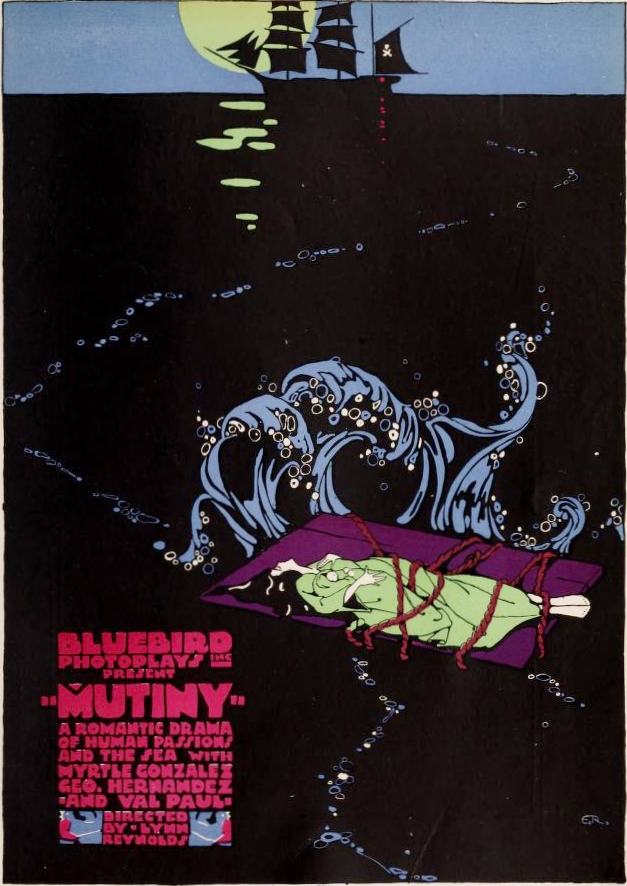
The 1917 silent feature Mutiny stands as a monumental, if often overlooked, artifact of early American cinema that interrogates the absolute power of the patriarch through the lens of maritime law. Directed with a surprisingly modern sense of pacing by Lynn Reynolds, the film eschews the simple heroics common to the era, opting instead for a gritty, salt-encrusted exploration of obsession and the disintegration of familial bonds. At its core, the film is a character study of Aaron Whitaker (played with a terrifying, stoic intensity by George Hernandez), a man who views his daughter Esther not as a sentient being, but as a piece of cargo to be traded for loyalty.
The opening acts establish a stark contrast between the terrestrial stability of the Whitaker home and the chaotic, lawless expanse of the open sea. This transition is catalyzed by the discovery of a small baby stocking in Esther’s sewing basket—a moment captured with such agonizing tension that it rivals the domestic suspense found in Enlighten Thy Daughter. The stocking represents a fracture in Whitaker's control, a physical manifestation of a life Esther built without his permission. The subsequent violence is not merely a plot point; it is the inevitable reaction of a man whose worldview cannot accommodate female agency.
Myrtle Gonzalez delivers a performance of profound vulnerability and resilience. In an era where female leads were often relegated to either the 'vamp' or the 'damsel,' Gonzalez imbues Esther with a quiet, burning defiance. Her imprisonment in the cabin of the Alden Besse serves as a metaphor for the broader societal constraints of 1917, echoing the thematic weight of films like Sapho or the social critiques found in Ignorance. When she declares she would rather embrace the abyss of the ocean than a forced marriage, it isn't just melodrama; it is a radical reclamation of selfhood.
The cinematography during these cabin sequences utilizes shadow and tight framing to emphasize her isolation. The presence of Eben Wiggs, the cook, provides the only warmth in this stygian environment. His character serves as a vital counterpoint to the hyper-masculinity of the crew, suggesting that true strength lies in compassion rather than the lash. This dynamic elevates Mutiny above standard seafaring adventures, placing it in conversation with more complex narratives like In the Prime of Life.
The mutiny itself is handled with a visceral, almost documentary-like realism. Lynn Reynolds leverages the physical environment of the ship to create a sense of mounting dread. The crew’s frustration, simmering beneath the surface, mirrors the internal turmoil of the Whitaker family. When the mutiny finally erupts, led by the treacherous Jacob Babcock, it is portrayed not as a glorious revolution, but as a chaotic, bloody inevitable. The film avoids the clean moral lines of Spartacus, showing instead how Whitaker’s own cruelty birthed the monsters that would eventually consume him.
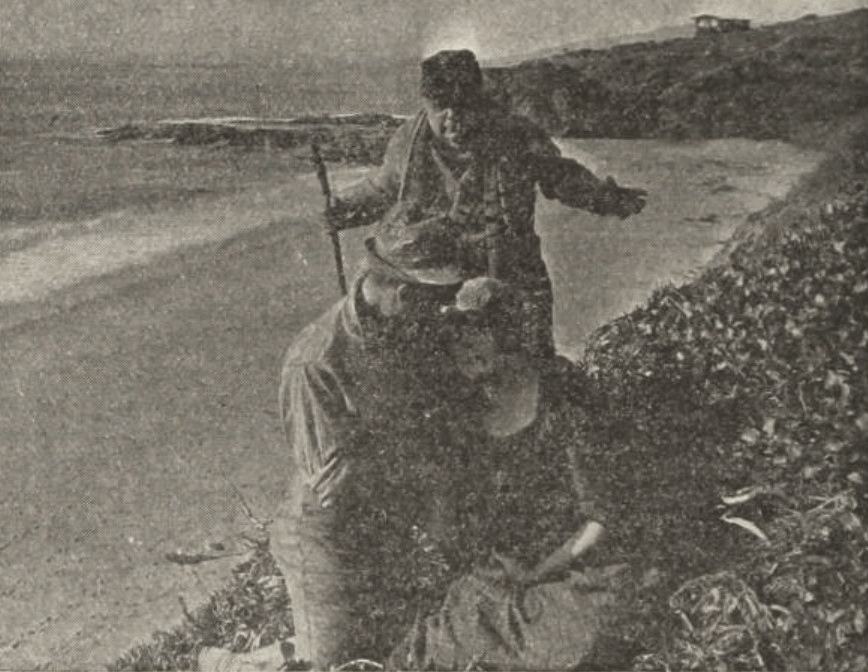
Babcock is a fascinating antagonist—a man who uses the captain's own logic of ownership and violence to seize power. His betrayal is the ultimate irony; Whitaker’s chosen successor becomes his executioner. This cyclical nature of violence is a recurring trope in Reynolds' work, often seen in his other explorations of rugged environments like The Buzzard's Shadow. The ocean, meanwhile, remains an indifferent witness, its waves crashing with the same rhythmic indifference regardless of who holds the wheel.
One of the most psychologically compelling segments of the film occurs in Panama Bay. Whitaker, haunted by the belief that he murdered Caleb Tilden, is confronted by Caleb’s actual presence. The captain’s immediate assumption that he is seeing a ghost speaks volumes about his fractured psyche. The guilt he has suppressed manifests as a supernatural haunting, a trope that elevates the film into the realm of gothic maritime horror, reminiscent of the atmospheric tension in Denn die Elemente hassen.
This moment of perceived haunting is the turning point for Whitaker. It is the first time his iron-clad certainty wavers. The 'ghost' of the man he tried to destroy becomes the harbinger of his own downfall. This psychological depth is rare for 1917, where characters were often archetypal. Here, Whitaker is a tragic figure, undone by his inability to distinguish between authority and love. His eventual death at the hands of the mutineers feels less like a murder and more like a cosmic correction.
The climax of Mutiny is a masterclass in silent film editing and practical effects. As the Alden Besse approaches its home port, a fierce storm breaks—a physical manifestation of the narrative’s unresolved tensions. The wreck of the ship is a sequence of pure cinematic adrenaline. The sight of Esther and her child lashed to a raft, tossed by the churning foam, remains one of the most harrowing images of the era, standing alongside the high-stakes peril of Fighting Odds or the visceral intensity of War Is Hell.
Caleb Tilden’s return as the rescuer completes the emotional arc. His emergence from the surf to save his family is the antithesis of Whitaker’s destructive paternalism. Where Whitaker sought to imprison, Caleb seeks to liberate. The resolution provides a catharsis that is hard-earned and physically grounded. The film doesn't just end with a reunion; it ends with the destruction of the Alden Besse, symbolizing the final collapse of the old world order that Whitaker represented.
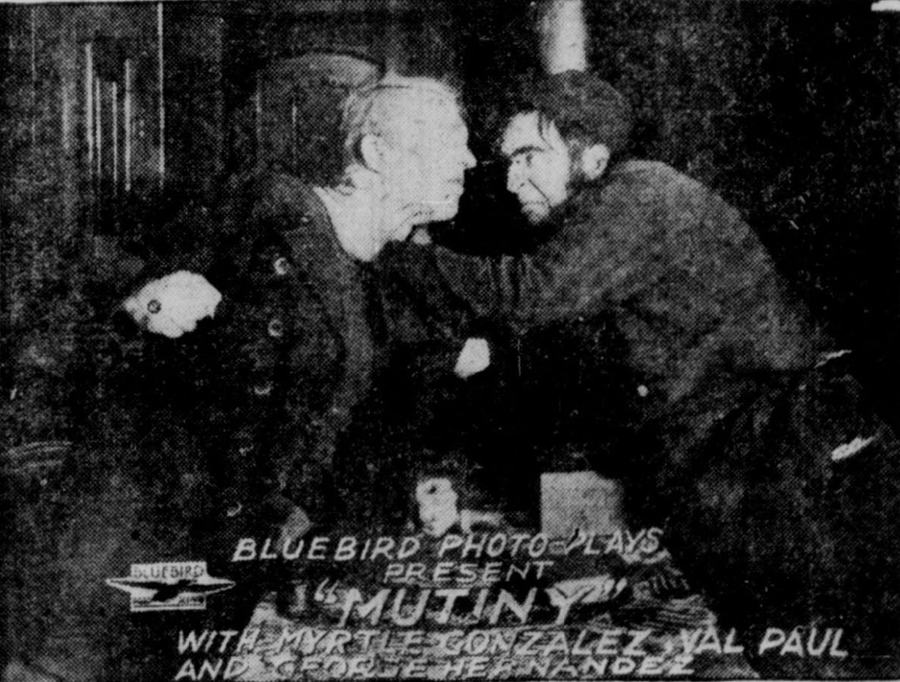
From a technical standpoint, Mutiny showcases the ambition of Universal Pictures during its formative years. The location shooting and the use of a real sailing vessel lend a verisimilitude that studio-bound productions of the time lacked. The lighting, particularly in the lower decks, creates a chiaroscuro effect that heightens the emotional stakes, a technique also explored in The Master Mind. The film’s ability to balance large-scale spectacle with intimate character drama is a testament to Lynn Reynolds' directorial sophistication.
Furthermore, the film’s exploration of mutiny as a justified response to tyranny was a bold thematic choice in 1917. While it maintains a moral center through Esther and Caleb, it doesn't shy away from the brutality of the sailors' revolt. This nuanced approach to conflict and morality can be seen in other contemporary works like Redemption or The Coming Power. It suggests a burgeoning awareness in cinema of the complexities of social hierarchy and the fragility of absolute command.
Looking back, Mutiny serves as more than just a relic; it is a vital bridge between the simplistic morality plays of early cinema and the more complex psychological dramas that would follow in the 1920s. Its influence can be felt in the DNA of later maritime epics. The performance of Myrtle Gonzalez remains a highlight, a bittersweet reminder of a talent lost too soon to the 1918 flu pandemic. Her presence on screen is luminous, providing the emotional anchor for a story that otherwise threatens to be swallowed by its own darkness.
The film’s conclusion—the transition of the Alden Besse from a physical ship to a local legend—mirrors the film's own status. It is a story that has sailed into the mist of history, yet for those who seek it out, it offers a powerful, salt-stained reflection on the cost of pride and the enduring strength of the human spirit. It is a cinematic voyage well worth taking, even a century later, for anyone interested in the roots of visual storytelling and the timeless struggle for freedom against the tide of oppression. Unlike the frivolous entertainment of The Great Diamond Robbery, this film leaves a lasting mark, much like the scars on a sailor's hands.
In the pantheon of Lynn Reynolds' filmography, Mutiny occupies a unique space where the ruggedness of the Western—a genre Reynolds was famous for—meets the high-seas adventure. The same themes of frontier justice and individual grit found in The Pride of New York are repurposed here for the ocean. It is a film of grit, grease, and salt, refusing to look away from the darker impulses of the human heart, much like the unrelenting gaze of The Tigress. For the modern viewer, it remains a potent reminder that the most dangerous storms are often those that brew within the confines of our own homes and hearts.

IMDb —
1936
Community
Log in to comment.