DbcultAccessing Vault...
6.7/10
Senior Film Conservator
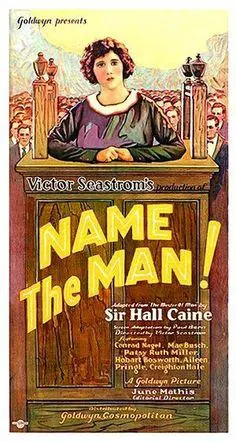
A definitive 6.7/10 rating for a film that redefined the boundaries of cult cinema. Name the Man! remains a cornerstone of transgressive art.
The year 1924 marked a pivotal juncture in the evolution of silent cinema, a period where the medium began to shed its stage-bound origins in favor of a more nuanced, psychological visual language. At the heart of this transformation stood Victor Sjöström (credited here as Victor Seastrom), the Swedish master of atmospheric dread and naturalistic pathos. In Name the Man!, Sjöström adapts Hall Caine’s sprawling novel The Master of Man with a surgical precision that dissects the anatomy of guilt. This is not merely a melodrama; it is a cinematic exegesis on the fallibility of human law when confronted with the inexorable weight of a tormented conscience.
The film opens with a deceptive tranquility, introducing us to Victor Stowell, played with a rigid, almost brittle dignity by Conrad Nagel. Stowell is the scion of a legacy of justice, a man whose future is mapped out in the hallowed halls of the Manx courts and the refined parlors of the elite. His engagement to Fenella Stanley (Aileen Pringle) represents the zenith of social expectation—a union of intellect, beauty, and status. However, Sjöström immediately begins to undermine this stability through his masterful use of shadow and space. Unlike the playful innocence found in contemporary shorts like Puppy Days, there is an antediluvian weight to every frame here.
When Stowell encounters Bessie Collister, portrayed with heartbreaking vulnerability by Mae Busch, the film shifts into a different register. Busch, often remembered for her comedic turns, delivers a performance of startling raw power. Her Bessie is not a mere temptress but a victim of circumstance and stifling provincialism. The affair is handled with a restraint that heightens its tragic inevitability. Sjöström avoids the prurient, focusing instead on the aftermath—the lingering glances of shame and the atmospheric claustrophobia that begins to tighten around the protagonist.
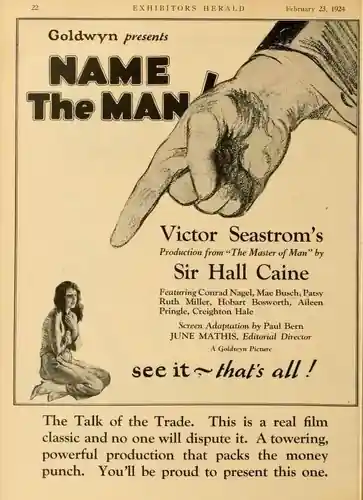
The narrative fulcrum of Name the Man! is the trial, a sequence that remains one of the most harrowing depictions of legal irony in silent film history. As Stowell ascends to the position of Deemster, he is tasked with presiding over the case of a woman accused of killing her newborn child. The realization that the defendant is Bessie, and the child was his own, transforms the courtroom into a cathedral of psychological torture. Here, the film transcends the tropes of the era, moving beyond the simple morality of The Ring and the Man or the adventurous spirit of Mr. Barnes of New York.
The tension is palpable, rendered through tight close-ups that capture the beads of sweat on Nagel’s brow and the hollowed-out despair in Busch’s eyes. Sjöström’s direction ensures that the audience feels the suffocating pressure of the law—a law that Stowell is sworn to uphold but has personally desecrated. The cinematography by Charles Van Enger utilizes the dark orange warmth of interior lamps contrasted against the sea-blue coldness of the Isle of Man’s exterior, creating a visual metaphor for the protagonist’s internal schism.
While Nagel and Busch anchor the film, the supporting cast provides a rich texture of Manx society. Hobart Bosworth brings a weathered gravitas to his role, embodying the old-world values that Stowell is inadvertently dismantling. Patsy Ruth Miller and Creighton Hale offer performances that, while secondary, flesh out the community's collective morality. This ensemble approach creates a sense of a living, breathing world, much more complex than the episodic nature of All-Star Production of Patriotic Episodes for the Second Liberty Loan.
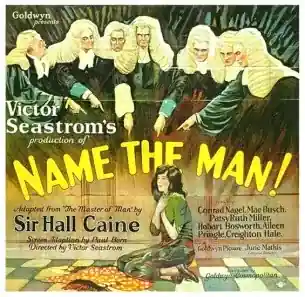
Even the smaller roles, such as those played by Lucien Littlefield and Winter Hall, contribute to the film’s overarching sense of dread. There is a specific kind of European cynicism at play here, perhaps inherited from Sjöström’s roots, which contrasts sharply with the more optimistic American productions of the time. It shares a certain thematic kinship with the dark promises of Halkas Gelöbnis, where oaths and social contracts become nooses around the characters' necks.
Technically, Name the Man! is a marvel of its era. The editing is unusually sophisticated, using rhythmic cuts to heighten the anxiety of the trial scenes. Sjöström’s use of deep focus allows the environment to act as a character; the stone walls of the prison and the ornate woodwork of the court seem to close in on the actors. This is a far cry from the documentary-style simplicity of The Captain Besley Expedition. Instead, every frame is meticulously composed to reflect the character's internal state.
The film’s pacing is deliberate, allowing the gravity of the situation to seep into the viewer’s consciousness. It doesn't rely on the frantic action seen in Soldiers of Chance or the lighthearted escapism of Beach Nuts. Instead, it demands an emotional investment, a willingness to sit with the discomfort of Stowell’s predicament. The use of intertitles is sparse but effective, allowing the visual storytelling to carry the narrative weight—a hallmark of Sjöström’s genius.
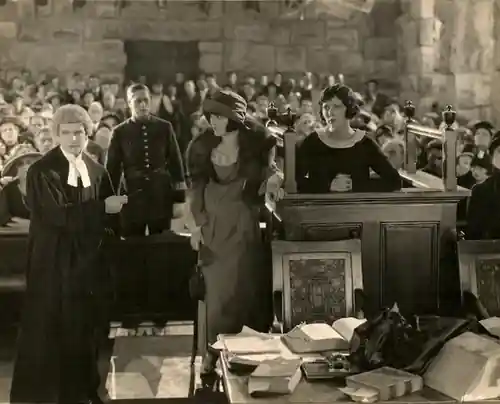
At its core, the film asks a question that remains relevant: can justice exist when the arbiter is as flawed as the accused? Stowell’s journey from a man of privilege to a man of penitence is handled with a psychological realism that was rare for 1924. His eventual confession is not a moment of triumph but one of profound exhaustion. It is a surrender to the truth, a theme explored with less intensity in The Unknown Quantity or the mystery-driven My Lady's Garter.
The resolution of Name the Man! is bittersweet, eschewing the easy happy endings of Hollywood for something more resonant and truthful. It suggests that while legal redemption may be impossible, moral redemption is achieved through the searing fire of public confession. This complexity elevates the film above standard genre fare like The Marconi Operator or the comedic misunderstandings of L'affaire de la rue de Lourcine.
In the pantheon of Sjöström’s American works, Name the Man! often sits in the shadow of The Wind or He Who Gets Slapped, yet it deserves a place of equal honor. It is a work of immense lexical diversity in its visual storytelling, a film that speaks in the language of shadows, glances, and the heavy silence of the Isle of Man. It lacks the whimsical nature of Butting in on Baby or the overt melodrama of Dos corazones, opting instead for a somber, philosophical inquiry into the nature of man.
For the modern cinephile, this film is a revelation. It showcases a director at the height of his powers, a cast willing to delve into the darkest corners of the human experience, and a story that refuses to offer easy answers. It is a haunting reminder that our pasts are never truly buried; they are merely waiting for the moment when we are forced to stand before the world and finally, irrevocably, name the man responsible for our own undoing. It is as enigmatic as The Man of Mystery, yet far more grounded in the agonizing reality of the human heart. Name the Man! is a towering achievement of silent cinema, a harrowing, beautiful, and ultimately transcendent experience that lingers in the mind long after the final iris-out.
IMDb —
1926
Community
Log in to comment.