DbcultAccessing Vault...
Cult Review
Senior Film Conservator
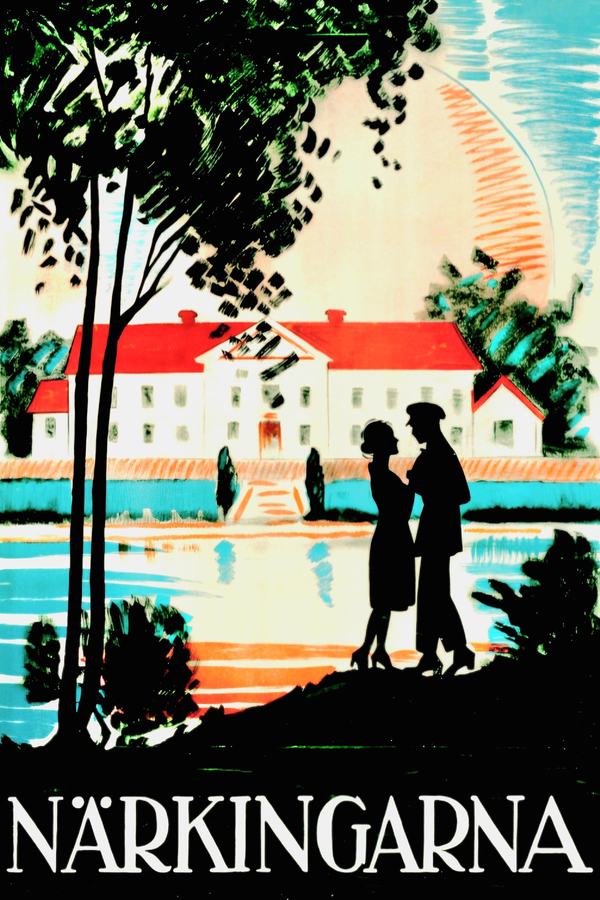
To witness Närkingarna in the modern era is to step through a temporal portal into the burgeoning soul of Swedish cinema. Directed by the prolific Gustaf Edgren and co-written with Axel Anrep, this 1923 silent gem captures a specific cultural vibration—a mixture of bucolic serenity and the harsh, unyielding social mores of the early 20th century. Unlike the sweeping historical epics like Julius Caesar or the grandiosity of Spartacus, Edgren’s work finds its power in the intimate, the local, and the profoundly human.
The narrative architecture is deceptively simple, yet it vibrates with a subterranean complexity. We are introduced to Axel (Anders Larsson) and Anna (Edith Nilsson), characters whose shared history is etched into the very soil of their village. Their desire for union is not merely a romantic whim but a biological and spiritual inevitability. However, the film quickly pivots into a study of power dynamics. Anna’s father, portrayed with a terrifyingly stiff-necked resolve by Gustaf Aronsson, represents the old world—a world where lineage and approval are the only currencies that matter. By casting his daughter out and sending Axel abroad, he attempts to rewrite their destiny, a move that echoes the domestic tragedies explored in The Cradle.
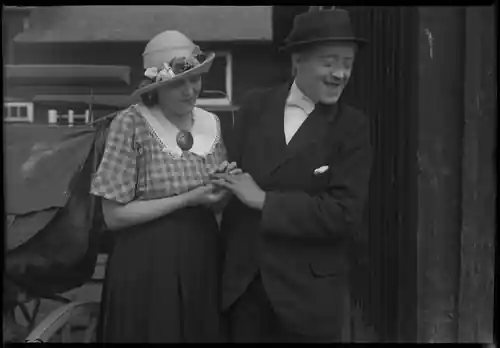
What distinguishes Närkingarna from its contemporaries, such as the more urban-focused The Painted World, is its commitment to naturalism. The cinematography utilizes the Swedish landscape as a psychological mirror. When Axel is sent away, the vastness of the world outside Närke feels cold and indifferent, a stark contrast to the claustrophobic but familiar warmth of the village. The use of light and shadow in the rural interiors suggests a Dutch Master’s influence, emphasizing the textures of wood, wool, and weathered skin.
Edith Nilsson’s performance is a revelation of silent-era nuance. In an age where overacting was often the default to compensate for the lack of sound, Nilsson employs a restrained physicality. Her Anna is not a weeping willow but a resilient oak, bent by the storm of her father’s wrath but never fully broken. Her chemistry with Anders Larsson is palpable; their scenes together possess a kinetic energy that makes the subsequent separation feel like a physical wound. This level of emotional verisimilitude is rarely seen even in highly regarded dramas like The Land of Hope.
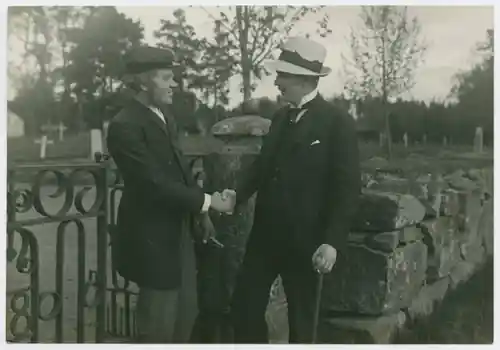
The ensemble cast reads like a who’s who of early Swedish cinema. Fridolf Rhudin, even in this relatively early role, displays the idiosyncratic charm that would make him a national treasure. His presence provides a necessary levity, a counterweight to the heavy melodrama of the central conflict, much like the comedic relief found in An Auto Nut or Felix in Hollywood. Anna Carlsten and Maja Jerlström round out the supporting cast, each adding layers to the community that both nurtures and stifles our protagonists.
Special mention must be made of Hugo Björne and Gerda Björne, whose contributions provide a sense of gravitas to the secondary plotlines. The film excels in showing that Axel and Anna’s struggle does not exist in a vacuum. The entire village is a web of interconnected lives, where a single patriarch’s decision can ripple through the community, affecting everyone from the local cobbler—perhaps even more dissatisfied than the one in The Dissatisfied Cobbler—to the highest-ranking business associate.
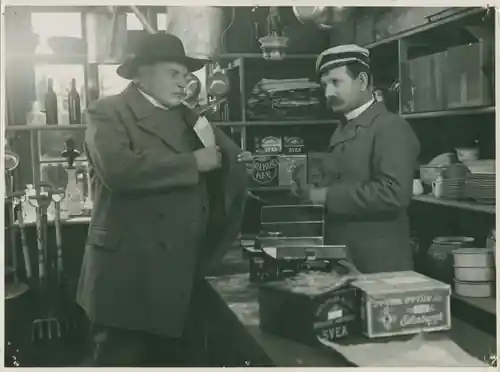
The theme of the 'journey' is central to Närkingarna. Axel’s business trip abroad is framed as a modern odyssey, a trial by fire that he must endure to prove his worthiness in a capitalist framework he never asked to join. While films like Headin' West or Trailin' treat the westward movement as a pursuit of freedom or adventure, Edgren treats Axel’s departure as a tragic displacement. It is an exile from the self.
Meanwhile, Anna’s expulsion from the domestic sphere forces her into a state of precariousness. Her struggle for survival in a society that offers little protection to an 'outside woman'—a concept explored with different tonalities in The Outside Woman—is portrayed with a grit that anticipates the social realism of later decades. The film doesn't shy away from the economic realities of the era; love is a luxury that the poor can ill afford when the whims of the landed gentry are involved.
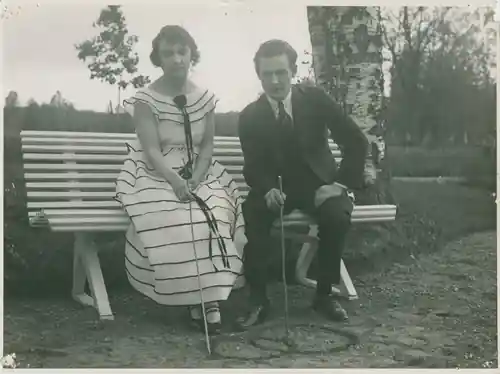
Compare this to the desert vistas of Sahara or the rugged outback of The Man from Kangaroo. While those films use vast, hostile environments to challenge their heroes, Närkingarna uses the familiar, lush greenery of Sweden to highlight the protagonists' internal isolation. The tragedy is not that they are lost in a wasteland, but that they are lost in a place they should call home.
Gustaf Edgren’s direction is masterful in its pacing. He understands when to linger on a landscape to let the emotional weight of a scene settle and when to cut rapidly to heighten the tension of a confrontation. The screenplay by Anrep and Edgren avoids the melodramatic pitfalls of many 1920s scripts. There is a lean, muscular quality to the storytelling. Every scene serves a purpose, whether it's establishing the social hierarchy or deepening our empathy for the displaced lovers.
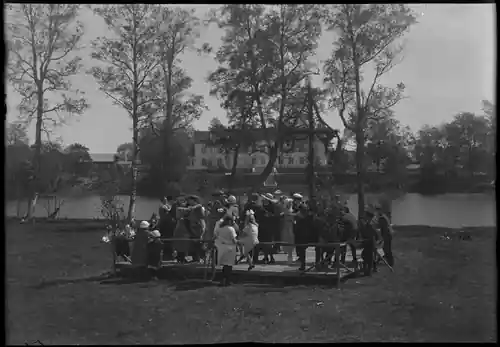
There is a sequence midway through the film where Anna looks out over the lake, the water shimmering with a deceptive peace. In this moment, Edgren captures the essence of the Swedish 'vemod'—a specific kind of melancholic longing. It’s a far cry from the slapstick energy of Some Judge or the vaudevillian flair of Dangerous Nan McGrew. Instead, it is a quiet, devastating observation of a life on hold.
Technically, for 1923, the film is a triumph of location shooting. The integration of the natural environment with the narrative flow suggests a sophisticated understanding of filmic space. The lighting, particularly in the evening scenes, uses the limited technology of the time to create a sense of depth and atmosphere that many Hollywood productions of the same year lacked. The textures of the film stock itself—the slight grain, the play of silver halides—add a dreamlike quality to the viewing experience today.
As we analyze the performances of Wictor Hagman, Torsten Bergström, and Aina Bergström, we see a company of actors who were instrumental in defining the Swedish cinematic identity. They brought a theatrical discipline to the screen, but adapted it for the camera’s unblinking eye. Henning Ohlsson, Emma Rommel, and Alfred Lundberg contribute to the rich tapestry of supporting characters, ensuring that the world of Närke feels lived-in and authentic.
In the final analysis, Närkingarna is more than a period piece; it is a vital document of human endurance. It reminds us that the obstacles to happiness are often constructed by those closest to us, and that the journey to overcome them is rarely a straight line. It stands as a testament to Edgren’s vision and the enduring power of the Swedish silent era. While it may not have the name recognition of the great epics, its emotional resonance is just as profound, proving that the smallest stories are often the ones that speak most loudly to the human heart.
For any serious student of cinema, or anyone who simply appreciates a well-told story of love against the odds, Närkingarna is essential viewing. It bridges the gap between the theatrical traditions of the 19th century and the cinematic innovations of the 20th, all while remaining firmly rooted in the beautiful, stubborn soil of the Närke countryside. It is a film of quiet beauty, fierce convictions, and an unbreakable spirit.
IMDb 7.8
1935
Community
Log in to comment.