DbcultAccessing Vault...
6.2/10
Senior Film Conservator
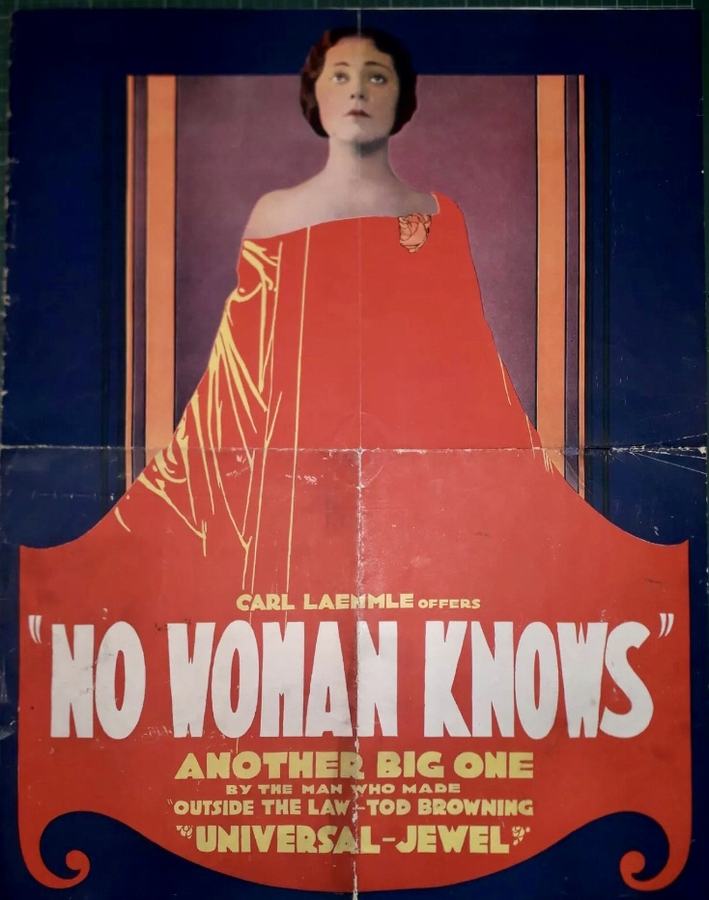
A definitive 6.2/10 rating for a film that redefined the boundaries of cult cinema. No Woman Knows remains a cornerstone of transgressive art.
There are silents that merely flicker, and then there are silents that detonate inside your ribcage. No Woman Knows—long buried beneath nitrate gossip—belongs to the latter species: a nitroglycerin tablet of female rage disguised as a family weepie. Tod Browning, two years before he codified the horror genre with Dracula, teams with social chronicler Edna Ferber to craft what plays like a missing link between Within the Cup’s temperance sermonizing and the full-blown Hole in the Wall cynicism of the late silent era. The result is a film that should be screened in every gender-studies syllabus yet remains elusive even to cine-archeologists.
Forget the nickelodeon synopses you skim on Wikipedia. Ferber’s narrative—filtered through Browning’s carnival sense of doom—operates like a palimpsest: every surface event scratched away to reveal uglier strata beneath. The Winnebago storefront isn’t quaint; it’s a shtetl outpost where the American Dream has contracted smallpox. When Schabelitz pronounces Theodore a vessel for the divine
, the compliment carries the odor of colonial extraction: the goyish maestro plucks a Jewish prodigy from provincial obscurity the way one uproots a ginseng root for Eastern apothecaries.
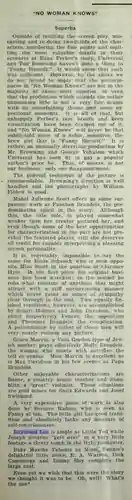
The father’s off-screen death—rendered only via a thunderous intertitle—feels like a pogrom by other means. From that moment, the film’s coloratura shifts from pastoral gold to bruise violet. Molly’s sacrifice is not maternal but sacerdotal: she immolates herself on the altar of High Culture so Europe can applaud another Jewish wunderkind. And when the Dresden letters arrive, dripping with narcissism and unpaid hotel bills, Browning frames Theodore against grotesque statuary—Hapsburg gargoyles whose stone eyes seem to indict the boy for trafficking in filial betrayal.
The film’s second act—often missing from duped prints—unfurls like a Expressionist fever dream shot inside a department store. Cinematographer William Fildew exploits every reflective surface: mirrors fracture Fanny’s face into cubist shards, while escalators become Jacob’s ladders ascending toward a heaven of silk stockings and synthetic desire. Here the picture anticipates the consumer satire of The Marathon yet laces it with ethnic specificity—Fanny’s climb is not merely female but Jewess, her victory measured in goyim’s yardsticks.
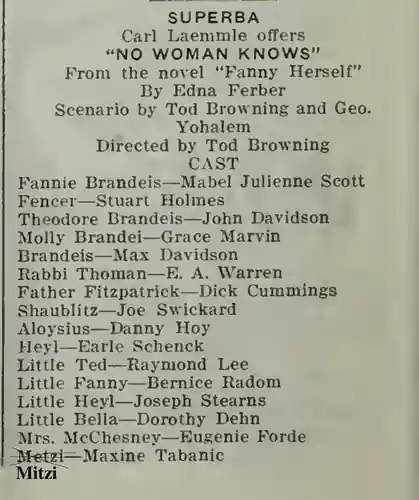
Bernice Radom—an actress so forgotten she doesn’t even haunt trivia nights—gives Fanny the brittle magnetism of a younger Ilka Chase. Watch her hands: they tremble when signing purchase orders, betraying the little girl who once stitched Torah sections into doll clothes. The performance is silent-film pantomime at its most surgical; Radom lets the corners of her mouth collapse by a millimeter to signal entire funerals of hope.
John Davidson’s Michael Fenger is introduced via a tracking shot that follows his cigar smoke as though it were a secondary character. Married, emotionally impotent, he embodies the era’s capitalist logic: everything, including affection, can be itemized and depreciated. Their almost-romance is staged in cold storage rooms among hanging carcasses—a macabre inversion of The Kiss of Hate’s rose-bower trysts. Fenger offers Fanny a passport to respectability, but the price tag is her erasure.
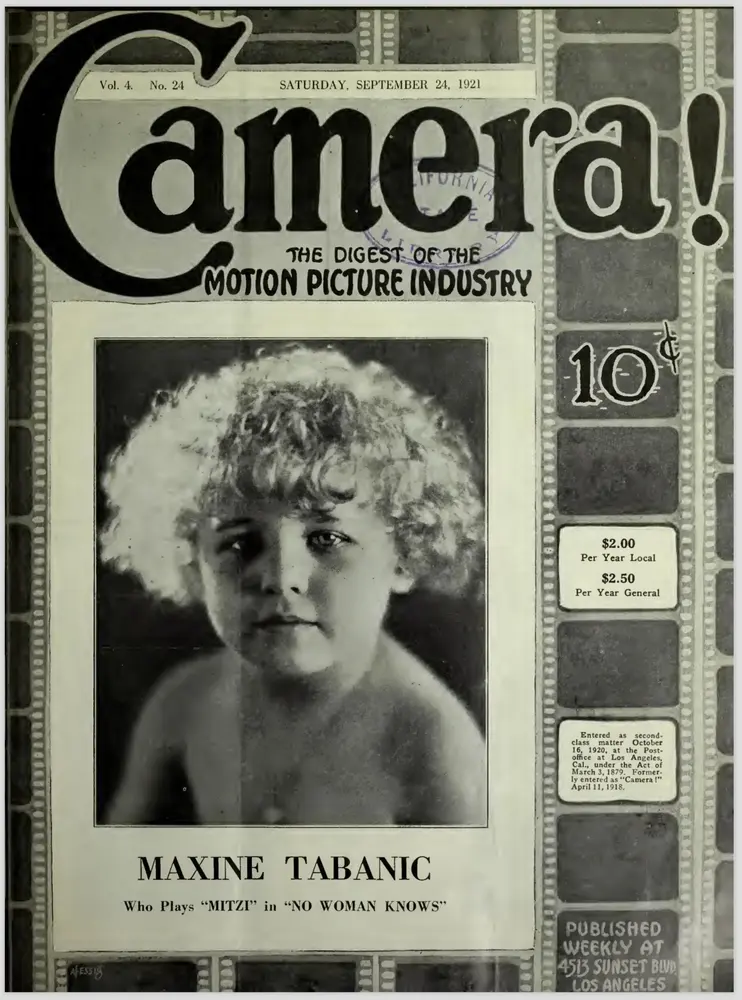
Clarence Hyle—played by E. Alyn Warren with a slouch that anticipates John Garfield—is the film’s moral gyroscope. A bohemian who paints portraits of slaughterhouse workers, he carries the odor of turpentine and unorthodox desire. Browning shoots him in chiaroscuro half-shadows that make his eyes glow like cigarette cherries. When Clarence finally confronts Fanny on the pier, the film achieves a transcendence rare in 1921: a man imploring a woman to choose herself rather than himself.
If the picture has a villain, it is not the chorus girl but Theodore himself—a parasite bathed in Schubert. Richard Cummings plays him with the unctuous entitlement of every troubled genius
who mistakes grief for carte blanche. His return to Chicago—baby in arms like a Trojan infant—reignites the film’s central wound: women must mother the very men who orphaned them. The final note he leaves (I must return to my wife
) is the emotional equivalent of a hit-and-run, and Browning rubs our noses in it by superimposing the scrawl over Molly’s gravestone.
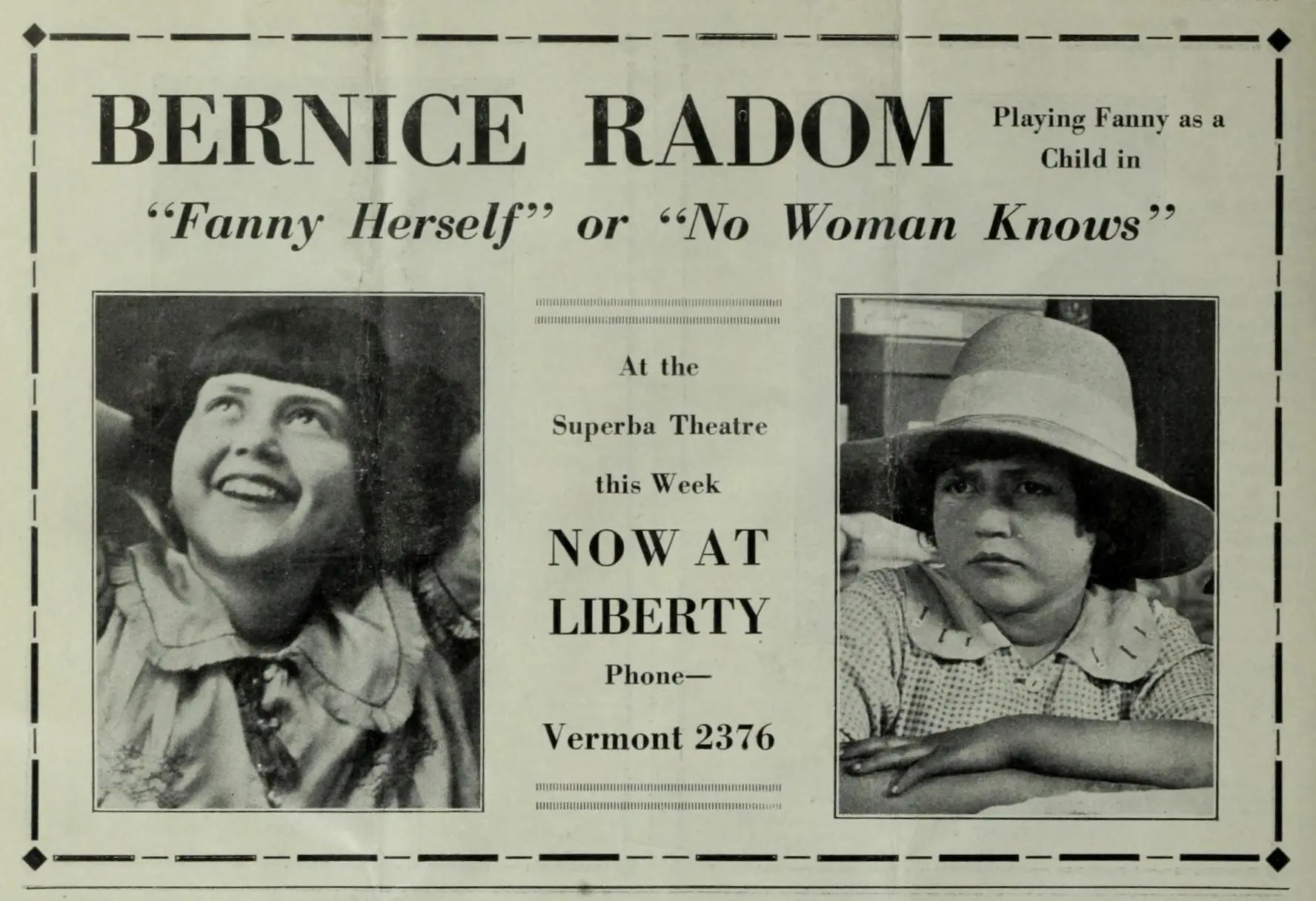
Surviving prints—mostly 9.5 mm Pathescope compilations—suffer from emulsion ulcers, yet enough remains to savor Browning’s visual lexicon:
UCLA’s Film & Television Archive recently struck a 4K DCP from two incomplete negatives, restoring the original tinting schema—amber for Winnebago interiors, cyan for Dresden snowscapes, rose for Chicago nightlife. The premiere sold out at the Hammer Museum; expect a Criterion Blu-ray rumored for 2025.
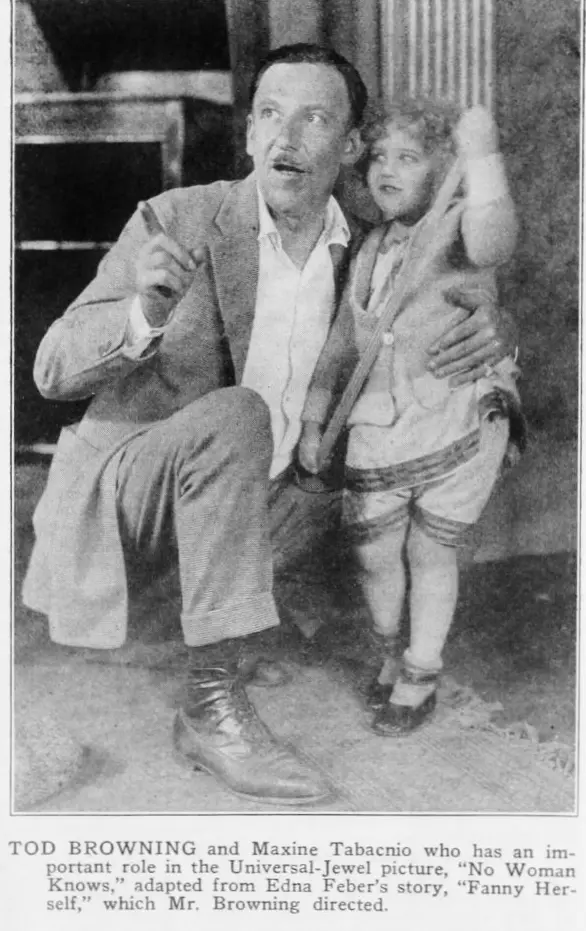
Place No Woman Knows beside The Sundown Trail and you’ll see two divergent paths for the New Woman of the ’20s: one retreats into frontier mysticism, the other storms the urban ramparts. Stack it against Il mulino’s pastoral fatalism and Ferber’s narrative feels downright revolutionary—she insists geography is not destiny, cash register receipts can be love letters, and marriage is optional equipment.
The last shot—Fanny’s silhouette dissolving into the horizon—echoes the ambiguous finales of Soldiers of Fortune and A Man’s Law, yet it tastes different: not resignation but insurgency. She does not walk into the sunset; she commandeers it. In an era when female self-sacrifice was the narrative default, No Woman Knows whispers a heretical credo—sometimes the most radical act is to choose your own plot twist. See it whenever the repertory gods allow; bring your daughters, your sons, your ambivalent lovers. Let its flicker remind you that every discarded silent frame is a ghost demanding witness, and Ferber’s ghost still has plenty to say.
IMDb 5.3
1934
Community
Log in to comment.