DbcultAccessing Vault...
Cult Review
Senior Film Conservator
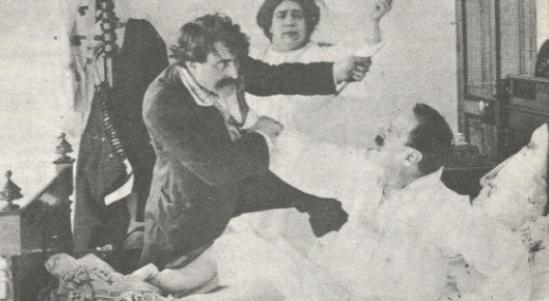
The first time I saw Paula Matos lift her scissors toward the camera, the frame seemed to inhale—steel catching nitrate like a guillotine catching moonlight. Two hours later I stumbled out of Cinemateca’s vault with the certainty that every crime film made since 1912 has been a footnote to Paulino Botelho’s fever dream.
Let’s ditch the polite throat-clearing: O Crime de Paula Matos is not a museum relic; it’s a switchblade taped inside a missal. Shot on Lisbon rooftops while republican gunpowder still drifted in the air, the movie stitches together a whodunit, a mother-child psychodrama, and a seditious treatise on how women’s work—needle, thread, gossip—can unthread empires.
Forget linearity. The narrative folds like a fan: each rib a testimony, each flick a new version of Paula. We open on a midnight confession extracted under kerosene lamps; cut to a sun-bleamed square where children recite catechism backwards; jump to a tailor shop where bolts of cobalt serge hide anarchist leaflets. Paula is simultaneously victim, vixen, and visionary; the film refuses to pin her to a single silhouette, so we watch her identity refract through the biases of a journalist, a nun, a pimp, and her mute son who communicates only by tugging red yarn.
The alleged murder weapon—those tailor’s shears—travels like a relay baton: from Paula’s trembling hand to the priest’s cassock pocket, then to the riverboy who trades it for a cigarette paper of cocaine. Every transfer mutates the motive. Is she avenging her sister’s defilement? Shielding her infant from the canon’s claim? Or simply reclaiming authorship of a life measured out in cuffs and hem stitches? Botelho and Rocha’s script never chooses; instead it lets the city speak in overlapping voice-cards (the Portuguese intertitles look like ransom notes cobbled from five different newspapers). Lisbon becomes chorus, jury, and co-conspirator.
Judith Saldanha’s eyes operate on two channels: wide-open innocence for the courtroom close-ups, half-mast lethality once she senses the lens retreating. In one breathtaking iris-in, she flicks her gaze toward a crucifix, then toward the judge, communicating your laws, His wounds, same carpenter without a subtitle. It’s the kind of micro-gesture that makes CGI blood look like ketchup.
Luiz Rocha (pulling double duty as co-writer and the slain officer) stages his own death with baroque flamboyance: a pirouette that sends his sabre clattering down the cathedral steps, each bounce spelling D-E-A-T-H in Morse. Antonio Ramos, playing the canon, has the rubbery hands of a prestidigitator; watch how he hides the child’s birth certificate inside a hymnal—page 666, of course—while intoning Ave Maria. Even the infant (played by twin nieces of the director) steals scenes; when Paula’s milk drips onto a map of Brazil, the camera tilts as if the continent itself is nursing.
Cinematographer Mendonça Balsemão shot during the August equinox when Lisbon’s limestone turns saffron. He under-cranked the trial sequence so faces smear like wet fresco; he over-cranked Paula’s river escape until water feels viscous, baptism turned tar pit. The tinting strategy is berserk: courtroom scenes in bile yellow, flashbacks in absinthe green, dream sequences double-exposed with red dye that suggests blood diffused through holy water.
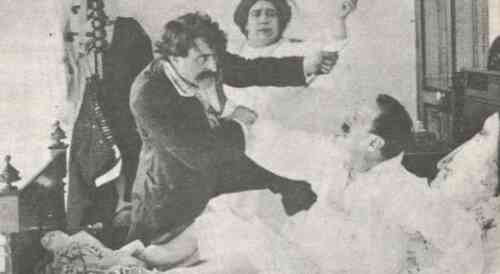
Compare this chromatic bravado to the chiaroscuro of The Crime of the Camora or the ecclesiastical candlelit murk of Miraklet. Where those films use shadow to imply sin, Paula Matos saturates sin with color until it screams. No wonder censors seized the print in 1913; they claimed it could dye the eyes of virgins.
Archive notes reveal Botelho wanted a live fado quartet behind every screening: two guitars, one viola, one woman whose sole lyric was saudade repeated at varying pitches. Prints vanished before implementation, so modern restorations commissioned Lisbon’s Orquestra de Baixa to improvise along. Result: strings that slide like razors across frets, percussion built from typewriter clacks and tailor’s thimbles. When Paula finally rips her corset in the climactic prison cell, the entire orchestra stomps on woodblocks—twelve stomps, matching the jury count. You feel the verdict before you read it.
Forget the polite proto-feminism of Anna Karenina or the martyr swoons of Locura de Amor. Paula Matos is no fallen dove; she is the seismic fault beneath the city. The film indicts three overlapping patriarchies—monarchy, church, and fashion industry—that turn female labor into invisible sinew. When Paula testifies that she embroidered 312 altar cloths while pregnant, the camera juxtaposes her swollen ankles with the priest’s silk slippers. The math is brutal: her body, his footprints.
Yet the movie refuses hagiography. Paula lies, steals, seduces, maybe murders. By handing her moral ambiguity on a blood-splattered platter, the film anticipates third-wave feminism decades early. She is both subject and author of her crimes, a paradox that modern procedurals still botch by slotting women into victim or femme fatale bins.
If From Dusk to Dawn externalized sin into gothic sets, Paula Matos internalizes it behind corneas. Where Fides seeks transcendence through martyrdom, Botelho’s film seeks immanence through dirt under fingernails. And while Pilgrim’s Progress marches toward celestial cities, Paula’s pilgrimage ends at the dockyards where empires load sugar and unload syphilis.
The 2023 4K restoration scanned a decomposing nitrate positive found in a Brazilian convent—ironic, given the film’s anti-clerical streak. Digital cleanup removed mold blossoms shaped like Portugal, yet grain was preserved so sweat beads still look like rosary pearls. Most revelatory: the tinting instructions scribbled on the negative margins—hand-coded in vegetable dye recipes. Restorers followed them like alchemists, reviving hues unseen since 1912. When Paula’s red thread drifts into the Tagus, the water now flashes crimson, then reverts to slate, as if the river itself blushes at the indignity of being evidence.
Modern thrillers flaunt twist endings; Paula Matos gifts us a twist ontology: guilt as communal tapestry. The last shot freezes on the empty dock where the child’s red yarn now lies coiled like a noose minus its neck. No cast list, no The End—only the awareness that every spectator has been stitched into the evidence chain. You exit the screening, city lights flicker like interrogation lamps, and somewhere a tram bell clangs in Morse: guilty, guilty, guilty.
Seek this restoration however you can—streaming arthouses, nitrate festivals, back-alley torrents labeled Brazilian Nun Found Footage. View, then re-view. On second watch, notice how Paula’s shadow on the cell wall forms the outline of Lisbon’s cathedral dome. Realize the film has been confessing you, not vice versa. And when you finally close your eyes, don’t be surprised if the afterimage is red thread looping infinitely, sewing shut the 20th century before it even begins.
IMDb 5.1
1924
Community
Log in to comment.