DbcultAccessing Vault...
Cult Review
Senior Film Conservator
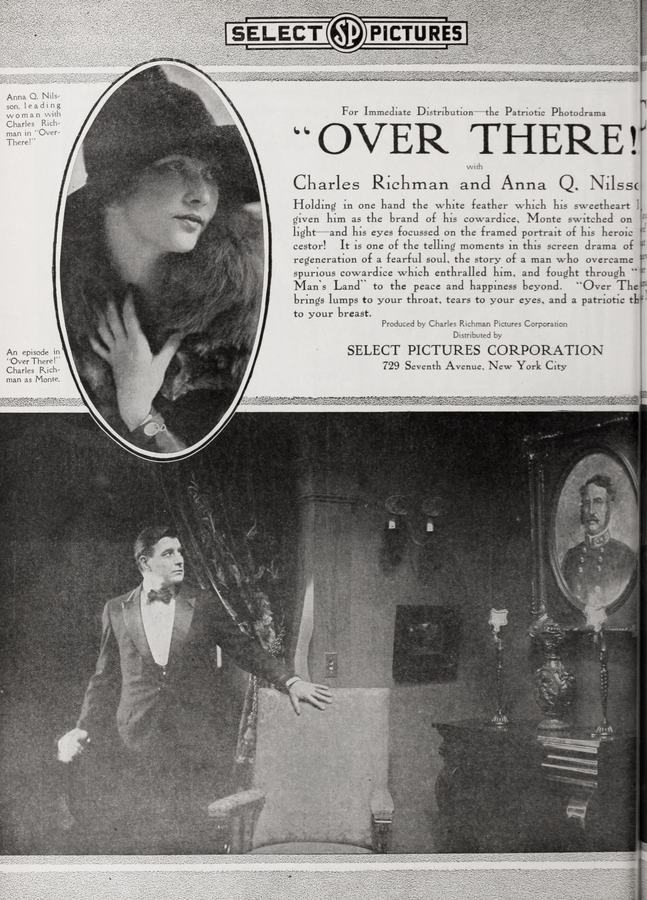
In the volatile atmosphere of 1917, American cinema was not merely an escapist medium but a potent instrument of social engineering. Over There, directed by James Kirkwood and penned by the formidable duo of Charles Richman and Eve Unsell, stands as a seminal artifact of this era. It is a film that grapples with the transition from isolationist introspection to the globalist responsibility of the Great War. While many contemporary war films focused on the strategic maneuvers of generals, this narrative delves into the fragile psyche of a single man, Montgomery Jackson, portrayed with a haunting sensitivity by Charles Richman himself. The film’s aesthetic choices and its unflinching look at the stigma of cowardice make it a fascinating study in early 20th-century masculinity.
The cinematic tapestry woven here is one of stark contrasts. We begin in the velvet-lined drawing rooms of American high society, a world that feels increasingly disconnected from the sulfurous reality of Europe. It is here that Montgomery’s refusal to enlist is most jarring. Unlike the protagonists in The Law Decides, where legal and moral frameworks are debated with intellectual rigor, Montgomery’s conflict is purely visceral. He is a man paralyzed by the very thought of bloodshed, an almost phobic reaction that his peers mistake for a lack of moral fiber.
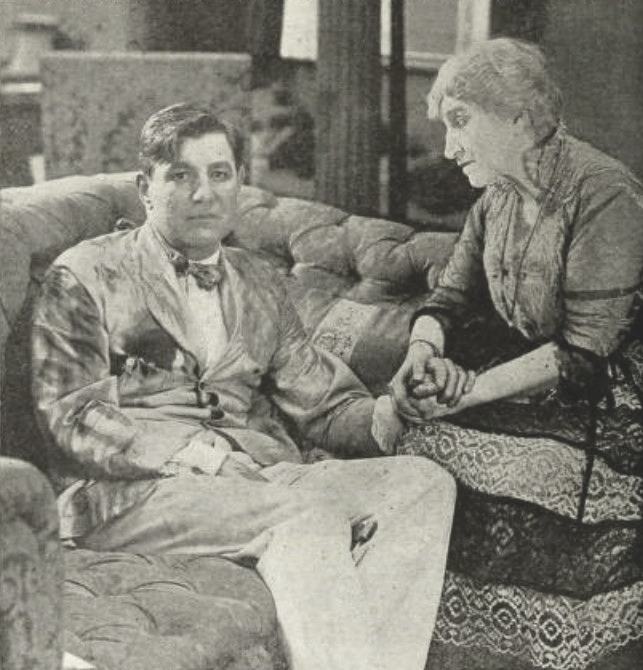
The emotional fulcrum of the film is undoubtedly Anna Q. Nilsson’s Bettie Adams. Nilsson, an actress of profound expressive range, provides the necessary friction to ignite Montgomery’s transformation. Her decision to volunteer for the Red Cross is not merely a plot device; it serves as a scathing indictment of Montgomery’s inactivity. In the silent era, the power of a gaze was paramount, and Nilsson’s transition from adoring fiancée to disappointed patriot is conveyed with a devastating economy of movement. Her departure for France shifts the film’s geography and its moral weight.
When Bettie leaves, the film sheds its domestic skin. The cinematography begins to mirror the chaotic energy found in The Girl from Frisco, though with a much darker, more solemn tone. The transition from the safety of the American home to the mud-clogged trenches of France is handled with a gritty realism that was quite advanced for its time. We see Montgomery not as a man who has suddenly found courage, but as a man who has found a reason to endure his terror. His enlistment is an act of romantic desperation, a theme that resonates through the ages.
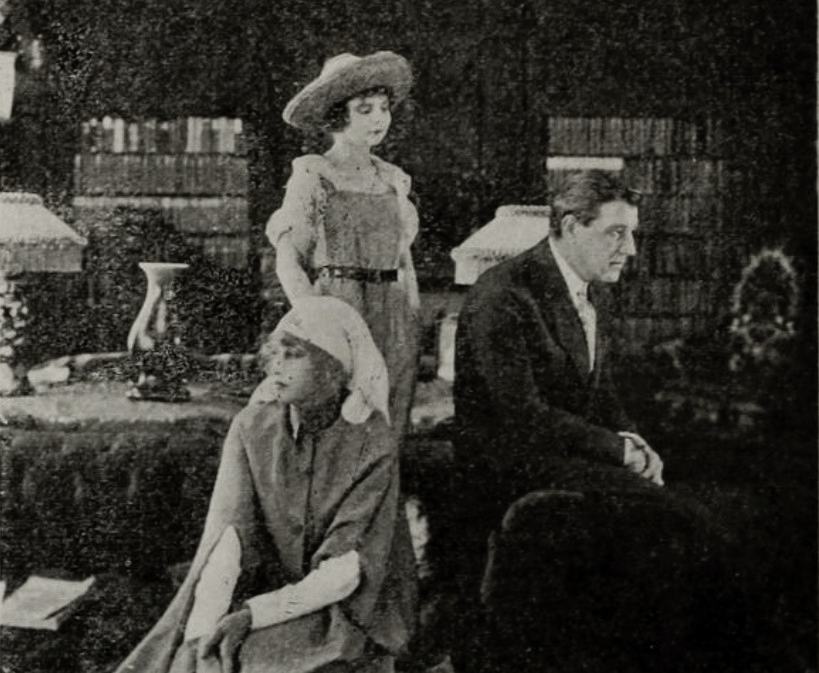
The middle act of Over There is a masterclass in tension. The battlefield sequences are choreographed with a sense of claustrophobia that underscores Montgomery’s internal struggle. Unlike the sweeping romanticism of Wildflower, the imagery here is jagged and discordant. The use of shadow and light—the sea blue of the nocturnal bombardments contrasted with the dark orange of the explosions—creates a sensory experience that must have been overwhelming for 1917 audiences.
Montgomery’s acts of heroism are portrayed not as effortless feats of strength, but as grueling, painful necessities. When he saves Colonel Adams and his own rival, the film avoids the saccharine pitfalls of many contemporary melodramas. There is a tangible sense of cost. His wounds are not just physical; they are the scars of a man who has finally integrated his shadow self. This psychological depth is what elevates Over There above standard propaganda. It acknowledges that the path to valor is often paved with abject fear.
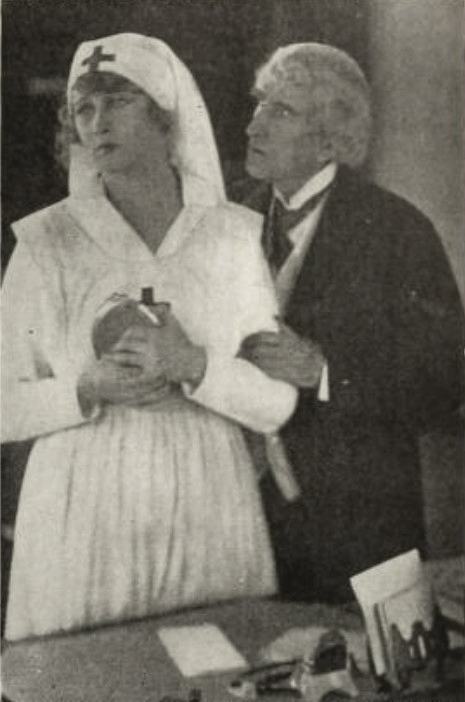
The narrative structure here mirrors the complexity found in The House of Tears, where past trauma dictates present action. Montgomery’s eventual wounding and subsequent recovery under Bettie’s care provide a narrative symmetry that is deeply satisfying. The rival’s magnanimity in stepping aside is perhaps the most 'silent film' trope in the production, yet within the heightened reality of the genre, it feels earned. It is a recognition that Montgomery has paid the ultimate price for his place in Bettie’s heart.
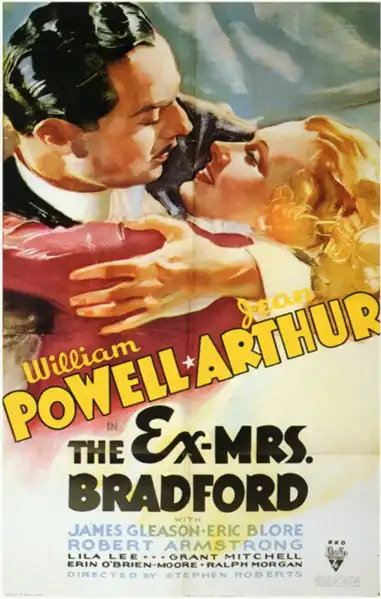
Comparing Over There to other films of the period reveals its unique position. While The Seats of the Mighty deals with historical conflict on a grander, more operatic scale, Over There remains stubbornly intimate. It is more interested in the sweat on a man’s brow than the movement of battalions. Even when compared to international efforts like the Hungarian Farkas or A peleskei nótárius, there is a distinctly American sense of individualistic redemption at play here.
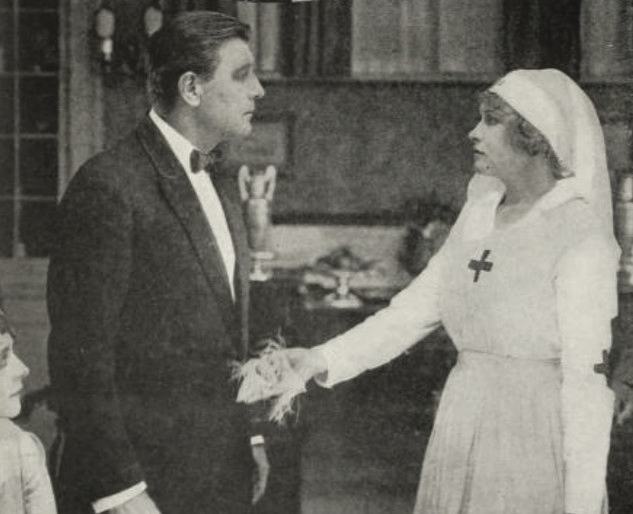
The film also avoids the comedic levity of A Bunch of Keys or the pure economic cynicism of Money. Instead, it occupies a space of earnest moral inquiry. How does a society reconcile the pacifist with the patriot? Can a man who fears blood truly be called a man in the eyes of his country? These are the questions that Charles Richman explores through his dual role as writer and star. His performance is a tour de force of restrained agony, far removed from the swashbuckling bravado often associated with early action stars.
We must also consider the contribution of Eve Unsell, a writer whose ability to ground fantastic situations in human emotion was legendary. Her influence is felt in the nuanced relationship between Montgomery and Bettie. It is not a simple romance; it is a negotiation of values. This thematic depth is similar to what we see in Kampen om barnet, where the struggle for identity is central to the plot.
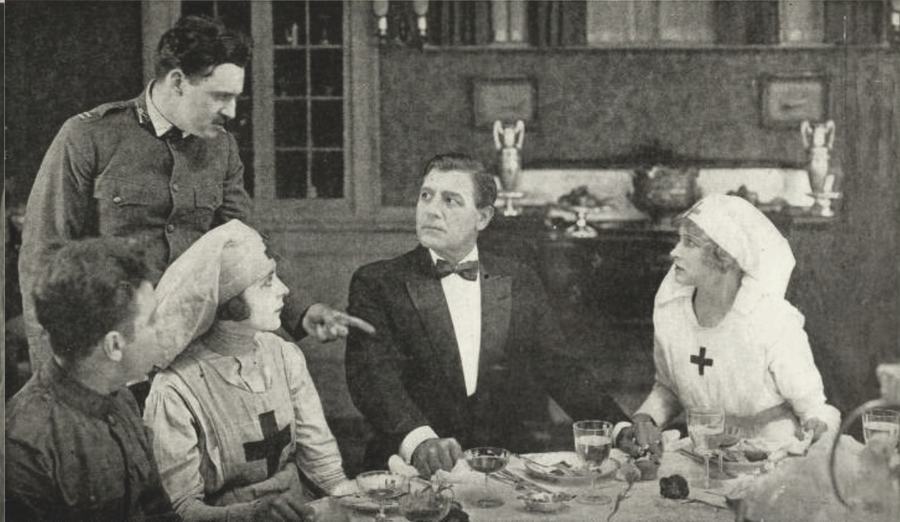
As we analyze the final act, where the rival yields to the undeniable bond between Montgomery and Bettie, we are reminded of the film's broader purpose. It was a rallying cry, a piece of propaganda designed to soothe the anxieties of a nation on the brink of unprecedented loss. Yet, it transcends its utilitarian origins through its craft. The supporting cast, including the reliable Walter McGrail and Walter Hiers, provide a solid foundation for the central drama. McGrail, in particular, offers a performance that contrasts sharply with the protagonist’s vulnerability, serving as a reminder of the 'ideal' soldier that Montgomery eventually becomes.
In the landscape of 1917, films like Red Powder or A Woman's Power explored different facets of the human condition, but Over There remains one of the most poignant examinations of the masculine ego under fire. It shares a certain thematic DNA with The Thoroughbred, specifically in its focus on the 'breeding' of character through adversity. However, the stakes here are much higher; it is not a race or a social standing at risk, but the very soul of the protagonist and the survival of the world he knows.
Technically, the film utilizes the limited tools of the era to maximum effect. The editing, while rudimentary by modern standards, creates a rhythmic pulse during the rescue scenes that is undeniably effective. The use of tinting—the yellow of the morning light after a battle—adds a layer of emotional resonance that black and white alone could not achieve. It is a reminder that even in the infancy of the medium, filmmakers were experimenting with the psychological impact of color and light, much like the mystery-driven The Ivory Snuff Box or the politically charged The Price of Tyranny.
Ultimately, Over There is a testament to the power of cinema to reflect and shape the human spirit. It is a film that demands to be viewed not just as a historical curiosity, but as a deeply human story of fear, love, and the arduous journey toward courage. In the performance of Charles Richman and the luminous presence of Anna Q. Nilsson, we find a timeless resonance that continues to echo long after the final frame has flickered out. It remains a cornerstone of silent cinema, a harrowing yet hopeful exploration of what it means to truly stand up when the world demands it.
IMDb —
1924
Community
Log in to comment.