DbcultAccessing Vault...
Cult Review
Senior Film Conservator
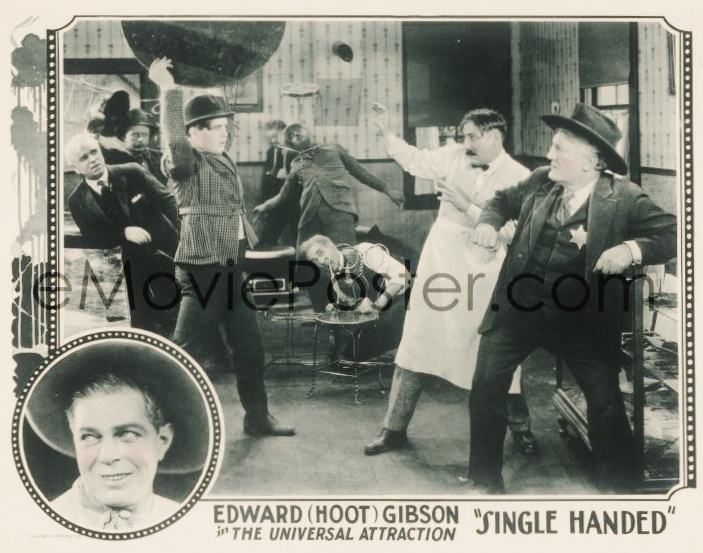
In the annals of early cinematic endeavors, particularly those that galloped across the untamed landscapes of the American West, there exists a unique charm that 'Single Handed' (1923) exemplifies with a delightful blend of rustic humor and unexpected adventure. Directed by Edward Sedgwick, this silent era gem, penned by Sedgwick and George C. Hull, serves as a captivating snapshot of a period when narrative ingenuity often compensated for the absence of spoken dialogue. It's a film that, despite its age, retains a vibrant energy, largely propelled by the inimitable presence of its star, Hoot Gibson, whose every gesture and expression speaks volumes. The picture isn't merely a relic; it's a testament to the enduring power of storytelling through visual artistry, offering a narrative tapestry rich with comedic mishaps, thrilling pursuits, and a surprisingly tender romance. Its premise, while seemingly straightforward, unravels with a series of charmingly convoluted events that keep the audience engaged from the first frame to the last.
At the heart of 'Single Handed' lies Hector MacKnight, a character affectionately, if somewhat derisively, known as "Goofy." Portrayed with an endearing awkwardness by Hoot Gibson, Hector is a man whose talents decidedly do not lie in musical proficiency; his fiddling is, by all accounts, an auditory affront. This seemingly innocuous detail, however, sets the stage for a series of events that propel him into an adventure far beyond his humble, off-key existence. The narrative truly ignites when Hector, an epitome of innocent naiveté, stumbles into a rigged poker game. This isn't just any game; it's a meticulously planned scheme designed to relieve unsuspecting players of their fortunes. Hector, an unwitting participant, becomes the catalyst for an explosion of chaos. The scene quickly devolves from a tense card game into a full-blown brawl, a maelstrom of flying fists and overturned tables that vividly captures the spirited, often rough-and-tumble, atmosphere of the frontier. The arrival of the sheriff, a predictable yet necessary intervention, escalates the situation, transforming the melee into a frantic chase that sweeps Hector into its turbulent current. This initial sequence is a masterclass in silent film exposition, using exaggerated physical comedy and rapid editing to convey both the escalating tension and Hector's bewildered involvement, reminiscent in its chaotic charm to the episodic misadventures seen in films like Looking for Trouble, where an ordinary man finds himself embroiled in extraordinary circumstances through no fault of his own.
It is amidst this whirlwind of confusion and pursuit that Hector's life takes an unforeseen turn, leading him to Ruth Randolph, played with a compelling blend of vulnerability and determination by Elinor Field. Their meeting isn't a grand, romantic introduction but rather a collision born of circumstance, a testament to the unpredictable nature of fate on the frontier. Ruth, it turns out, is on her own quest, one inextricably linked to a mysterious treasure map and a hidden inheritance. Her predicament draws Hector further into a complex web of intrigue, transforming his accidental involvement into a shared destiny. The narrative then takes an even more whimsical detour, plunging our unlikely duo into the vibrant, often outlandish, world of a traveling circus. This setting provides a rich backdrop for both comedic escapades and further plot development, as the pursuit of the map's missing half becomes intertwined with the theatricality and deception inherent in circus life. The contrast between the dusty, lawless West and the colorful, performative circus creates a visually dynamic experience, showcasing the versatility of silent cinema to transport its audience to disparate worlds within a single narrative. The circus sequence, with its potential for both spectacle and trickery, adds layers of excitement and danger, echoing the dramatic shifts in environment and tone that one might find in adventure serials of the era.
The heart of Hector and Ruth's shared journey is, of course, the treasure hunt. This isn't a conventional search for glittering gold or precious jewels; the object of their arduous quest is revealed to be nothing more than a prehistoric jawbone. This ironic twist is a stroke of narrative brilliance, subverting audience expectations and adding a layer of wry humor to the entire endeavor. It challenges the conventional notions of what constitutes "treasure," suggesting that true value might lie not in material wealth but in the experiences gained and the bonds forged during the pursuit. This revelation, while initially anticlimactic, ultimately serves to highlight the film's underlying themes of innocence and the unexpected rewards of virtue. The pursuit itself, fraught with peril and punctuated by thrilling action sequences, ensures that the audience remains invested, even as the ultimate prize is revealed to be something so utterly unconventional. The dramatic irony of chasing a jawbone, rather than a chest of riches, provides a memorable and distinctive element, setting 'Single Handed' apart from more straightforward treasure narratives like those hinted at in adventure tales or even romantic pursuits of wealth such as in The Heiress at Coffee Dan's, where the focus on tangible assets is far more pronounced. Here, the journey itself, and the growth of the characters, becomes the true gold.
Hoot Gibson's portrayal of Hector MacKnight is undoubtedly the magnetic core of 'Single Handed'. Gibson, a true silent film legend, possessed a unique ability to convey complex emotions and nuanced character traits without uttering a single word. As "Goofy" Hector, he embodies the archetype of the well-meaning but perpetually clumsy hero, a character whose innocence and good nature consistently draw him into predicaments. His physical comedy is impeccable, from the exaggerated movements of his terrible fiddling to the frantic energy of the chase scenes. Yet, beneath the comedic veneer, Gibson imbues Hector with a genuine warmth and integrity that makes him immensely likable. We root for him not because he is a traditional, stoic Western hero, but precisely because he is an ordinary man thrust into extraordinary circumstances. His expressive face and masterful use of body language ensure that Hector's bewilderment, fear, determination, and eventual affection for Ruth are all palpable. This performance is a testament to the power of silent acting, where every gesture, every tilt of the head, and every wide-eyed stare carried immense narrative weight. Gibson's ability to blend humor with heroic resolve is a key factor in the film's enduring appeal, creating a protagonist who is both relatable and inspiring, much like the unassuming, yet ultimately courageous figures found in tales such as For Valour, where everyday individuals rise to meet challenges with unexpected bravery.
While Hoot Gibson shines, the supporting cast members also contribute significantly to the film's vibrant tapestry. Elinor Field, as Ruth Randolph, provides a strong female counterpart to Hector's bumbling charm. Her character is not merely a damsel in distress; she possesses her own agency and determination, driving much of the plot's forward momentum. The chemistry between Gibson and Field is subtle yet convincing, evolving naturally from shared adversity to genuine affection. The villains, though perhaps less complex, are effectively portrayed, providing the necessary antagonistic force to propel the narrative. Dick La Reno, Robert McKenzie, and Sidney De Gray, among others, fill their roles with the broad, expressive acting typical of the era, ensuring that their nefarious intentions are clear. Edward Sedgwick's direction is commendably agile, balancing the comedic elements with genuine thrills and moments of heartfelt emotion. He demonstrates a keen understanding of pacing, allowing the quieter moments to breathe before launching into exhilarating chase sequences or boisterous brawls. The cinematography, while perhaps not groundbreaking, effectively captures the expansive landscapes of the West and the intimate details of character interaction, utilizing depth of field and dynamic camera angles to enhance the storytelling. The film's visual language is clear and concise, a hallmark of well-executed silent cinema. Sedgwick’s ability to orchestrate such a diverse set of elements into a coherent and engaging whole speaks volumes about his craftsmanship, much like the meticulous world-building seen in other period pieces such as In the Palace of the King, albeit with a vastly different tone and setting.
'Single Handed' subtly explores several compelling themes that resonate beyond its comedic exterior. The most prominent is perhaps the capriciousness of fortune and fate. Hector's journey is a series of accidental encounters and unintended consequences, yet each twist of fate ultimately steers him towards a happier, more fulfilling life. His initial entanglement in the poker game, his chance meeting with Ruth, and even the ironic discovery of the jawbone all underscore the idea that life's greatest rewards often come from unexpected places and through unconventional means. The film also touches upon the theme of mistaken identity, albeit in a lighthearted manner, as Hector is initially perceived by some as a troublemaker or a simpleton, only to reveal a deeper courage and integrity. This concept of appearances versus reality is a recurring motif in cinema, from outright farces like But a Butler! to more dramatic explorations of character. Furthermore, the film celebrates the virtues of honesty and perseverance, as Hector's inherent goodness ultimately triumphs over the avarice and deceit of the villains. The seemingly worthless treasure serves as a powerful symbol, ironically paving the way for a truly valuable reward: a future with Ruth, demonstrating that true wealth lies in companionship and contentment, rather than material possessions. It’s a message that, while simple, remains profoundly resonant, especially when contrasted with the often cynical pursuit of wealth depicted in other films of the era.
Placing 'Single Handed' within the broader context of silent cinema reveals its unique position as a charmingly unpretentious Western comedy. Unlike the brooding psychological depths explored in a film like The Student of Prague, or the stark, often brutal realities depicted in more serious Westerns like The Law of the North, 'Single Handed' opts for a lighter, more optimistic tone. It shares a spirit of adventurous escapism with films such as Robinson Crusoe Hours, where the thrill of discovery and survival drives the plot, though 'Single Handed' anchors its adventure firmly in a comedic framework. The film's ability to blend action, romance, and humor without sacrificing the integrity of any element is a testament to the skilled craftsmanship of its creators. Its episodic structure, moving from a poker game to a chase, then to a circus, and finally to a treasure hunt, maintains a brisk pace and prevents any single plot device from overstaying its welcome. This narrative agility ensures that the audience is constantly entertained, much like the rapid-fire gags and plot developments in many silent comedies, yet it manages to retain a coherent emotional arc for its central characters. The film’s focus on the common man’s journey to heroism, albeit an accidental one, contrasts sharply with the more overt political or dramatic statements found in films like Revolutionens datter or To Hell with the Kaiser!, which were often steeped in contemporary historical or nationalistic fervor. Instead, 'Single Handed' offers a timeless tale of human foibles and triumphs.
In conclusion, 'Single Handed' stands as a delightful, if perhaps overlooked, entry in the vast canon of silent Westerns. Its strength lies in its unpretentious charm, its engaging narrative, and the magnetic performance of Hoot Gibson. The film's ability to elicit genuine laughter, stir excitement with its action sequences, and ultimately deliver a heartwarming resolution speaks volumes about its enduring quality. It reminds us that even the most seemingly insignificant individuals, like a fiddler whose talent is inversely proportional to his good intentions, can find themselves at the center of grand adventures and ultimately achieve profound personal happiness. The journey of Hector MacKnight, from a ridiculed musician to a reluctant hero who wins the hand of the woman he loves, is a classic tale rendered with fresh enthusiasm. While it may not possess the grandiosity of some epic silent productions, its intimate focus on character and well-executed comedic timing ensures its place as a thoroughly enjoyable piece of cinematic history. It's a film that proves that sometimes, the greatest treasures are not what you seek, but what you find along the way, and that a single-handed effort, guided by a good heart, can indeed change one's destiny. Its legacy is not built on groundbreaking technical innovation, but on its pure, unadulterated entertainment value and its ability to capture the spirit of an era with genuine warmth and wit. For fans of silent cinema, Westerns, or simply a good, old-fashioned story of an underdog's triumph, 'Single Handed' remains a joyous discovery, a testament to the craft and charm of early Hollywood storytelling. It’s a film that, much like a beloved folk tune, may not be technically perfect, but resonates with a soulful, memorable quality that transcends its simple notes. Its lighthearted approach is a welcome counterpoint to more somber character studies found in films like Grumpy, offering instead a buoyant optimism that is infectious and enduring, solidifying its place as a quintessential example of silent film entertainment.
IMDb —
1923
Community
Log in to comment.