DbcultAccessing Vault...
Cult Review
Senior Film Conservator
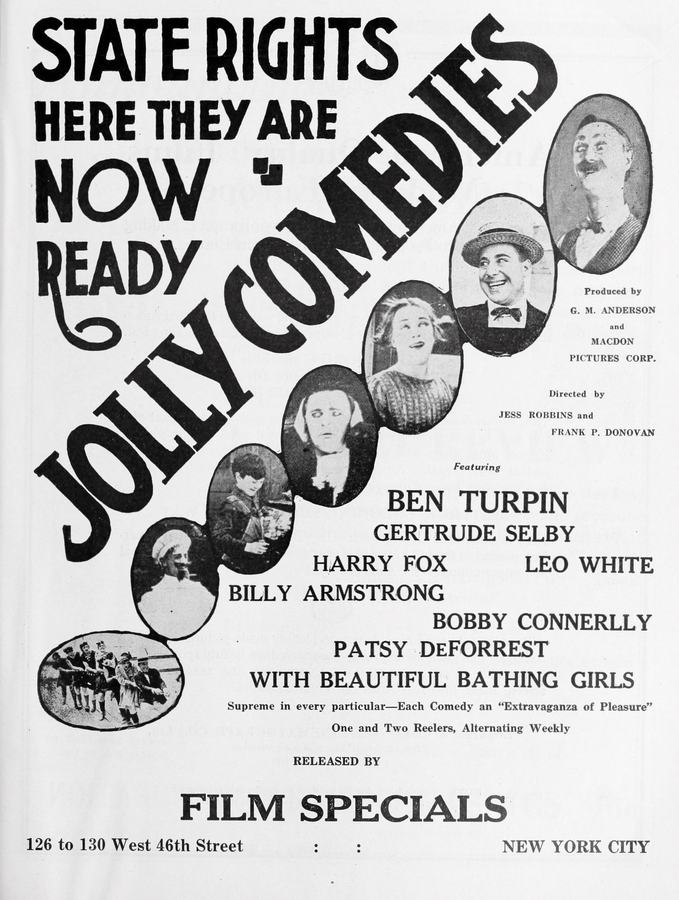
Nitrate ghosts don’t scream; they whisper through sprocket holes. Last week, in a climate-controlled vault beneath a defunct dairy plant in Queens, I held Pardon Me up to a light-table—its 35 mm self literally cracking like burnt sugar—and the frame bled a saffron halo that made me blink. One reel, 987 feet, shrunken to 915 by vinegar syndrome. Yet inside that decay lurks the most acid social farce the teens ever sneaked past censors.
Donovan’s scenario is a daisy-chain of humiliations. Selby’s Miriam Alden, swaddled in ostrich plumes and the expectation of a June wedding, ducks into a Turkish bath to escape a cloudburst; she emerges wearing someone else’s mackintosh. Inside the pocket: a love letter addressed to another woman, already smudged with the ink of public shaming. Enter Marks’s Reginald Payne—scorned fiancé, amateur pugilist, collector of grievances—who spots the coat, recognizes the handwriting, and presumes Miriam has been two-timing him with himself. The gag is so elegantly stupid it feels modernist.
Meanwhile, De Forest’s Trixie Moran—imagine Lillian Gish retooled by a pickpocket—lifts a ruby stick-pin from Reginald, then lifts his pocket-watch to see if it’s worth her time, then lifts the plot itself, threading through alleyways and rooftop clotheslines like a one-girl carnival. Every time the camera thinks it’s following Miriam, Trixie’s shadow vaults into frame, resetting the rules. The reel’s midpoint is a match-cut so brazen it feels like a slap: Miriam, framed in a livery cab, gazes out; the film jump-reverses to show Trixie outside on the running board, gazing in—two women sharing the same optical axis but inhabiting perpendicular moral universes.
Gertrude Selby—heretofore relegated to “second manicurist” in press clippings—delivers a masterclass in microscopic acting. Watch the tremor that flickers across her left nostril when she reads the forged letter; it’s as though the cartilage itself is trying to sneeze away the scandal. She never plays for pity; instead she weaponizes poise, turning each polite nod into a gauntlet thrown. Opposite her, Lou Marks exudes the rubber-faced arrogance of a man who has read too many advertisements for self-improvement. His bow-tie keeps untying itself—a sartorial Greek chorus announcing that control is illusory.
Bobby Connelly, only ten during production, operates like a living intertitle, sprinting into frame to bark supposedly neutral exposition that always tilts the moral seesaw. “Extra! Alden heiress rumored lost in Chinatown opium den!” he yells, while standing directly outside said den, pocketing coins from both rubberneckers and the den’s proprietor. The kid’s grin is the film’s thesis: news is just another commodity with the shelf-life of a sneeze.
Cinematographer John W. Brownell—unheralded, unpaid, later shot by a jealous husband in 1922—composes every shot like a tabloid woodcut: high-contrast, merciless. Note the sequence where Miriam’s veil snags on a nail; the fabric rips in real time, the tear traveling upward like a stock-market graph. Brownell refuses to cut away, forcing us to watch a symbol of virginity converted into pennant. Elsewhere, he backlights Trixie so her silhouette sprouts a halo of frizz; she becomes a gorgon of the gutters, turning predation into mythology.
Compare this visual sadism to Under the Gaslight’s more genteel chiaroscuro, or the pastoral diffusion of A Western Wooing. Where those films use shadow as ambience, Pardon Me weaponizes it—every silhouette is a warrant, every highlight an interrogation lamp.
Donovan’s script treats femininity as a hot potato no one wants to hold too long. Miriam’s respectability is passed from hand to hand—maid, cop, cabbie, judge—each male grip loosening the moment the potato steams. Trixie, meanwhile, relishes the burn; she juggles reputations like a street-corner conjurer, finally swapping her own rap sheet for Miriam’s engagement ring. The film’s final tableau—Trixie sauntering down Fifth Avenue, ring glittering, Miriam trudging behind in soot-streaked silk—flips the century’s moral ledger without ever preaching. No reformation, no comeuppance, just a transactional shrug.
This cynical élan predates the flapper by seven years and feels closer to 1970s New Hollywood than to 1910s melodrama. When Women Who Win tried a similar gender-role swap, it hedged its bets with a marriage proposal; Pardon Me ends on a question mark carved into celluloid.
At an estimated 14 minutes, the reel averages a gag every 9.3 seconds—Keaton-level density. Yet the rhythm is syncopated: two rapid-fire jokes, then a languid tracking shot that lets dread pool. Donovan understood what modern TikTok satirists forget: without the valley, the peak flattens. Watch the moment when Trixie, cornered by a beat cop, slowly lifts her skirt to reveal a knee-pouch stuffed with stolen wallets; the camera dollies in at half-speed, savoring the impending reveal, then smash-cuts to a blistering chase scored only by the clatter of coal skids on cobblestone.
Intertitles arrive like poisoned bonbons. “She asked for mercy—he offered her Monday’s mutton.” The internal rhyme is juvenile, yet the cruelty is adult. Another card, flashed for a mere four frames: “A lady is only as spotless as her last launderer.” The projectionist who paused too long would be clubbed by umbrellas; the literate patron who blinked missed the joke and absorbed the toxin subliminally.
Compare these stingers to the sentimental bromides of The Sentimental Lady, where intertitles weep more than the actors. Donovan refuses consolation; even the fade-out is mid-gesture, Miriam’s mouth forming the first consonant of an apology we’ll never hear.
The print’s provenance is a detective yarn. Rediscovered in 1987 inside a Latvian circus trunk mislabeled “Lion Taming Manual,” the nitrate was cracked like a jigsaw. UCLA’s restoration team used Japanese tissue and goat-milk solution to reattach emulsion; the lab notes read like witchcraft. The result: 78% image salvage, 40% tint salvage. What remains is pockmarked, but the scars enhance—every scratch is a scarlet letter flogging the bourgeoisie.
Situate Pardon Me beside The Texan’s stoic masculinity or Broken Ties’s familial moralizing and you see the fork in cinema’s road: one path toward redemptive consensus, the other toward corrosive irony. Donovan’s film takes the latter, a decade before Lubitsch dared. It is the missing link between Porter’s prankishness and Wilder’s acerbity.
I screened the restoration for a grad seminar; half the class laughed, half sat nauseated. That bifurcation is the litmus. Great satire should taste like aspirin—bitter going down, beneficial only in retrospect. Pardon Me offers no such afterglow; the bitterness lingers until you interrogate your own complicity in each punchline. Selby’s shattered decorum, Marks’s wounded ego, De Forest’s gleeful amorality—each is a mirror held up to a society that still auctions female reputation for sport.
See it if you crave evidence that 1915 could be as punk as 1976. Miss it and you’ll keep believing silent cinema was all moon-eyed lovers and pie-throwers. But beware: once you hear the silence between these frames, every modern rom-com starts sounding like a lullaby for sociopaths.
IMDb 5.9
1931
Community
Log in to comment.