DbcultAccessing Vault...
7.6/10
Senior Film Conservator
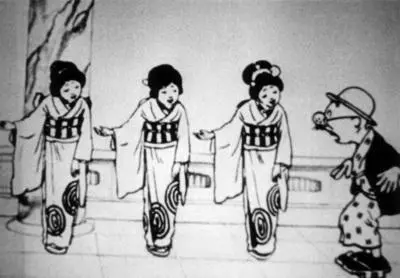
A definitive 7.6/10 rating for a film that redefined the boundaries of cult cinema. Nonkina tosan ryugu mairi remains a cornerstone of transgressive art.
Stepping into the world of Nonkina Tosan Ryugu Mairi, or 'The Carefree Father's Visit to the Dragon Palace,' is akin to unearthing a forgotten scroll, its ink still vibrant with the whispers of ancient folklore and the nascent artistry of early cinema. This 1924 Japanese silent film, a creation penned by Yutaka Aso, transcends its seemingly simple narrative to offer a profound meditation on human nature, escapism, and the mystical allure of the unknown. It's a cinematic relic that, despite its age and the inherent limitations of its medium, manages to evoke a sense of wonder and contemplative introspection rarely achieved even by contemporary works.
The film commences with the titular 'carefree father,' portrayed with a compelling blend of indolence and underlying yearning by Hakusan Kimura. Kimura's portrayal is masterful, relying solely on exaggerated gestures and nuanced facial expressions to convey the protagonist's deep-seated lethargy. We witness him awakening, not with purpose or ambition, but with a languid stretch, a testament to a life lived without the urgency of societal demands. His subsequent pilgrimage to the seaside, ostensibly for a day of fishing, feels less like an activity and more like a continuation of his passive existence, a communion with the ceaseless rhythm of the waves rather than an active pursuit.
What unfolds next is where the film sheds its mundane veneer and spirals into the realm of the fantastical. The appearance of a beautiful woman by the shore, an almost spectral figure, immediately signals a departure from the ordinary. She is not merely an object of desire, but a siren, a guide, an embodiment of the ocean's mysterious draw. Her silent invitation, conveyed through gesture and gaze, is irresistible, pulling the protagonist away from his mundane fishing and towards the shimmering, enigmatic expanse of the sea. This pivotal moment, devoid of dialogue, is imbued with an almost dreamlike quality, demonstrating the formidable power of visual storytelling in the silent era.
The climax, the protagonist's transformation into a turtle, is not just a plot device; it is the very soul of the film. This metamorphosis is rendered with a simplicity that belies its profound impact. It resonates deeply with the ancient Japanese legend of Urashima Taro, a fisherman who visits the Dragon Palace (Ryugu-jo) and returns to find centuries have passed. While Nonkina Tosan Ryugu Mairi diverges in its specific narrative outcome, the thematic echoes of temporal displacement, magical realms, and the consequences of encounters with the divine are unmistakable. The film subtly taps into this rich cultural heritage, allowing viewers familiar with the myth to bring their own layers of interpretation to the screen.
Kimura's performance during this transformation is particularly striking. The subtle shifts in his demeanor, the slow surrender to the oceanic pull, and the final, almost serene acceptance of his new form are conveyed with an understated elegance. It's a testament to the power of silent acting, where every muscle twitch, every flicker of the eye, carries immense narrative weight. The film doesn't rely on special effects to convey the magic; instead, it leverages the audience's imagination, guided by Kimura's evocative portrayal and Aso's poetic direction.
The visual grammar of Nonkina Tosan Ryugu Mairi is a fascinating study in early cinematic techniques. Shot predominantly outdoors, the film captures the raw beauty of the Japanese coastline, using natural light to create an atmosphere that oscillates between idyllic and ethereal. The use of long shots to emphasize the man's isolation against the vastness of the sea, juxtaposed with closer shots that highlight the siren's enigmatic beauty, demonstrates a sophisticated understanding of visual storytelling for its time. Unlike some of its contemporaries, which often relied on theatrical staging, this film embraces the cinematic potential of its natural settings.
Comparing it to other films of the era, one might find parallels in its fantastical elements. While a film like A Soul for Sale explores moral fables with a more overt dramatic flair, Nonkina Tosan Ryugu Mairi leans into a more mythical and surreal narrative. Its quiet contemplation of transformation sets it apart from the more direct narratives often seen in Western cinema of the period, such as the gritty realism of The Kelly Gang or the social commentary in Alice Adams. This Japanese film, instead, offers a gentle, almost meditative dive into the subconscious, a dream made manifest on screen.
The pacing of the film, characteristic of many silent features, allows for a deliberate unfolding of events, giving the audience ample time to absorb the visual information and emotional nuances. There are no rapid cuts or dizzying montages; instead, scenes are held, allowing the viewer to sink into the protagonist's world, to feel the weight of his indolence and the pull of the ocean. This measured rhythm is crucial for the film's success, as it builds a sense of inevitability towards the fantastical climax.
At its core, Nonkina Tosan Ryugu Mairi is a rich tapestry of themes. The most obvious is the theme of transformation, not just physical but existential. The lazy man's metamorphosis into a turtle can be interpreted in multiple ways: as a release from the burdens of human existence, a return to a simpler, more primal state, or even as a consequence of his passivity, a literal embodiment of his slow-paced life. It challenges the conventional understanding of 'progress' and 'purpose,' suggesting that perhaps true contentment lies in embracing a different form of being.
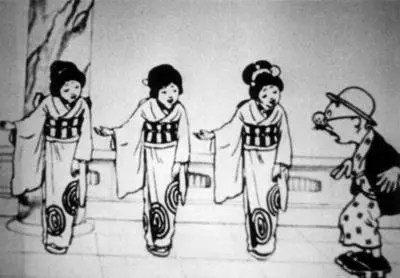
Another compelling theme is escapism. The protagonist's initial journey to the seaside is an escape from his daily routine, however minimal it may be. The encounter with the siren and the subsequent transformation represent the ultimate escape – a complete severance from his former life and identity. This resonates with a universal human desire to break free from the mundane, to find solace or adventure in the extraordinary. In an era grappling with rapid modernization, such a narrative might have offered a comforting fantasy of retreat to a simpler, mythical past.
The film also subtly explores the allure of the unknown. The siren, silent and mysterious, represents the irresistible pull of what lies beyond human comprehension. Her beauty is not just aesthetic; it is imbued with a primal power, a gateway to a world both terrifying and wondrous. This sense of awe and apprehension towards the mystical is a hallmark of many folktales and finds a poignant expression in this cinematic adaptation.
Hakusan Kimura's performance is the anchor of Nonkina Tosan Ryugu Mairi. In an age before synchronized sound, the actor's body was the primary vehicle for narrative and emotion. Kimura masterfully employs his physicality to convey the protagonist's journey from indolence to enchantment. His initial movements are slow, deliberate, almost heavy with disinterest. As the siren appears, a subtle shift occurs; his gaze becomes more focused, his posture less slumped, a nascent curiosity stirring within him. The final moments of his transformation, where human form gives way to reptilian grace, are handled with a dignity that prevents the scene from becoming absurd. It is a performance that speaks volumes without uttering a single word, a testament to the profound artistry of silent film actors.
Consider the nuanced acting expected in other silent films. While The Reckless Sex might demand overt melodrama, and The Great Gamble might rely on tension and suspense, Kimura’s role here is one of quiet internal struggle and eventual surrender. His performance is less about grand gestures and more about subtle shifts in presence, reflecting the inner world of a man who is both passive and profoundly open to the extraordinary. This understated approach makes his transformation all the more compelling and believable within the film's fantastical framework.
The 1920s were a fascinating period for Japanese cinema, a crucible of experimentation and adaptation. While many studios were still developing their unique styles, often influenced by Kabuki and other traditional performing arts, films like Nonkina Tosan Ryugu Mairi showcased a willingness to explore indigenous folklore through the nascent language of cinema. It stands in contrast to the documentary-style realism of something like Kino-Pravda No. 18, which sought to capture 'truth' directly. Instead, Aso's film delves into the realm of myth, offering a different kind of truth – an emotional and cultural one.
It's also worth noting the challenges faced by early Japanese filmmakers, from technological limitations to evolving audience expectations. Yet, within these constraints, a vibrant cinematic culture emerged, producing works that, while perhaps less globally recognized than their European or American counterparts, possessed a distinct artistic voice. Films like Nonkina Tosan Ryugu Mairi are crucial pieces in understanding the foundational years of Japanese cinema, demonstrating its early embrace of fantasy and its unique approach to storytelling. They show a clear intent to move beyond mere documentation or theatrical reproduction and into the realm of cinematic art. This film, in particular, feels like a precursor to the lyrical fantasy often found in later Japanese animation and live-action films.
Nonkina Tosan Ryugu Mairi is more than just a historical curiosity; it is a captivating piece of cinematic art that continues to resonate. Its exploration of idleness leading to unexpected, profound change, its quiet embrace of the mythical, and its masterful use of silent acting combine to create an experience that is both thought-provoking and deeply moving. It reminds us that sometimes, the greatest adventures begin not with a grand plan, but with a simple, carefree drift towards the unknown.
The film serves as a beautiful testament to the power of early cinema to transcend language and cultural barriers through pure visual poetry. It’s a gentle whisper from the past, inviting us to ponder the boundaries between reality and myth, human and animal, and the profound transformations that can occur when one simply lets go. For enthusiasts of silent film, Japanese cinema, or indeed anyone with an appreciation for allegorical storytelling, this film is an absolute treasure, offering a glimpse into a world where magic still resides just beyond the waves. It stands as a compelling argument for the enduring power of narrative, regardless of its technological vintage, to transport, to enchant, and to make us reflect on our own place within the grand tapestry of existence.
In an era of rapid technological advancement in filmmaking, it is refreshing to revisit a work that achieves so much with so little, relying on the sheer talent of its cast and crew, and the boundless imagination of its audience. Nonkina Tosan Ryugu Mairi remains a quiet masterpiece, a shimmering pearl discovered at the bottom of the cinematic ocean, waiting to be appreciated by new generations of viewers.

IMDb 4.9
1935
Community
Log in to comment.