DbcultAccessing Vault...
Cult Review
Senior Film Conservator
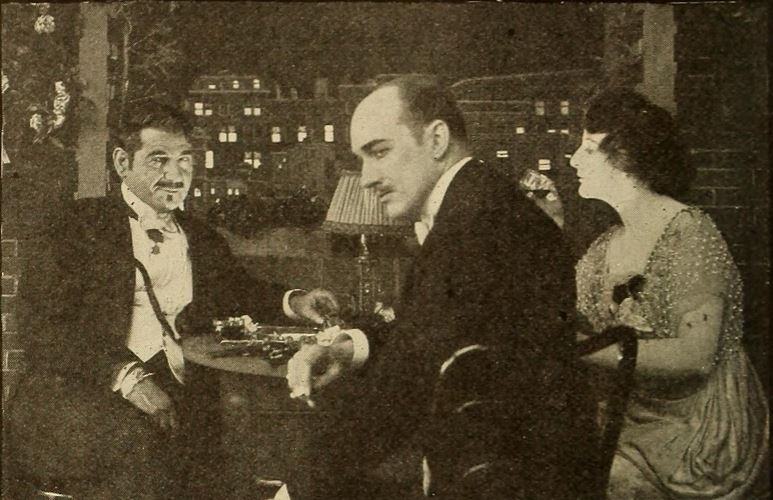
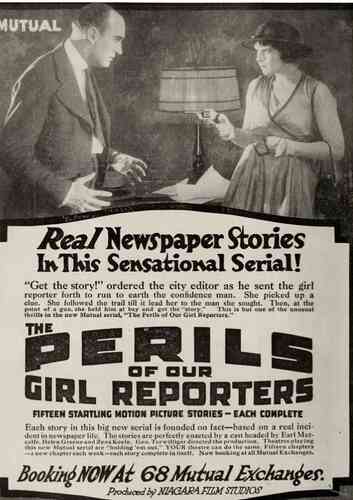
Stepping back into the cinematic annals of 1915 feels akin to unearthing a time capsule, and few artifacts gleam with such a peculiar, often uncomfortable, brilliance as the serial 'Perils of Our Girl Reporters.' This episodic drama, a relic from an era when film was still finding its voice, offers a fascinating, if flawed, window into the anxieties, prejudices, and burgeoning sense of female agency that defined the early 20th century. My journey into its inaugural installment, 'The Jade Necklace,' reveals a narrative pulsating with melodrama, sensationalism, and a protagonist who, despite her naiveté, embodies a nascent spirit of independent womanhood.
The story opens with Dorothy Desmond, portrayed by the earnest Zena Keefe, as a figure of profound pathos. Her backstory is a veritable Greek tragedy condensed into a few stark sentences: a father slain by political rivals, a mother succumbing to the shock. This almost operatic level of misfortune leaves her, a young woman from Kentucky, virtually penniless but armed with an unshakeable belief in her talent for writing. This origin story immediately grounds Dorothy not just as a heroine, but as a survivor, albeit one thrust into the unforgiving crucible of New York City.
Her ambition leads her to the cutthroat world of metropolitan journalism, a field still largely dominated by men. The very assignment she receives—to expose an opium den in Chinatown—is a testament to the era's hunger for sensationalism and its often-exploitative portrayal of 'exotic' urban enclaves. It’s a classic setup for a serial: a plucky, if inexperienced, protagonist thrown into immediate, visceral danger. This echoes the adventurous spirit found in other serials of the time, where female leads often found themselves in extraordinary circumstances, much like the titular character in The Ventures of Marguerite, though perhaps with less overt heroism from the outset.
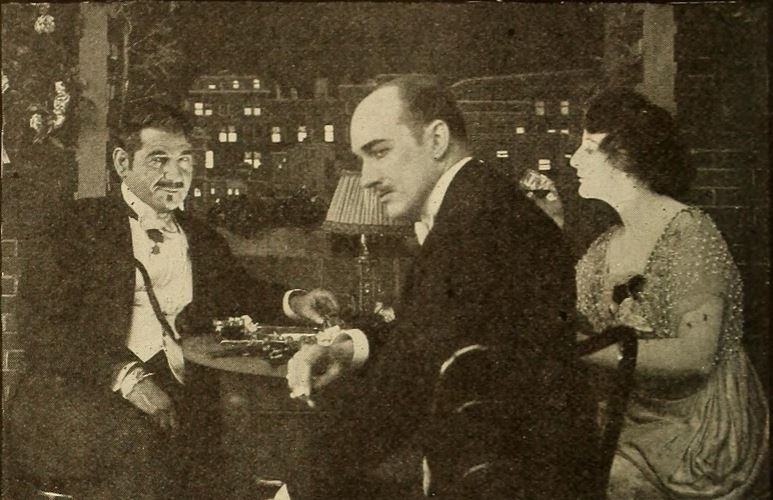
Dorothy's misstep—missing her escort and venturing alone into Chinatown—is both brave and foolish, a narrative device designed to amplify her vulnerability and the impending threat. The Chinatown depicted here is not merely a setting; it's a character in itself, imbued with an aura of mystery, danger, and 'otherness' that was a common trope in early 20th-century Western cinema. This portrayal, while undeniably problematic by today's standards, was deeply ingrained in the popular imagination, reflecting societal anxieties and prevalent xenophobia.
The scene in the Chinese shop is particularly telling. Dorothy's naive acceptance of an invitation to inspect beads quickly morphs into a harrowing encounter, as the shopkeeper's intentions turn sinister. This moment encapsulates the 'perils' advertised in the title, highlighting the vulnerability of a young, unchaperoned woman in a foreign environment. It's a precursor to the more explicit dangers she will face, a subtle yet potent demonstration of the underlying menace that permeates this 'otherworld.' The racial undertones here are impossible to ignore, echoing the often-caricatured portrayals of non-white characters seen in films like The Cheat, where exoticism and villainy were frequently intertwined.
Just as Dorothy's situation becomes dire, a storm of revolver shots erupts, signaling the onset of a tong war. This sudden, violent interlude serves as a classic deus ex machina, saving Dorothy from one immediate threat only to plunge her into another. The shopkeeper, momentarily abandoning his evil designs, shoves her into a secret room, locking her in. This sequence, even in its textual description, conveys a sense of breathless urgency, a hallmark of the serial format designed to keep audiences on the edge of their seats.
Trapped and terrified, Dorothy is a passive witness to the brutality unfolding just beyond her muffled walls. The sounds of gunfire, then the abrupt cessation, followed by the mournful gongs of police ambulances and patrols, paint a vivid, if unseen, picture of the carnage. The subsequent arrival of white-jacketed surgeons and blue-coated officers, rounding up the dead and wounded, underscores the visceral reality of urban gang violence. The sheer scale of the incident – "seven dead already, and some of the wounded sure to die" – highlights the stakes and the raw, unvarnished depiction of violence that silent films, despite their lack of sound, could effectively convey through visual storytelling and intertitles.
The police sergeant's dialogue to the newspaper man is perhaps the most revealing, and frankly, disturbing, aspect of this episode. His casual observations – "These Chinks shoot mighty straight for heathen. In the dark, too. What always puzzled me was how one tong could spot the other tong when they get mixed up in one of these nasty little wars. All Chinks look pretty much alike to me. You can never find out what started one of those shooting festivals. They won't tell a white man a thing." – lay bare the deeply entrenched racial prejudices of the era. The dehumanizing language, the assertion that 'all Chinks look alike,' and the portrayal of their conflicts as inscrutable and unknowable to the 'white man' exemplifies the 'inscrutable Oriental' trope prevalent in early cinema and literature.
This dialogue not only reflects the societal biases of the time but also serves a narrative function: it reinforces the 'otherness' of the Chinese community, making them seem more dangerous and mysterious to the predominantly white audience. It’s a stark contrast to more anthropological, if still colonial, portrayals like In the Land of the Head Hunters, which attempted, however imperfectly, to document indigenous cultures. Here, the 'other' is framed purely through a lens of fear and incomprehension, a convenient narrative device to heighten the sense of peril for the white protagonist.
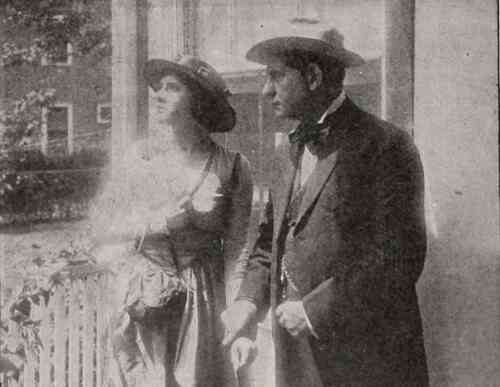
While details on direction and specific performances are scarce from this synopsis, one can infer much about the silent film aesthetic at play. The melodramatic plot points – orphaned heroine, sinister foreigners, sudden violence – are characteristic of the period. Actors like Zena Keefe (Dorothy Desmond) and the rest of the ensemble, including William H. Turner, Dean Raymond, and Julia Hurley, would have relied heavily on exaggerated facial expressions and body language to convey emotion, a necessity in the absence of spoken dialogue. The pacing, especially with the abrupt shift from attempted assault to tong war, suggests a dynamic and fast-moving narrative, designed to maintain audience engagement across multiple episodes. The serial format itself, with its cliffhanger endings, demanded a heightened sense of theatricality and spectacle, traits evident even in this initial plot summary.
The use of a secret room, the sudden storm of bullets, and the police aftermath are all visual cues that would have been rendered with a certain theatrical flair, perhaps with stark lighting to emphasize shadows and danger. The casting of actors like Felix Hainey and Anthony W. Matthews, though their specific roles aren't detailed, would have contributed to the ensemble's ability to create a believable, if often caricatured, world of danger and intrigue. The focus on a female lead navigating these perils also places it alongside other films of the era that explored female agency, even if through the lens of sensationalism, such as The Huntress of Men, which similarly featured a woman in a dangerous, active role.
'Perils of Our Girl Reporters,' even from its first episode, is a product of its time, reflecting both the nascent power of cinema to tell compelling stories and the unfortunate biases embedded within early 20th-century American society. While we can appreciate its historical significance as an early serial and a vehicle for a strong (if often imperiled) female protagonist, we must also critically examine its problematic portrayals of race and class.
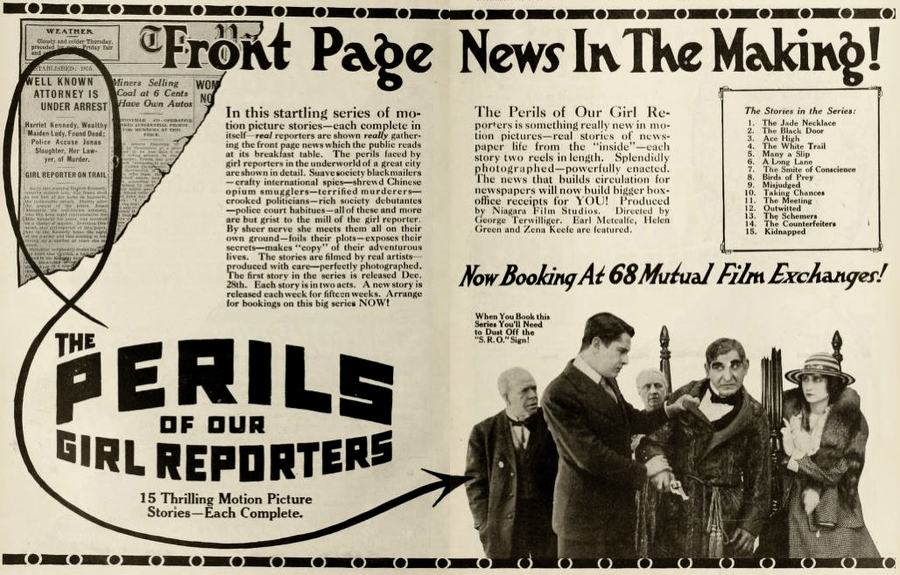
The episode leaves us with a potent cliffhanger: Dorothy is trapped, the immediate danger has passed, but the larger mystery of the tong war and her own journalistic quest remains unresolved. This is the essence of the serial: a promise of further thrills, further revelations, and further 'perils.' It's a testament to the storytelling craft of the era, designed to ensure audiences returned week after week. The questions posed by the sergeant – about the motivations behind the tong wars, the inability to distinguish 'one tong from another' – are left hanging, not as genuine inquiries into cultural understanding, but as narrative devices to underscore the exotic and dangerous nature of this foreign element within New York City.
In conclusion, 'The Jade Necklace' is a riveting, if culturally insensitive, introduction to a serial that aimed to captivate its audience with a blend of melodrama, action, and a dash of social commentary, however skewed. It serves as a valuable historical document, allowing us to trace the evolution of cinematic narrative, the development of character archetypes, and the pervasive societal attitudes that shaped early American film. While it might make us wince at its casual xenophobia, its enduring power lies in its ability to transport us back to a time when the moving picture was still a wondrous, dangerous new medium, eager to explore the 'perils' of its rapidly modernizing world.
The sensationalism inherent in 'Perils of Our Girl Reporters' is not an anomaly but rather a defining characteristic of much early cinema. Films like The Celebrated Stielow Case, for instance, capitalized on real-life crime and scandal, mirroring the public's fascination with the darker aspects of society. This serial, however, takes a slightly different approach by embedding its sensationalism within a fictionalized, adventurous framework, albeit one drawing heavily on contemporary fears and prejudices. The 'girl reporter' archetype itself was a relatively new phenomenon, reflecting the changing roles of women in society, even if these roles were often presented through a lens of vulnerability and needing rescue.
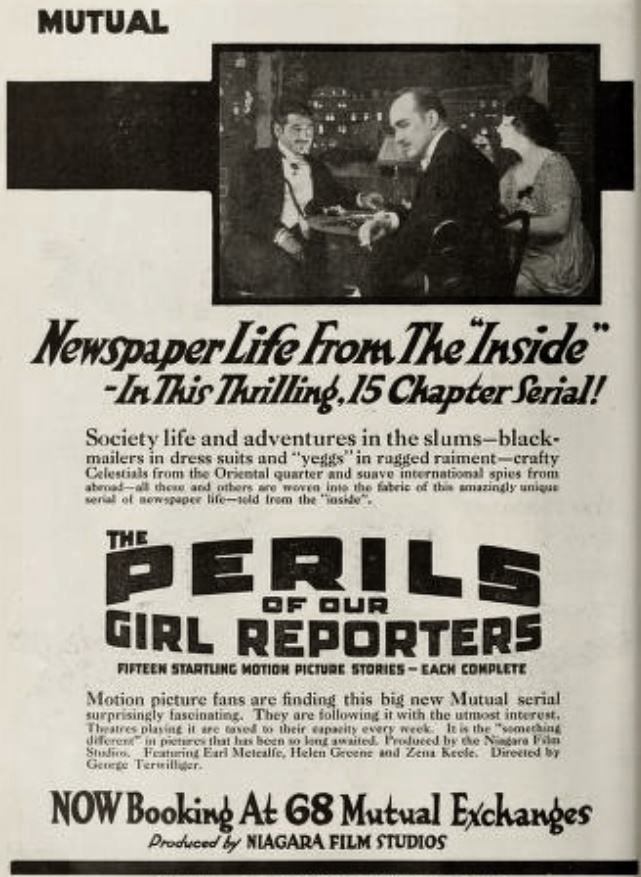
The narrative's reliance on a 'foreign' threat, specifically the Chinese tong war, taps into a wellspring of xenophobic sentiment that was pervasive in the United States during this period. The 'Yellow Peril' was a common fear, and films often exploited this by portraying Asian characters as menacing, inscrutable, and prone to violence. This trope allowed for a convenient antagonist, one that could justify the heroics of the protagonist while simultaneously reinforcing societal prejudices. The casual dismissal of the Chinese characters' motivations by the sergeant – 'They won't tell a white man a thing. We can take our fill of guessing, though.' – is a prime example of this narrative convenience, where complexity is sacrificed for simplistic villainy.
Furthermore, the film's structure, as an episodic serial, played a crucial role in its popularity. Audiences would flock to theaters week after week, eager to see how Dorothy would escape her latest predicament. This format, with its inherent cliffhangers, guaranteed sustained interest and revenue. It was a precursor to modern television series, demonstrating an early understanding of how to build long-form narratives that kept viewers invested. The 'perils' were not just plot points; they were the very engine of the narrative, designed to elicit maximum emotional response and ensure repeat viewership.
While the film's artistic merits might be debated through a modern lens, its historical significance is undeniable. It showcases the early attempts at character development within a serial format, the use of urban landscapes as a source of both opportunity and danger, and the ongoing struggle to define female roles in a rapidly changing world. Dorothy Desmond, despite being a creation of sensationalism, represents a nascent form of female empowerment, a woman daring to venture into dangerous territories traditionally reserved for men. This tension between vulnerability and agency is what makes 'Perils of Our Girl Reporters' a compelling, if imperfect, artifact of early cinema, reminding us of the complex interplay between entertainment, societal attitudes, and the evolving art form of film.
IMDb —
1927
Community
Log in to comment.