DbcultAccessing Vault...
Cult Review
Senior Film Conservator
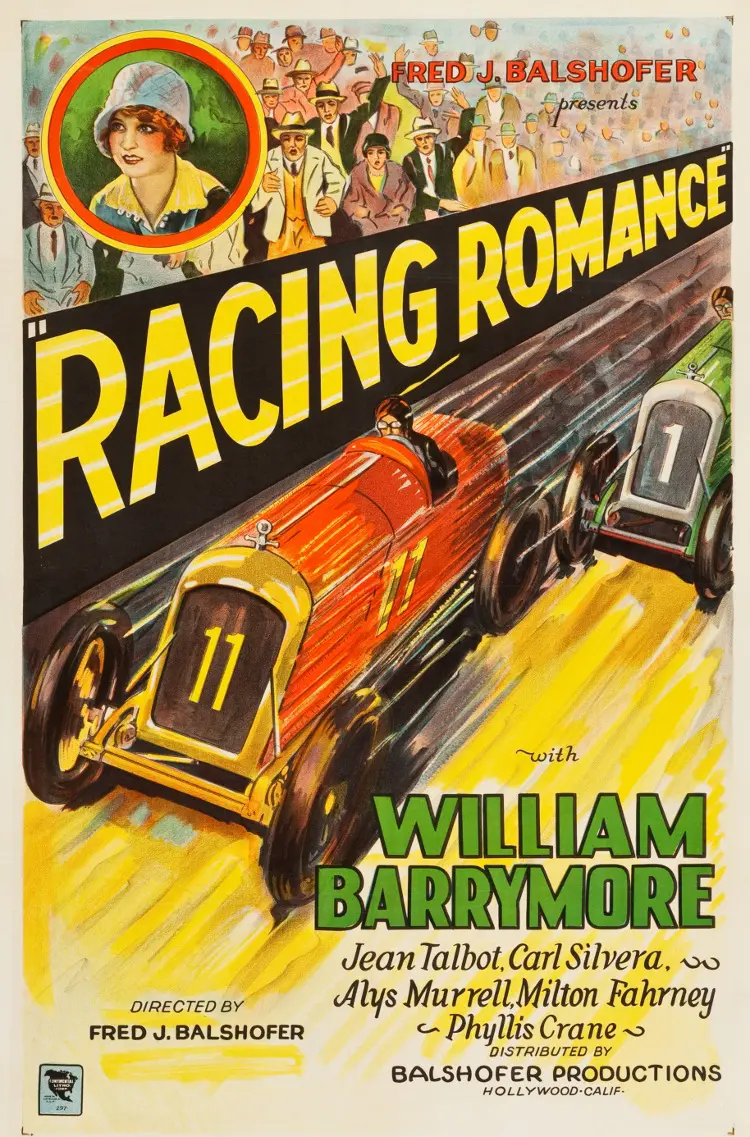
Does Racing Romance still have enough gas in the tank to justify a viewing in the 21st century? Short answer: no, unless you are a dedicated historian of the silent era or a completionist for early independent cinema. This film is strictly for those who find beauty in the flickering grain of 1920s celluloid and the exaggerated pantomime of the silent age; it is absolutely not for anyone who requires a fast-paced narrative or high-definition spectacle.
Racing Romance is a fascinating, if flawed, relic of a time when the film industry was still figuring out how to translate the physical thrill of sports to the silver screen. It lacks the polish of the major studio releases from 1926, but it possesses a certain 'B-movie' charm that feels more honest than some of its high-budget contemporaries. It doesn't try to be high art, and that is its greatest strength.
Racing Romance is a niche experience that offers a glimpse into the early days of sports-themed melodrama. While it lacks the narrative complexity of modern cinema, it provides a valuable look at the tropes that would eventually define the 'underdog athlete' subgenre. It is a slow burn that culminates in a frantic finale, making it a decent choice for a rainy afternoon of historical exploration.
1) This film works because it captures the raw, unpolished energy of 1920s independent filmmaking without the sanitization of the big studios.
2) This film fails because the middle act is bogged down by redundant title cards and a romance that feels more like a contractual obligation than a genuine connection.
3) You should watch it if you are interested in the evolution of the action genre or the career of Fred J. Balshofer.
Karl Silvera delivers a performance that is emblematic of the mid-20s leading man. He is stoic, jaw-clenched, and intensely focused. In the scene where his character first approaches the racing machine, Silvera uses his eyes to convey a mix of fear and destiny. It’s a moment that feels surprisingly grounded, avoiding some of the more egregious 'eye-rolling' tendencies of the time. He isn't just playing a driver; he’s playing a man who sees the car as his only exit from a life of mediocrity.
Jean Talbot, playing the romantic lead, has less to do but manages to make her presence felt through sheer screen magnetism. Her interactions with Silvera often feel stiff, but that is more a byproduct of the script than her talent. When compared to the female leads in Mary Regan, Talbot’s character feels slightly more proactive, even if she is still ultimately relegated to the role of the 'prize' at the end of the race.
The supporting cast, including William Barrymore and Milton J. Fahrney, provide the necessary friction. Barrymore, in particular, brings a level of gravitas that grounds the more flighty elements of the plot. His presence reminds the audience that the stakes aren't just romantic; they are financial and existential. It’s a performance that wouldn't look out of place in a more serious drama like The Dwelling Place of Light.
Fred J. Balshofer was a pioneer, and in Racing Romance, he demonstrates a keen understanding of how to use the camera to simulate speed. While the technology was primitive, his choice of camera angles during the final race sequence creates a sense of claustrophobia and danger. He places the audience on the track, a technique that was significantly more effective than the static wide shots found in The Biggest Show on Earth.
However, Balshofer struggles with the film’s pacing. The transition from the high-energy opening to the domestic drama of the second act is jarring. The film grinds to a halt as we are forced to sit through long sequences of characters standing in parlors, discussing things that could have been handled in a single title card. This lack of narrative flow is a common issue in films of this budget level from the era, but it’s particularly noticeable here because the racing scenes are so much more compelling than the romance.
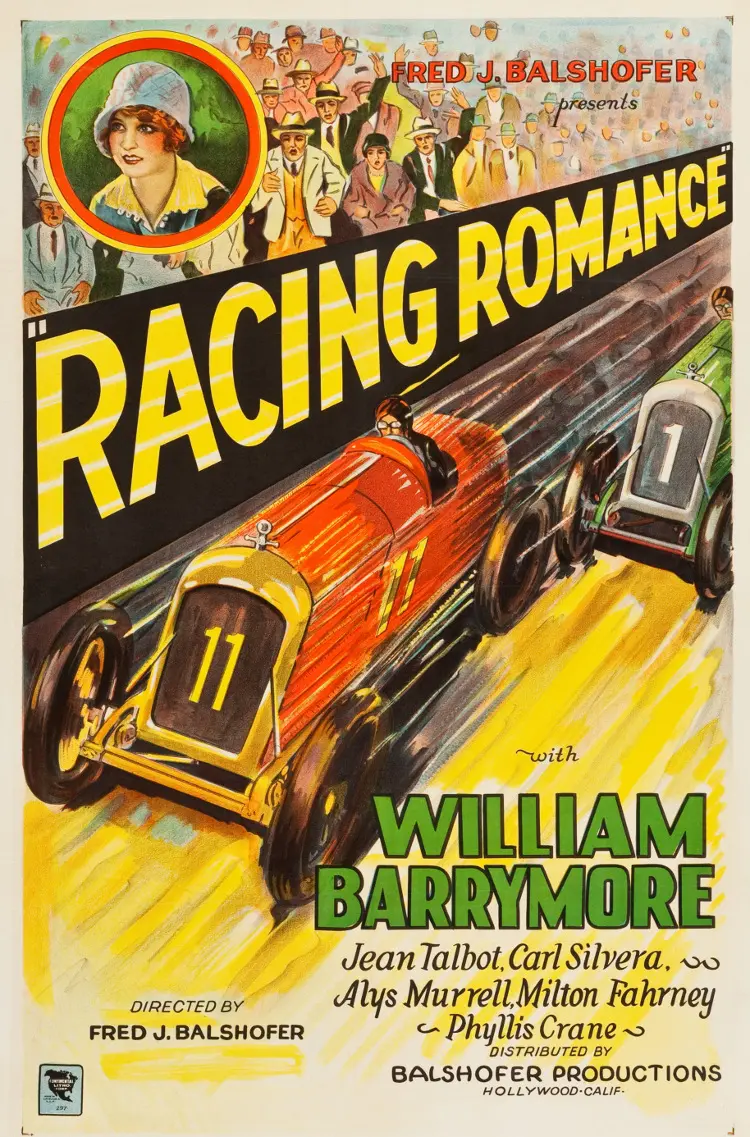
The cinematography is functional rather than poetic. There are no attempts at the expressionistic shadows found in Der lachende Ehemann. Instead, we get bright, flat lighting that emphasizes the grit of the racetrack. It’s a blue-collar aesthetic for a blue-collar story. It works. But it’s flawed. The lack of visual variety makes the 70-minute runtime feel much longer than it actually is.
If you are looking for a masterpiece of silent cinema, look elsewhere. Racing Romance is a workmanlike production that hits the necessary beats but fails to transcend its genre. It is a fascinating historical document, particularly for those interested in the history of automotive or horse racing in film. It shows us what the 'average' moviegoer was watching in 1926—not the high-art of Murnau or Lang, but the reliable, genre-driven entertainment of Balshofer.
For the casual viewer, the answer is a firm no. The pacing is too uneven, and the story is too predictable to hold the attention of someone used to modern storytelling. However, for the cinema buff, there is a specific joy in seeing how the tropes of the racing movie were being forged in real-time. It’s the cinematic equivalent of looking at a prototype car: it’s clunky and slow, but you can see the future in its lines.
Pros:
Cons:
When you place Racing Romance alongside a film like The Third Alarm, you see a clear divide in how 'action' was perceived. While the latter focuses on the heroism of firefighters with a certain moral weight, Racing Romance is more cynical. It’s about the desire for upward mobility and the fear of failure. It shares more DNA with the gritty realism of A Model's Confession than it does with the lighthearted comedy of Hoot Mon!.
One unconventional observation: the film seems more interested in the mechanics of the race than the people involved. There is a lingering shot of a wrench turning and a wheel being bolted that feels almost fetishistic. It’s as if Balshofer knew that the machinery was the real star of the show. This focus on the 'how' of the race, rather than just the 'who,' is a precursor to the technical obsession seen in modern films like Ford v Ferrari.
In terms of narrative structure, it’s far less sophisticated than The Silent Master. It doesn't attempt any complex non-linear storytelling or deep psychological dives. It is a straight line from point A to point B, much like the racetrack it depicts. This simplicity is both its charm and its undoing. It is honest, but it is also thin.
Racing Romance is a 1926 time capsule that manages to cross the finish line, but only just. It isn't a lost masterpiece, and it won't change your life. However, it is a sturdy piece of filmmaking that serves as a reminder of the era's obsession with speed and the emerging American dream of self-reinvention. It’s a film of small pleasures: the way the dust kicks up on the track, the intensity of a silent stare, and the simple satisfaction of a hero winning against the odds. It’s clunky. It’s dated. But for a specific kind of viewer, it’s a race worth running once-over. The bottom line: watch it for the history, not the story.
IMDb —
1916
Community
Log in to comment.