DbcultAccessing Vault...
Cult Review
Senior Film Conservator
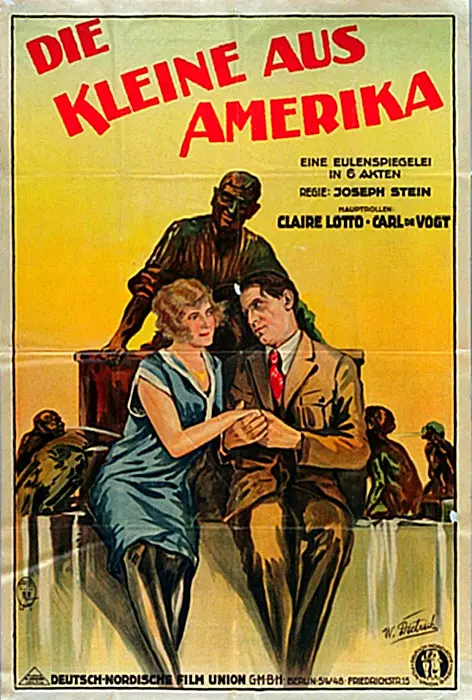
To watch Die Kleine aus Amerika (1925) is to step into a time capsule where the flickering light of the projector illuminates the profound anxieties and fascinations of the Weimar era. This film, directed during a period of intense cultural transition, captures the zeitgeist of 'Amerikanismus'—the German obsession with American modernity, efficiency, and social fluidity. Unlike the heavy psychological burdens found in Fesseln, this work opts for a more nuanced exploration of cultural clash, albeit through the lens of a sophisticated melodrama.
The screenplay, a collaborative effort between Willy Rath and Ilse Zerbe, avoids the simplistic tropes of the era. Instead of a mere fish-out-of-water comedy like In the Knicker Time, we are presented with a narrative that functions as a surgical dissection of class and national identity. The arrival of the 'little girl' from America isn't just a plot point; it is a radiological scan of the decaying European social structure. The writers leverage the protagonist's perceived innocence to peel back the layers of artifice that define the lives of the supporting cast.
At the heart of the film's success is the presence of Carl de Vogt. By 1925, de Vogt had already cemented his legacy through his collaborations with Fritz Lang, and here he brings a seasoned, almost weary authority to the screen. His performance is a masterclass in silent-era subtlety; he communicates volumes through a slight shift in posture or a lingering gaze. Compared to the more overt theatricality found in A Man of Sorrow, de Vogt’s restraint provides the film with its emotional anchor. He represents the old world’s conscience, a man caught between the inertia of tradition and the kinetic pull of the future.
Hermann Leffler and Claire Lotto provide the necessary counterpoints. Lotto, in particular, embodies the 'American' archetype with an effervescence that feels remarkably modern. Her movements are unencumbered by the stiff corsetry of European social norms, mirroring the thematic thrust of the film. One can see echoes of the character dynamics in Don't Tell Everything, where secrets and public personae are constantly at odds. The supporting cast, including Wilhelm Diegelmann and Tilly Boettcher, rounds out a microcosm of society that is both recognizable and hauntingly specific to its time.
Visually, the film is a testament to the technical prowess of mid-20s German studios. The use of light and shadow—a hallmark of the period—is employed here not to create horror, as in The Doom of Darkness, but to delineate social boundaries. The interiors are often framed with a claustrophobic density, suggesting the weight of history, while the arrival of the American influence is signaled by more open compositions and a brighter, more high-key lighting palette. This visual dichotomy reinforces the central conflict without the need for excessive intertitles.
The pacing of Die Kleine aus Amerika is remarkably fluid. Where many of its contemporaries, such as The Colleen Bawn, might rely on episodic melodrama, Rath and Zerbe construct a crescendo of social tension. The film understands the power of the 'reveal'—not just in terms of plot, but in terms of character realization. As the protagonist navigates the labyrinthine social circles, each encounter serves as a mirror, reflecting the insecurities of the German elite. This is not unlike the psychological interplay seen in The Infamous Miss Revell, where reputation is the ultimate currency.
In 1925, America was not just a place; it was a concept—a symbol of the 'Neue Sachlichkeit' (New Objectivity). The film captures this perfectly. The 'Little Girl' is a cipher for the Dawes Plan, for jazz, for Fordism, and for a brand of feminism that was both alluring and threatening to the established order. When compared to films like As a Woman Sows, which deals with the consequences of social transgression, Die Kleine aus Amerika suggests that the transgression itself is the path to modernity. The protagonist doesn't just disrupt the family; she recalibrates their moral compass.
The film’s exploration of wealth and its origins also bears mention. The 'American money' is treated with a mixture of disdain and desperate need, a theme that resonates through Der Mann ohne Namen - 1. Der Millionendieb. In the post-inflation landscape of Germany, the financial power of the United States was a tangible force, and the film does not shy away from the transactional nature of international relations, even within the intimate sphere of a family drama.
Technically, the film benefits from an era where silent cinema had reached its zenith of expressive capability. The absence of spoken word necessitates a visual literacy that modern audiences often find challenging, yet Die Kleine aus Amerika rewards the attentive viewer. The set design, likely influenced by the grandiosity of productions like King of the Circus, provides a lush backdrop that highlights the protagonist's relative simplicity. Her 'American' attire—functional, stylish, and devoid of the baroque excesses of the old world—serves as a constant visual reminder of her outsider status.
One must also consider the role of the director in harmonizing these elements. While the director's chair for this specific production is often overshadowed by the star power of de Vogt and the writers, the cohesive vision is undeniable. The film manages to avoid the saccharine pitfalls of Youth's Endearing Charm, opting instead for a bittersweet realism that acknowledges the difficulty of true cultural integration. It is a film about the impossibility of returning to a 'pure' past once the future has already arrived.
When placed alongside other 1920s international productions like It Happened in Paris, Die Kleine aus Amerika feels distinctly more grounded in its social commentary. While the former might lean into the romanticism of the travelogue, the latter is concerned with the friction of the destination. It shares a certain DNA with The Love Brand in its examination of how personal identities are marketed and perceived across borders, yet it maintains a uniquely German sense of 'Heimat'—and the threat posed to it by globalization.
The film also predates the more kinetic, action-oriented silent films like Blue Blazes, choosing instead to find its 'action' in the shifts of social standing and the revelation of character. Even a seemingly minor character like the one played by Erich Roehl or the archetypal The Book Agent-style figures that populate the periphery are given enough screen time to establish their place in the hierarchy. This attention to detail ensures that the film feels like a lived-in world rather than a mere stage play.
Ultimately, Die Kleine aus Amerika is a fascinating artifact of a world on the brink of total transformation. It captures the last gasps of the old European order before the 20th century’s darker chapters truly took hold. The performances, particularly from de Vogt and Lotto, remain vibrant even a century later. The film’s interrogation of 'the American dream' from a European perspective offers a refreshing reversal of the typical immigrant narrative, reminding us that the gaze of the 'other' is always a two-way street.
For the modern cinephile, this film is more than just a historical curiosity. It is a sophisticated piece of storytelling that utilizes the unique grammar of silent film to explore themes that remain relevant today: the tension between tradition and progress, the performance of identity, and the power of the outsider to disrupt established power dynamics. It is a vital chapter in the history of German cinema, standing tall as a work of artistic integrity and social insight. In the grand gallery of 1920s cinema, it is a portrait that demands—and deserves—a second look.
Reviewer's Note: This film represents a crucial juncture in the careers of its writers and cast, marking a shift toward more internationally-minded narratives in the German film industry. Its preservation is a testament to the enduring power of silent storytelling.
IMDb 7.5
1932
Community
Log in to comment.