DbcultAccessing Vault...
Cult Review
Senior Film Conservator
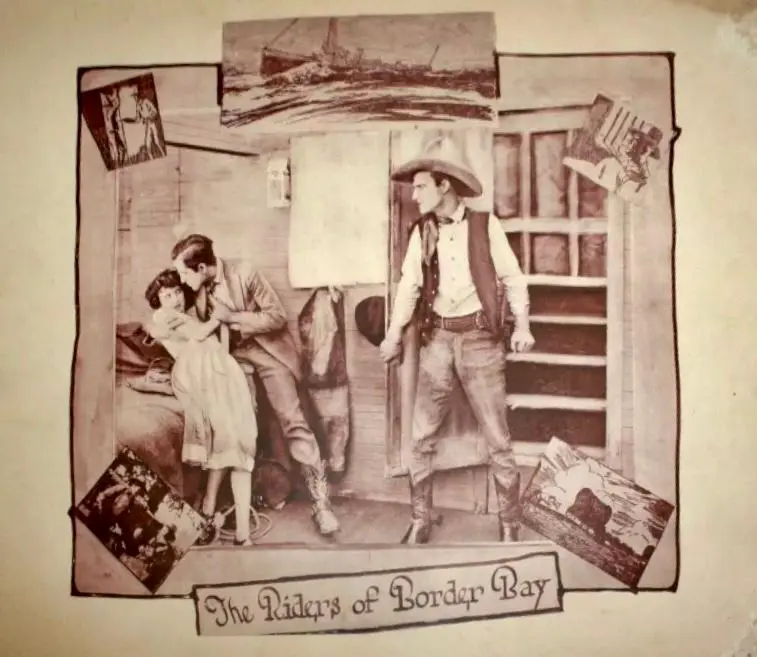
Is Riders of Border Bay worth watching today? Short answer: yes, but with significant caveats. This silent Western, starring the legendary Art Mix, offers a fascinating glimpse into early Hollywood action, yet it demands a certain patience and appreciation for historical cinema that isn’t for everyone. It's a film for the dedicated cinephile, the Western history buff, and those curious about the roots of screen heroism, decidedly not for viewers seeking modern pacing or complex narrative twists.
For those who embrace its era, it delivers a potent, if uncomplicated, dose of frontier justice. But don't expect a revelation; expect a foundation.
Silent Westerns occupy a peculiar, often overlooked, corner of cinematic history. They were the blockbusters of their day, thrilling audiences with daring stunts, clear-cut morality, and the vast, romanticized landscape of the American West. Riders of Border Bay, while perhaps not a household name today, exemplifies many of the genre's strengths and, inevitably, its limitations.
It works. But it’s flawed.
This film works because of Art Mix’s magnetic physical presence and the sheer, unadulterated thrill of its action sequences, which remain impressive even a century later. Its commitment to practical stunts is a refreshing antidote to modern CGI.
This film fails because its narrative is as thin as a prairie wind, relying on archetypes rather than character depth, and its pacing, while spirited in action, can drag during exposition.
You should watch it if you have a genuine interest in silent cinema, the evolution of the Western genre, or want to see one of cinema's earliest stuntmen at the peak of his craft.
The story of Riders of Border Bay is, by design, straightforward. It's a morality play set against the backdrop of a frontier community struggling against external threats. Art Mix steps into the boots of a nameless hero, a man whose quiet resolve is etched onto his weathered face and whose actions speak louder than any intertitle could convey. His adversary is a familiar villain: a land-grabbing scoundrel, perhaps a corrupt businessman or an outlaw chieftain, who seeks to exploit the resources of the Border Bay region for personal gain, disregarding the rights of honest folk.
This simplicity is both a strength and a weakness. It allows for immediate understanding, a clear delineation of good and evil that was vital for silent audiences. There’s no moral ambiguity here; Mix’s character is righteous, his opponents are unequivocally despicable.
The plot unfolds through a series of escalating conflicts: cattle rustling, threats against a vulnerable family, and eventually, a direct confrontation for control of the land. It’s a formula, yes, but one that’s executed with a commendable vigor. The stakes, though simple, feel genuine because they are tied to the very survival of the community.
While the narrative isn't going to win any awards for originality, it serves its primary purpose: to set the stage for Art Mix to perform. And perform he does, with a physical intensity that few of his contemporaries could match. The uncredited screenwriters of the era understood that the star was the spectacle, and the plot merely the vehicle.
Art Mix isn't just an actor in Riders of Border Bay; he is the film’s central pillar, its heartbeat, and its most compelling special effect. Known for his daring horsemanship and willingness to perform his own stunts, Mix embodies the rugged individualism of the Western hero with an almost effortless grace. His screen presence is less about nuanced emotional performance and more about kinetic energy and physical prowess.
Consider the climactic chase across the dusty plains. Mix, astride his magnificent steed, navigates treacherous ravines and leaps over fallen timber, a sequence that, even without synchronized sound, conveys a visceral thrill. The camera, likely static or mounted on a moving vehicle, captures the raw speed and danger, emphasizing Mix's legendary horsemanship. This isn't just a stunt; it's a character beat, reinforcing his unwavering commitment to justice.
His interactions, particularly with the film's damsel in distress (a rancher's daughter whose fate hangs in the balance), are conveyed through broad, expressive gestures typical of the silent era. A determined nod, a protective stance, a reassuring hand – these are the tools of his emotional communication. While it lacks the psychological depth of a Chaplin in The Idle Class or the dramatic intensity of a Lillian Gish, Mix’s performance is perfectly suited to the genre’s demands.
It’s a performance rooted in physicality, a testament to an era where actors were often expected to be athletes first, emoters second. His ability to convey courage and determination through posture and action is genuinely captivating. This isn't acting as we understand it today; it's a masterclass in silent-era heroic iconography.
The direction, likely by an uncredited or lesser-known craftsman of the period, prioritizes clarity and action. There’s a directness to the filmmaking that, while sometimes simplistic, is remarkably effective. The camera is often positioned to maximize the impact of Mix’s stunts and the vastness of the Western landscape. Wide shots dominate the outdoor sequences, emphasizing the isolation and grandeur of the frontier, a stark contrast to the often cramped studio sets of other genres like those seen in Maman poupée.
The cinematography, while not groundbreaking, is competent for its time. There are moments of genuine beauty, particularly in the landscape shots that frame the action. The play of light and shadow across the dusty plains, the silhouette of a rider against the sunset – these are visual tropes that were already becoming iconic in Westerns, and Riders of Border Bay utilizes them with a practiced hand. The film understands the power of the natural environment as a character in itself, shaping the lives and struggles of its inhabitants.
However, the indoor scenes can feel a little flat, betraying the limitations of early studio lighting and set design. The focus is clearly on the exterior, where the film truly breathes. It's in these outdoor sequences, particularly during the aforementioned chases and confrontations, that the direction shines, orchestrating a ballet of horses and riders that feels both chaotic and controlled.
The pacing of Riders of Border Bay is a characteristic blend of the silent era’s conventions. Dialogue, delivered via intertitles, breaks up the action and exposition, sometimes jarringly. Yet, when the film commits to an action sequence, it moves at a breakneck speed. The fight scenes, while choreographed simply, are executed with a raw energy that propels the narrative forward.
The tone is one of unwavering heroism and clear-cut morality. There’s little room for cynicism or moral grey areas. This is a world where good triumphs over evil, where courage is rewarded, and where justice, though hard-won, always prevails. It's an optimistic, idealized vision of the West, far removed from the revisionist Westerns that would emerge decades later. This steadfast tone is, arguably, part of its charm; it offers a comforting escape into a world of clear principles.
The dramatic tension is built through visual cues and the escalating stakes of the conflict. A close-up of a villain's sneer, a shot of Mix's determined gaze, the frantic galloping of horses – these are the tools used to manipulate audience emotion in the absence of spoken dialogue and complex scoring (though live musical accompaniment would have been integral to its original viewing). It's a testament to the filmmakers' understanding of visual storytelling.
This film is best suited for film historians, silent cinema enthusiasts, and fans of classic Westerns who appreciate the foundational elements of the genre. It offers a direct line to the roots of action cinema and the charismatic appeal of early movie stars like Art Mix. If you enjoy understanding how cinema evolved, or have a soft spot for the straightforward narratives of early Hollywood, this is a rewarding watch. It's a piece of living history, an artifact that still pulses with a certain, undeniable energy.
Conversely, Riders of Border Bay is likely to disappoint viewers accustomed to modern filmmaking conventions. If you require intricate plots, deep character development, sophisticated dialogue, or fast-paced editing, this film will feel slow and simplistic. Those who struggle with the lack of synchronized sound and the exaggerated acting styles of the silent era will find it a difficult watch. It’s not a film designed for casual viewing; it requires an active engagement with its historical context and stylistic choices. Don't expect the nuanced emotional range of The Sorrows of Love or the intricate plotting of later Westerns.
Riders of Border Bay is more than just a relic; it’s a vibrant, if unsophisticated, piece of early cinematic history that still holds a certain power. Its primary draw is undoubtedly Art Mix, whose physical artistry and unwavering screen presence elevate what might otherwise be a fairly standard silent Western. He is the reason to seek this film out, his legendary stunts a tangible link to a bygone era of practical filmmaking.
While its narrative simplicity and dated conventions might test the patience of some, for those willing to engage with its historical context, it offers a rewarding experience. It's a foundational text for understanding the Western genre, showcasing the raw energy and clear-cut morality that defined early Hollywood. It's not a masterpiece on par with When Rome Ruled in its genre, but it is an essential stepping stone, a vibrant snapshot of a time when the myth of the American West was being forged, one thrilling horse chase at a time.
Ultimately, Riders of Border Bay is a film that deserves to be seen by those who appreciate the roots of cinema, not just as an academic exercise, but as a genuine source of uncomplicated, frontier-style entertainment. It’s a testament to the enduring appeal of a hero on horseback, a good guy fighting for justice, and the sheer spectacle of a well-executed stunt. Give it a chance, and you might just find yourself charmed by its silent, dusty allure.
IMDb 5.2
1930
Community
Log in to comment.