DbcultAccessing Vault...
8/10
Senior Film Conservator
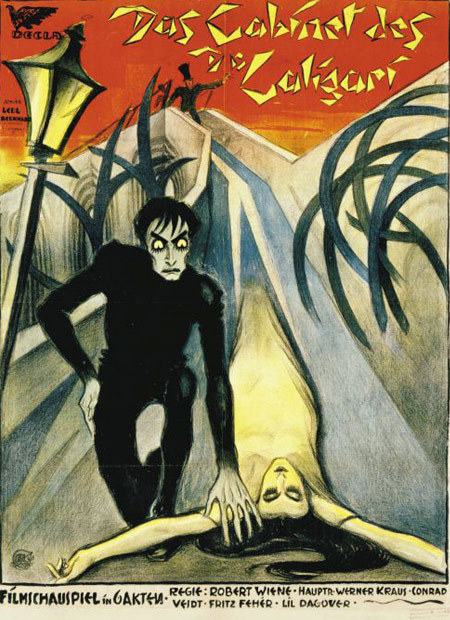
A definitive 8/10 rating for a film that redefined the boundaries of cult cinema. The Cabinet of Dr. Caligari remains a cornerstone of transgressive art.
To gaze upon The Cabinet of Dr. Caligari is to witness the precise moment cinema emancipated itself from the mundane shackles of theatrical realism. Released in the wake of the Great War, Robert Wiene’s 1920 triumph did not merely tell a story; it externalized the fractured soul of the Weimar Republic onto the silver screen. In an era where many films, such as The Brazen Beauty, were content with the conventional aesthetics of the time, Caligari arrived like a jagged shard of glass, cutting through the expectations of the audience with its revolutionary visual language.
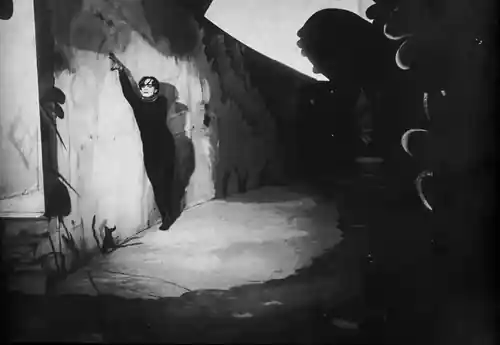
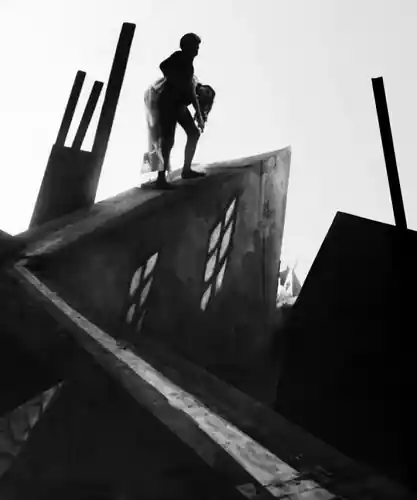
The first element that strikes the modern viewer—and surely traumatized the contemporary one—is the radical art direction. Hermann Warm, Walter Reimann, and Walter Röhrig rejected the notion that a set should mimic reality. Instead, they crafted a world where the laws of physics are subservient to the whims of the subconscious. The buildings of Holstenwall lean at impossible, threatening angles; the shadows are not cast by light but are painted directly onto the floors with a defiant, ink-black permanence. Unlike the literalism found in The Carter Case, Caligari’s environment is a claustrophobic maze of psychological projection.
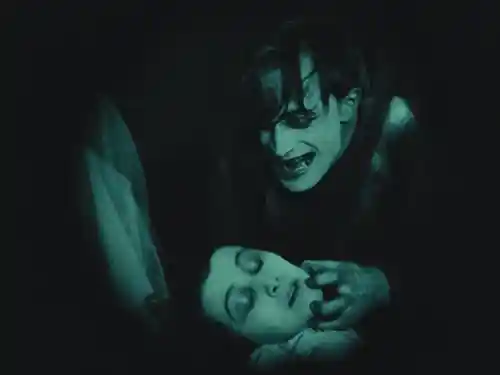
This visual distortion serves a profound narrative purpose. The sharp, needle-like windows and the spiraling streets reflect a society in the throes of a nervous breakdown. Every frame is a graphic composition, a woodcut come to life, where the actors must navigate a landscape that seems actively hostile to their presence. While Flips and Flops utilized the camera for slapstick transparency, Wiene utilizes it to obscure, to haunt, and to destabilize. The very architecture is a character, a silent witness to the atrocities committed under the cover of night.
At the heart of this phantasmagoria is the performance of Conrad Veidt as Cesare. Veidt’s physicality is nothing short of miraculous. Moving with the fluid, terrifying grace of a predatory insect, his Cesare is the ultimate victim-villain. He is a man robbed of his agency, a literal puppet of the authoritarian Dr. Caligari. When Cesare creeps along a white-washed wall, his dark silhouette becomes an indelible stain on the visual field. This portrayal of a controlled body resonates with the contemporary anxieties regarding the conscripted soldier—a theme explored with more overt pacifism in Down with Weapons, yet here it is rendered as a gothic nightmare.
Werner Krauss, as the titular doctor, provides the perfect foil. His Caligari is a creature of spectacles and top hats, a bureaucrat of the macabre who hides his murderous intent behind the veil of scientific inquiry and fairground spectacle. The dynamic between the two is a masterclass in power imbalance. While films like The Marionettes toyed with the concept of social control, Caligari takes it to a metaphysical extreme, suggesting that the very mind can be colonized by a charismatic tyrant.
One cannot discuss Caligari without addressing its controversial framing device. The revelation that the entire story is the delusion of an asylum inmate was not part of the original script by Carl Mayer and Hans Janowitz. Initially conceived as a direct indictment of the state’s power to force citizens to kill, the added frame story by the producers potentially softened the blow by pathologizing the rebellion. However, from a purely cinematic standpoint, this twist invented the unreliable narrator. It transforms the film from a simple horror story into an exploration of the subjective nature of truth.
In comparing this to the straightforward morality of Her Right to Live or the sentimental journeys in Alone in New York, Caligari feels remarkably modern. It forces the audience to question their own eyes. If the world looks insane, is it the world that is broken, or the observer? This ambiguity is what has allowed the film to survive for over a century. It is a Rorschach test of a movie, reflecting the fears of whatever era is viewing it. The ending doesn't offer the catharsis of Fighting Cressy; instead, it leaves us in a state of existential dread, trapped within the walls of a mental institution that looks suspiciously like the world we just left.
The term "Caligarisme" was coined to describe the film's unique style, but its influence extends far beyond mere aesthetics. It birthed the film noir, the psychological thriller, and the modern horror genre. The use of light and shadow to represent moral ambiguity can be traced directly from this film to the works of Hitchcock, Welles, and beyond. Even in the silent era, its impact was felt globally, contrasting with the more traditional operatic scales of Bánk bán or the somber realism of Pohorony Very Kholodnoi.
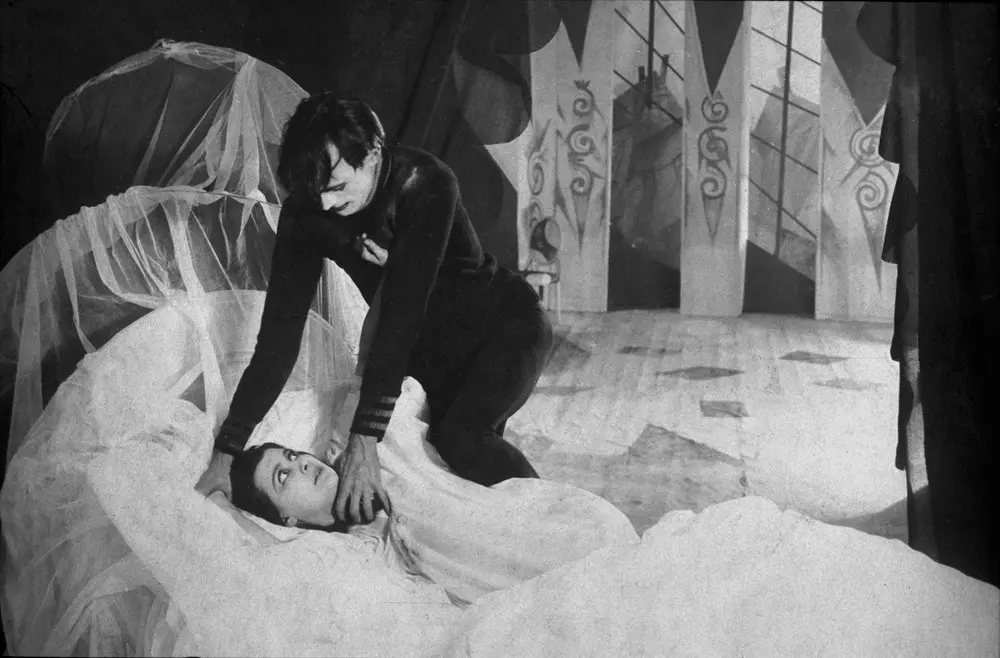
Lil Dagover’s Jane is often overlooked in discussions of the film, yet her performance as the object of Cesare’s reluctant abduction provides the only anchor of human vulnerability in the sea of abstraction. Her presence is less about the "damsel in distress" tropes seen in The Innocence of Ruth and more about the fragility of beauty in a world that has gone mad. When she is carried across the rooftops of Holstenwall, the composition is as haunting as any painting by Munch or Kirchner.
Ultimately, The Cabinet of Dr. Caligari remains an essential text because it understands that true horror is internal. It is the fear that our perceptions are flawed, that our leaders are madmen, and that we are all merely somnambulists waiting for a voice to tell us who to kill. The film’s refusal to provide a stable reality makes it a precursor to the existentialist movements of the mid-20th century. While The Invisible Bond or Life's Whirlpool dealt with the complexities of human relationships, Caligari dealt with the collapse of the human mind itself.
The pacing is deliberate, almost hypnotic. The iris shots—those circular masks that draw our attention to a specific detail—act like the eye of a voyeur, or perhaps the eye of the doctor himself, scrutinizing our reactions. Even the intertitles are stylized, their font echoing the jagged edges of the scenery. This is total cinema, a work where every single element is synchronized to evoke a singular, pervasive mood of unease. It lacks the pastoral serenity of The Wolf of the Tetons, opting instead for a synthetic, manufactured nightmare that feels more real than any location shoot could ever achieve.
As we look back from the vantage point of a century, the film has lost none of its potency. It stands as a monument to the power of artistic vision over technical limitations. In an age of digital perfection, the hand-painted, wobbly sets of Caligari possess a soul and a terror that no CGI can replicate. It is a reminder that cinema is most powerful when it stops trying to photograph the world and starts trying to photograph the soul. Caligari is the cabinet we all fear to open, yet once we have looked inside, we can never truly close it again.
The Cabinet of Dr. Caligari is a haunting reminder that the most terrifying monsters are not those that hide under the bed, but those that reside within the corridors of the mind and the halls of authority. It remains the definitive experience of German Expressionism and a mandatory watch for anyone who wishes to understand the psychological roots of modern storytelling.

IMDb 6.7
1919
Community
Log in to comment.