DbcultAccessing Vault...
Cult Review
Senior Film Conservator
Imagine a world where heartbreak is so flammable that a single telegram can detonate it into holy matrimony.
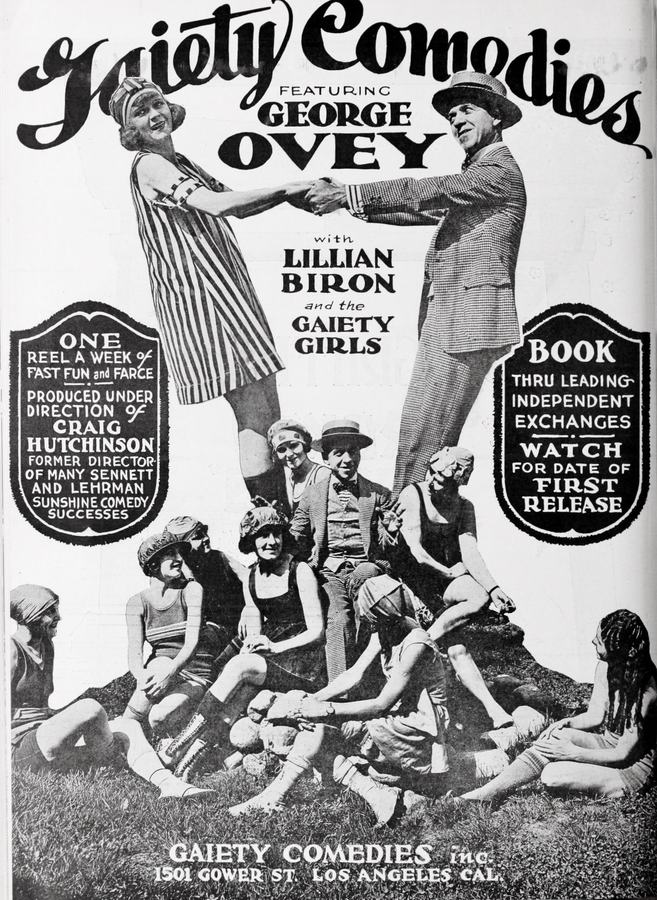
That is the cracked looking-glass Ruined by Love holds up to 1916 audiences, and—miraculously—the reflection still glints a century later. Clocking in at a brisk twelve minutes, this one-reel marvel from director-writer duo George Ovey and Frank Roland Conklin distills romantic despair into carbonated slapstick, then spikes it with enough narrative cyanide to make even The Accident Attorney look procedurally sober.
We open on George, a wisp of a man with Buster Keaton eyes and the posture of a deflated balloon, pacing the littered edge of a nameless seaside resort. His sweetheart Lillian—played by Lillian Biron with the hauteur of a duchess swatting a gnat—has “given him the mitten,” that delicious antique phrase for summary dismissal. Ovey, who also scripts, refuses to linger on the breakup; instead he hurls us straight into the abyss of George’s imagination. In quick, staccato vignettes we see him pricing rat poison, testing the tensile strength of a clothesline, and eyeing the ocean as though it were a duvet he might simply pull over his head. Each tableau is framed like a penny-dreadful woodcut, yet the camera undercuts the morbidity with pratfalls: the druggist mistakes the arsenic order for sugar, the line snaps depositing George in a laundry basket, the tide recoils to reveal a scrawled “NOPE” etched in sand.
Enter Chlorine—yes, Chlorine—an aquatic sylph who erupts from the surf as if the Pacific itself had concocted a bromide against melancholy. She is every bit the chemical miracle her name implies: bleaching George’s morose palette into something approaching daylight. Their meet-cute is anything but cute; she mistakes his dangling noose for a swing, grabs hold, and yanks him head-first into the foam. Underwater photography, radical for 1916, renders the moment dreamlike: strands of seaweed halo her head like Art Nouveau tendrils while George’s bowler drifts toward the abyss, a black sun eclipsed by absurdity. One gulp of saltwater and he’s reborn, coughing up not only surf but the entire Romantic notion that suicide is a viable narrative arc.
Here the screenplay pirouettes into epistolary farce. Determined to assure Lillian he no longer craves oblivion, George wires: “Am changing my mind and taking Chlorine instead.” The telegram, of course, elides context; Lillian reads lethal chemical rather than nymphic balm. Cue the sororal cavalry: a half-dozen flapper friends pile into her roadster, veil-draped as though en route to a séance. They burst into George’s boarding house—door splintering like a cartoon—and find him sprawled atop the counterpane, fully clothed, coins evicted from pockets into the palms of a beggar earlier. He is, in the vernacular of the day, “dead to the world,” which is to say gloriously, snoringly alive.
But Lillian, primed by her own guilt and the telegram’s ambiguity, sees a cadaver. Her lament is operatic: she rends her boater, gnashes a lace glove, and—because this is 1916—telephones a physician whose surname is a cosmic punchline: Dr. Hitchem. The gag lands harder when the man who materializes is no medic but a Doctor of Divinity, prayer book already open to the matrimonial liturgy. Ovey lets the camera linger on the book’s gilt-edged pages, the word “D.D.” embossed where “M.D.” should be, a typographical gag worthy of Molière. Lillian, too distraught to parse ecclesiastical credentials, pleads: “Save him, doctor!” The Reverend, ever the opportunist, intones: “In sickness and in health…” before George groggily consents, mistaking the ceremony for a morphine hallucination.
And so the suicide comedy pivots into shotgun wedding, the ultimate cure for a broken heart. The final iris-in closes on the newlyweds kissing beneath a parasol wielded by Chlorine herself, who has apparently officiated in some proto-polyamorous capacity. A title card winks: “Chlorine—cleansing agent of the soul.”
What rescues Ruined by Love from the graveyard of forgotten one-reelers is its tonal tightrope walk. Ovey and Conklin grasp that the gag is only as strong as the abyss it bridges. They allow George genuine despair—those early compositions frame him against yawning negative space, the boardwalk stretching into void—so that Chlorine’s arrival feels not like narrative contrivance but metaphysical intervention. Compare this to Her Man, where the stakes are social, not existential, or to The Spurs of Sybil, whose melodrama leans into moral absolutes. Here, morality is as slippery as wet sand; suicide is sin, courtship is commerce, and marriage is the ultimate antidepressant.
George Ovey plays George with the elastic physiognomy of a man whose face has already rehearsed every death mask. Watch the way his eyebrows semaphore hope when Chlorine invites him to swim; they ascend like twin weather balloons. Lillian Biron’s Lillian is a marvel of hauteur-cum-hysteria; her breakdown in the boarding-house bedroom is a master-class in miniature, shifting from brittle socialite to grief-struck penitent in the span of a single close-up. And Chlorine—billed only as “Miss Chlorine” in contemporary press—embodies the pre-Hays fantasy of the carnivalesque feminine: part mermaid, part patent medicine.
Cinematographer Bert Cannock frames the suicide gags in deep focus so that background details—a child licking a lollipop shaped like a skull, a billboard touting “Dr. Pierce’s Pleasant Pellets”—undercut the morbidity. The underwater sequence, shot through a diving bell lens, ripples with proto-surrealist distortion; Chlorine’s hair drifts like ink in water, foreshadowing the dream ballets of Seven League Boots. Meanwhile, the telegram close-up—white letters slammed onto black background—anticipates the expressionist intertitles of Die närrische Fabrik.
Though released sans official score, exhibitors of 1916 often accompanied the picture with a pastiche of popular tunes. Contemporary accounts cite a Chicago nickelodeon pairing the film with “Everybody Two-Step,” whose jaunty rag offsets George’s suicidal ideation much like Chlorine’s laughter. The cognitive dissonance is deliberate; the film weaponizes levity against despair, a trick Chaplin would perfect in The Essanay-Chaplin Revue of 1916.
Read the film through a feminist lens and Chlorine becomes the catalyst, not the prize. She enters, disrupts, then exits with a wink, leaving men to reassemble the rubble into wedlock. Lillian’s final epiphany—that she coveted George only once he seemed lost—parodies the Victorian angel-in-the-house trope. Meanwhile, George’s redistribution of coins to a beggar prefigures the communal ethos of The Great Day, where charity becomes the only antidote to capitalist anomie.
Film historians often locate the birth of dark romantic comedy in the sound era—think Twentieth Century or The Awful Truth. Yet Ruined by Love offers a silent prototype, one that fuses the cosmic pessimism of Melville’s Bartleby with the redemptive slapstick of Murnau’s Sunrise. Its DNA can be traced through the suicidal whimsy of Skinner’s Bubble and the marital macabre of The Family Skeleton. Even the Coen Brothers’ Intolerable Cruelty owes a debt: the telegram gag resurfaces as a fax, the D.D. becomes a loophole lawyer.
Only one 35mm print is known to survive, housed in the EYE Filmmuseum under the Dutch title Verliefd en Verdronken (literally “In Love and Drowned”). The nitrate was chemically stabilized in 2019, revealing previously lost details: a marginal doodle of a mermaid on George’s suicide note, the beggar’s face—actually director Conklin in proto-cameo. A 2K scan circulated among cine-clubs last year, its intertitles restored to the original font, a serif circus that screams 1916.
Watch Ruined by Love at 3 a.m. when your own heart feels chlorine-bleached. Let its gallows humor rinse the stain of modern cynicism. Revel in the knowledge that a century ago, audiences laughed at the same cosmic joke: that love, suicide, and marriage are merely competing brands of delusion, each promising transcendence while delivering a different flavor of farce. And when the Reverend pronounces George and Lillian man and wife, notice how Chlorine slips away, back toward the ocean, her silhouette dissolving into nitrate grain—an unattainable antidote to every poison the heart invents.
Verdict: A carbonated shot of cyanide-laced champagne—still fizzy after 107 years.
IMDb —
1924
Community
Log in to comment.