DbcultAccessing Vault...
Cult Review
Senior Film Conservator
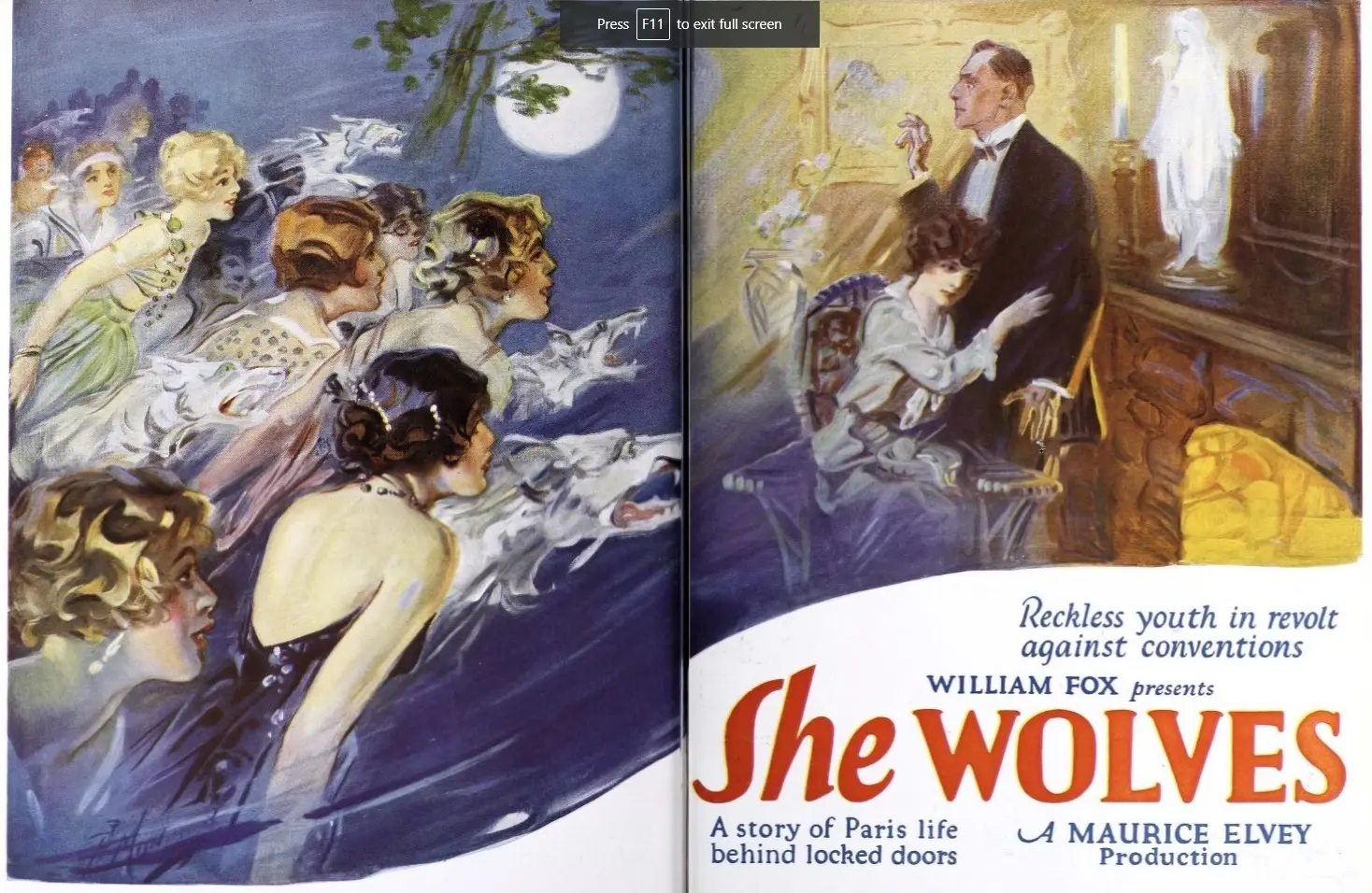
In the pantheon of 1920s silent cinema, few films capture the agonizing friction between the bucolic and the boulevards as effectively as She Wolves. This 1925 production, directed with a keen eye for the nuances of class-driven resentment, serves as a profound meditation on the performative nature of identity. At its center is Germaine, portrayed with a haunting luminosity by Alma Rubens, whose performance transcends the era's penchant for theatrical exaggeration. Germaine is not merely a victim of an arranged marriage; she is a casualty of a culture that views feminine romanticism as a liability to be traded for the stability of a wealthy, albeit unrefined, husband. The film’s initial setting—a world of horses, dogs, and rough-hewn manners—serves as a cage for her sensibilities, a theme of domestic entrapment that we frequently observe in the gendered expectations of No Woman Knows.
Lucien D’Artois, played by Harry Myers with a fascinating blend of vulnerability and brusqueness, is the catalyst for Germaine’s despair. His initial portrayal as a man who prefers the company of hounds to the etiquette of the parlor creates a stark contrast that drives the narrative’s first act. This archetype of the 'unpolished man' is a staple of the era, yet here it is handled with a specific French sensibility that emphasizes the intellectual gap between the spouses. Lucien’s decision to abandon his estate for the chrysalis of Paris represents a desperate attempt to bridge this chasm, a transformation that mirrors the behind-the-scenes theatricality and identity shifts captured in Bag Filmens Kulisser.
The shift from the rural estate to the neon-lit shadows of Paris marks a tonal pivot in She Wolves. Lucien’s attempt at self-improvement quickly curdles into self-destruction when he receives Germaine’s letter of rejection. The cinematography here takes on a more frenetic, shadowed quality, reflecting his descent into the demi-monde. The film brilliantly captures the irony of a man who becomes a 'gentleman' only through the crucible of loss and reckless living. This narrative arc of financial and moral ruin, followed by a search for dignity, finds a thematic sibling in the poignant narrative of A Prince in a Pawnshop. Lucien’s performance of vice in the city’s underbelly feels almost like the protagonist's reckless antics in An Amateur Devil, yet the stakes here are underscored by a genuine sense of tragic inevitability.
The title She Wolves suggests a predatory environment, and this is personified in the character of André Delandal. Played with a serpentine grace by Bertram Grassby, André is the architect of the film’s central deception. He is the 'wolf' in the parlor, manipulating Germaine’s fragile emotional state to further his own ends. While a modern viewer might look at the intricate social engineering of André and see a primitive precursor to the technological deceptions found in Sneakers, the conflict in 1925 remains purely a battle of the heart and reputation. André’s sophistry—leading Germaine to believe in Lucien’s infidelity—is the engine that drives the final act’s confrontation, proving that the most dangerous predators are often those who wear the most polished masks.
The technical execution of She Wolves is a testament to the sophistication reached by the silent medium just before the advent of sound. The lighting, particularly in the scenes depicting Germaine’s isolation, uses high-contrast shadows to emphasize her psychological fracturing. The costumes, too, play a narrative role; Lucien’s transition from rough riding gear to the impeccable tailoring of a Parisian dandy is more than a wardrobe change—it is a visual manifestation of his internal struggle. This attention to visual flair and the raw, unbridled emotion of the Parisian nightlife scenes hints at the thematic intensity explored in Pagan Passions.
Alma Rubens provides the film with its soul. Her ability to convey the transition from youthful idealism to hardened skepticism, and finally to a belated, agonizing realization of love, is remarkable. Her face becomes a map of the French social landscape, reflecting the pressures to marry for stability—a theme also central to American Maid. The pervasive sense of missed timing and the tragedy of letters sent too late evokes the same bittersweet resonance found in Till We Meet Again, grounding the melodrama in a universal human experience of regret.
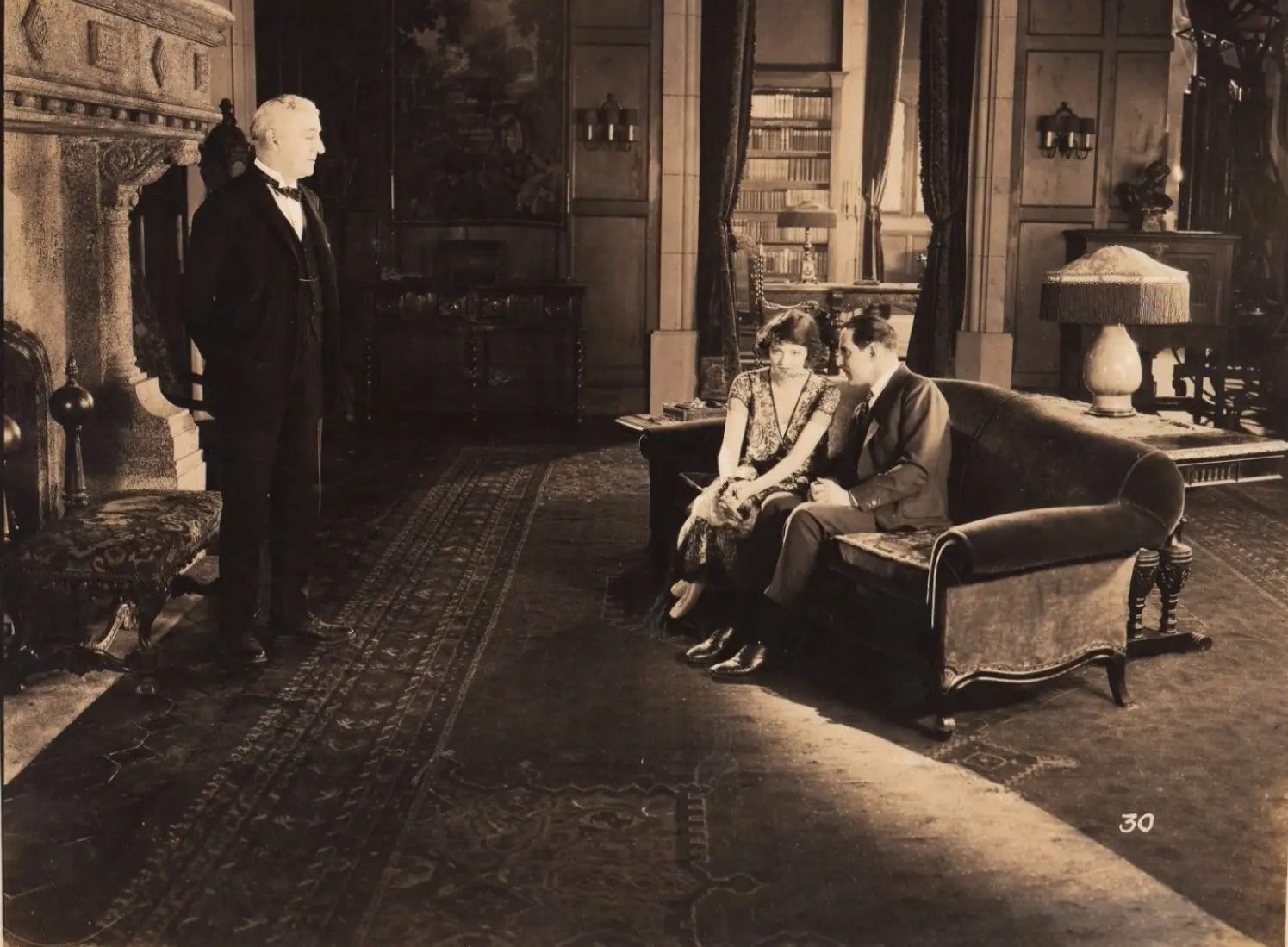
The climax of She Wolves occurs in the heart of Paris, where Germaine seeks her freedom only to find a husband who has become the very paragon of refinement she once craved. This reversal is dripping with irony; the 'gentleman' she desired was forged in the fire of her own rejection. The subversion of what it means to be a 'good' or 'refined' man plays out with significantly more dramatic weight here than in the lighter, more comedic explorations of masculinity like A Very Good Young Man. Lucien’s initial persona as a man of horses and dogs presents a fascinating foil to the more traditional masculine energy found in The Lucky Devil, suggesting that true refinement is a matter of the spirit rather than the suit.
As Germaine belatedly declares her love, the film avoids a simplistic 'happily ever after' by acknowledging the scars left by their mutual deceptions. The heavy hand of fate that guides Lucien toward ruin before his eventual redemption is a staple of French silent cinema, reminiscent of the deterministic forces in La Destinée de Jean Morénas. Germaine’s eventual realization and her move to reclaim her agency at the end of the film is a quiet but firm reversal, not unlike the shifts in power dynamics seen in Tempest Cody Turns the Tables. The clash between the structured expectations of the upper class and the wilder, unrefined instincts of the heart is a through-line that connects this film to works like The Gypsy Trail.
While the domestic battles of She Wolves are intimate and localized, they are depicted with a gravity that makes them feel monumental. In the grand scheme of 1920s cinema, these personal conflicts are no less devastating than the historical upheavals depicted in The Battle of Jutland, proving that the destruction of a heart is as cinematic as the sinking of a fleet. The film’s exploration of the 'other' life—the Parisian escape—provides a narrative shift similar to the exotic journey in The Carpet from Bagdad, though the destination here is the internal landscape of the self rather than a distant land.
Ultimately, She Wolves stands as a sophisticated example of the silent melodrama. It refuses to settle for easy villains or perfect heroes. Instead, it presents a world populated by flawed individuals struggling against the dictates of their class and the limitations of their own perceptions. The film’s enduring power lies in its recognition that the most profound transformations are often the ones we are too blind to see until they have already cost us everything. It is a haunting, beautifully rendered piece of cinema that demands to be remembered not just for its stars, but for its unflinching look at the predatory nature of social expectations and the fragile beauty of a love found in the ruins of a life.
IMDb —
1924
Community
Log in to comment.