DbcultAccessing Vault...
Cult Review
Senior Film Conservator
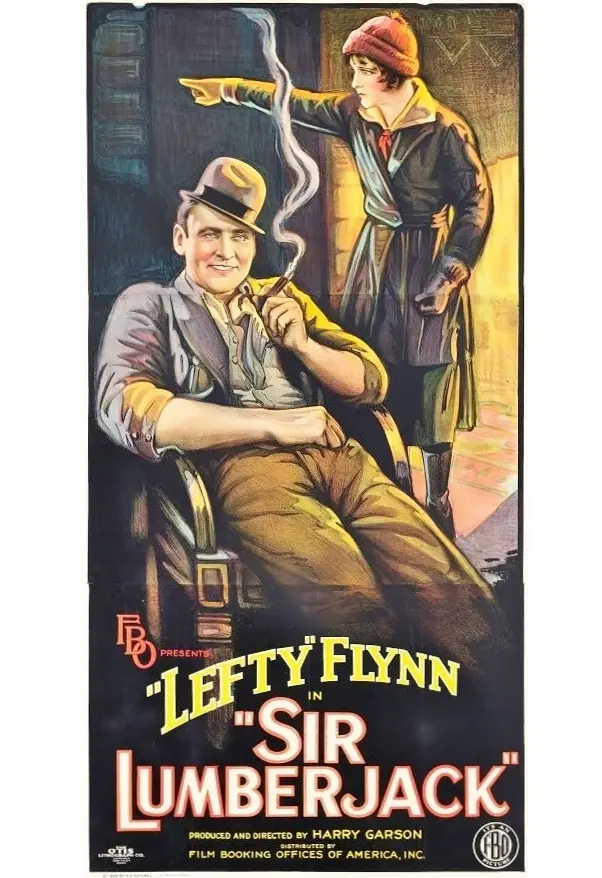
Is Sir Lumberjack a hidden masterpiece of the silent era or just another relic of 1920s melodrama? Short answer: It is a visceral, high-octane survival story that remains surprisingly watchable today, provided you can stomach its more absurd plot contrivances. This film is for viewers who crave the raw, unpolished energy of early action cinema and those who enjoy seeing physical stunts performed without the safety net of CGI. It is definitely not for those who require airtight logic or subtle character development.
1) This film works because it leans heavily into the physical charisma of Maurice 'Lefty' Flynn, whose background as an athlete brings a genuine sense of danger to the logging sequences.
2) This film fails because the central premise—that a father wouldn't recognize his own son simply because he’s wearing dirty rags—stretches the limits of suspension of disbelief to the breaking point.
3) You should watch it if you are a fan of early American industrial history or if you want to see a textbook example of the 'Red-Blooded' male archetype that dominated the 1920s box office.
In the mid-1920s, Maurice 'Lefty' Flynn was the embodiment of the collegiate hero turned screen star. In Sir Lumberjack, his performance is less about internal monologue and more about how his body occupies space. Unlike the more theatrical acting found in urban dramas like Josselyn's Wife, Flynn’s work here is grounded in the dirt and the sawdust. When he is stripped of his clothing by the tramps in the opening act, it’s not just a plot device; it’s a symbolic shedding of the Gilded Age excess. He literally has to build a new man from the skin up.
One specific moment that stands out is the log rescue scene. While contemporary audiences are used to the polished choreography of modern blockbusters, there is a terrifying clumsiness to the way the timber moves in this film. You can feel the weight of the wood. When Bill Barlow Jr. lunges to pull Bess Calhoun from the path of the log, it’s not a graceful stunt. It’s a desperate, heavy scramble. This lack of polish is exactly what makes the film feel alive nearly a century later. It’s raw. It’s dangerous. It works.
The screenplay by Victor Gibson uses the timber industry as a backdrop for a very specific American anxiety: the fear that wealth makes men soft. This was a recurring theme in the 20s, also explored in different ways in films like The Ragamuffin. However, Sir Lumberjack takes it a step further by introducing an element of corporate espionage. The plot involving the mortgage on the Calhoun timberlands adds a layer of tension that elevates the film above a simple 'fish out of water' comedy.
The antagonist, Mack, played with a delightful, sneering menace by Tom Kennedy, represents the 'unrefined' threat. He is the camp bully who views Bill's perceived low status as an opportunity for cruelty. The rivalry between Bill and Mack isn't just about Bess; it's a clash of classes where the 'rich boy' has to prove he can out-muscle the professional brawler. It’s a trope we’ve seen a thousand times, but here, set against the backdrop of real, looming pines, it feels elemental.
Yes, Sir Lumberjack is worth watching if you appreciate the historical evolution of the action-adventure genre. While the plot is predictable, the location shooting and the high-speed logging engine chase in the final act are genuinely impressive. It captures a moment in time when cinema was transitioning from simple storytelling to grand, outdoor spectacle. If you can overlook the 'secret identity' logic gaps, the film offers a satisfying, punchy experience.
The cinematography in Sir Lumberjack deserves a closer look. Unlike the controlled environments of Tiger Rose, Gibson’s direction feels more improvisational. The camera often feels like an intruder in the lumber camp, capturing the dust and the sweat of the workers. The use of natural light in the forest scenes creates a sense of scale that studio sets simply couldn't replicate. The trees aren't just props; they are looming characters that threaten to crush the protagonists at any moment.
The pacing is surprisingly modern. After a somewhat slow setup in the city, the film accelerates once Bill hits the camp. The editing during the climax—where Bill borrows the mortgage money and races to stop Mack—utilizes cross-cutting techniques that were state-of-the-art for 1926. It creates a genuine sense of urgency. The logging engine itself becomes a mechanical beast, a symbol of the industrial age that Bill must master to reclaim his inheritance.
- Maurice 'Lefty' Flynn's incredible physical presence.
- High-stakes practical stunts that still look dangerous.
- A brisk runtime that doesn't overstay its welcome.
- The plot relies on extreme coincidences.
- Female characters are relegated to the 'damsel' role with little agency.
- Some of the intertitles feel redundant to the action.
One surprising element of Sir Lumberjack is how it treats the 'tramps' who steal Bill’s clothes. In many films of this era, such characters are comic relief. Here, they are a genuine, albeit brief, threat. This suggests a darker undercurrent to the 1920s American dream—the idea that one's status is entirely dependent on the clothes on their back. Take away the suit, and the man becomes invisible. It’s a proto-existentialist theme buried in a logging movie. It’s strange. It’s fascinating.
Sir Lumberjack is a fascinating artifact. It isn't a high-brow masterpiece, nor does it try to be. It is a 'blue-collar' movie made for an audience that valued grit over grace. The logic is thin as a wood shaving. But the energy? The energy is undeniable. It’s a film that understands the visceral thrill of a man, a train, and a deadline. It works. But it’s flawed. If you can accept that, you’re in for a hell of a ride.
Ultimately, the film stands as a testament to Maurice 'Lefty' Flynn's short-lived but impactful career. While other actors of the era were focusing on the 'Great Profile' or comedic timing, Flynn was out in the woods, getting dirty, and showing the world what a 1920s action star looked like. For that alone, Sir Lumberjack deserves a spot in the conversation of silent action cinema.

IMDb 5.4
1922
Community
Log in to comment.