DbcultAccessing Vault...
Cult Review
Senior Film Conservator
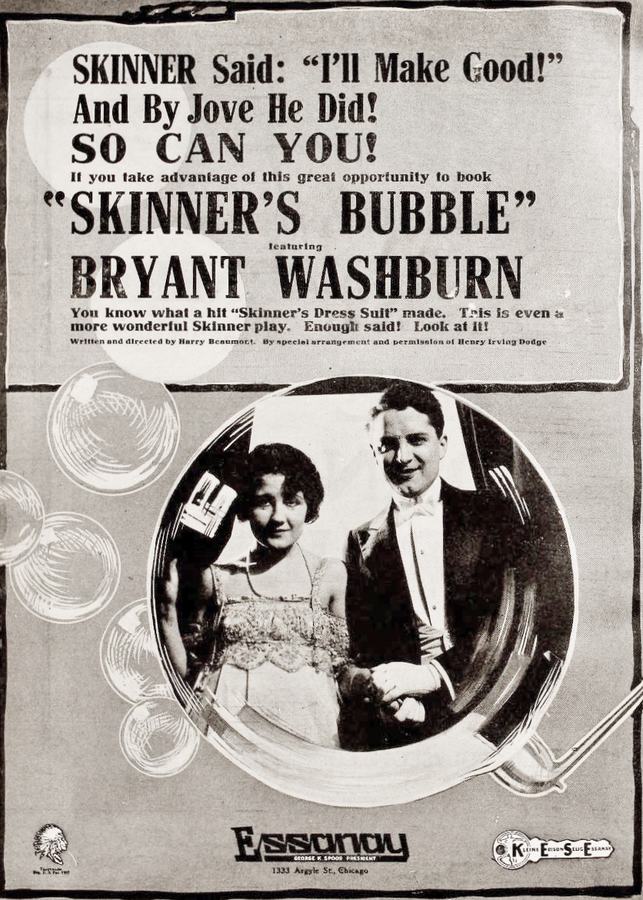
In the annals of early cinema, where narratives often hinged on grand gestures and moralistic tales, 'Skinner's Bubble' emerges as a remarkably nuanced exploration of ambition, perception, and the delicate scaffolding of reputation. This silent-era gem, though perhaps not as widely celebrated as some of its contemporaries, offers a surprisingly potent commentary on human nature and the often-illusory foundations of success. It delves into the psyche of William Manning Skinner, a man whose self-perception far outstrips his actual capabilities, setting the stage for a delightful, if anxiety-inducing, comedy of errors. The film masterfully illustrates how easily a carefully constructed façade, buttressed by unwavering spousal belief, can be mistaken for genuine triumph, ultimately leading to an outcome both ironic and deeply satisfying.
At its core, 'Skinner's Bubble' is a cautionary fable wrapped in the guise of a domestic drama. William Manning Skinner, portrayed with an endearing blend of hubris and vulnerability by Bryant Washburn, is introduced as a junior partner at the esteemed firm of McLaughlin and Perkins. He is, by all accounts, doing well, but his internal compass points to a more grandiose destiny. He views his current position not as an achievement in itself, but as a mere stepping stone, a temporary station on the path to becoming an 'industrial Napoleon.' This vision, fueled by an inflated sense of self-worth, blinds him to the very real advantages conferred by the established prestige of McLaughlin and Perkins. He genuinely believes his personal brilliance is the sole engine of his success, discounting the invaluable leverage of the firm's name and network. This fundamental miscalculation forms the dramatic impetus for the entire narrative. His decision to resign and launch his own colossal enterprise is presented as a bold, almost reckless, leap of faith – a faith primarily in himself, untempered by practical foresight.
The subsequent unraveling of Skinner's independent venture is swift and brutal. Operating without the institutional backing he once enjoyed, he quickly finds himself on the verge of bankruptcy. The market, it turns out, is far less impressed by his individual genius than it was by the combined might of McLaughlin and Perkins. The film subtly critiques the notion of pure entrepreneurial spirit without the necessary groundwork of reputation and trust. Skinner's grand plans crumble, leaving him facing a humiliating failure. This predicament sets up the central tension: how will he reconcile his impending ruin with the image of success he so desperately cultivates, especially for his adoring wife, Honey? This is where the film truly begins to sparkle, moving beyond a simple tale of business folly into a more complex exploration of marital dynamics and the power of perception.
Skinner's response to his impending financial collapse is nothing short of audacious. Instead of confessing his failure to Honey, his devoted and somewhat naive wife, he concocts an elaborate, almost theatrical, bluff. He casually informs her that he is making money at such an astonishing rate that he can barely keep track of it. This lie, born of desperation and a desire to preserve his image, becomes the catalyst for the story's remarkable twist. Hazel Daly, in her role as Honey, embodies the ideal of the adoring, trusting spouse, a figure often seen in films of this era, yet here she becomes an unwitting instrument of her husband's redemption. Her unwavering belief in Skinner's 'Napoleonic might' is not just a character trait; it's a driving force of the plot. She interprets his casual remarks as irrefutable proof of his extraordinary success, reinforcing his own deluded self-image even as reality crumbles around him.
This domestic deception spirals outward when Honey, brimming with pride, confides in Mrs. McLaughlin, the wife of Skinner's former senior partner. The scene likely plays out with charming innocence, Honey's joy palpable, completely oblivious to the far-reaching implications of her disclosure. Mrs. McLaughlin, in turn, relays this seemingly triumphant news to her husband. This chain of communication is crucial. Mr. McLaughlin, upon hearing of Skinner's supposed meteoric rise, experiences a profound shift in perspective. He and his partner, Perkins, conclude that they made a 'tremendous mistake' in allowing such a seemingly prodigious talent to depart their firm. Their initial assessment of Skinner's value was, they now believe, gravely flawed. This misinterpretation, fueled by Honey's innocent relay of Skinner's grand bluff, sets the stage for the film's climax.
The narrative reaches its peak of dramatic irony as Skinner, utterly defeated and preparing to declare bankruptcy, is suddenly confronted with an astonishing proposition. Just as he is about to admit his miserable failure, McLaughlin and Perkins, convinced of his unparalleled success, extend a staggering offer for him to rejoin their firm. This isn't just an invitation to return; it's an acknowledgment of his perceived genius, validated by what they believe to be his independent triumphs. The very act of his bluff, coupled with his wife's unshakeable faith, transforms him from a spectacular failure into a highly sought-after commodity. The film concludes with Skinner's improbable rescue, a testament not to his business acumen, but to the power of perception, the strength of a well-executed deception, and the profound influence of a loyal, albeit unwitting, spouse. It's a conclusion that leaves the audience to ponder the true nature of success and the often-fragile line between appearance and reality.
While 'Skinner's Bubble' might hail from an era of cinema often characterized by melodrama and overt moralizing, its narrative sophistication and thematic depth are surprisingly resonant even today. The film, a product of its time, skillfully employs the visual storytelling techniques of the silent screen to convey complex emotions and intricate plot developments without a single spoken word. Intertitles would have played a crucial role, not just in conveying dialogue but in establishing the internal monologues and external perceptions that drive Skinner's journey. The pacing, likely deliberate and measured, would have allowed audiences to fully absorb the weight of Skinner's ambition, the despair of his failure, and the sheer audacity of his bluff. The film's strength lies in its human scale, a focus on the individual's struggle against societal expectations and personal hubris.
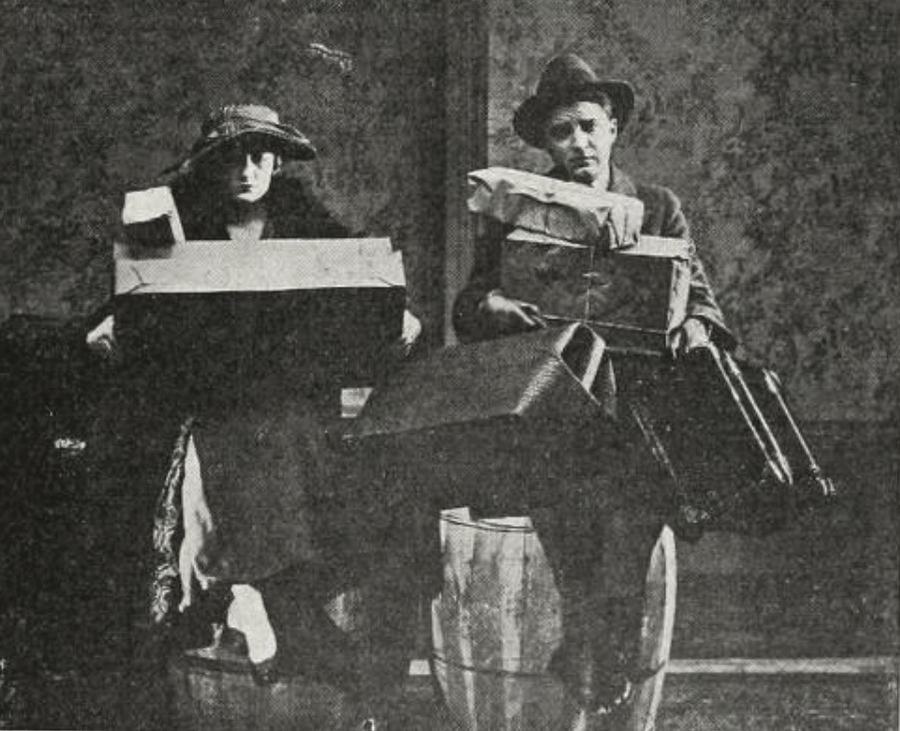
The success of any silent film hinges heavily on the expressive capabilities of its cast, and 'Skinner's Bubble' appears to have been blessed with a talented ensemble. Bryant Washburn, as William Manning Skinner, carries the bulk of the film's emotional and comedic weight. His portrayal would have required a delicate balance – conveying Skinner's initial overconfidence, his growing desperation, the cunning behind his bluff, and ultimately, his bewildered relief. One can imagine Washburn using exaggerated facial expressions and body language, typical of the era, to communicate Skinner's internal turmoil and his outward veneer of success. His performance would have been key to making Skinner a character with whom the audience could both empathize and slightly scorn.
Hazel Daly, in the role of Honey, is equally pivotal. Her character is the emotional anchor and the unwitting architect of Skinner's salvation. Daly's performance would have needed to convey genuine adoration, childlike trust, and perhaps a touch of naiveté, without making Honey seem foolish. Her scenes with Mrs. McLaughlin, where she innocently boasts of her husband's 'success,' would have been critical moments of dramatic irony, relying on Daly's ability to project unadulterated joy. The supporting cast, including James C. Carroll, Marian Skinner, and Ullrich Haupt, would have provided the necessary context and reactions, their performances contributing to the overall believability of the world Skinner inhabits. The interplay between these characters, conveyed through gesture and gaze, would have been essential in building the film's comedic and dramatic tension.
'Skinner's Bubble' resonates far beyond its silent film origins, touching upon universal themes that remain relevant. The film is a potent commentary on the nature of reputation. Skinner learns, to his immense chagrin, that personal talent, however perceived, is often insufficient without the backing of an established name. The prestige of McLaughlin and Perkins was not just a convenience; it was a foundational element of his previous achievements. This speaks to the power of branding and institutional trust, concepts still profoundly important in contemporary business and public life. One might draw parallels to narratives of social climbing and the pursuit of status, themes explored in films like The Lion and the Mouse, though perhaps with a more cynical edge regarding the methods employed.
The central act of deception – Skinner's audacious bluff – is another fascinating thematic thread. It highlights the lengths to which individuals will go to maintain appearances, especially to those they love and respect. This isn't merely a story about a man trying to save his business; it's about a man trying to save his pride and his perceived standing in his wife's eyes. The film explores the fine line between confidence and delusion, and how easily one can tip into the other. The irony is that the bluff, intended to mask failure, inadvertently becomes the very engine of his success, demonstrating that sometimes, perception truly is reality, at least in the eyes of others. This manipulative use of perception, albeit for self-preservation, finds echoes in the intricate schemes of films like Mr. Grex of Monte Carlo, where appearances are everything, though Skinner's motives are arguably less malicious.
Furthermore, the film offers a quaint but insightful look at the American Dream in the early 20th century. Skinner's desire to become an 'industrial Napoleon' reflects the era's pervasive belief in individual enterprise and the possibility of rising to great heights through sheer will. However, the film subtly critiques this ideal by showing that unbridled ambition, detached from practical realities and established networks, can lead to spectacular failure. It suggests that success is often a more communal or systemic achievement than a purely individual one, a lesson Skinner learns the hard way. The film, in its own way, is a precursor to many later narratives that question the ethics and sustainability of rapid, unearned wealth, or the fragility of a fortune built on sand.
While 'Skinner's Bubble' might not possess the dramatic gravitas of a The Victory of Conscience or the intricate mystery of The Million Dollar Mystery, its charm lies in its accessible human story. It's a film that reminds us of the delicate interplay between self-perception, external validation, and the profound, sometimes unwitting, influence of those closest to us. The comedic elements, likely arising from Skinner's increasingly desperate attempts to maintain his façade and the McLaughlins' misinterpretation, would have provided much entertainment for audiences of the time. Yet, beneath the humor, there lies a thoughtful exploration of business ethics, marital trust, and the often-unpredictable nature of fortune. The film's enduring appeal, for those fortunate enough to discover it, lies in its timeless message: sometimes, the greatest successes are born not of genuine merit, but of a carefully constructed illusion, reinforced by an unwavering, if misplaced, belief. It's a delightful testament to the fact that in the grand theater of life, sometimes all it takes is a good bluff and an adoring audience to turn the tide.
The very title, 'Skinner's Bubble,' is a metaphor for the fragile, self-contained world of illusion he constructs. It’s a bubble that, against all odds, refuses to burst, propelled instead to greater heights by the currents of misperception. This cinematic artifact, therefore, stands as a fascinating case study in how narratives of ambition and deception can transcend their historical context, offering insights into human folly and fortune that remain pertinent, even in a world vastly different from the one in which it was created. Its quiet brilliance lies in demonstrating that sometimes, the greatest triumph is simply getting others to believe in your potential, even when you’re on the verge of losing faith in it yourself. And in that, there’s a strange, almost poetic, kind of genius.
IMDb 5.7
1927
Community
Log in to comment.