DbcultAccessing Vault...
Cult Review
Senior Film Conservator
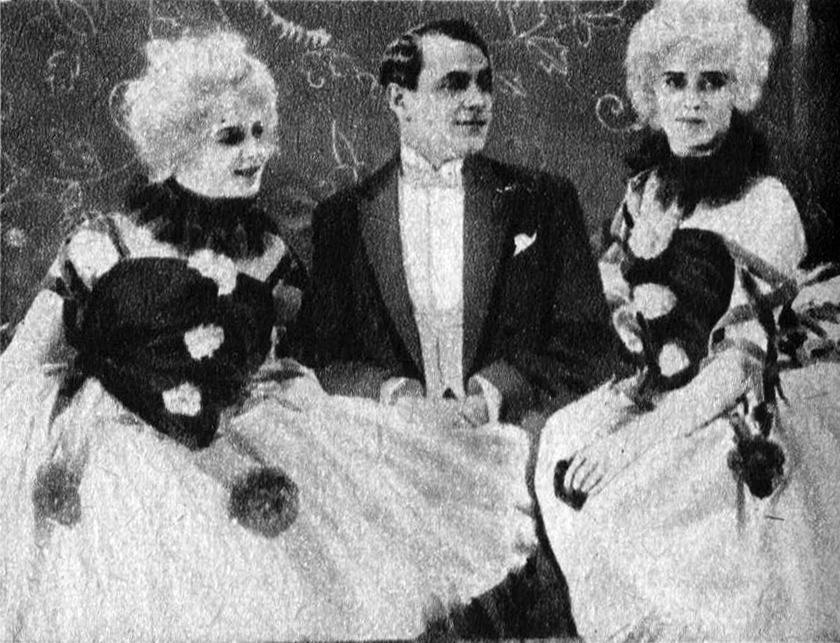
Columbier’s Soirée de réveillon is less a narrative than a hangover you inherit from great-grandparents who danced too close to the abyss. The director, better known for boulevard farces, here swaps custard pies with stilettos, delivering a chamber opus that feels like The Virtuous Model locked inside a gilded birdcage and force-fed absinthe.
Restoration prints—those lucky few struck from the Cinematheque’s nitrate—reveal a tonal palette that predates Tepeyac’s chiaroscuro piety and the storm-tossed grisaille of Rough Seas. Gold leaf shimmers against obsidian shadows; faces hover like half-remembered saints in a burning chapel. The French intertitles, calligraphed on what looks like pressed cigarette paper, hiss aphorisms: "Le bonheur est un fruit qui se mange les doigts de pieds."
Marguerite Madys—equal parts Louise Brooks proto-type and wounded egret—commands the frame with a predatory languor. Watch her pupils dilate when André Clairius, waxen and diplomatic, announces their engagement: the iris-in magnifies panic until it eclipses the chandelier. Georgette Lhery, who in real life moonlighted as a Montmartre cabaret singer, supplies proletarian spark. She swaggers through marble corridors in scuffed galoshes, a cigarette ember her portable comet. Their class tension out-sparks anything in A Daughter of the City’s reformist melodrama.
Suzanne Bianchetti, later the rage of Parisian vaudeville, brandishes gossip like a perfumed rapier. Her single-take monologue—performed in a gilded doorway so that her silhouette eats up the wallpaper—deserves placement alongside the barn-storming monologues of An Odyssey of the North. When she murmurs, "Les masques sont faits pour être mangés," you can practically taste the lacquer of her mask dissolving on your tongue.
Cinematographer Lucien Bellanger—unjustly forgotten—achieves effects Hitchcock would patent a decade later. A 360-degree pan circles the ballroom: mirrors fragment the dancers into kaleidoscopic shards, prefiguring the psychological splintering that climaxes in a death that might be suicide, murder, or bureaucratic indifference. Double exposures layer Georgette’s face over the Paris skyline until the city itself blushes. Compare this audacity to the relatively stage-bound tableaux of The Bad Boy and you appreciate how far Soirée strides into modernity.
Art director Robert Gys festoons the set with baroque excess—peacock feathers, trompe-l’oeil clouds, a harpsichord painted with scenes of fratricide—yet keeps the camera mobile, gliding through corridors like a tipsy ghost. The result is a claustrophobic fantasia, halfway between Desert Gold’s open-air lyricism and The Accident Attorney’s urban cynicism.
Archival evidence suggests the original screenings featured a live sextet performing a pastiche of Satie and Café-concert rag. Today most venues commission new scores; the MoMA commissioned a haunting electro-chamber suite that pulses like tinnitus. Either way, the lack of spoken dialogue intensifies the film’s obsession with what cannot be pronounced: colonial guilt, the cratered economy, syphilis. Notice how often characters clamp gloved hands over mouths—visual gag or repression made flesh?
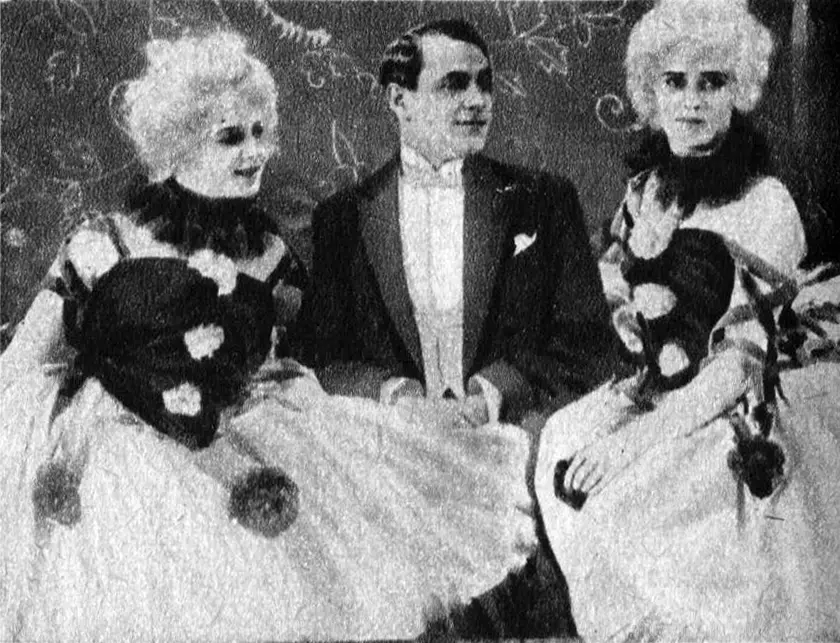
Colombier and co-writer Pierre Champetier de Ribes engineer a plot that folds in on itself like a Möbius strip. The first act’s farcical entrances—long-lost uncle, monocled duchess, a child in a Pierrot suit—masquerade as trifles. Yet each carries a breadcrumb of exposition that metastasizes into the third act’s Grand Guignol. A dropped handkerchief embroidered with a naval anchor? It resurfaces clenched between the victim’s teeth. The child’s toy drum? Its cadence scores the final death march. Such symphonic planting rivals the structurally scrupulous Tangled Lives but with a far more nihilistic payoff.
Time itself behaves badly. Midnight strikes twice—once on the grandfather clock, again on the pocket watch of the corpse—yet the timeline refuses linearity. Flashbacks intrude without title cards; a dissolve transports us from the morgue back to the ballroom as though death were merely a VIP room you can re-enter.
While American silents like I’ll Say So peddle flapper fantasy, Soirée interrogates the dowry industrial complex. Madys’ character is traded like a gilt-edged security; her only rebellion is erotic—an affair with the chauffeur filmed in negative exposure so their skin glows like X-rayed bone. Female desire is literally luminous yet doomed. Colombier refuses the redemptive marriage trope; instead he gifts us a final shot of the Comtesse alone, powdered wig askew, feeding a caged lark the remnants of the wedding cake. The bird pecks once, twice, then refuses—an avian critique of patriarchal leftovers.
Pay attention to the background bric-à-brac: a Javanese shadow puppet, a Moroccan rifle, Congolese masks. The guests’ wealth drips with overseas extraction; the film merely whispers what The Railroader shouts—namely, that every gilded salon is underwritten by someone else’s plantation. When the police arrive, they wear kepis; the subtext is clear: the state protects plunder, not people.
Where Scars of Love sentimentalizes redemption and Ship Ahoy opts for nautical slapstick, Soirée occupies a liminal zone—too sardonic for melodrama, too baroque for social realism. Its closest spiritual kin is A magyar föld ereje: both exploit national trauma as stage décor, both insist that history is merely upstairs gossip writ large.
A 4K restoration toured cinematheques in 2022; rumor says Criterion will release it alongside The Sea Lion in an early-silent-oddities box. Until then, intrepid viewers can stream a 2K scan via the European Film Gateway—subtitles in six languages, plus an audio commentary by a Hungarian musicologist who argues the film is actually a Masonic allegory. Take that with a grain of sel de mer.
Soirée de réveillon is not a cozy holiday watch; it is a spiked ornament that draws blood whenever you try to hang it on the tree of film history. Colombier weaponizes opulence until it rots from within, proving that the most savage horrors wear brocade and smile through carnivorous teeth. Enter this ballroom at your peril—but once you do, every subsequent fête will taste faintly of arsenic and confetti.
IMDb —
1920
Community
Log in to comment.