DbcultAccessing Vault...
5.8/10
Senior Film Conservator
A definitive 5.8/10 rating for a film that redefined the boundaries of cult cinema. Something to Think About remains a cornerstone of transgressive art.
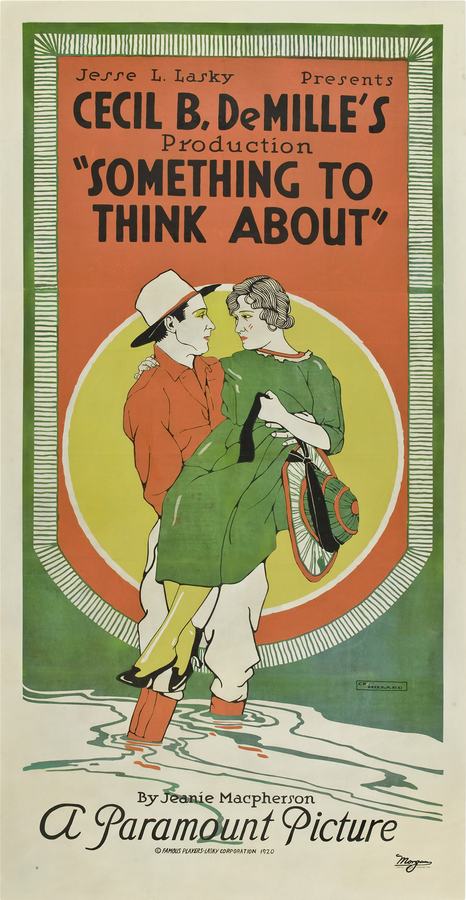
The year 1920 marked a pivotal juncture for Cecil B. DeMille, a filmmaker whose name had already become synonymous with the burgeoning grandiosity of Hollywood. In Something to Think About, DeMille eschews some of the more flamboyant extravagances of his later biblical epics in favor of a domestic drama that is as intellectually rigorous as it is emotionally taxing. This is not merely a story of unrequited love; it is a profound examination of the transactional nature of human kindness and the rigid social hierarchies of the early 20th century. While contemporary audiences might find the plot's reliance on a 'marriage in name only' to be a relic of a bygone moral code, the psychological underpinnings of the characters remain startlingly relevant.
Elliott Dexter delivers a performance of remarkable restraint as David Markley. His portrayal of physical disability is never played for cheap pathos; instead, it serves as a metaphor for his isolation from the vibrant, kinetic world of the 'able-bodied' youth. Markley is a man who builds castles—not of stone, but of people. By financing Ruth’s education, he is essentially sculpting a companion who can bridge the gap between his static existence and the world of high culture. Unlike the more overt manipulations seen in The Half Million Bribe, Markley’s influence is subtle, wrapped in the silk of philanthropy. He represents the 'benevolent patriarch' whose very kindness becomes a cage for the object of his affection.

The tension in the first act is palpable. When Ruth returns, transformed and radiant, the blacksmith’s shop—rendered with a gritty, industrial realism—clashes violently with the refined aura she now carries. DeMille uses lighting to accentuate this disparity; the forge is a place of shadows and sweat, while Markley’s estate is bathed in a soft, diffused glow that suggests a sterile perfection. This visual storytelling reminds one of the class tensions explored in Builders of Castles, where the physical structures characters inhabit reflect their internal moral architecture.
Gloria Swanson, before she became the quintessential icon of the 'talkies' or the tragic Norma Desmond, was a force of nature in silent cinema. In this film, her transition from the wide-eyed daughter of a blacksmith to a sophisticated woman is handled with a nuance that defies the often-exaggerated acting styles of the era. Her Ruth is not a villain for leaving Markley; she is a woman reacting to the claustrophobia of expectation. When she encounters Jim Dirk, played with a rugged, urban energy by Monte Blue, the chemistry is immediate and disruptive. It is the classic conflict between the 'mind' (Markley) and the 'blood' (Dirk).

The flight to the city is where DeMille’s directorial flair for the modern world takes center stage. The city is depicted as a labyrinth of opportunity and peril, a theme often revisited in films like Beatrice Fairfax Episode 9: Outside the Law. Ruth’s descent from the heights of her educated status to the grit of urban survival is punctuated by the tragic subway accident. This sequence, though brief by modern standards, carries a visceral impact. The suddenness of Jim’s death serves as a cosmic punishment for Ruth’s transgression against the 'order' Markley had established, a narrative device similar to the moral reckonings found in The Broken Commandments.
The second half of the film delves into the 'white marriage'—a trope that was a staple of early 20th-century melodrama but is explored here with significant psychological depth. Markley’s offer to marry Ruth to protect her son’s reputation is a double-edged sword. On one hand, it is the ultimate act of self-sacrifice; he will give his name and his fortune to a child that is not his and a woman who rejected him. On the other hand, it is a reclaiming of control. By bringing Ruth back under his roof, he restores the status quo, albeit a fractured one. This complex dynamic of 'saving' a fallen woman resonates with the themes of Redeeming Love and Betrayed.

Jeanie Macpherson’s screenplay is a marvel of thematic density. She weaves in elements of religious guilt and societal judgment that elevate the film above a mere 'weepie.' The presence of the child, played by Michael D. Moore, acts as the emotional fulcrum. The child is the bridge that eventually allows Markley and Ruth to find a genuine connection that transcends the transactional nature of their initial arrangement. It is a slow-burn emotional payoff that requires the audience to sit with the discomfort of their situation—hence the title, which serves as both a suggestion and a warning.
When comparing Something to Think About to other contemporary works, its sophistication becomes even more apparent. While Marriage might tackle the institution with a more direct approach, DeMille’s work is more interested in the psychological undercurrents that precede the altar. There is a touch of the epic tragedy found in Enoch Arden, specifically in the theme of the 'return' and the altered domestic landscape. Even the more action-oriented or fantastical films of the time, such as Marvelous Maciste or Riders of the Purple Sage, lack the specific, grinding emotional realism that Macpherson and DeMille achieve here.

The film also stands in stark contrast to the international offerings of the period. While Russian cinema was exploring revolutionary zeal in works like Yulian Otstupnik, or the British were refining the social drama in Possession, DeMille was perfecting the 'American Morality Play.' He understood that the American public wanted a mixture of high-society glamour and relatable moral dilemmas. The inclusion of stars like William Boyd and Theodore Roberts ensures that every frame is filled with character and presence.
One cannot discuss a DeMille film without mentioning the mise-en-scène. The art direction in Something to Think About is meticulous. Markley’s library is a character unto itself—a fortress of knowledge and wealth that feels both protective and suffocating. The contrast between this and the stark, cold environments Ruth faces in the city highlights her vulnerability. The use of double exposures and expressive intertitles helps to convey the internal monologues of characters in a way that feels modern. This technical proficiency is a far cry from the more static presentations found in earlier works like Anna Held or War and the Woman.

Furthermore, the film’s pacing is expertly handled. Melodramas of this era often suffer from a saggy middle act, but Macpherson’s script keeps the stakes high. Each scene serves a purpose, whether it’s establishing the blacksmith’s pride or Markley’s quiet desperation. The film’s exploration of 'the north' vs. 'the city' also brings to mind the atmospheric tensions of Carmen of the North, though DeMille’s focus remains firmly on the internal landscape of his protagonists.
Something to Think About is a testament to the power of silent cinema to communicate complex ethical quandaries without the need for a single spoken word. It showcases a director at the height of his powers, a writer with a keen eye for the human condition, and a lead actress who was about to conquer the world. It asks us to consider the price of our ambitions and the true meaning of charity. Is Markley a saint or a man who simply bought the ending he wanted? Is Ruth a victim of circumstance or a woman who finally learned the value of what she had? These are questions that linger long after the final iris-out. In the pantheon of 1920s cinema, this film remains a vital, breathing piece of art that demands—and deserves—our attention.
Critic's Rating: 9.2/10
A masterclass in silent melodrama, featuring a transformative performance by Gloria Swanson and the sophisticated directorial touch of Cecil B. DeMille. A must-watch for any serious student of film history.

IMDb —
1930
Community
Log in to comment.