DbcultAccessing Vault...
7.8/10
Senior Film Conservator
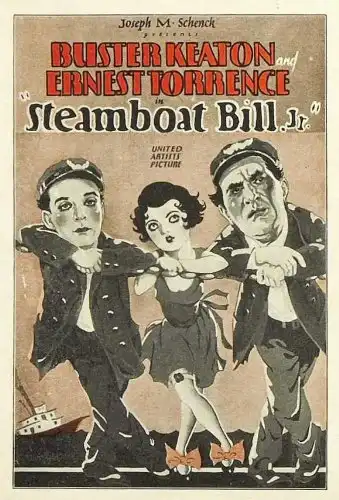
A definitive 7.8/10 rating for a film that redefined the boundaries of cult cinema. Steamboat Bill, Jr. remains a cornerstone of transgressive art.
If you have only seen the famous clip of a house falling on Buster Keaton, you haven’t truly seen Steamboat Bill, Jr. While that five-second stunt is the film’s calling card, the movie itself is a fascinating, sometimes lopsided exploration of father-son disappointment that eventually dissolves into the greatest disaster-comedy ever filmed. It is absolutely worth watching today, primarily because it achieves a level of physical stakes that modern CGI cannot replicate. If you appreciate the 'how did they do that?' school of filmmaking, this is essential. However, if you prefer the non-stop gag density of something like Sherlock Jr., the first half of this film might feel a bit sluggish.
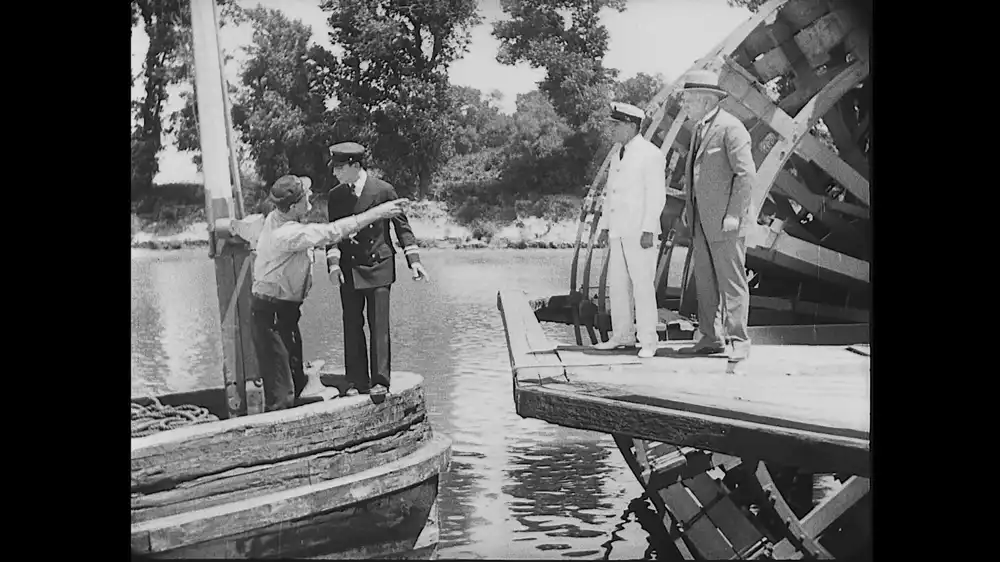
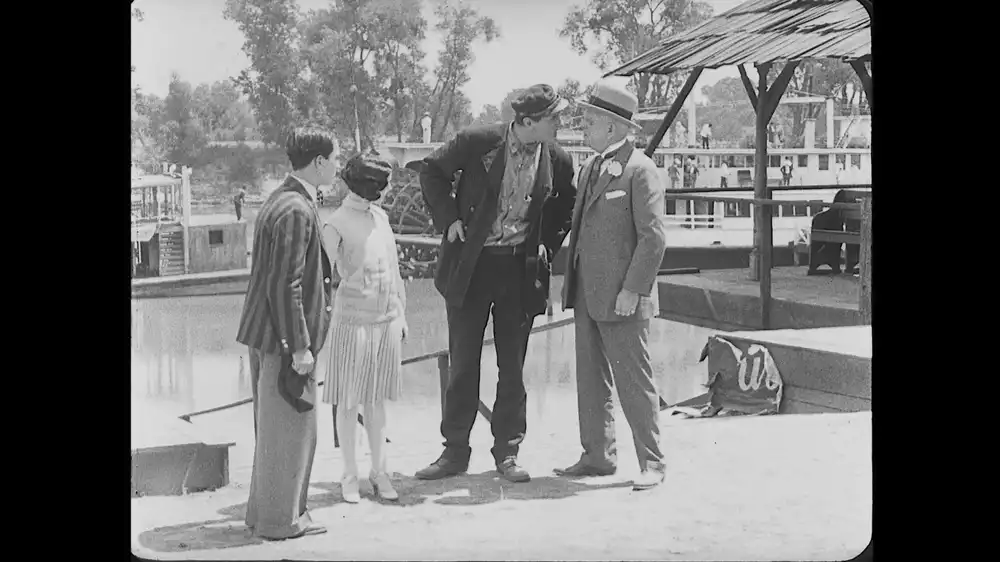
The core of the film’s first hour is the friction between Ernest Torrence’s Steamboat Bill and Keaton’s Junior. Torrence is fantastic here; he is a massive, craggy-faced man who looks like he was carved out of an old pier. When Keaton arrives at the train station, the visual gag isn't just in his clothes—it’s in the physical scale. Junior looks like a different species. He’s carrying a ukulele, wearing a ridiculous hat, and sporting a mustache that looks like it was drawn on with a weak pencil.
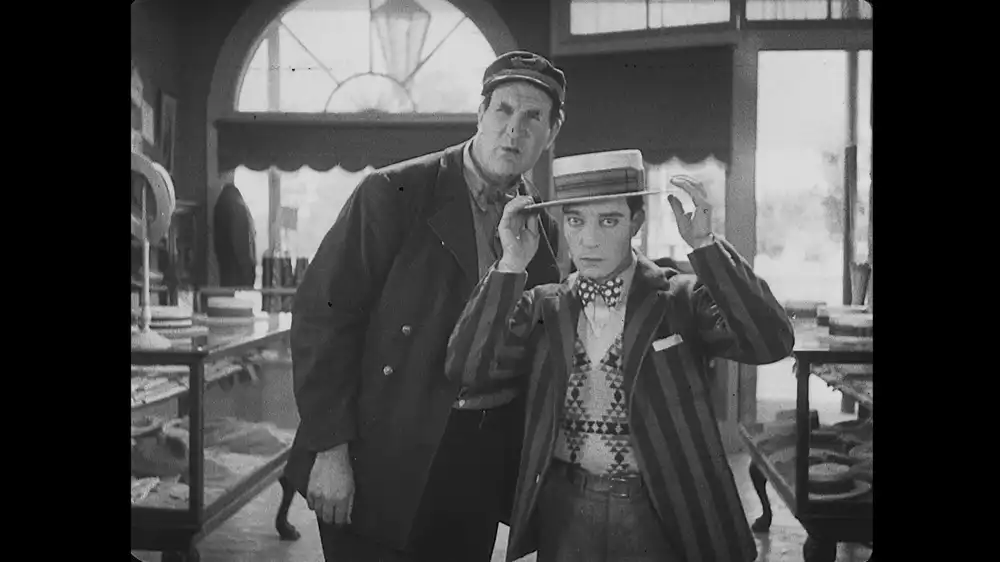
The 'hat-fitting' scene is arguably the best sequence in the first half. It’s a simple setup: Bill takes his son to a shop to replace his 'effeminate' headwear. Keaton tries on a dozen hats, and his subtle facial reactions—never quite breaking into a smile or a frown—are a masterclass in restraint. There is a brief, meta-moment where he tries on his own iconic porkpie hat, only for his father to immediately toss it away. It’s a sharp, self-aware wink to the audience that signals Keaton is playing against his own established persona.
If there is a weakness, it’s that the film leans a bit too hard on Junior's incompetence for too long. There are several scenes on the boat where Junior trips over ropes or fails to understand basic nautical commands that feel a bit repetitive. The romantic subplot with Kitty (Marion Byron) is also fairly thin, serving mostly as a bridge between the two feuding fathers. It lacks the inventive visual playfulness of Keaton’s earlier work, like the dream sequences in Sherlock Jr. or the historical parodies in The Tents of Allah (though that film operates in a very different tonal register). Here, the comedy is grounded, almost gritty, which makes the eventual transition into the surreal hurricane sequence even more jarring.
The final twenty minutes of Steamboat Bill, Jr. are some of the most impressive minutes in the history of cinema. When the storm hits, the film ceases to be a domestic comedy and becomes a survival epic. Keaton used massive aviation engines to create wind that looks genuinely terrifying. You can see the debris—actual wood and glass—flying past his head. This isn't 'movie wind' that gently ruffles hair; it’s wind that forces Keaton to lean at a 45-degree angle just to stay upright.
Then, of course, there is the house. The stunt where the facade of a two-story building falls around him is legendary, but seeing it in context is different. By that point in the film, the town has been decimated. He’s wandering through a wasteland of collapsing sets. When the wall falls, the clearance between his shoulders and the window frame is a matter of inches. Knowing that Keaton was dealing with personal turmoil and a failing studio deal at the time adds a layer of genuine recklessness to the scene. He isn't just a performer; he’s a man standing still while the world literally falls down around him.
The cinematography by Devereaux Jennings and Bert Haines captures the river with a grey, industrial texture that feels more realistic than the romanticized versions of the South often seen in 1920s cinema. The editing rhythm during the storm is frantic but never confusing. You always know where Junior is in relation to the boat, the shore, and the collapsing buildings. One small detail I noticed: the way the water actually looks 'heavy' during the flood scenes. They weren't just spraying a hose; they were dumping thousands of gallons of water, and you can see the way the weight of it affects the actors' movements.
Steamboat Bill, Jr. is a lopsided masterpiece. It starts as a modest, character-driven comedy about a son failing to meet his father's expectations and ends as a terrifying, gravity-defying spectacle. It lacks the tight, clockwork plotting of The General, but it makes up for it with sheer physical audacity. It’s a film that demands to be seen on the biggest screen possible, if only to appreciate the scale of the destruction Keaton was willing to endure for a laugh. If you can get past the somewhat dated 'effete son' tropes of the first half hour, you are rewarded with one of the most visceral experiences in silent film.

IMDb —
1931
Community
Log in to comment.