DbcultAccessing Vault...
8/10
Senior Film Conservator
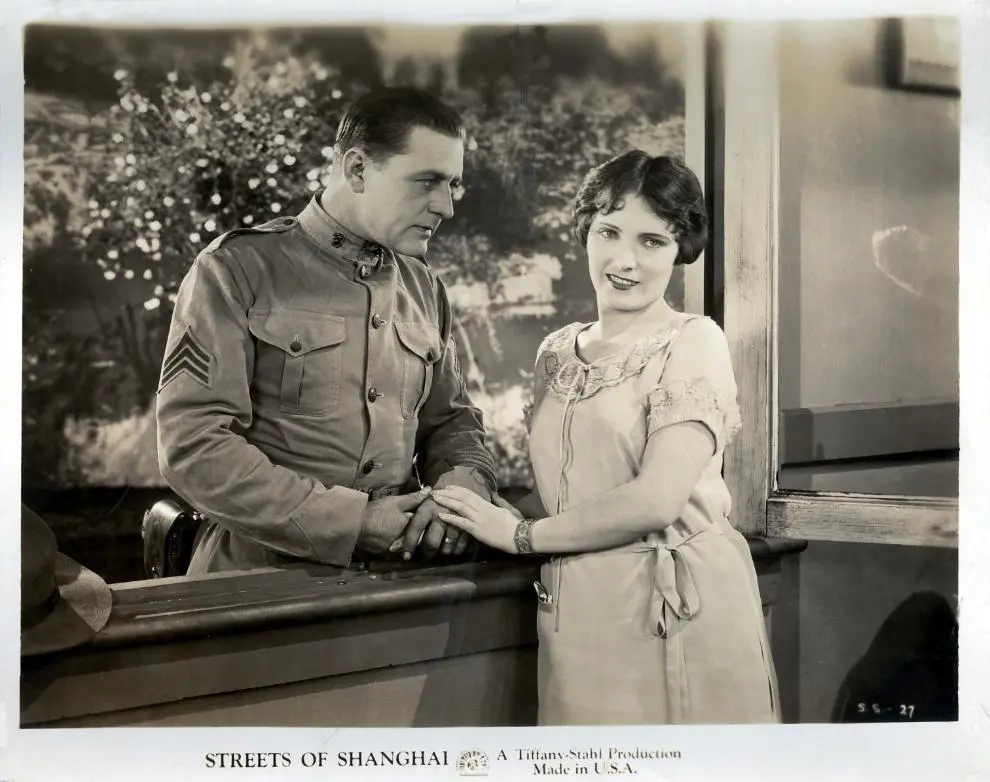
A definitive 8/10 rating for a film that redefined the boundaries of cult cinema. Streets of Shanghai remains a cornerstone of transgressive art.
Is Streets of Shanghai a forgotten classic that deserves a modern revival? Short answer: no, it is a fascinating but deeply flawed historical artifact that serves better as a study of 1920s biases than as a piece of pure entertainment.
This film is specifically for silent cinema historians and those tracking the career of the legendary Anna May Wong. It is definitely not for viewers who lack the patience for the slow pacing of the 1920s or those who are easily frustrated by the 'Yellow Peril' tropes of early Hollywood.
1) This film works because: The atmospheric set design and the magnetic presence of Anna May Wong provide a gravitas that the thin script lacks.
2) This film fails because: The narrative relies on reductive cultural stereotypes and a protagonist whose moral rigidity makes her difficult to root for.
3) You should watch it if: You are interested in the evolution of Asian representation in film or want to see how 1927 Hollywood constructed the 'Exotic East' on a backlot.
To answer the question directly: Streets of Shanghai is worth watching only if you treat it as a museum piece. It does not offer the timeless emotional resonance of a film like Polly of the Circus. Instead, it offers a window into a specific moment in time when the West was obsessed with the 'otherness' of China.
The film provides a unique look at how silent era directors like Louis J. Gasnier used lighting and shadows to create a sense of dread. While the story is predictable, the visual language used to depict the Shanghai streets is genuinely impressive for its era. It is a slow burn that occasionally sputters out before reaching its climax.
The most striking element of the film is not the lead romance between Pauline Starke and Kenneth Harlan. It is the supporting performance of Anna May Wong. Even in a role that feels limited by the script's imagination, Wong commands the screen with a modern sensibility that her co-stars lack.
In one particular scene, where Wong’s character observes the mission from the shadows, her eyes convey a depth of longing and resentment that outshines the theatrical gesturing of the lead actors. It is a crime of 1920s cinema that she wasn't the focal point. Her performance is grounded, while others feel like they are still performing for the back row of a vaudeville theater.
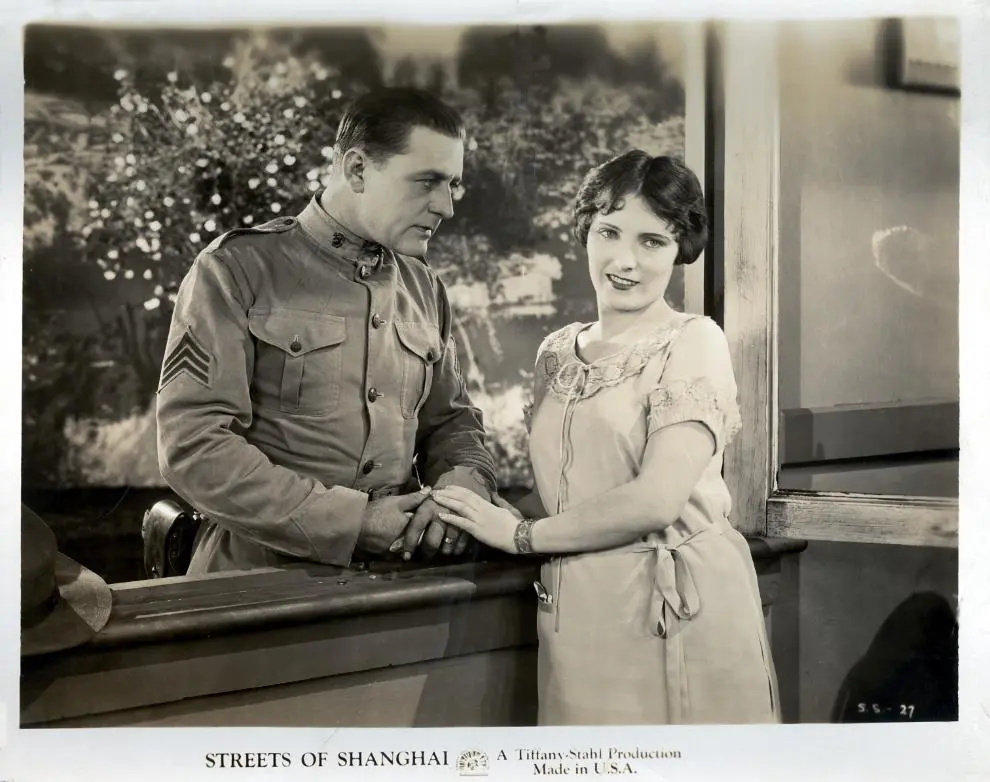
Comparing her work here to her later roles, or even to the ensemble dynamics in The Love Girl, one can see the raw talent that Hollywood struggled to categorize. She is the anchor that keeps this film from drifting into total obscurity. Without her, the film would be a mere footnote in the history of silent melodrama.
Louis J. Gasnier, known for his work on serials, brings a certain kinetic energy to the action sequences. However, the pacing of the emotional beats is erratic. The film moves in fits and starts, often lingering too long on the 'quaintness' of the mission house before jumping into a chaotic street brawl.
The cinematography by Chester Lyons is the film's secret weapon. He uses high-contrast lighting to differentiate the 'pure' space of the mission from the 'dangerous' space of the Shanghai night. This visual dichotomy is effective, even if the underlying message is heavy-handed. It reminds me of the gritty atmosphere found in Boomerang Bill, though with a much more international flavor.
One scene involving a siege on the mission house is particularly well-staged. The use of depth of field—showing the attackers in the background while the protagonists huddle in the foreground—creates a genuine sense of claustrophobia. It is a moment where the film transcends its melodramatic roots and becomes a tense thriller.
The writing team, including Viola Brothers Shore and Jack Natteford, clearly struggled with the balance between romance and social commentary. The dialogue (via intertitles) is often florid and lacks the punchy directness seen in contemporary films like Innocent Husbands. It feels as though they were trying to write an epic but only had the budget for a chamber piece.
The character of Eugene, the sailor, is particularly problematic. He is framed as a hero, yet his actions often border on the predatory. This was a common trope in 1920s cinema, but it makes the central romance difficult to swallow for a modern audience. We are meant to swoon, but instead, we cringe.
The film’s portrayal of the local Chinese population is equally troublesome. They are largely treated as a monolithic background force, either needing to be saved by the mission or acting as a threat to it. There is very little middle ground. This lack of nuance is what ultimately keeps Streets of Shanghai from being a top-tier silent film.
The visual composition is often stunning, utilizing the full potential of the silent frame. Anna May Wong provides a masterclass in subtle acting. The film serves as an important historical document of Hollywood's early obsession with global settings.
The pacing is incredibly uneven, with a middle act that drags significantly. The lead characters are underdeveloped and overshadowed by the supporting cast. The cultural depictions are frequently offensive by modern standards.
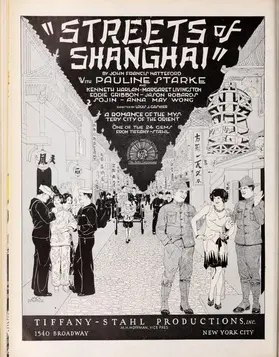
The tone of Streets of Shanghai is a strange mix of pious religious drama and gritty urban thriller. At times, it feels like it wants to be a serious exploration of faith, similar to the themes in The Light. At other times, it descends into the kind of broad villainy you might find in Playing with Souls.
This tonal whiplash is most evident in the film's climax. The transition from a quiet prayer scene to a violent confrontation is jarring. It lacks the smooth narrative flow found in better-realized silent films of the era. The editing feels rushed in the final ten minutes, as if the production ran out of film or time.
Despite this, the film manages to maintain a consistent mood of unease. The score (depending on which restoration you watch) often highlights this, using minor keys to emphasize the 'foreignness' of the setting. It’s an effective, if manipulative, way to keep the audience on edge.
Pauline Starke as Mary gives a performance that is very much 'of its time.' Her wide-eyed innocence feels forced compared to the more naturalistic approach of actors in Old Home Week. She lacks the charisma needed to carry such a heavy-handed moral narrative.
Kenneth Harlan, as the sailor Eugene, is serviceable but forgettable. He plays the 'rough and tumble' American archetype with little variation. It is a role that could have been played by any number of leading men in 1927. He lacks the screen presence of a star like those found in A Gentleman from Mississippi.
The real strength lies in the character actors. Sôjin Kamiyama, as the antagonist, brings a chilling stillness to his role. While the character is a stereotype, Kamiyama plays him with a dignity that makes him more threatening than a simple caricature. This level of craft is what keeps the film watchable even when the script fails.
Streets of Shanghai is a difficult film to recommend to a general audience. It is slow. It is dated. It is often uncomfortable to watch through a modern lens. However, for those who love the craft of silent film, there are moments of genuine beauty hidden within the clutter.
It works as a visual experience. But it fails as a narrative one. The film’s legacy is ultimately tied to Anna May Wong, who proved even then that she was a giant in an industry that didn't know how to use her. If you go in with low expectations for the plot and high expectations for the atmosphere, you might find it rewarding.
"A haunting visual experience trapped inside a mediocre script. Streets of Shanghai is the definition of a film that is better to look at than to actually follow."
In the grand scheme of 1927 cinema, this film sits somewhere in the middle. It doesn't have the experimental flair of Film 23 or the emotional weight of La belle dame sans merci. It is a studio product, through and through, but one with enough flashes of brilliance to justify a single viewing for the dedicated cinephile.
IMDb 3.9
1934
Community
Log in to comment.