DbcultAccessing Vault...
6.7/10
Senior Film Conservator
A definitive 6.7/10 rating for a film that redefined the boundaries of cult cinema. Sweetie remains a cornerstone of transgressive art.
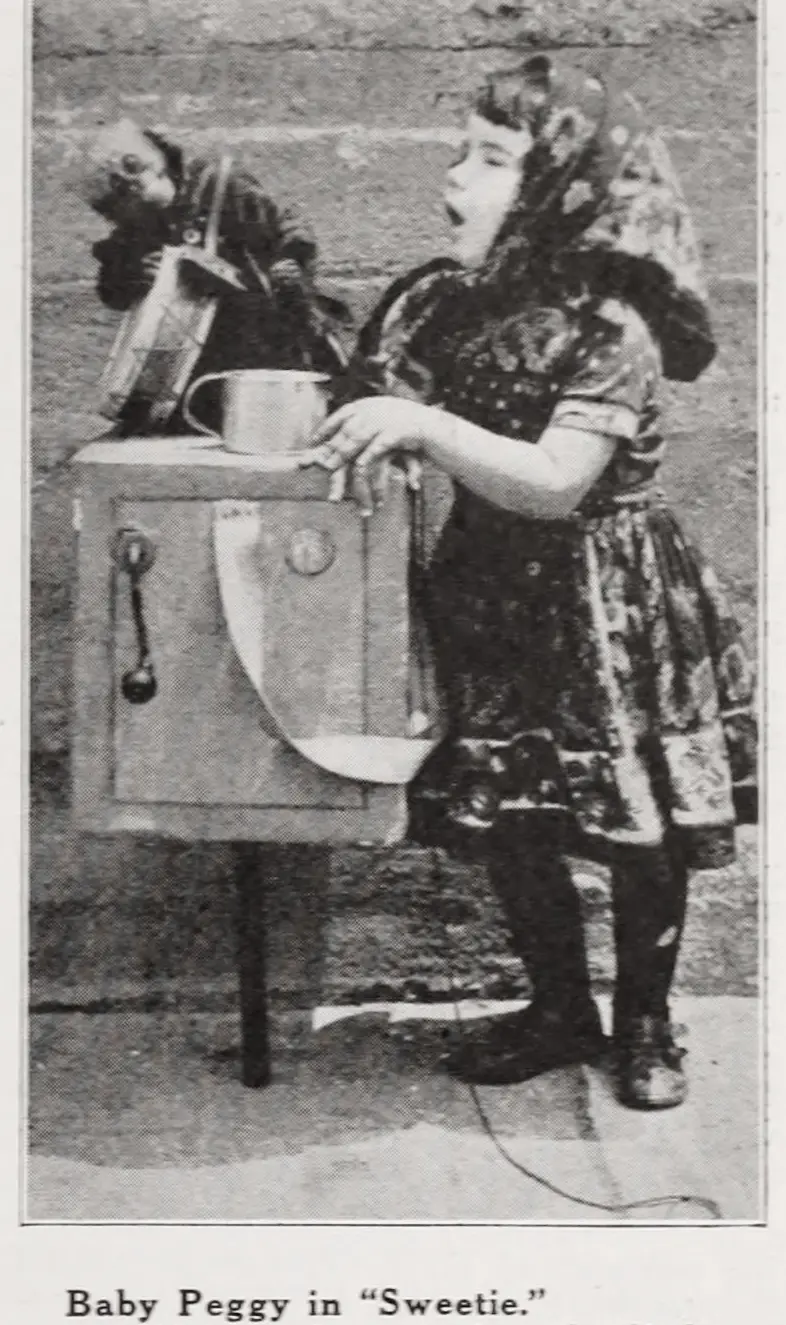
The 1929 short Sweetie emerges as a kaleidoscopic vignette of ambition, charity, and the restless energy of a child star navigating the treacherous currents of early Hollywood. Directed by the sprightly Alfred J. Goulding, the film assembles a modest ensemble—Jennie the Monkey, Max Asher, Jerry Mandy, Louise Lorraine—yet it is Baby Peggy’s luminous presence that commands the visual and emotional spectrum.
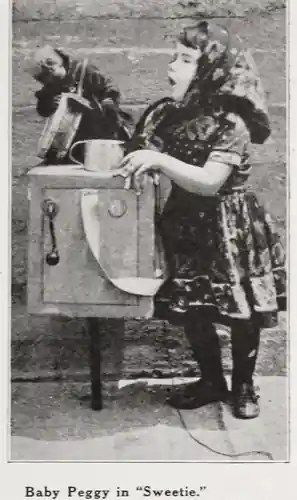
From the opening tableau, the audience is thrust into a dimly lit parlour where Peggy, diminutive yet resolute, manipulates the keys of an antiquated organ. The instrument’s resonant sighs echo the plight of a blind man, a figure rendered with poignant simplicity, whose reliance on auditory solace underscores the era’s fascination with sensory deprivation as a narrative device. The organ’s timbre, captured in grainy black‑and‑white, functions as an aural metaphor for hope amid desolation.
Enter the affluent benefactress, a woman whose sartorial elegance and poised demeanor contrast starkly with the impoverished setting. Her intervention—both philanthropic and performative—mirrors the period’s predilection for the “rags‑to‑riches” trope, a theme also explored in contemporaneous works such as The Phantom Riders and The Raven. The rescue, however, is not merely a plot catalyst; it serves as a commentary on the social stratifications that defined the Roaring Twenties, where wealth could both elevate and exploit.
The subsequent party scene unfurls like a tableau vivant, replete with glittering chandeliers and a cacophony of laughter. It is here that Peggy’s audacious spirit crystallizes. Inspired by an Egyptian dancer whose costume flutters with an exotic allure, Peggy appropriates fragments—shimmering beads, a sheer veil, a sliver of a silk sash—and assembles a makeshift ensemble that teeters on the edge of propriety. The costume’s scantiness is not gratuitous; rather, it symbolizes a child’s yearning to transgress the boundaries imposed by adult guardianship.
Her foster father, portrayed with a blend of paternal concern and weary exasperation by Max Asher, reacts with palpable alarm. His admonition—"You're courting trouble, child"—resonates as a forewarning of the perils that accompany early stardom. Yet Peggy, undeterred, asserts a nascent agency that foreshadows the later assertiveness of screen icons such as Louise Lorraine’s heroines in Be My Wife. This tension between guardianship and autonomy forms the emotional nucleus of the short.
The climax resolves with a harmonious reconciliation, a narrative choice that reflects the era’s predilection for tidy conclusions. Peggy’s exuberance is tempered, her foster father’s fears assuaged, and the blind man’s gratitude is rendered in a silent, reverent nod. The film’s denouement, while ostensibly simplistic, encapsulates a broader discourse on the negotiation of power between child performers and the adult architects of their careers.
Goulding’s direction, though constrained by the brevity of the short, exhibits a deft command of visual storytelling. The camera frequently adopts low angles when framing Peggy, imbuing her with an inadvertent grandeur that belies her physical stature. This technique aligns with the auteurist sensibilities observed in The Dust of Egypt, where low‑angle shots elevate the protagonist’s mythic status.
Lighting plays a pivotal role: chiaroscuro effects accentuate the organ’s somber tones, while the party’s illumination bursts in a cascade of warm amber, echoing the film’s thematic juxtaposition of darkness and light. The strategic use of the sea‑blue hue (#0E7490) in the backdrop of the dance sequence adds a cool counterpoint, evoking the exoticism associated with Egyptian motifs and providing visual relief from the surrounding amber.
Intertitles, sparingly employed, convey essential dialogue while preserving the visual momentum. Their typographic choices—bold serif fonts rendered in yellow (#EAB308) against a black backdrop—ensure legibility and echo the film’s broader chromatic palette, reinforcing the interplay between textual and visual narration.
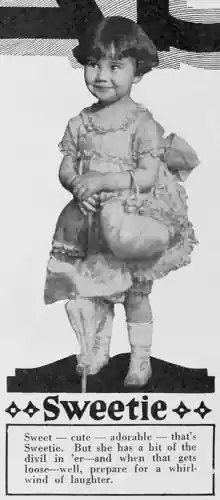
Baby Peggy, born Peggy-Jean Montgomery, delivers a performance that oscillates between innocence and precocious defiance. Her facial expressiveness—wide-eyed curiosity, a mischievous grin, a fleeting scowl—communicates narrative beats without reliance on dialogue, a hallmark of silent‑era acting. The subtlety of her gestures, particularly when she adjusts the improvised costume, reveals an intuitive understanding of visual storytelling that would later influence child actors like Shirley Temple.
Max Asher’s portrayal of the foster father is layered; his gruff exterior masks a tender core, evident in moments when he watches Peggy from a distance, his eyes softening. This duality enriches the film’s emotional texture, inviting viewers to contemplate the complexities of parental stewardship in a commercialized entertainment landscape.
The supporting cast—Jennie the Monkey providing comic relief, Jerry Mandy’s slap‑stick antics, and Louise Lorraine’s dignified presence—contribute texture without eclipsing the central narrative. Their performances echo the ensemble dynamics seen in Grim Justice, where each character, however minor, serves a purposeful narrative function.
At its core, Sweetie interrogates the intersection of charity and exploitation. The wealthy benefactor’s rescue of Peggy, while seemingly altruistic, also underscores the patronizing gaze of the upper class toward the impoverished—a dynamic that permeates silent cinema, as observed in His Temporary Wife. The film subtly critiques this power imbalance through Peggy’s agency; she does not merely accept the benefactor’s hand but actively reshapes her destiny.
The motif of vision—embodied by the blind man—serves as an allegory for societal perception. While he is physically sightless, his auditory acuity allows him to appreciate the organ’s music, suggesting that true insight transcends visual observation. This theme resonates with the era’s fascination with sensory substitution, a concept explored in the experimental film The Warfare of the Flesh.
Peggy’s appropriation of the Egyptian dancer’s garb introduces an exoticism that reflects the 1920s Western fascination with Orientalism. Yet, unlike the overt fetishization seen in some contemporaneous productions, Sweetie treats the costume as a conduit for personal expression rather than a mere spectacle, thereby granting Peggy a degree of cultural agency rarely afforded to child characters of the period.
Alfred J. Goulding’s directorial portfolio, replete with slap‑slap comedic shorts, often balances physical humor with sentimental undercurrents. In Sweetie, his signature brisk pacing is evident, yet the film also showcases a nuanced emotional depth absent in earlier works like The Slacker. The juxtaposition of comedic set‑pieces—such as Jennie the Monkey’s mischievous antics—with heartfelt moments underscores Goulding’s evolving sensibility toward layered storytelling.
The short’s narrative economy mirrors the structural efficiency of other 1920s comedies, yet its thematic ambition aligns it more closely with the dramatic undertones of Nine Points of the Law. By integrating social commentary within a comedic framework, Goulding anticipates the hybrid genres that would later dominate Hollywood.
Although Sweetie remains a relatively obscure entry in the silent canon, its exploration of child agency, class disparity, and performative identity renders it a fertile subject for modern scholarship. The film’s preservation status—partially restored by the National Film Preservation Foundation—allows contemporary audiences to appreciate its visual craftsmanship and narrative daring.
In an age where child stars are scrutinized for exploitation, the short offers a historical lens through which to examine the genesis of such debates. Peggy’s assertiveness, juxtaposed with her foster father’s protective instincts, mirrors ongoing dialogues about autonomy and guardianship in the entertainment industry.
Moreover, the film’s aesthetic palette—dark orange (#C2410C) for warmth, yellow (#EAB308) for textual highlights, and sea blue (#0E7490) for exotic accents—continues to influence modern filmmakers seeking to evoke nostalgic yet vibrant atmospheres. Its color symbolism, though constrained by the monochrome medium, is deftly suggested through set design and costuming, a technique that contemporary directors emulate through selective color grading.
Sweetie stands as a microcosm of silent‑era ingenuity, where limited runtime compels a distillation of narrative potency. Its interweaving of comedy, pathos, and cultural critique exemplifies the era’s capacity to convey complex ideas without spoken word. For scholars and cinephiles alike, the short offers a compelling study of early Hollywood’s negotiation between commercial imperatives and artistic expression.
In sum, the film’s deft choreography of light, shadow, and performance, coupled with its resonant thematic layers, cements its status as a modest yet significant artifact. Whether viewed as an entertaining vignette or a scholarly case study, Sweetie invites repeated viewings, each revealing new subtleties within its compact frame.

IMDb 6.8
1928
Community
Log in to comment.