DbcultAccessing Vault...
Cult Review
Senior Film Conservator
T
The silent era was a period of profound experimentation, where the visual language of cinema was being articulated in real-time, often grappling with complex sociopolitical anxieties under the guise of melodrama. The Amazing Wife (1919), directed and written by the formidable Ida May Park, stands as a testament to this era's capacity for nuanced storytelling. While many contemporary critics might dismiss such plots as mere contrivances, a closer examination reveals a sophisticated exploration of class mobility, female agency, and the transformative power of identity. Unlike the more straightforward moral plays of the time, such as The Turn of the Road, Park’s work delves into the psychological shadows of survival.
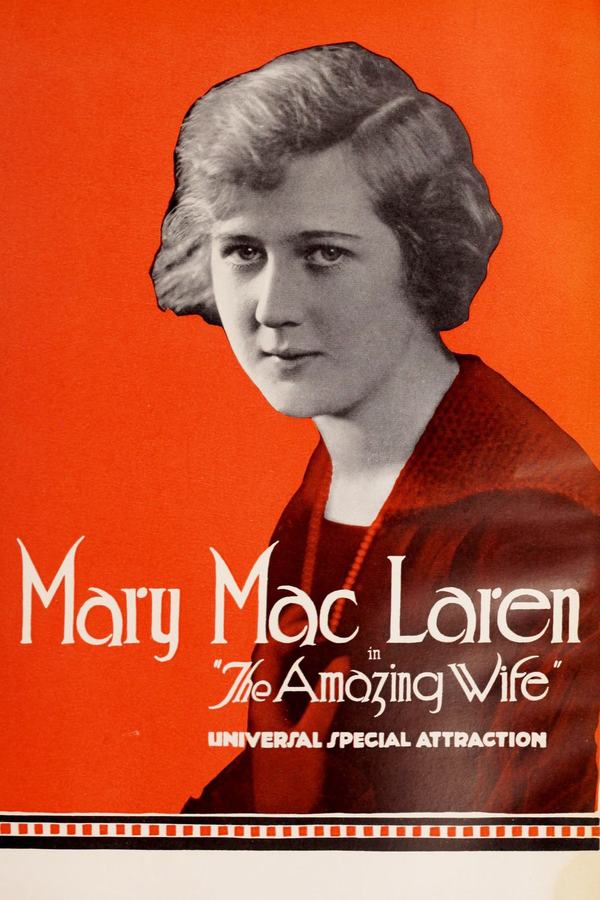
Mary MacLaren delivers a performance of startling vulnerability and calculated grace as Cicely Osborne. In the opening sequences, we witness the crushing weight of poverty—a theme explored with varying degrees of grit in films like The Highway of Hope. Cicely’s decision to marry the laborer John Ashton is not born of passion but of a grim necessity to sustain her mother. The cinematography during the cabaret scene is particularly noteworthy; the use of high-contrast lighting creates an atmosphere of impending doom, mirroring the internal chaos of a woman who has traded her freedom for a security that vanishes in a heartbeat.
The pivot from mourning to deception is handled with a deftness that avoids the pitfalls of villainy. When Cicely discovers her mother’s death, the silence of the room is palpable, even in a non-talking medium. Her discovery of the Lieutenant’s obituary is presented not as a moment of opportunistic greed, but as a visceral grasp for air by a drowning soul. This transition into the aristocratic Ashton household introduces a fascinating dialectic between the 'authentic' working-class Cicely and the 'performative' high-society widow. It echoes the thematic concerns found in The Black Sheep of the Family, where the boundaries of social standing are constantly tested and renegotiated.
The narrative complexity deepens significantly with the arrival of the actual Lieutenant John Ashton, portrayed with a stoic yet empathetic charm by Frank Mayo. His decision to sustain Cicely’s lie is the crux of the film’s moral ambiguity. Why would a man of his station allow an impostor to occupy the sacred space of his family’s grief? It is here that Ida May Park’s writing shines, suggesting a weariness with the rigid expectations of his class. His survival of the Great War has left him disillusioned, and in Cicely, he finds a mirror of his own fractured identity. This dynamic is far more sophisticated than the typical romantic entanglements of the period, such as those seen in The Fortunes of Fifi.
The tension within the Ashton manor is further exacerbated by the presence of Philip, the crippled cousin. Philip serves as the narrative’s shadow, a man whose physical limitations have curdled into a predatory cynicism. His suspicion of Cicely is not motivated by a desire for truth, but by a thirst for power. The scenes where he attempts to blackmail her are drenched in a claustrophobic dread, highlighting the precariousness of her position. This subplot elevates the film from a simple drama to a proto-noir, exploring the darker impulses that hide behind the veneer of aristocratic respectability, a recurring motif in works like House of Cards.
Ida May Park’s direction is characterized by an economy of motion and a focus on the expressive potential of the human face. The use of close-ups in The Amazing Wife allows the audience to navigate the labyrinth of Cicely’s conscience. We see the flicker of guilt, the surge of terror, and the eventual blossoming of love. The production design, while reflecting the opulence of the upper class, often feels like a gilded cage, emphasizing the themes of entrapment and performance. This visual storytelling rivals the grandiosity of epics like Judith of Bethulia, but on a much more intimate and psychologically taxing scale.
The climax of the film, involving the jealous confrontation between the two Johns (the memory of the laborer and the reality of the Lieutenant) and Philip, is a masterclass in tension. The reopening of the war wound serves as a literal and metaphorical manifestation of the past refusing to stay buried. It is a visceral reminder that the consequences of our choices are etched into our very bodies. The final scene, where a priest solemnizes the union between Cicely and the Lieutenant, provides a spiritual resolution that is both poignant and provocative. It suggests that truth is not merely a collection of facts, but a commitment to the emotional reality of one’s circumstances.
When we look at The Amazing Wife in the context of its contemporaries, its uniqueness becomes even more apparent. While The Fatal Marriage explores the disastrous consequences of ill-conceived unions, Park’s film offers a more optimistic, albeit complicated, view of how a 'fatal' start can lead to a redemptive end. Similarly, while Uden Fædreland grapples with the loss of homeland and identity, The Amazing Wife focuses on the construction of a new identity in the wake of total loss.
The film also stands apart from the more exoticized dramas of the era, such as Die Lieblingsfrau des Maharadscha or Aladdin from Broadway. It doesn't rely on the 'other' to generate interest; instead, it finds the extraordinary within the mundane struggles of a woman trying to navigate a world that offers her very few legitimate exits. The writing by Elinor Chipp and Ida May Park ensures that every character, no matter how briefly they appear, feels grounded in a specific social reality, much like the ensemble cast in Each to His Kind.
One cannot discuss this film without acknowledging the significant role of women behind the camera. Ida May Park was a pioneer, and her influence is felt in the nuanced portrayal of Cicely’s agency. In an era where female characters were often relegated to the roles of the 'maiden in distress' or the 'vamp,' Cicely is a multifaceted protagonist who makes difficult choices and lives with the consequences. Her journey from the cabaret to the manor is a subversive take on the Cinderella trope, one that acknowledges the grit and deception required to cross class lines. This same level of character depth can be observed in other female-centric narratives of the time, such as The Incomparable Mistress Bellairs.
The interplay between the cast members is also worth noting. Stanhope Wheatcroft’s performance as Philip provides a necessary friction that prevents the film from descending into saccharine sentimentality. His presence reminds the audience that the world Cicely has entered is just as dangerous, if not more so, than the one she left behind. The chemistry between MacLaren and Mayo is subtle, built on shared glances and unspoken understandings, which is essential for a story where the characters are essentially living a lie together. This level of ensemble work is reminiscent of the tight-knit performances in Het geheim van het slot arco.
Ultimately, The Amazing Wife is a film about the stories we tell ourselves to survive. It challenges the viewer to question the nature of truth and the morality of deception when the stakes are life and death. The technical proficiency, from the lighting to the pacing, ensures that the film remains engaging even for modern audiences accustomed to more kinetic storytelling. It shares a certain thematic DNA with Drakonovskiy kontrakt in its exploration of binding agreements and the weight of the past, yet it maintains a distinctly American sensibility in its focus on individual reinvention.
As we rediscover the gems of the silent era, The Amazing Wife deserves a prominent place in the conversation. It is a sophisticated, emotionally resonant piece of work that showcases the immense talent of its creators. Whether you are a scholar of early cinema or a casual viewer looking for a compelling drama, this film offers a rich, rewarding experience. It reminds us that even in the silence, there are voices crying out with a profound and enduring humanity. Like The Ranger, it navigates the rugged terrain of the human heart, proving that the most difficult journeys are often the ones we take within ourselves.
Reviewer's Note: This film is a quintessential example of the 1910s drama, blending social commentary with high-stakes personal conflict. It is a must-watch for anyone interested in the evolution of narrative structure in film.
IMDb —
1924
Community
Log in to comment.