DbcultAccessing Vault...
Cult Review
Senior Film Conservator
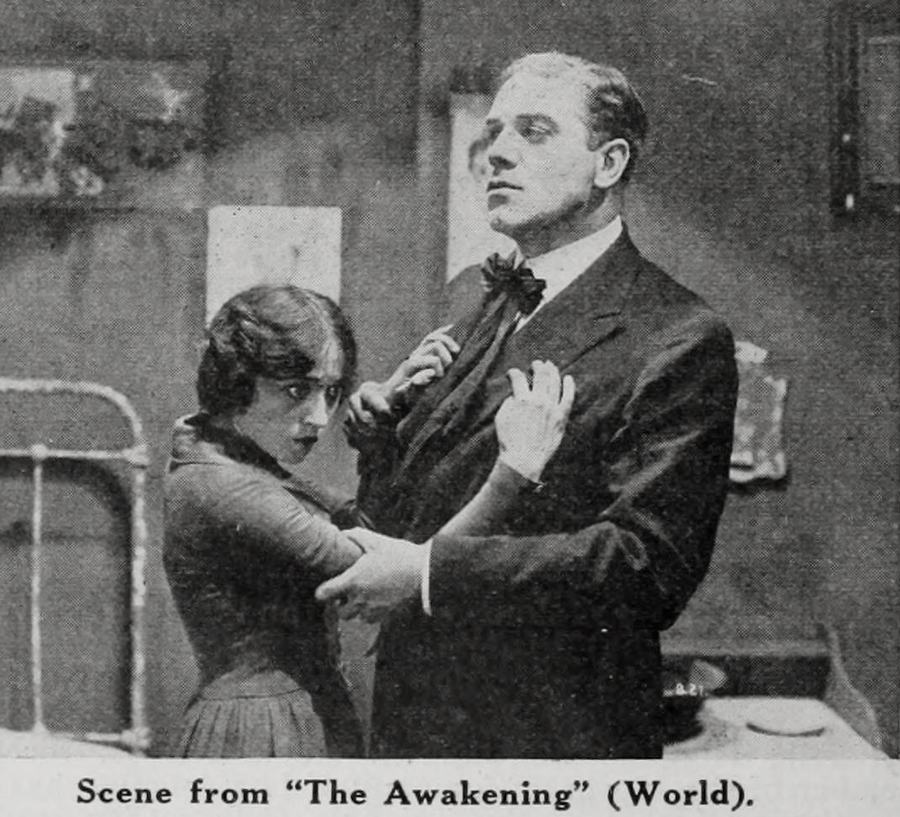
There's a certain timeless allure to tales of the solitary soul, particularly when rendered through the potent, often exaggerated, emotional landscape of silent cinema. The Awakening, a cinematic journey penned by Emil De Varney, is precisely such a narrative, weaving a tapestry of isolation, artistic yearning, and the arduous quest for genuine human connection. It's a film that, even a century later, speaks to the profound vulnerability inherent in seeking belonging amidst a world quick to judge and condemn.
Our protagonist, Jacques Revilly, portrayed with a compelling intensity by Frank Beamish, begins his life's odyssey under the shadow of mystery, discovered on the cold, unforgiving steps of a French village church. He grows into a man of quiet strength, his days defined by the demanding rhythm of farm life. Yet, beneath this rugged exterior lies a soul yearning for expression, a clandestine artist whose sanctuary is the sacred hush of the church, where he surreptitiously cultivates his skill with brush and canvas. This private passion, however, proves to be his undoing in a community that values brawn over beauty, rough play over refined contemplation. When one of his tormentors unearths his artistic endeavors, it becomes a new vector for their cruelty, culminating in a fabricated delinquency charge that forces his expulsion from the only home he has ever known. This initial rejection, this forced exile from a world that cannot comprehend his inner life, sets the melancholic tone for Jacques’s journey, a poignant echo of the struggles faced by many protagonists in early cinema who dared to defy societal norms, much like the characters navigating the moral quagmires in Mysteries of London, where individual virtue often clashes with entrenched social prejudices.
Three years later, the sprawling, indifferent metropolis of Paris becomes Jacques's new crucible. Here, amidst the bohemian bustle, he hones his craft, producing canvases of undeniable merit. Yet, his exterior mirrors his internal landscape: unkempt, sullen, and seemingly averse to human society. This self-imposed isolation earns him the moniker "The Beast," a label that further entrenches his solitude. The vibrant artist community of the Café Brasserie Murger, a hub of creative energy and social interaction, remains largely impenetrable to him. He observes, he consumes his drink, but he does not join. This portrayal of the brooding, misunderstood artist is a recurring motif in literature and film, one that The Awakening captures with remarkable pathos, positioning Jacques as an archetypal figure of the alienated genius.
The narrative takes a subtle yet significant turn during a lively evening at the café. A dance is planned, but "The Beast" is pointedly excluded from the festivities. Jacques, oblivious to the social machinations, enters as usual, seeking only his solitary drink. It is Varny, another student, who extends a tentative invitation, an olive branch that Jacques, hardened by years of rejection, initially declines. Fate, however, has other plans. A girl, dancing precariously on a table, falls, injuring Varny. In this moment of unexpected crisis, Jacques’s dormant empathy stirs. He takes Varny home, nursing him back to health with a quiet devotion that speaks volumes about the warmth hidden beneath his gruff exterior. This act of selfless care is a pivotal instance of human connection for Jacques, a brief respite from his entrenched isolation. However, with Varny’s recovery and his return to his old companions, Jacques is once again confronted with the stark reality of his solitude, a realization that pushes him to a profound moment of vulnerability.
In a saloon, amidst the din and the clinking of glasses, Jacques, with a raw honesty, pours out his heart in a silent prayer, begging for the companionship his soul so desperately craves. This scene, devoid of dialogue yet rich with emotional weight, highlights the power of silent film to convey deep internal struggles through gesture, expression, and the sheer force of a performer like Beamish. It’s a moment of spiritual nakedness, a desperate plea to the universe for an end to his profound loneliness.
His prayer, it seems, is answered with a dramatic immediacy. On his way home, he discovers a frail young girl, Marguerite (portrayed with delicate grace by Josephine Earle), lying seemingly lifeless in the snow. He carries her to his home, convinced that divine intervention has brought her to him. Under the meticulous care of Jacques, Varny, and their compassionate caretaker, Marguerite slowly convalesces. Her story, a tragic tale of failed attempts to find work after her mother's death, mirrors Jacques's own struggles with societal indifference. She is a kindred spirit, a fellow outcast. Jacques, in an act of profound generosity, gives her his room, relocating himself to Varny's across the hall. This selfless gesture marks the true beginning of his "awakening."
Marguerite's presence acts as a catalyst for Jacques. He begins to take an interest in his physical appearance, shedding the "Beast" persona. His friends, initially incredulous, witness his transformation firsthand. Prosper, one of the students, famously declares he's seen "The Beast" sober, clean-shaven, and neatly dressed. This internal and external metamorphosis is beautifully depicted, underscoring the redemptive power of love and companionship. Marguerite, meanwhile, secures a position in Madame Celeste's millinery shop, a beacon of hope for her future. The film masterfully builds this burgeoning romance, emphasizing the quiet dignity of their connection, a stark contrast to the boisterous, often cruel, world outside their shared sanctuary. This gentle blossoming of affection, born from shared vulnerability and mutual respect, resonates deeply, offering a counterpoint to the more overt romantic dramas of the era, such as Amalia, which often relied on grand gestures and sweeping declarations.
However, tranquility in the world of The Awakening is fleeting. The forces of cynicism and malevolence, personified by Horace Chapron (Montagu Love delivering a suitably villainous performance), conspire to shatter their happiness. A seemingly innocuous incident—a book falling from Marguerite's window, returned by Prosper—escalates into a confrontation when Jacques discovers Prosper attempting to kiss Marguerite. Prosper, in turn, spreads word of Marguerite’s beauty and virtue, inadvertently drawing the predatory attention of Horace. Horace, a bully of the Student Quarter, makes a despicable wager: he bets a dinner that Marguerite will be his within a month. This month, by a cruel twist of fate, is set to be Jacques and Marguerite's wedding day. The tension ratchets up considerably, as the audience is left to dread the inevitable collision of these two narratives.
The fateful day arrives. The students gather for their wagered dinner. Jacques, unaware of the insidious plot, enters the café, seeking to join the celebration, perhaps even to share his joy. Horace, with cruel relish, toasts "His Marguerite, who works in Madame Celeste's shop." The specificity of the toast, the unmistakable reference to the one Marguerite, shatters Jacques’s world. His demand for a retraction is met with Horace’s chilling display of a ring, which Jacques, in his shock and fury, believes stolen. The challenge is issued: a duel. This sudden shift from joyous anticipation to violent confrontation is a masterstroke of dramatic pacing, common in the melodramas of the era, yet here imbued with a particularly personal sting. The film, much like The Bull's Eye, demonstrates how quickly a character's fortunes can turn, often due to the machinations of a jealous rival or societal pressures.
Consumed by a righteous rage, Jacques rushes to Marguerite’s room, where he finds her penning a letter to him. She hands him the missive, which he reads with devastating clarity: "You'll never see me again. I am a defiled creature." In that moment, the fragile world he had built with Marguerite crumbles. Believing her guilty, he bids her leave, his heart fractured by what he perceives as ultimate betrayal. The scene is heart-wrenching, a testament to the power of miscommunication and the swiftness with which trust can be shattered. In his despair, Jacques makes his will, leaving everything to Marguerite, a testament to his enduring love despite the perceived betrayal.
It is Varny, once again, who acts as the voice of reason and compassion. Marguerite, desperate, begs Varny to persuade Jacques to finish reading her letter. With reluctance, Jacques consents, and Varny reveals the true, harrowing confession: Marguerite's defilement was not an act of infidelity but a vile trap. Madame Celeste, feigning sickness, had lured Marguerite home, introducing her to a man she called her brother. After drinking wine, Marguerite was rendered powerless, waking the next morning to the horrifying realization of her assault. This revelation is a gut-punch, shifting the narrative from one of betrayal to one of profound tragedy and injustice. The film, in its portrayal of such a heinous act, bravely tackles dark themes, reminiscent of the stark realities depicted in films like L'assassino del corriere di Lione, where innocence is often brutally confronted by the darker elements of society.
The truth ignites a new fury in Jacques, a desire for vengeance against Horace. Varny’s gentle query, "Will you not see Marguerite?" prompts a reunion. But when Marguerite learns of the impending duel, her fear for Jacques’s life overrides all else. She desperately begs him not to go, convinced he will be killed. Yet, Jacques, fueled by a potent blend of love, outrage, and a desire to reclaim his honor and Marguerite’s, is unswayed. His resolve is absolute, a testament to the fierce protective instinct that has now fully blossomed within him. This emotional crescendo is handled with a masterful touch, building towards the inevitable confrontation on the field of honor.
On the dueling ground, a final twist of character reveals Horace’s surprising, if belated, flicker of conscience. He admits his wrongdoing and offers an apology. But Jacques, his fury still incandescent, strikes him across the face, a visceral rejection of a last-minute reprieve. The shots ring out. Jacques is hit, but not mortally. The doctor assures him of his recovery. Carried back to his rooms, the physical wounds are superficial compared to the emotional scars that have finally begun to heal.
The film culminates in a poignant reconciliation. The misunderstandings are cleared, the truth has triumphed, and the journey from isolated artist to cherished companion finds its resolution. Jacques, who once prayed for companionship in a lonely saloon, now has his heart’s desire. The ending, while perhaps leaning into the melodramatic conventions of its era, provides a deeply satisfying emotional catharsis. It’s a testament to enduring love, the power of forgiveness, and the idea that even the most hardened hearts can be softened by genuine connection. The performances, particularly from Beamish and Earle, convey the depth of their characters' suffering and ultimate joy with remarkable clarity, even without spoken words.
The Awakening stands as a powerful example of silent era filmmaking, where narrative clarity and emotional resonance were paramount. Emil De Varney’s script, brought to life by a talented ensemble including John Davidson, Joseph Granby, and Dorothy Kelly, navigates complex themes with a surprising subtlety for its time. The film explores the multifaceted nature of identity—how it is shaped by external perceptions ("The Beast") and internal struggles, and ultimately, how it can be transformed by love and acceptance. It delves into the dark underbelly of societal cruelty, the vulnerability of the innocent, and the redemptive power of empathy.
The visual storytelling is rich, relying on expressive acting, carefully composed shots, and intertitles that serve to advance the plot and reveal inner thoughts without over-explaining. The use of light and shadow, typical of the period, is employed effectively to reflect Jacques's internal state—from the stark shadows of his early isolation to the warmer, softer lighting of his life with Marguerite. The film's pacing allows for moments of quiet introspection to breathe, contrasting effectively with the sudden bursts of dramatic conflict.
Comparing The Awakening to other films of its time reveals its unique strengths. While it shares the melodramatic intensity of films like The Oval Diamond or Blood Will Tell, its focus on the psychological transformation of its protagonist, particularly the artist's struggle for acceptance, sets it apart. It’s less about grand social commentary, though elements exist, and more about the individual's battle against internal and external forces to find a place in the world. The film’s exploration of false accusations and the societal pressures placed upon women, as experienced by Marguerite, also echoes themes found in narratives like A Self-Made Widow or The Walls of Jericho, where reputations and honor are constantly under threat.
Furthermore, the depiction of the Parisian artistic quarter, while brief, offers a glimpse into the bohemian life that fascinated audiences then as now, a stark contrast to the more conventional settings of films like The Pride of the Clan. The film's ability to create compelling villains like Horace, whose actions drive much of the central conflict, is also noteworthy, placing him in a lineage of cinematic antagonists whose motivations, however base, serve to highlight the virtues of the heroes. Even the corrupting influence of Madame Celeste, a character who orchestrates Marguerite's downfall, speaks to a prevalent theme in early cinema: the hidden dangers lurking beneath respectable facades, a motif that could be seen in the darker corners of narratives like Fantômas: In the Shadow of the Guillotine, albeit in a more overtly criminal context.
The film's ultimate message is one of hope and resilience. Jacques’s journey is not merely about finding love, but about finding himself. It is about shedding the protective layers of cynicism and isolation, allowing vulnerability to become a strength, and ultimately, embracing the messy, complicated, yet profoundly rewarding experience of human connection. The "awakening" is not just his, but also, perhaps, an awakening for the audience to the enduring power of empathy and understanding. This narrative arc, from utter despair to hard-won contentment, makes The Awakening a deeply resonant and profoundly affecting work of early cinema, one that continues to speak volumes about the human condition and the universal craving for companionship.
In an era defined by rapid societal change and nascent cinematic language, Emil De Varney crafted a story that transcends its time, a testament to the timeless appeal of a well-told tale of struggle and redemption. The film doesn't shy away from the darker aspects of human nature but ultimately champions the light of compassion and the transformative power of love. It reminds us that even "The Beast" can find solace and belonging, provided they open their heart to the possibility of connection, and that the path to true happiness is often paved with unforeseen trials and profound acts of forgiveness. It's a film that deserves to be rediscovered and appreciated for its emotional depth and its significant contribution to the art of silent storytelling.

IMDb —
1917
Community
Log in to comment.